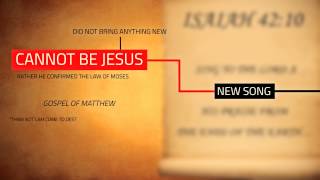
45:30
919 views
·
Last viewed: 22 hrs ago
Uploaded: 23 May 2023 (3 years ago) · Shared: 06 May 2026
Video Description (from Youtube)
As part of the Ali Vural Ak Center for Global Islamic Studies' Spring 2011 Lecture Series, Fred Donner dives deep into the history of Islam's formative years to offer a look at the foundation andevolution of political principles in the earliest Muslim societies.
Fred M. Donner received his PhD in Near Eastern Studies (1975) from Princeton University, with study of Arabic in Lebanon (1966-67) and of Oriental Philology at the University of Erlangen, Germany (1970-71). He has taught at Yale University (1975-1982) and the University of Chicago (since 1982). An early interest in the relationship between pastoral nomads and the Islamic state resulted in his first book, The Early Islamic Conquests (1981). Work on the early Islamic period for his first book raised questions about the sources for that history, and led him to investigate more deeply the early development of Islamic historical writing, resulting in his second book, Narratives of Islamic Origins (1997). This in turn caused him to ask how early Islam actually coalesced as a religion, explored in his most recent book, Muhammad and the Believers: At the Origins of Islam (2010). He has translated a volume of the medieval Arabic chronicle of al-Tabari (1993), written over forty scholarly articles, numerous encyclopedia entries, and scores of reviews, and has received research fellowships from the National Endowment for the Humanities and the John Simon Guggenheim Memorial Foundation. He is currently President-Elect of the Middle East Studies Association of North America, and in 2008 received MESA's Jere L. Bacharach Award for Service to the Profession of Middle Eastern Studies.
This event was organized by the Ali Vural Ak Center for Global Islamic Studies on February 22, 2011
If you would like to be informed about the Center programs, please subscribe to the ACGIS mailing list at the following link:
gmu.us7.list-manage.com/subscribe/post?u=363affc885e5927d7734f38bc&id=6abb26ce76
DISCLAIMER
All videos are shared for educational and information purposes only. All videos are hosted and viewable on Youtube servers. Video titles are generated using the original video title; overall content theme including actual dialogue and speech (Transcript); and A.I-based recommendations with a focus on SEO, keyword density, and internal search functions. The video title does not represent the views held by the Youtube video uploader, or any individual, organisation or business.
If you spot any mistake, omission or give feedback, kindly Contact Us with details
Overview & Key Concepts
Who is Fred Donner?
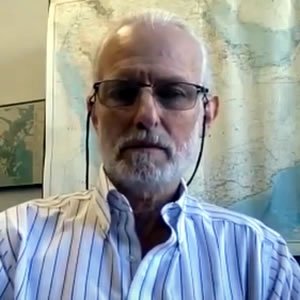 Fred McGraw Donner (born 1945) is a scholar of Islam and Professor of Near Eastern History at the University of Chicago. He has published several
books about early Islamic history. Donner received his PhD in Near Eastern Studies from Princeton in 1975. He taught Middle Eastern history in the History Department at Yale University from 1975-1982 before taking his position at the University of Chicago in 1982. Donner's main argument is that what came to be called Islam began as a monotheistic "Believers' movement" inaugurated by Muhammad which included righteous Christians and Jews as well as those monotheists who followed the teachings of the Quran.
What is Early Islam?
 Early Islam or the history of Islam is believed, by most historians to have originated with Muhammad's mission in Mecca and Medina at the start of the
7th century CE. Although Muslims regard this time as a return to the original faith passed down by the Abrahamic prophets, such as Adam, Noah, Abraham, Moses, David, Solomon, and Jesus, with the submission (Islam) to the will of God. According to the traditional account, the Islamic prophet Muhammad began receiving what Muslims consider to be divine revelations in 610 CE, calling for submission to the one God, preparation for the imminent Last Judgement, and charity for the poor and needy.
What is The Quran?
 Quran, literally meaning "the recitation" is the central religious text of Islam, which Muslims believe to be a revelation from God (Allah). It is
widely regarded as the finest work in classical Arabic literature. The Quran is divided into chapters (surah in Arabic), which are then divided into verses (ayah). Muslims believe that the Quran was verbally revealed by God to Muhammad through the angel Gabriel (Jibril), gradually over a period of approximately 23 years, beginning on 22 December 609 CE, when Muhammad was 40, and concluding in 632, the year of his death. Muslims regard the Quran as the most important miracle of Muhammad, a proof of his prophethood, and the culmination of a series of divine messages that started with the messages revealed to Adam and ended with Muhammad.
Who is GOD?
 In monotheism and henotheism, God is conceived as the Supreme Being and principal object of faith. The concept of God as described by theologians
commonly includes the attributes of omniscience (infinite knowledge), omnipotence (unlimited power), omnipresence (present everywhere), omnibenevolence (perfect goodness), divine simplicity, and eternal and necessary existence.
<ul>
<li>In theism, God is the creator and sustainer of the universe</li>
<li>In deism, God is the creator, but not the sustainer, of the universe</li>
<li>Monotheism is the belief in the existence of one God or in the oneness of God</li>
<li>In pantheism, God is the universe itself</li>
<li>In atheism, God is purported not to exist, while deemed unknown or unknowable within the context of agnosticism. </li>
</ul>
Frequently Asked Questions
1.Why should we believe the Quran if it comes 600 years after Jesus?
The Quran may have come 600 years after Jesus, but does that make it false? Jesus came 1600 years after Moses, does that make Jesus false? The underlying or main argument here is the time between one person and another, but as we can see, if time is a problem then Christians should reject the other Prophets and Messengers since they have a greater number of years between them.
The complete manuscript collections of the New Testament and Old Testament date to the 4th and 5th century, within 100 years of the Qur'an, if Christians want to reject the Qur'an because it is 600 years after Jesus then they must be consistent and also reject the New Testament.
It should be noted that the Church itself did not ordain or make it canon (law) that the New Testament should be scripture until 393 and 397 CE in the Carthaginian councils. With all of these evidences, and centuries between Jesus and the New Testament, then they must reject the New Testament first. If not, then they are admitting that their argument is weak, unintelligent and absurd.
2.What is the Quran?
The Quran is the scripture revealed to Muhammad via the Angel Gabrial
3.How was the Quran revealed?
The Quran was revealed to Prophet Muhammad through the Angel Gabrial. Muhammad would repeat the exact words Gabrial gave him and they were written down and memorised.
4.What does the Quran say about Jews and Christians?
The Jews say "The Christians have nothing [true] to stand on," and the Christians say, "The Jews have nothing to stand on," although they [both] recite the Scripture. Thus the polytheists speak the same as their words. But Allah will judge between them on the Day of Resurrection concerning that over which they used to differ.
[Quran 2:113]
5.How authentic is the Quran historically?
Thanks to its undisputed authenticity, the text of the Quran holds a unique place among the books of Revelation, shared neither by the Old nor the New Testament.
6.How was the Quran text kept authentic?
As the Quran was revealed, the Prophet and the believers following him recited the text by heart and it was also written down by the scribes in his following.
It therefore starts off with two elements of authenticity that the Gospels do not possess. This continued up to the Prophet's death.
At a time when not everybody could write, but everyone was able to recite, recitation afforded a considerable advantage because of the double-checking possible when the definitive text was compiled.
7.How was the Quran revealed?
The Quranic revelation was made by Archangel Gabriel to Muhammad. It took place over a period of more than 23-years of the Prophet's life up to his death in 632 AD
8.How was the Quran preserved?
Whenever a fragment of the Quran was revealed, the Prophet called one of his literate companions and dictated it to him, and setting the exact position of the new fragment in the fabric of what had already been received.
Muhammad then asked the scribe to repeat back what he dictated so that he could correct any deficiencies.
Another famous story tells how every year in the month of Ramadan, the Prophet would recite the whole of the Quran (so far revealed) to Gabriel.
Since that day, Muslims recite the whole Quran during the month of Ramadan. The head scribe of the Quran was Zaid Ibn Thabit who was present at the final compilation of the Quran text.
Extremely diverse materials were used when recording: parchment, leather, wooden tablets, camels' scapula, soft stone for inscriptions, etc.
At the same time however, Muhammad encouraged the faithful to learn the Quran by heart. Many memorized the entire Quran by heart and helped to spread it abroad.
By preserving the Quran text both in writings (on materials) and by human memorization proved invaluable in the preservation of the entire text.
9.After the death of Muhammad, the Quran was changed?
This is false. The first three Caliphs, especially Uthman completed a critical analysis of the entire Quran text.
This was due to the rapid expansion of Islam in the first decade amongst people whose native language was not Arabic. So it was deemed essential the text retained its original purity.
Uthman sent copies of the standardized Quran text to the centre of the Islamic Empire. Today, copies attributed to Uthman exist can be found in Tashkent and Istanbul.
Apart from a few dialect variations in copying, the oldest documents known to the present day found throughout the Islamic world are identical; the same is true for documents preserved in Europe (fragments in the Bibliothèque Nationale in Paris which, according to the experts date from the 8th Century AD).
The minor dialect variations do not change the general meaning of the text. For example, the absence of diacritical marks could make a verb either active or passive and in some instances, masculine or feminine. This is a minor issue since the context indicated the meaning in many instances.
Therefore the Quran has been fully preserved since its revelation.
10.Is Muhammad mentioned in the Quran?
The Bible speaks about a prophet who cannot read Gods word
11.Does the Quran tell Jews and Christians to refer to their Scriptures (Torah and Bible)?
When the Quran refers to the previous Scriptures (Torah, Gospel etc.), this is understood to mean the original revelations sent to Moses and Jesus, and not the 'corrupted' versions we have today
12.Does the Quran encourage violence against the disbelievers (non-Muslims)?
The historical context is that this Quran verse was revealed at the Battle of Badr, a battle in which the pagans of Makkah traveled over 200 miles to destroy the Muslims of Madinah. The Pagans of Makkah had an army of about 1000 while the Muslims were only 300 followers. Muhammad and his followers had suffered severe persecutions and torture for 13 years in the city of Makkah. Having fled from Makkah to the safety of Madinah, they found that they were once again threatened.
It is obvious from historical and textual context therefore that this Quran verse does not promote the killing of innocents.
13.Are Muslims told to kill polytheists in the Quran?
This Quran verse is often quoted out of context. The preceeding Quran verses inform us there was a war treaty between the Muslims and pagan Arabs, which the pagans of Arabia broke.
Therefore this verse applies to a very specific historical event and applied only to those who broke the agreement.
Naturally, in war violence is expected. If country A declares war with country B because a peace treaty was violated, then both countries will expect their soldiers to kill or be killed.
14.Does the Quran promote killing?
This Quran verse is often misquoted. The previous verses clearly state the command is to fight those who fight you, and not to overstep the limits. This verse does not promote the killing of innocents, Muslim or non-Muslim, and only allows for fighting in self-defence (when attacked).
15.Does the Quran promote violence?
This verse was revealed by God to Muhammad at a time when Muslims were being attacked by the enemy from Makkah on a regular basis. The verse only allows for self-defence fighting against those who 'withdraw not from you nor give you (guarantees) of peace besides restraining their hands'. So the guarantee of a peace treaty or agreement is required for the war and fighting to completely stop.
16.Does the Quran encourage Muslims to kill non-Muslims?
This verse was revealed about the Battle of Badr. The pagans of Mecca travelled more than 200 miles to Madinah with an army of about 1000 to kill the Muslims who numbered around 300. The Prophet Muhammad and fellow Muslims had suffered severe persecution, torture and even murder of their brethren for 13 years in the city of Mecca at the hands of these very same pagans.
And once the Muslims had fled Mecca and found a sanctuary in the city of Madinah, they were followed by the pagans of Mecca. By this verse God gave the order to Muslims to fight to defend their lives and faith, as they had previously been forbidden from defending themselves.
17.Is their violence in the Quran?
This verse is applicable to the Muslims during the time of Muhammad – historical Muslims – who were terrified of fighting in the battles to defend themselves because they were out numbered.
God bolstered their bravery by assuring them that they would be rewarded.
18.Does the Quran encourage ill-treatment of non-Muslims?
The 'disbelievers' in this verse refers to those who persecuted and attacked the Muslims. This is not a verse directing Muslim to just go out and be awful to non-Muslims.
In fact there is a lot in the Quran and hadith collections that command Muslims to be compassionate and kind to all of God's creation. One such hadith states: Whoever is deprived of gentleness is deprived of all good. (Muslim, Abu Dawood)
It is also reported by Abu Dawood (a hadith collection) that Muhammad said, 'Beware! Whoever is cruel and hard on a non-Muslim minority, or curtails their rights, or burdens them with more than they can bear, or takes anything from them against their free will; I (Muhammad) will complain against the person on the Day of Judgement.'
19.Why does the Quran discourage the asking of questions?
This is in reference to those who asked useless questions about revelation. If all their questions were answered, it would have made the duties of faith more specific and, therefore, more difficult to perform. There is mercy in leaving questions alone and specifics unspecified. 7
In Chapter 2 of the Quran, when the Children of Israel were told to slaughter a cow, they began to ask useless questions about what type of cow. All the questions were answered to the point that it became very difficult for them to find such a cow. If they had not asked, any cow would have been acceptable.
Useless, petty questions are just a stalling tactic; ask any mother or teacher. But asking honest, sincere questions to clarify matters of faith is, in fact, encouraged.
20.What is Islam?
Islam means Submission and full surrender to God. In this sense, all prophets, from the start of mankind, including Adam, Noah, Abraham, Isaac, Ishmael, Jacob, Joseph, Moses, David, Solomon, Jesus, and Mohammad (peace upon all of them) are Islam prophets
21.Who is a Muslim?
A Muslim is a follower of the religion of Islam, a monotheistic Abrahamic religion revealed to prophet Muhammad
22.Were all Prophets Muslim?
In essence, all the prophets were Muslim because they preached Monotheism (i.e. the worship of one God, and not the worship false dieties).
23.Do Muslims believe in Prophets?
A Muslim must believe, honour and respect each and every prophet of God
24.Why choose the name MuslimProphets.com?
All Prophets preached Monotheism. The worship of one God and forbade the worship of false diety. Therefore, all Prophets 'in-essence' are considered to be Muslim.
25.Does Islam promote extremism, terrorism and violence?
Islam is a religion of peace and tolerance. This was the message of all the prophets and it is from God's way
26.Where can I learn more about Islam?
Their are many online sources of information, such as http://www.onereason.org
27.Do Muslims believe in the Bible?
And We sent, following in their footsteps, Jesus, the son of Mary, confirming that which came before him in the Torah; and We gave him the Gospel, in which was guidance and light and confirming that which preceded it of the Torah as guidance and instruction for the righteous. [Quran 5:46]
Therefore Muslims believe their was a Gospel and it was revealed by God.
28.What is the basic teaching of Islam?
It is to make peace with God, which means to submit to and obey God completely
29.How did Islam come into the world?
The religion of Islam in its present form came to us through the teachings of the Prophet Muhammad, who lived and preached in Arabia some 1400 years ago (born 571 CE, died 632 CE). However, the Holy Prophet taught that he was not bringing a completely new religion into the world, because the basic principles of Islam had also been preached by all the great founders of the various religions before him. Islam, therefore, did not begin with Muhammad, but was also the religion of Abraham, Moses, Jesus and every other prophet of God.
30.If all prophets taught Islam, what was so different about Muhammad?
The teachings delivered by previous prophets had gradually become lost, altered and obscured. God then sent Muhammad to:
* re-establish those original principles,
* preach other truths which had not been preached before, but were necessary now because mankind had advanced,
* to collect together the best of every religion into one faith.
So Muhammad appeared as the Last Prophet to give to the whole world one, perfect and ever-lasting, religion - Islam.
31.What do I have to do to become a Muslim?
A person becomes a Muslim by declaring in public an oath of: I bear witness that there is no god except Allah. And I bear witness that Muhammad is the Messenger of Allah.
32.What do Muslims believe?
The Muslim belief consists of 5 fundamentals:
1. God, Who possess the most perfect and excellent qualities.
2. Angels, who act upon the heart of each person, inspiring him to do good.
3. Prophets and Messengers of God, sent to all the nations of the world, who taught virtue by their own high moral example.
4. Books of God, which were revealed to all the nations through their respective prophets, containing guidance on how man should live and conduct himself.
5. Life after death, when each person shall become conscious of all the deeds, good or bad, he/she did in this life, and shall face the consequences.
33.What is the most important point Islam teaches about belief?
34.What is the basic teaching of Islam about God?
Islam teaches that there is one, and only one, God Who is the Creator and Controller of the entire universe. He is unique in every respect, and there is nothing which bears any likeness to Him. He is the Knower of all things, and has full power over the whole of creation. He does not stand in need of anything at all, while everything is totally dependent on Him. He possesses all the perfect qualities, and man should worship Him, and Him alone.
35.Does Islam give any arguments to prove the existence of God?
The Holy Quran gives three kinds of arguments on this point.
Firstly, it refers us to the physical world which shows great order and arrangement, works according to laws, and where everything has a set purpose in the whole scheme of things. There is also immense beauty in nature which attracts man's heart. Science is discovering more and more of these characteristics of the world all the time. So behind this highly purposeful and beautiful working of nature must be One, single Intelligence of great beauty and attraction.
Secondly, the Quran tells us about the close and deep connection between God and the inner nature of every person. There is an in-built desire in each and every person to search for something higher than oneself, and when in difficulties a person instinctively wants to call upon a Hidden Power to help him.
Thirdly, and most convincingly, Prophets and men of God appeared in every nation in the world and showed their people the reality of God through their teachings and works. Just as most of us learn about science not by making all the discoveries ourselves, but by accepting the work and evidence of those who devote themselves to the study of science, similarly the proof of the existence of God is provided by the lives of the great luminaries whom God sent all over the world for this very purpose.
36.Other religions also teach the existence of God. Is there any difference between their teaching and the Islamic concept of God?
The first major difference is that Islam teaches the absolute one-ness of God, with Whom no one can share in Divinity. No idol or heavenly object, nor any religious or spiritual teacher, can possess some Divine power or attribute.
Secondly, Islam teaches the highest conception of God, and does not accept any limitation to His power and knowledge, while other religions set limits to Him. For instance, Islam rejects the Hindu belief that God is not the Creator of matter and souls but exists alongside them. It also rejects the Christian doctrine that God is unable to forgive sins unless He punishes someone, and so He sent His 'son' to suffer the punishment for the sins of all humanity. Moreover, a son is needed to take the place of the father when the father dies, and clearly this cannot apply if God is perfect.
Thirdly, Islam refutes the idea that any human being, however great, was a 'manifestation' of God on earth, or a Divine incarnate.
37.Which prophets do Muslims have to believe in?
Muslims have to believe in all the prophets and messengers of God, equally, without distinction, wherever they may have appeared.
38.Since Muslims believe in all the Prophets equally, why is Muhammad special?
All Prophets were equally from God, and equally true, but the scope of their missions varied. The messengers before Muhammad were each given teachings limited to their respective nations, because in those times a nation did not have much to do with other nations.
Furthermore, the teachings of each Prophet applied for a limited period of time only, after which God would raise another Prophet to revise some of the teachings for the new circumstances.
The time came to unite all the nations upon a single religion so that mankind may live in peace as one nation. Muhammad, to whom God gave teachings for the whole world for all time to come fulfilled this purpose.
39.Do Muslims believe in scripture other than their own Quran?
Muslims believe the scripture given to other prophets including Moses, David and Jesus have some elements of truth in them. But the Quran is the final revelation from God and takes precedence over other scripture.
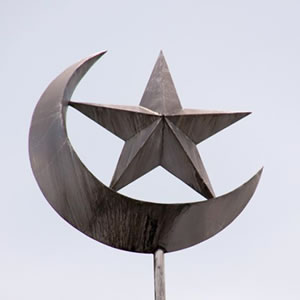
40.Is the Star and Crescent a symbol of Islam?
The crescent is not a symbol of Islam, but of the Ottoman Empire. The Ottomans are those tribes that moved to Turkey from east and middle Asia. They converted to Islam and built a huge Muslim Empire that ruled the whole Muslim world for centuries. When they took Islam as a religion they started using the lunar calendar, the calendar that was used by Muslims, Jews and early Christians. Even today, the flag of Turkey has a crescent on it. There was no crescent on any mosque built before the Ottomans era.
41.How are Noah, Abraham, Moses and Jesus considered Muslim Prophets, when Islam came 600-years after Jesus?
A Muslim is essentially a person who believes in one God.
All of the prophets of God preached the message of 'Monotheism' (they all called people to the worship of one God). Based on this fact, they are considered 'in-essence', in terms of their basic beliefs to be Muslim.
42.Can Muslims eat Pork?
The Muslim’s diet, like all other aspects of his or her life, is governed by divine law. Muslims (male and female) implement the commandments of Islam because the fundamental concept of Islam is submission to Allah, Almighty God, recognising that in His infinite knowledge, He knows what is best for His creation.
This passage also clearly prohibits the consumption of meat and other products derived from both wild and domestic pigs, including pork, bacon, and ham.
Furthermore, it is not only Muslims who refrain from eating pork, with both Jews and some Christian denominations refraining from doing so, and the Old Testament describing pork as unclean.
43.Do Muslims believe in a God?
Yes, Muslims believe in Allah(God)
Muslims believe that Allah is the all-powerful Creator of a perfect, ordered universe.
He is transcendent and not a part of his creation. He is all-powerful, absolutely Just and He is First, Last, and Everlasting; He was when nothing was, and will be when nothing else remains. Also, There is no other entity in the entire universe worthy of worship besides Him.
This belief in God is how one becomes a Muslim and is similar to the first commandment of Christianity and Judaism: You shall have no other gods before Me.
The Quran presents this belief in Allah as:
Say He is Allah,the One,
Allah the Eternal,Absolute;
He does not beget,not nor is He begotten,
And there is none like Him.
Al-Ikhlas(1:1-4)
44.In Islam, can God become a Man?
God is perfect and He is all powerful. Both Muslims and Christians accept that this is true. The ontological term for this is that God is "immutable" or absolute in His perfect nature. In the Christian faith, God's incarnation is seen as a manifestation of His power, whereas in Islam it is seen as the changing of God's nature. If God is perfect, and God's nature changes, how can He be perfect?
It would have to mean that He was not perfect before and is now perfect, which would not make Him God or that He was perfect before and is now not perfect, which would also not
make Him God.
If God is perfect, then there is no need for Him to become anything, so that He can grant us salvation. Since He's already perfect, loving and merciful, why would He need to change His nature to a weaker, human nature to grant us salvation? That's a contradiction. Therefore, when the Christian argues that God changing His nature makes Him perfect, this is not the case. They need to think before they speak.
If God is perfect and you add something to His nature, does that mean He was not perfect before? Which means He was not a God before this addition?
If God is perfect and you add something to His nature, that would mean He lacked something before and thus could not be a God.
45.Does the Quran encourage violence against the disbelievers (non-Muslims)?
The historical context is that this Quran verse was revealed at the Battle of Badr, a battle in which the pagans of Makkah traveled over 200 miles to destroy the Muslims of Madinah. The Pagans of Makkah had an army of about 1000 while the Muslims were only 300 followers. Muhammad and his followers had suffered severe persecutions and torture for 13 years in the city of Makkah. Having fled from Makkah to the safety of Madinah, they found that they were once again threatened.
It is obvious from historical and textual context therefore that this Quran verse does not promote the killing of innocents.
46.Does Islam encourage violence?
No. Islam forbids violence. It allows for defensive war where if Muslims are attacked first, then they are allowed to fight back.
47.Why should non-Muslims pay the Jizya (tax)?
This Quran verse refers to the Jizya, a tax levied on non-Muslims living in an Islamic State. Also, Muslims would have to pay the Zakah (charity tax) to the Islamic State. It is universally agreed that any civilized government or system requires residents to financially contribute towards its running. In return, the state offers basic services such as education, security, welfare, protection, amenities etc.
48.Are Muslims told to kill polytheists in the Quran?
This Quran verse is often quoted out of context. The preceeding Quran verses inform us there was a war treaty between the Muslims and pagan Arabs, which the pagans of Arabia broke.
Therefore this verse applies to a very specific historical event and applied only to those who broke the agreement.
Naturally, in war violence is expected. If country A declares war with country B because a peace treaty was violated, then both countries will expect their soldiers to kill or be killed.
49.Can the Muslims have non-Muslim friends?
In this verse, the words “Awliya”- plural- or “wali” – singular- has been (badly) translated as “friends” or “friend”; however, the more appropriate translation would be a “guardian, protector, or advocate”. Muslims are to be advocates and protectors for each other. And friends with everyone.
Muhammad was kind to the pagans of Mecca and fought them only when they fought him. He made treaties with the Jews of Madinah and honored the treaties until they broke them. He received the Christians of Najran with kindness in Madinah. They argued with him about Islam, but he treated them with honor and respect.
Some translate this verse to mean that Muslim should not take the Jews and the Christians for friends who are exclusively friends of each other at the exclusion and detriment of the Muslims, as is seen in Zionism and the Islamophobic lobby.
50.Does the Quran encourage Muslims to kill non-Muslims?
This verse was revealed about the Battle of Badr. The pagans of Mecca travelled more than 200 miles to Madinah with an army of about 1000 to kill the Muslims who numbered around 300. The Prophet Muhammad and fellow Muslims had suffered severe persecution, torture and even murder of their brethren for 13 years in the city of Mecca at the hands of these very same pagans.
And once the Muslims had fled Mecca and found a sanctuary in the city of Madinah, they were followed by the pagans of Mecca. By this verse God gave the order to Muslims to fight to defend their lives and faith, as they had previously been forbidden from defending themselves.
51.Why should non-Muslims pay a Jizyah tax?
These verses are also historical in context. They are about the Battles of Mu'tah and Tabuk.
These verse were in reference to The Byzantine Empire instigating war against the Muslims. They murdered an ambassador of Muhammad who was carrying a message to the ruler of Busra. The Chosroe of Persia even ordered his commander in Yemen to kill Muhammad, and they mobilized their forces to fight the Prophet. The Muslims confronted them.
There are many people who misunderstand over the Jizyah (a tax on non-Muslims living under the protection of a Muslim authority) claiming it is discriminatory. But the truth is that Muslims are not exempt from taxes, they just go by a different term.
The tax collected from non-Muslims is only imposed on adult males. It exempts them from military service; affords them protection under the law; and freedom to practice their religion. And Muslim taxes go to welfare programs.
52.Can the Muslims be harsh to non-Muslims?
This verse is speaking about the hypocrites who were among the Muslims in the time of Muhammad. The 'unbelievers who are near you' were, in actuality, non-Muslims posing as Muslims who sought to corrupt the believing Muslims from within. The instruction was to fight them (here, 'fight' means to resist the hypocrites’ skepticism, as we will see in the next verse) without preferential treatment for the social or economic standing.
53.Does the Quran encourage ill-treatment of non-Muslims?
The 'disbelievers' in this verse refers to those who persecuted and attacked the Muslims. This is not a verse directing Muslim to just go out and be awful to non-Muslims.
In fact there is a lot in the Quran and hadith collections that command Muslims to be compassionate and kind to all of God's creation. One such hadith states: Whoever is deprived of gentleness is deprived of all good. (Muslim, Abu Dawood)
It is also reported by Abu Dawood (a hadith collection) that Muhammad said, 'Beware! Whoever is cruel and hard on a non-Muslim minority, or curtails their rights, or burdens them with more than they can bear, or takes anything from them against their free will; I (Muhammad) will complain against the person on the Day of Judgement.'
54.Why do Muslims say non-Muslims will go to Hell?
One of the basic teachings of Islam is that God does not have a favorable opinion of those who knowingly deny His right to be worshiped alone (as He alone is responsible for our creation, our sustenance, and our judgement) and reject any of His messengers.
This is not to say that there will be conveyor belts for each religion, and we just jump on and go to either Heaven or Hell according to what we call ourselves. Each person will be judged based on their understanding of God's message, as well as his or her capability and intentions to follow the path to God as best he or she could.
Muslims are not allowed to say that someone will go to hell just because they call themselves a Christian, Jew, or Polytheist. Muslims are not allowed to speak without knowledge. And each person's destination in the Hereafter is known only to God.
It is interesting to note that some people of different faiths insist on telling everyone who does not go to their specific place of worship that they will certainly be going to Hell (knowledge they do not have). But when they see this Quran verse, they are upset by it.
55.Why do Muslims sacrifice livestock (goat, sheep, cow etc.) on Eid Al-Adha?
The animal sacrifice is to honor the willingness of Abraham to sacrifice Ishmael, his eldest son, as an act of submission to God's command. At the point of sacrifice, God intervened and replaced his son with a ram (male sheep) which had been slaughtered instead.
Abraham had passed the test by his willingness to carry out God's command
56.Why did God send so many prophets?
God sent thousands of prophets with the sole message to worship the one, true God (the Creator) and not worship Creation, such as other men, prophets, spiritual leaders, trees, water, fire, animals, weather, money etc.
57.How did God send his revelation to us?
The Angel Gabrial (Jibreel) was tasked with conveying God's message to His prophets
58.What is the basic teaching of Islam about God?
Islam teaches that there is one, and only one, God Who is the Creator and Controller of the entire universe. He is unique in every respect, and there is nothing which bears any likeness to Him. He is the Knower of all things, and has full power over the whole of creation. He does not stand in need of anything at all, while everything is totally dependent on Him. He possesses all the perfect qualities, and man should worship Him, and Him alone.
59.Does Islam give any arguments to prove the existence of God?
The Holy Quran gives three kinds of arguments on this point.
Firstly, it refers us to the physical world which shows great order and arrangement, works according to laws, and where everything has a set purpose in the whole scheme of things. There is also immense beauty in nature which attracts man's heart. Science is discovering more and more of these characteristics of the world all the time. So behind this highly purposeful and beautiful working of nature must be One, single Intelligence of great beauty and attraction.
Secondly, the Quran tells us about the close and deep connection between God and the inner nature of every person. There is an in-built desire in each and every person to search for something higher than oneself, and when in difficulties a person instinctively wants to call upon a Hidden Power to help him.
Thirdly, and most convincingly, Prophets and men of God appeared in every nation in the world and showed their people the reality of God through their teachings and works. Just as most of us learn about science not by making all the discoveries ourselves, but by accepting the work and evidence of those who devote themselves to the study of science, similarly the proof of the existence of God is provided by the lives of the great luminaries whom God sent all over the world for this very purpose.
60.Other religions also teach the existence of God. Is there any difference between their teaching and the Islamic concept of God?
The first major difference is that Islam teaches the absolute one-ness of God, with Whom no one can share in Divinity. No idol or heavenly object, nor any religious or spiritual teacher, can possess some Divine power or attribute.
Secondly, Islam teaches the highest conception of God, and does not accept any limitation to His power and knowledge, while other religions set limits to Him. For instance, Islam rejects the Hindu belief that God is not the Creator of matter and souls but exists alongside them. It also rejects the Christian doctrine that God is unable to forgive sins unless He punishes someone, and so He sent His 'son' to suffer the punishment for the sins of all humanity. Moreover, a son is needed to take the place of the father when the father dies, and clearly this cannot apply if God is perfect.
Thirdly, Islam refutes the idea that any human being, however great, was a 'manifestation' of God on earth, or a Divine incarnate.
61.What is a prophet or messenger of God?
A prophet or messenger of God is a human being to whom God gives His guidance and whom He charges with the task of conveying that guidance to the people, so that they may do good and avoid evil.
62.Christianity and Hinduism revere their religious figures as gods or incarnations of God
According to Islam, all these righteous persons were mortal, human prophets of God, like Muhammad, having the same needs that every human being has. They all eventually died, as everyone must.
There are several reasons why they have come to be revered by their followers as 'gods'. One is that their words were misunderstood by the later generations, who mistook their figurative expressions in a literal sense. Another is that the details of their lives were not preserved accurately, and therefore a great many myths have grown up around them, and their works and deeds have been much exaggerated.
63.Is Allah the Moon-God?
Robert Morey, a Christian pastor first claimed Allah was a pagan Moon God. This is a false claim
64.Do Muslims believe in a God?
Yes, Muslims believe in Allah(God)
Muslims believe that Allah is the all-powerful Creator of a perfect, ordered universe.
He is transcendent and not a part of his creation. He is all-powerful, absolutely Just and He is First, Last, and Everlasting; He was when nothing was, and will be when nothing else remains. Also, There is no other entity in the entire universe worthy of worship besides Him.
This belief in God is how one becomes a Muslim and is similar to the first commandment of Christianity and Judaism: You shall have no other gods before Me.
The Quran presents this belief in Allah as:
Say He is Allah,the One,
Allah the Eternal,Absolute;
He does not beget,not nor is He begotten,
And there is none like Him.
Al-Ikhlas(1:1-4)
65.How many prophets did God send?
According to sources, God sent 124,000 prophets to guide mankind
66.In the Bible, God says "For God so loved the world, that he gave his only Begotten son"
The words "Begotten" and "Son" are not accurate. View Jesus is the Son of God for more information.
In the Quran, God says:
"They say: (God) Most Gracious has begotten a son! Indeed ye have put forth a thing most monstrous! At it the skies are ready to burst, the earth to split asunder, and the mountains to fall down in utter ruin, That they should invoke a son for (God) Most Gracious. For it is not consonant with the majesty of (God) Most Gracious that He should beget a son." (Quran 19:88-92)
67.According to Apostle Paul, why did God give Jews the Torah?
Paul claimed God gave Jews the Torah so that they could be saved later on by believing in Jesus Christ. This was God's divine plan.
68.Does the resurrection of Jesus prove he is God?
No. Jesus himself raised people after their death:
1. Jairus' daughter (Mark 5:35-43)
2. Son of a widow at Nain (Luke 11:11-17)
3. Lazarus, who was dead for four days (John 11-1-44)
Furthermore, the Old Testament shows women received their dead by resurrection (Hebrews 11:35)
Elijah raised a widows son from death (I Kings 17:17-24)
Therefore, the resurrection itself would not make Jesus unique or divine even.
69.How did Apostle Paul break Gods Law?
Two of the most demanding requests made by God of all faithful Jews was:
1. Circumcision of males as a sign of covenant
2. Ritual Purity - Both physical purity and dietary, careful regulation of what foods passed the lips
By rejecting the Torah, Paul broke away from God's requests.
70.How did the Sun-God manifest itself?
The Sun-God had many manifestations including:
* Apollo or Dionysus among the Greeks
* Hercules among the Romans
* Mithras in Persia
* Adonis and Attis in Syria
* Phrygia, the Osiris, Isis and Horns triad (Trinity) in Egypt
* Baal, Astarte and Tammuz triad (Trinity) among Babylonians
* Jesus Christ the 'Son-of-God' (Sun-God?)
71.How were the Triadic or 'Trinity-like' Pagan Gods presented?
The pagan Triadic dieties were shown as a single-head with 3 faces, 3 mouths but only 4 mouths. Such images were preserved across the Roman Empire.
72.Who was Mithras, the Sun-God?
Long before Jesus arrived, the Sun-God Mithras was worshipped.
* Mithras was said to have been a great mediator between God and
humanity
* Mithras was born of a virgin in a cave on December 25th
* Mithras travelled far and wide with 12 disciples
* Mithras died in the service of humanity.
* Mithras rose again from the tomb, and his resurrection was
celebrated with great rejoicing.
* His great festivals were the Winter Solstice and the Vernal
Equinox.
* Mithras was called Saviour and sometimes figures as a lamb.
People were initiated into the cult through the baptism of blood
73.Who was Dionysus, the Greek God of Wine?
* Dinoysus, the Greek God also known as Bacchus was born on
December 25th
* Dinoysus' mother was a virgin called Demeter
* The world was full of evil, so the GOD of Gods was called on
to save humanity
* The prayer was accepted by Jupiter who declared his Son
would redeem the world from its misery
* Dionysus known as his only begotten-Son, was sent as the
Saviour
* The shedding of Dinoysus' blood was symbolized in his gift
of wine to humanity
74.Who was the Attis God?
* Attis was born of a virgin named Nana
* Attis bled to death on a pine tree and his blood renewed the
fertility of the earth; bringing life to humanity
* He rose from the dead and this event is celebrated on 24th
March when Attis' image is attached to a pine-tree
* Attis' image was placed in a tomb, but the tomb was later
found to be empty and so the festival of resurrection was
celebrated
75.Were the Gods sacrificed?
* Horus - In Egypt, in the Heb-Sed festival, the powers of Pharaoh
(Horus incarnate) were tested. If found weak, Horus was expected to
sacrifice himself by donating his blood to the soil
* Kronos - A man was sacrified annually at the Phoenician
feast of Kronos. Kronos had a son, Ieoud who he sacrificed. Ieoud
was known as 'the only begotten son of his Father'
* Tammuz - A popular Syrian saviour-God born of a virgin
was killed and rose again every spring. Wherever Tammuz was
worshipped a human victim in royal robes was killed and eaten, so
his body and blood might bring salvation to the community.
76.Who was the Tammuz God?
Tammuz was a popular Syrian saviour-God who pre-existed Jesus
Christ yet shared a number of similarities:
* Tammuz was born of a virgin
* Tammuz was killed and rose again every spring.
* Wherever Tammuz was worshipped, he was celebrated with a
human victim in royal robes who was killed and eaten. This was so
the sacrifice, his body and blood might bring salvation to the
community
* One of the chief centres of Tammuz worship was Bethlehem,
said to have been the birthplace of Jesus
* Tammuz was called 'the Carpenter', a title related to the
'Architect' of the universe. Jesus too was called the 'son of the
carpenter'
* Tammuz was said to have entered Jerusalem riding two asses,
because this represented the passage of the sun at the summer
solstice through the sign of Cancer (two asses star-sign)
* In the gospel of Matthew, Jesus enters Jerusalem on two
animals.
Tell ye the daughter of Sion, Behold, thy King cometh unto thee,
meek, and sitting upon an ass, and a colt the foal of an ass.
(Matthew 21:5)
(Matthew 21:5)
77.Who was the Babylonian Baal God?
Details of the Babylonion Baal or Bel God were found by German
excavators in 1904 at the site of the ancient city of Ashur.
* Details of Baal's capture and his trial in the House on the
Mount
* Baal's torture and being led away to his death
* The city broke out in fighting
* Baal's clothes were carried away
* A woman wiped away blood from the weapon thrust into his
heart
* A weeping woman came to lament him at the 'Gate of Burial'
* Baal was brought back to life at the spring equinox
78.Why are their so many similarities between Jesus Christ and all the pagan Gods?
It is highly likely the reason why the Church priests burned and destroyed the earlier records of pagan Gods was to hide the evidence for the real origins of their own Christian mythology.
79.What is the God of the Old Testament like?
The God of the Old Testament is a jealous, bloodthirsty, vicious God that mercilessly commanded horrific attrocities like, for example:
Killing every human on the planet except the handful that went with Noah.
Moses commanding his people to shed each others blood as atonement for creating and worshiping the golden calf
The genocide of the people in the promised land when the Hebrews finally ended their 40-year stay in the dessert. Under the command of God, they wiped out whole cities, killing every man, woman and child.
80.In Islam, can God become a Man?
God is perfect and He is all powerful. Both Muslims and Christians accept that this is true. The ontological term for this is that God is "immutable" or absolute in His perfect nature. In the Christian faith, God's incarnation is seen as a manifestation of His power, whereas in Islam it is seen as the changing of God's nature. If God is perfect, and God's nature changes, how can He be perfect?
It would have to mean that He was not perfect before and is now perfect, which would not make Him God or that He was perfect before and is now not perfect, which would also not
make Him God.
If God is perfect, then there is no need for Him to become anything, so that He can grant us salvation. Since He's already perfect, loving and merciful, why would He need to change His nature to a weaker, human nature to grant us salvation? That's a contradiction. Therefore, when the Christian argues that God changing His nature makes Him perfect, this is not the case. They need to think before they speak.
If God is perfect and you add something to His nature, does that mean He was not perfect before? Which means He was not a God before this addition?
If God is perfect and you add something to His nature, that would mean He lacked something before and thus could not be a God.
81.Jesus is the son of God as he had no Father?
If Jesus is the son of God, Adam is the greater son of God as he had no father and no mother
82.In John 1:1. Jesus claims to be God?
In the beginning was the Word, and the Word was with God, and the Word was God.
In actual fact, the 'Word' is God's wisdom and action and not as a separate deity, as is presented in the Old Testament:
And the word of the Lord was Joseph’s helper (Gen.39:2)
And Moses brought the people to meet the word of the Lord (Ex. 19:17)
And the word of the Lord accepted the face of Job (Job 42:9)
And the word of the Lord shall laugh them to scorn (Ps. 2:4)
They believed in the name of His word (Ps. 106:12)
83.The first of all the commandments is, Hear, O Israel; The Lord our God is one Lord:
Mark 12:28
28 And one of the scribes came, and having heard them reasoning together, and perceiving that he had answered them well, asked him, Which is the first commandment of all?
29 And Jesus answered him, The first of all the commandments is, Hear, O Israel; The Lord our God is one Lord:
30 And thou shalt love the Lord thy God with all thy heart, and with all thy soul, and with all thy mind, and with all thy strength: this is the first commandment.
Mark 12:28-30
84.All scripture is given by inspiration of God, and is profitable for doctrine, for reproof, for correction, for instruction in righteousness:
2 Timothy 3:16
Yet in other Bible verses, Paul claims he is not inspired by God.
12 But to the rest speak I, not the Lord: If any brother hath a wife that believeth not, and she be pleased to dwell with him, let him not put her away.
1 Corinthians 7:12
25 Now concerning virgins I have no commandment of the Lord: yet I give my judgment, as one that hath obtained mercy of the Lord to be faithful.
1 Corinthians 7:25
17 That which I speak, I speak it not after the Lord, but as it were foolishly, in this confidence of boasting.
2 Corinthians 11:17
85.And this is life eternal, that they might know Thee the only true God, and Jesus Christ, whom thou hast sent
John 17:3
One does not need to be a doctor of divinity to construe our point! The archaic pronoun "THEE", as use in the text, alludes directly and distinctly to the father; no Trinitarian would deny this.
That being the case, if we substitute subject "Father" for the pronoun "THEE" we get:
"And this is life eternal, that they might know FATHER the only true God, and Jesus Christ, whom thou hast sent"
86.For God so loved the world, that he gave his only begotten Son, that whosoever believeth in him should not perish, but have everlasting life.
John 3:16
Regarded as a core summary of the Christian faith, John 3:16 emphasizes God’s love for the world, the necessity of faith in Jesus, and the promise of eternal life over perishing. It frames the gospel as a free gift of salvation based on divine love and the incarnation of the Son.
87.And Jesus answered him, The first of all the commandments is, Hear, O Israel; The Lord our God is one Lord:
Mark 12:29
28 And one of the scribes came, and having heard them reasoning together, and perceiving that he had answered them well, asked him, Which is the first commandment of all?
29 And Jesus answered him, The first of all the commandments is, Hear, O Israel; The Lord our God is one Lord:
30 And thou shalt love the Lord thy God with all thy heart, and with all thy soul, and with all thy mind, and with all thy strength: this is the first commandment.
31 And the second is like, namely this, Thou shalt love thy neighbour as thyself. There is none other commandment greater than these.
32 And the scribe said unto him, Well, Master, thou hast said the truth: for there is one God; and there is none other but he:
33 And to love him with all the heart, and with all the understanding, and with all the soul, and with all the strength, and to love his neighbour as himself, is more than all whole burnt offerings and sacrifices.
Mark 12:28-33
29 And Jesus answered him, The first of all the commandments is, Hear, O Israel; The Lord our God is one Lord:
30 And thou shalt love the Lord thy God with all thy heart, and with all thy soul, and with all thy mind, and with all thy strength: this is the first commandment.
31 And the second is like, namely this, Thou shalt love thy neighbour as thyself. There is none other commandment greater than these.
32 And the scribe said unto him, Well, Master, thou hast said the truth: for there is one God; and there is none other but he:
33 And to love him with all the heart, and with all the understanding, and with all the soul, and with all the strength, and to love his neighbour as himself, is more than all whole burnt offerings and sacrifices.
Mark 12:28-33
The above Bible verses show Jesus explain to his disciples that the first and most important commandment is to worship God, the Creator.
88.How did the prophets Moses, Jesus, Abraham etc. call out to God?
Most likely the Aramaic or (later) Hebrew form of Allah, which would be Elah or El. These are the generic names, but we do not know if it became generic due to normative use.
89.In the beginning was the Word, and the Word was with God, and the Word was God
John 1:1
90.Why does God allow suffering?
In general, God has allowed suffering to remind us that we need to adhere to His laws. The other reason for suffering is as a punishment for those who have violated Gods laws. Ultimately, suffering is a test of our faith in God and we must endure it with patience and appreciation for those who are suffering even greater trials.
91.How did God address Abraham and his wives?
92.How did Jesus tell people to reach God?
By following his way by keeping the law
93.Did Jesus claim to be equal to God?
Jesus confirmed God was greater then him
94.Are Jesus and God the same?
Jesus makes a distinction between himself and God here
95.Was Jesus sent and approved by God?
Jesus was sent and approved by God.
96.Was Jesus a servant of God?
Although the King James Version (KJV) Bible claims "his Son Jesus". Modern, more reliable Bible translations use "his servant Jesus" for this verse.
97.What is the greatest of Gods commandments?
To love God will all our heart.
98.Was Jesus and God one?
Jesus was saying that He and the Father are of one nature and essence.
Christians claim that this statement proves that Jesus is one or united with God and, consequently, Jesus is God. However, when Jesus died, he did not give up the Father, he only gave up the ghost, "And Jesus cried with a loud voice, and gave up the ghost" (Mark 15:37).
This claimed unity was not available to Jesus when he died; what happened to this unity and why did not the Father die when Jesus died, if Jesus and the Father are one?
99.Does the Bible support the Trinity (3-in-1) God concept?
This verse mentions the Trinity (Father, Son, Holy Ghost) in the King James Version Bible (KJV). Bible critics agree the KJV verse is a forgery that was added into the Bible. More modern, accurate Bibles give different text:
And the Spirit is the witness, because the Spirit is the truth - (RSV Bible)
And it is the Spirit that beareth witness, because the Spirit is the truth - (ASV Bible)
For there are three that testify: the Spirit, the water and the blood; and the three are in agreement. (NIV Bible)
100.If God is so powerful, can he become a man?
The Bible tells us that God is not a man or son of man.
101.Do all Christians believe Jesus was God or Son of God?
The early Jewish-Christians such as the Ebonites, the Cerinthians, the Basilidians, the Capocratians, and the Hypisistarians. The Arians, Paulicians and Goths also accepted Jesus as a prophet of God.
Even in the modern age there are churches in Asia, in Africa, the Unitarian church, the Jehovah's witnesses, and even the majority of todays Anglican Bishops do not worship Jesus as God.
102.Did God sent Jesus with the task of guiding people?
The Bible confirms that God sent Jesus, and God gave Jesus a job to do, which he duly completed (i.e. called the 12 disciples and others to the worship of God)
One does not need to be a doctor of divinity to construe our point! The archaic pronoun "THEE", as use in the text, alludes directly and distinctly to the father; no Trinitarian would deny this.
That being the case, if we substitute subject "Father" for the pronoun "THEE" we get:
"And this is life eternal, that they might know FATHER the only true God, and Jesus Christ, whom thou hast sent"
103.Jesus was God as he had the power to forgive sin
104.What did God promise Abraham regarding Isaac?
God promised Abraham he would establish an everlasting covenant with Isaac. If this is true, then why would God tell Abraham to sacrifice his 'only son' Isaac? A sacrifice would nullify the covenant?
105.What does God say about Ishmael, Abraham's eldest son?
God promises to make a nation from Ishmael. This is the Arab nation from whom Muhammad came.
106.Did Jesus confirm the oneness of God?
Yes
107.Did Jesus call for worship of one God?
Yes
108.Did Jesus call for the worship of one God?
Yes
109.Does God make a distinction between clean and unclean animals?
In the account of Noah's Flood. God makes a distinction between clean and unclean animals, but it is obvious that Noah knew the difference.
110.Does God make a distinction between clean and unclean animals?
In the account of Noah's Flood. God makes a distinction between clean and unclean animals, but it is obvious that Noah knew the difference.
111.Does God define clean and unclean animals, i.e. those we can eat?
God goes into great detail and lists which animals were clean (kosher; fit for human consumption) and which are unclean (non kosher; not fit for human consumption)
112.Did Jesus claim to be God?
When read in context with previous verses 22-30, Jesus makes a distinction between himself and the Father. 'My Father who has given them to me, is greater than all'. Therefore, Jesus and the Father are not one in person, for the Father must be a distinct person from the Son, and the Son a distinct person from the Father. The use of the verb plural, "I and [my] Father", (esmen) , "we are one" is in nature and essence.
113.Who are the Gods in the Bible?
Emperor Constantine at the opening of the Council of Nicaea (325 AD) quoted Psalm 82:6 to remind the bishops that their high office should raise them above jealousy and party feeling.
The term 'God' was applied to people of power, authority and rule who were considered to have greater nearness to God than others - an appellation which implies that you are God's representatives on earth, and that your decision is, in an important sense, to be regarded as his.
114.Does God have many sons?
According to Bible scholars the term 'sons of God' here refers to kings, rulers or princes. The term is plural and points to many sons.
115.Jesus claimed to be God. The Jews must have understood this, as they accused him of blasphemy and were ready to stone him?
The Jews were mistaken. Jesus did not claim to be God, claim divinity or commit blasphemy. In the next verse (John 10:34), Jesus tells the Jews to read their own books, Psalm 82:6 where men in power, eminence, dignity, government, judges, magistrates, in high office posts are called Gods too. i.e. the term God does not literally mean GOD.
116.In John 9:38, Jesus is worshipped like a God?
According to verse 38, a blind man is healed by Jesus, and after seeing Jesus he worships him.
In the Codex Sinaticus, the oldest manuscript of John, dated to 330-years after Jesus, verse 38 is not recorded. The entire verse 38 appears as an additional footnote on the side of the Codex Sinaticus.
Verse 38 was inserted into the bible to prove that Jesus was worshipped and that he acknowledged and allowed the people to worship him.
This proves that the early Jewish-Christians did not interpret Johns gospel in the way we do today. At some point a scribe felt so strongly about the divinity of Jesus that he was compelled to include a footnote into the main text as an actual verse.
117.In John 20:28, Jesus is called a God?
This verse 28 is a statement by Doubting Thomas and is used to demonstrate that Jesus was viewed as God, and therefter worshipped as one.
In the earliest manuscript, Papyrus66, the words "and my God" are missing. So verse 28 reads "And Thomas answered and said unto him, My Lord".
It appears that later bible scribes came across a gap in the manuscripts and using guesswork and speculation, filled it with the words "and my God".
Unfortunately, it is impossible to know what the original words in the papyrus were.
118.Are children born believing in a God?
Led by two academics at Oxford University, the £1.9 million study found that human thought processes were 'rooted' to religious concepts.
The project involved 57 academics in 20 countries around the world, and spanned disciplines including anthropology, psychology, and philosophy.
The co-director of the project, Professor Roger Trigg, from the University of Oxford, said the research showed that religion was “not just something for a peculiar few to do on Sundays instead of playing golf”.
"We have gathered a body of evidence that suggests that religion is a common fact of human nature across different societies. This suggests that attempts to suppress religion are likely to be short-lived as human thought seems to be rooted to religious concepts, such as the existence of supernatural agents or gods, and the possibility of an afterlife or pre-life."
Videos on The Quran (90)
 55:58
55:58
524
1424908800
1786982790
Jesus in the Quran & Conflict Among His Early Followers
003358
1
351 views
9:35
351
1441324800
1786968379
On reading the Quran - Lesley Hazleton
000575
2
 8:34
8:34
377
1441324800
1787061874
Oldest Bible confirms the Quran. Jesus is a servant of God
000514
3
366 views
5:25
366
1441324800
1786960938
Mathematical Miracle Of The Quran
000325
4
 43:56
43:56
591
1441324800
1786987363
Jesus of the Holy Bible vs Jesus of the Quran (Islam) - Charles Lawson
002636
5
 2:17:40
722
1452384000
1787064725
Baby Jesus: His Birth in the Bible & the Quran - Shabir Ally vs Dean Canonico
008260
6
 3:29
3:29
1006
1456185600
1787010184
Were There Multiple Versions of the Quran? - Shabir Ally
000209
7
 7:25
7:25
311
1456185600
1787055935
Amazing Structure of The Quranic text, divine speech of God
000445
8
 10:50
10:50
714
1456185600
1786832773
Patterns of Numerical Values in the Quran - Shabir Ally
000650
9
 15:34
15:34
612
1480896000
1787062928
Why does the Quran call the Jews 'Apes'? - Tovia Singer
000934
10
 4:48
4:48
615
1482192000
1787003899
In the Quran, why does God call Mary, the Sister of Aaron? - Shabir Ally
000288
11
 10:51
10:51
746
1482192000
1787051383
Is the Quran REALLY The Word Of God? - Shabir Ally
000651
12
 11:08
11:08
581
1482192000
1787022299
Jesus' Birth in the Quran and Bible - Shabir Ally
000668
13
 41:38
41:38
797
1483401600
1786883773
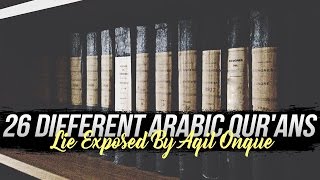
Is the Quran revealed in 26 different Arabic versions? - Radush Shubuhaat
002498
14
 36:26
36:26
914
1483401600
1786806751
In the Quran, why does God say Jews are more hostile towards Muslims than Christians? - Tovia Singer
002186
15
 57:06
57:06
572
1487808000
1787008317
The Quran Explained to School Kids - Nouman Ali Khan
003426
16
 2:12:31
587
1487808000
1786932310
The Quran or Bible: Which is the Word of God? - Zakir Hussain vs Samuel Green
007951
17
 19:37
19:37
655
1487808000
1786988764
Can you explain the violence in the Quran? - Mohammed Hijab vs Lizzie 2/2
001177
18
 1:54:56
609
1490659200
1786914144
Is the Quran the word of God or Man? - Shadid Lewis vs Tony Costa
006896
19

1045 views
6:50
1045
1490659200
1786889415
The Quran on the Crucifixion? - Shabir Ally
000410
20
 3:02
3:02
1194
1490659200
1786978228
The Torah and Gospel (Injeel) in the Quran - Shabir Ally
000182
21
 1:49:49
863
1493856000
1787033256
The Bible or the Quran? - Sadat Anwar vs Tony Costa
006589
22
 8:53
8:53
1433
1493856000
1787007935
The Quran on the Christian Trinity - Shabir Ally
000533
23
 30:04
30:04
848
1493856000
1787013331
The devil gave the Quran to Muhammad - Hamza Myatt vs Christian
001804
24
 1:32:52
607
1493856000
1786845222
The Quran: Eternal Living Miracle of God - Yasir Qadhi
005572
25
 47:42
47:42
837
1501895853
1786847092
The different 'Textual Variants' in the Quran - Mansur Ahmad vs Christian Preacher
002862
26
 9:43
9:43
1268
1508408027
1787008314
Ring Composition: Miracle Structure of the Quran
000583
27
 8:04
8:04
1133
1509201244
1786872649
What is worse, believing the Quran or living in Agnosticism? - Mohammed Hijab vs Atheists 3/3
000484
28
 20:00
20:00
1035
1509322320
1787014729
Can you explain the violence in the Quran? - Mohammed Hijab vs Lizzie 1/2
001200
29
 51:49
51:49
753
1509371117
1786979349
The Quran in Abrahamic Religions - Angelika Neuwirth
003109
30
 31:01
31:01
745
1509375504
1786917318
The Quran: An Historical, Literary and Theological Study - Angelika Neuwirth
001861
31
 10:44
10:44
531
1513042574
1786867844
Women's Rights in the Quran - Omar Suleiman
000644
32
 8:46
8:46
840
1514850621
1787009114
Ezekiel and Jethro in the Quran - Shabir Ally
000526
33
 54:29
54:29
481
1520100415
1786988211
Prove a single verse is corrupt in the Quran - Hamza Myatt vs Lizzie
003269
34
 29:19
29:19
933
1520421753
1787056794
Inheritance in the Quran is confusing. 1 man with 1 mother, 3 daughters and a poor grandad who gets nothing - Mohammed Hijab vs Atheist
001759
35
 35:05
35:05
680
1525150481
1786877876
Different Versions of the Quran Myth - Yasir Qadhi
002105
36
413 views
9:12:22
413
1527426547
1786923805
The Quran (English Translation) 1/2
033142
37

452 views
8:51:43
452
1527426538
1786864723
The Quran (English Translation) 2/2
031903
38
 2:42
2:42
573
1528480499
1787056627
Preservation of the Quran - Quran Miracle
000162
39
 16:14
16:14
674
1536780105
1787056961
I want to convert to Islam. Let me read the Quran first - Shamsi vs Bo
000974
40
 1:58:28
660
1540555842
1786839536
Which is more violent, the Quran or Bible? - Shabir Ally vs Douglas Jacoby
007108
41
 12:10
12:10
542
1544171132
1787055722
How the Quran was preserved for 1400 years? - Shabir Ally
000730
42
 20:22
20:22
980
1545161564
1786892349
Does the Quran insist on a Virgin Birth for Jesus? Early Christians did not believe it - Abu Layth
001222
43
 15:28
15:28
953
1550014609
1786988551
Does the Quran have Syriac or Aramaic Origins? - Hamza Tzortzis
000928
44
 14:57
14:57
873
1551644896
1786874466
God 'spoke' to me in the Quran and confirmed my Christian beliefs, not the Bible - Saajid Lipham
000897
45
 8:03
8:03
663
1554734194
1787026087
How the Quran was accurately preserved over 1400 years - OnePath
000483
46
 50:54
50:54
505
1554904392
1787058244
The Quran - Garry Wills (Chicago Humanities Festival)
003054
47
 3:51
3:51
546
1555582022
1787042142
What is the Quran? - Garry Wills (Emir-Stein)
000231
48
 26:02
26:02
667
1556073837
1786884667
Story of Moses and Khidr in the Quran - Nouman Ali Khan 1/6
001562
49
 25:37
25:37
714
1556074113
1787053694
Story of Moses and Khidr in the Quran - Nouman Ali Khan 2/6
001537
50
 19:53
19:53
461
1556074062
1786837015
Story of Moses and Khidr in the Quran - Nouman Ali Khan 3/6
001193
51
 20:32
20:32
562
1556076445
1786875366
Story of Moses and Khidr in the Quran - Nouman Ali Khan 4/6
001232
52
 23:14
23:14
543
1556074385
1787062085
Story of Moses and Khidr in the Quran - Nouman Ali Khan 5/6
001394
53
 18:21
18:21
656
1556074131
1786866187
Story of Moses and Khidr in the Quran - Nouman Ali Khan 6/6
001101
54
 14:13
14:13
791
1556139116
1786854579
Is the Quran really from God? - Shabir Ally
000853
55
 12:54
12:54
950
1556568047
1787026466
Mathematical Miracles in the Quran - Shabir Ally
000774
56

468 views
28:10
468
1558349276
1787044294
What the Quran Meant - Garry Wills
001690
57
 4:32
4:32
652
1564509337
1786892093
Must I follow the Quran to be Saved? - Leo Muhammad (NOI)
000272
58
 10:39
10:39
845
1566027471
1787061030
In Quran 2:23, the Challenge of the Quran was about overall Impact, not language, poetic eloquence or style - Abu Layth
000639
59
 1:21
1:21
549
1566004685
1786984382
Is the Quran Created or Uncreated? - Abu Layth
000081
60

698 views
42:40
698
1567373279
1786827565
27 Miracles in the Quran (Anime)
002560
61
 24:59
24:59
854
1570474099
1786852755
Prophet Moses & Al-Khidr: Story from the Quran
001499
62
421 views
3:20
421
1583925069
1787052628
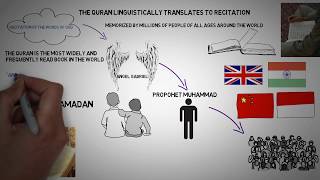
The Quran: Primary Source of Islam
000200
63
 5:28
5:28
551
1585308159
1786972773
Did a Sheep eat part of the Quran? - Farid Responds
000328
64
 6:22
6:22
630
1602172917
1786878799
Creation of the Universe in The Quran - Khalid Yasin
000382
65
 2:44
2:44
875
1603789888
1786856399
Jesus' Crucifixion is Unclear in the Quran - Adnan Rashid
000164
66
 30:03
30:03
788
1609160468
1786881518
The Quran, Moses, Pharaoh and the Secrets of Egypt - ManyProphetsOneMessage
001803
67
 1:04:48
761
1617277875
1786831612
Stories of Prophets: Prophets in The Quran - Yasir Qadhi 4
003888
68
 13:54
13:54
744
1629301571
1787013357
Importance of Jerusalem in the Quran - PfanderFilms
000834
69
 56:20
56:20
353
1652363349
1786851464
Exploring the Origins of The Quran - Gabriel Reynolds
003380
70
 32:06
32:06
691
1652399407
1786938348
Allah, God of The Quran - Gabriel Reynolds
001926
71
 1:07:04
756
1728782211
1787062181
Evolution of Arabic Language in The Quran | Munther Younes | Gabriel Reynolds
004024
72
 7:48
7:48
770
1749779644
1787052909
Is The Quran an Early Text? | Sean Anthony | MythVision
000468
73
2:02
910
1749784347
1786962356
Is the Quran 100% preserved perfectly? | Sean Anthony | MythVision
000122
74
9:50
798
1749787965
1786863880
How is Jesus presented in The Quran? | Sean Anthony | MythVision
000590
75
 21:33
21:33
194
1770901075
1786870111
Who wrote the Quran? What sources were used? | UsefulCharts
001293
76
 1:37:53
743
1771423436
1787033131
Relationship between Islam, Christianity and Judaism using The Quran | Gabriel Reynolds | Skepsislamica
005873
77

284 views
45:10
284
1772712705
1787056462
Adam, Eve and the 72 Virgins of Paradise in The Quran | Ana Davitashvili | Exploring Quran Bible
002710
78
 22:59
22:59
552
1773114450
1786856888
Moses Before the Quran and in the Bible | Gabriel Reynolds | Hassan Ahmad | Moses Series 2/2
001379
79
 48:35
48:35
177
1773772203
1786981070
Miracles of The Quran Explained | Religion Camp
002915
80
 1:13:26
987
1776190586
1787004385
Islamic Dilemma - Does The Quran confirm New Testament Bible? | Khalil Andani | History Valley
004406
81
 18:08
18:08
267
1776248447
1786979043
History behind the Compilation of The Quran | Hythem Sidky | Exploring-Quran-Bible
001088
82
 2:23:02
313
1777484461
1787039033
Development of The Quran's linguistics in Pre-Islam Arabia | Suleyman Dost | Skepsislamica
008582
83
 38:59
38:59
109
1777484490
1786970928
Early Development of The Quran | Lets Talk Religion
002339
84

107 views
18:48
107
1777506695
1787013441
Key Themes of the Quran | Peter Bolland
001128
85
 1:26:42
425
1778084814
1786878107
Modern Challenges in The Quran | Javad Hashmi | InspiringPhilosophy
005202
86
 45:30
45:30
919
1778084927
1786987367
Early Islam focused on GOD, not Muhammad or The Quran | Fred Donner
002730
87
 2:22
2:22
287
1778499967
1786567730
Importance of reading The Quran in chronological order (revelation order) | James Howard-Johnston | Skepsislamica
000142
88
 1:32:50
117
1784599551
1787037921
Early Muslims, Jews and Christians were called BELIEVERS in The Quran | Fred Donner
005570
89
 1:08:31
102
1785156025
1787061238
THE QURAN - Exploring Authorship, Chronology, Textual Variants, Transmission, Manuscripts, Authenticity, Muhammad and more | Gabriel Reynolds
004111
90