51:49
754 views
·
Last viewed: 23 hrs ago
Uploaded: 22 Jul 2013 (13 years ago) · Shared: 30 Oct 2017
Video Description (from Youtube)
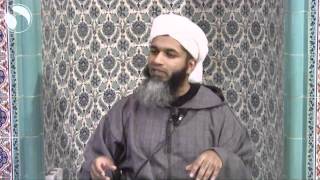
Lecture: "Relocating the Qur'an in "Abrahamitic Religions": Straight Trajectories or Dead Alleys?" The new opening of formerly Early Islamic Studies to a more comparative approach encompassing thetwo neighboring religions certainly marks an immense progress in academic self-reflection. Yet the concept, however inclusive, again risks to exclude important elements of the nascent Islamic Culture. The lecture advocates a still more extended concept: Late Antique Studies. 'Late Antiquity' should not be regarded primarily as an epoch but rather as a broad field of discourse, a Denkraum, where texts and notions originating from antiquity (Hellenic and Ancient Oriental) were re-read under new -- religious or at least individualist -- perspectives. Such new readings in Arabic language do not exclusively originate with the Qur'an but have not a few precedents in pre-Islamic poetry. The construct of a "Denkraum Late Antiquity" thus does no longer view Jahiliyya, pre-Islamic culture, as the other of Islam, but rather as the Arabian province of a vast space of debate involving diverse cultures, a space out of which the Qur'an and considerable other early Arabic literature emerged. A number of Qur'anic texts will be discussed as evidence.
Professor Angelika Neuwirth was educated in Classics and Oriental Studies at German and international universities (Italy, Iran, Israel). She taught at the Universities of Bamberg, Munich, Amman, Cairo and since 1991 holds the chair of Arabic Studies at the Freie Universität Berlin. From 1994-1999 she served as the director of the Orient Institut der Deutschen Morgenländischen Gesellschaft in Beirut and Istanbul. Her major fields of research are classical and modern Arabic literature, as well as Late Antiquity Studies. In several recent publications Neuwirth has try to vindicate the Qur'an as a Late Antique text, which is not "influenced by" but creatively in conversation with pagan, Christian and Jewish traditions, providing new answers to universally debated questions of its time. Neuwirth whose monograph "Scripture and the Making of a Community -- Literary Readings of the Qur'an" is presently in print, has been acknowledged for her novel approach to interreligious studies with several honorary doctorates and awards.
DISCLAIMER
All videos are shared for educational and information purposes only. All videos are hosted and viewable on Youtube servers. Video titles are generated using the original video title; overall content theme including actual dialogue and speech (Transcript); and A.I-based recommendations with a focus on SEO, keyword density, and internal search functions. The video title does not represent the views held by the Youtube video uploader, or any individual, organisation or business.
If you spot any mistake, omission or give feedback, kindly Contact Us with details
EXPLORE TOPICS :
ANGEL |
46
ANGELIKA NEUWIRTH |
4
THE QURAN |
303
ABRAHAMIC |
7
ABRAHAMIC RELIGION |
0
RELIGIONS |
22
 ABRAHAM
ABRAHAM
Overview & Key Concepts
What is Abrahamic Religion?
 The Abrahamic religions are a set of monotheistic religions that respect or admire the religious figure Abraham as a patriarch, namely Judaism
Christianity, and Islam. The term also often encompasses several smaller faiths. The religions of this set share doctrinal, historical, and geographic overlap that contrasts them with Indian religions, Iranian religions, and East Asian religions. The term, introduced in the 20th century, replaced "Judeo-Christian" to include Islam as an Abrahamic religion and acknowledge differences between Judaism and Christianity. The term Abrahamic religions (and its variations) is a collective religious descriptor for elements shared by Judaism, Christianity, and Islam. It features prominently in interfaith dialogue and civil discourse, as well as academic discourse.
Who is Angelika Neuwirth?
 Angelika Neuwirth (born 1943) is a professor of Quranic studies from Freie University, Berlin, Germany. She studied islamic studies, semitic studies
and classical philology at the Universities of Berlin, Tehran, Gottingen, Jerusalem, and Munich. Between 1994 and 1999 she was the director of the German Institute of Oriental Studies in Beirut and Istanbul. Neuwirth works as a professor in Freie University in Berlin and as a visiting professor at the University of Jordan in Amman, and her research focuses on the Quran, its interpretations, and modern Arabic literature in the Eastern Mediterranean, especially Palestinian poetry and prose related to the Arab-Israeli conflict.
What is The Quran?
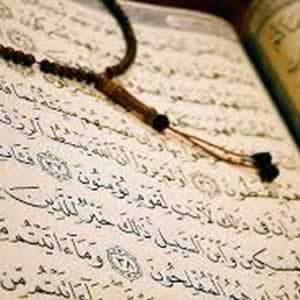 Quran, literally meaning "the recitation" is the central religious text of Islam, which Muslims believe to be a revelation from God (Allah). It is
widely regarded as the finest work in classical Arabic literature. The Quran is divided into chapters (surah in Arabic), which are then divided into verses (ayah). Muslims believe that the Quran was verbally revealed by God to Muhammad through the angel Gabriel (Jibril), gradually over a period of approximately 23 years, beginning on 22 December 609 CE, when Muhammad was 40, and concluding in 632, the year of his death. Muslims regard the Quran as the most important miracle of Muhammad, a proof of his prophethood, and the culmination of a series of divine messages that started with the messages revealed to Adam and ended with Muhammad.
What are Religions?
Religion is a range of social-cultural systems, including designated behaviors and practices, ethics, morals, beliefs, worldviews, texts, sanctified
places, prophecies, or organizations, that generally relate humanity to supernatural, transcendental, and spiritual elements. There is no scholarly consensus over what precisely constitutes a religion. It is an essentially contested concept. Different religions may or may not contain various elements ranging from the divine, sacredness, faith, and a supernatural being or beings.
The origin of religious belief is an open question, with possible explanations including awareness of individual death, a sense of community, and dreams. Religions have sacred histories, narratives, and mythologies, preserved in oral traditions, sacred texts, symbols, and holy places, that may attempt to explain the origin of life, the universe, and other phenomena. Religious practice may include rituals, sermons, commemoration or veneration (of deities or saints), sacrifices, festivals, feasts, trances, initiations, matrimonial and funerary services, meditation, prayer, music, art, dance, or public service.
<br><br>
There are an estimated 10,000 distinct religions worldwide, though nearly all of them have regionally based, relatively small followings. Four religions: Christianity, Islam, Hinduism, and Buddhism account for over 77% of the world's population, and 92% of the world either follows one of those four religions or identifies as non-religious, meaning that the vast majority of remaining religions account for only 8% of the population combined.
Frequently Asked Questions
1.Why should we believe the Quran if it comes 600 years after Jesus?
The Quran may have come 600 years after Jesus, but does that make it false? Jesus came 1600 years after Moses, does that make Jesus false? The underlying or main argument here is the time between one person and another, but as we can see, if time is a problem then Christians should reject the other Prophets and Messengers since they have a greater number of years between them.
The complete manuscript collections of the New Testament and Old Testament date to the 4th and 5th century, within 100 years of the Qur'an, if Christians want to reject the Qur'an because it is 600 years after Jesus then they must be consistent and also reject the New Testament.
It should be noted that the Church itself did not ordain or make it canon (law) that the New Testament should be scripture until 393 and 397 CE in the Carthaginian councils. With all of these evidences, and centuries between Jesus and the New Testament, then they must reject the New Testament first.
2.What is the Quran?
The Quran is the sacred scripture of Islam, which was revealed to Prophet Muhammad through the Angel Gabriel.
3.How was the Quran revealed?
The Quran was verbally delivered to Prophet Muhammad through the Archangel Gabriel; the Prophet would then repeat the precise words, which were simultaneously memorised and recorded by scribes.
4.What does the Quran say about Jews and Christians?
The Quran recognizes Jews and Christians as 'People of the Book' (Ahl al-Kitab), acknowledging that they were given previous divine revelations through prophets like Moses and Jesus. While it praises the righteous among them, it also critiques their theological developments, specifically rejecting the Christian doctrine of the Trinity and the divine sonship of Jesus.
5.How authentic is the Quran historically?
Islamic tradition holds that the text of the Quran has been preserved perfectly since its 7th-century revelation, with oral memorisation and scribal dictation acting as dual tracking methods. Mainstream secular historians and academic textual critics confirm that early surviving fragments (such as the Birmingham Quran manuscript) demonstrate remarkable textual stability, verifying its core compilation dates to within a few decades of the Prophet Muhammad's lifetime.
6.How was the Quran text kept authentic?
According to historical records, whenever a passage was revealed, the Prophet Muhammad immediately dictated the verses to literate scribes while simultaneously instructing the community to commit them to memory. This dual tracking framework where oral recitation by thousands of companions double-checked the physical parchment, leather, and palm leaves prevented textual isolation and provided a robust system of communal validation before the definitive text was standardized.
7.How was the Quran preserved?
Whenever a fragment of the Quran was revealed, Prophet Muhammad would immediately call one of his literate companions to dictate the exact verses and specify their precise placement in the text. To ensure perfect accuracy, the Prophet had the scribe repeat the verses back to correct any errors. Additionally, every year during Ramadan, he would recite the compiled revelation to the Archangel Gabriel. Verses were written down on highly diverse materials such as parchment, leather, and wooden tablets. While thousands of companions simultaneously committed the entire text to memory, creating a dual preservation system that kept the message authentic.
8.After the death of Muhammad, the Quran was changed?
This is false. The first three Caliphs, especially Uthman completed a critical analysis of the entire Quran text.
This was due to the rapid expansion of Islam in the first decade amongst people whose native language was not Arabic. So it was deemed essential the text retained its original purity.
Uthman sent copies of the standardized Quran text to the centre of the Islamic Empire. Today, copies attributed to Uthman exist can be found in Tashkent and Istanbul.
Apart from a few dialect variations in copying, the oldest documents known to the present day found throughout the Islamic world are identical; the same is true for documents preserved in Europe (fragments in the Bibliothèque Nationale in Paris which, according to the experts date from the 8th Century AD).
The minor dialect variations do not change the general meaning of the text. For example, the absence of diacritical marks could make a verb either active or passive and in some instances, masculine or feminine. This is a minor issue since the context indicated the meaning in many instances.
Therefore the Quran has been fully preserved since its revelation.
9.Is Muhammad mentioned in the Quran?
Yes, the name Muhammad is explicitly mentioned by name four distinct times in the text of the Quran (Surah Al-Imran 3:144, Surah Al-Ahzab 33:40, Surah Muhammad 47:2, and Surah Al-Fath 48:29), where he is formally designated as the Messenger of God and the 'Seal of the Prophets.' Additionally, he is addressed once by the name Ahmad in Surah As-Saff (61:6), inside a narrative where Jesus prophesies the future arrival of a messenger coming after him.
10.Does the Quran tell Jews and Christians to refer to their Scriptures (Torah and Bible)?
Yes, the Quran references previous scriptures in passages like Surah Al-Ma'idah (5:47), which tells the followers of the Gospel to judge by what God has revealed in it. From an academic perspective, this reflects the historical context of 7th-century Medina, where Jews and Christians were recognized as 'People of the Book' who possessed divine laws. While Islamic theology holds that modern biblical texts have suffered from textual corruption (tahrif), the Quran historically appeals to the core monotheistic truths remaining in those scriptures to validate Muhammad's message.
11.Does the Quran encourage violence against the disbelievers (non-Muslims)?
Academic Islamic scholarship clarifies that verses in the Quran addressing warfare against non-Muslims were historically revealed during active, state-level conflicts with the pagan tribes of Mecca and their military allies. Mainstream historians emphasize that these specific martial passages must be read within their situational context of self-defence and treaty violations, rather than as an open-ended command to attack peaceful non-Muslims.
The historical context is that this Quran verse was revealed at the Battle of Badr, a battle in which the pagans of Makkah traveled over 200 miles to destroy the Muslims of Madinah. The Pagans of Makkah had an army of about 1000 while the Muslims were only 300 followers. Muhammad and his followers had suffered severe persecutions and torture for 13 years in the city of Makkah. Having fled from Makkah to the safety of Madinah, they found that they were once again threatened.
From a historical and textual context this Quran verse does not promote the killing of innocents.
12.Are Muslims told to kill polytheists in the Quran?
Academic, context-based interpretations of the Quran indicate that verses regarding fighting (e.g., 9:5, 2:190) are historically situated within specific conflicts or treaty breaches rather than universal commands, emphasizing that the text generally prohibits indiscriminate violence, defends the sanctity of life (5:32), and allows for positive relations with peaceful non-Muslims (60:8).
13.Is their violence in the Quran?
Like many ancient religious scriptures, including the Hebrew Bible, the Quran contains passages dealing with warfare, military engagement, and state-level defense. Academic historians note that these specific verses were revealed chronologically during the 7th century to regulate battle conduct, enforce military discipline, and motivate the early Muslim community when they were heavily outnumbered by hostile pagan forces in Arabia.
14.Does the Quran encourage ill-treatment of non-Muslims?
No, orthodox Islamic theology strictly prohibits the unprovoked abuse, exploitation, or mistreatment of peaceful non-Muslims, explicitly warning in the Hadith literature that anyone who oppresses a religious minority will face divine complaints from the Prophet himself on the Day of Judgment. Scriptural texts command Muslims to uphold agreements, demonstrate broad compassion to all of creation, and engage in respectful theological dialogue.
15.Why does the Quran discourage the asking of questions?
This concept is rooted in Surah Al-Ma'idah (5:101), where the text advises believers not to ask about things that, if revealed to them, might cause them distress or unnecessary burden. Historical-critical and traditional scholars explain that this warning was directed at trivial, pedantic, or speculative inquiries that could over-complicate religious obligations, much like the extensive questioning regarding the sacrificial cow in the biblical and Quranic narrative of the Israelites, rather than discouraging sincere, honest questions aimed at seeking knowledge and spiritual clarity.
16.Other religions also teach the existence of God. Is there any difference between their teaching and the Islamic concept of God?
The first major difference is that Islam teaches the absolute one-ness of God, with Whom no one can share in Divinity. No idol or heavenly object, nor any religious or spiritual teacher, can possess some Divine power or attribute.
Secondly, Islam teaches the highest conception of God, and does not accept any limitation to His power and knowledge, while other religions set limits to Him. For instance, Islam rejects the Hindu belief that God is not the Creator of matter and souls but exists alongside them. It also rejects the Christian doctrine that God is unable to forgive sins unless He punishes someone, and so He sent His 'son' to suffer the punishment for the sins of all humanity. Moreover, a son is needed to take the place of the father when the father dies, and clearly this cannot apply if God is perfect.
Thirdly, Islam refutes the idea that any human being, however great, was a 'manifestation' of God on earth, or a Divine incarnate.
Videos on The Quran (90)
 55:58
55:58
527
1424908800
1787098342
Jesus in the Quran & Conflict Among His Early Followers
003358
1
351 views
9:35
351
1441324800
1786968379
On reading the Quran - Lesley Hazleton
000575
2
 8:34
8:34
379
1441324800
1787109020
Oldest Bible confirms the Quran. Jesus is a servant of God
000514
3
366 views
5:25
366
1441324800
1786960938
Mathematical Miracle Of The Quran
000325
4
 43:56
43:56
591
1441324800
1786987363
Jesus of the Holy Bible vs Jesus of the Quran (Islam) - Charles Lawson
002636
5
 2:17:40
723
1452384000
1787091256
Baby Jesus: His Birth in the Bible & the Quran - Shabir Ally vs Dean Canonico
008260
6
 3:29
3:29
1007
1456185600
1787098639
Were There Multiple Versions of the Quran? - Shabir Ally
000209
7
 7:25
7:25
312
1456185600
1787068458
Amazing Structure of The Quranic text, divine speech of God
000445
8
 10:50
10:50
715
1456185600
1787090596
Patterns of Numerical Values in the Quran - Shabir Ally
000650
9
 15:34
15:34
613
1480896000
1787080570
Why does the Quran call the Jews 'Apes'? - Tovia Singer
000934
10
 4:48
4:48
617
1482192000
1787092161
In the Quran, why does God call Mary, the Sister of Aaron? - Shabir Ally
000288
11
 10:51
10:51
754
1482192000
1787106904
Is the Quran REALLY The Word Of God? - Shabir Ally
000651
12
 11:08
11:08
583
1482192000
1787104984
Jesus' Birth in the Quran and Bible - Shabir Ally
000668
13
 41:38
41:38
798
1483401600
1787094574
Is the Quran revealed in 26 different Arabic versions? - Radush Shubuhaat
002498
14
 36:26
36:26
919
1483401600
1787150176
In the Quran, why does God say Jews are more hostile towards Muslims than Christians? - Tovia Singer
002186
15
 57:06
57:06
575
1487808000
1787142739
The Quran Explained to School Kids - Nouman Ali Khan
003426
16
 2:12:31
589
1487808000
1787095306
The Quran or Bible: Which is the Word of God? - Zakir Hussain vs Samuel Green
007951
17
 19:37
19:37
657
1487808000
1787128008
Can you explain the violence in the Quran? - Mohammed Hijab vs Lizzie 2/2
001177
18
 1:54:56
610
1490659200
1787084614
Is the Quran the word of God or Man? - Shadid Lewis vs Tony Costa
006896
19

1046 views
6:50
1046
1490659200
1787098028
The Quran on the Crucifixion? - Shabir Ally
000410
20
 3:02
3:02
1194
1490659200
1786978228
The Torah and Gospel (Injeel) in the Quran - Shabir Ally
000182
21
 1:49:49
865
1493856000
1787081064
The Bible or the Quran? - Sadat Anwar vs Tony Costa
006589
22
 8:53
8:53
1436
1493856000
1787141812
The Quran on the Christian Trinity - Shabir Ally
000533
23
 30:04
30:04
849
1493856000
1787148923
The devil gave the Quran to Muhammad - Hamza Myatt vs Christian
001804
24
 1:32:52
609
1493856000
1787106204
The Quran: Eternal Living Miracle of God - Yasir Qadhi
005572
25
 47:42
47:42
839
1501895853
1787139600
The different 'Textual Variants' in the Quran - Mansur Ahmad vs Christian Preacher
002862
26
 9:43
9:43
1270
1508408027
1787100016
Ring Composition: Miracle Structure of the Quran
000583
27
 8:04
8:04
1134
1509201244
1787078928
What is worse, believing the Quran or living in Agnosticism? - Mohammed Hijab vs Atheists 3/3
000484
28
 20:00
20:00
1036
1509322320
1787074140
Can you explain the violence in the Quran? - Mohammed Hijab vs Lizzie 1/2
001200
29
 51:49
51:49
754
1509371117
1787069583
The Quran in Abrahamic Religions - Angelika Neuwirth
003109
30
 31:01
31:01
746
1509375504
1787100172
The Quran: An Historical, Literary and Theological Study - Angelika Neuwirth
001861
31
 10:44
10:44
660
1513042574
1787128659
Women's Rights in the Quran - Omar Suleiman
000644
32
 8:46
8:46
842
1514850621
1787104508
Ezekiel and Jethro in the Quran - Shabir Ally
000526
33
 54:29
54:29
485
1520100415
1787098464
Prove a single verse is corrupt in the Quran - Hamza Myatt vs Lizzie
003269
34
 29:19
29:19
938
1520421753
1787149840
Inheritance in the Quran is confusing. 1 man with 1 mother, 3 daughters and a poor grandad who gets nothing - Mohammed Hijab vs Atheist
001759
35
 35:05
35:05
680
1525150481
1786877876
Different Versions of the Quran Myth - Yasir Qadhi
002105
36
414 views
9:12:22
414
1527426547
1787079185
The Quran (English Translation) 1/2
033142
37

452 views
8:51:43
452
1527426538
1786864723
The Quran (English Translation) 2/2
031903
38
 2:42
2:42
573
1528480499
1787056627
Preservation of the Quran - Quran Miracle
000162
39
 16:14
16:14
674
1536780105
1787056961
I want to convert to Islam. Let me read the Quran first - Shamsi vs Bo
000974
40
 1:58:28
660
1540555842
1786839536
Which is more violent, the Quran or Bible? - Shabir Ally vs Douglas Jacoby
007108
41
 12:10
12:10
542
1544171132
1787055722
How the Quran was preserved for 1400 years? - Shabir Ally
000730
42
 20:22
20:22
981
1545161564
1787088883
Does the Quran insist on a Virgin Birth for Jesus? Early Christians did not believe it - Abu Layth
001222
43
 15:28
15:28
954
1550014609
1787079654
Does the Quran have Syriac or Aramaic Origins? - Hamza Tzortzis
000928
44
 14:57
14:57
877
1551644896
1787105441
God 'spoke' to me in the Quran and confirmed my Christian beliefs, not the Bible - Saajid Lipham
000897
45
 8:03
8:03
666
1554734194
1787142566
How the Quran was accurately preserved over 1400 years - OnePath
000483
46
 50:54
50:54
505
1554904392
1787058244
The Quran - Garry Wills (Chicago Humanities Festival)
003054
47
 3:51
3:51
546
1555582022
1787042142
What is the Quran? - Garry Wills (Emir-Stein)
000231
48
 26:02
26:02
668
1556073837
1787097143
Story of Moses and Khidr in the Quran - Nouman Ali Khan 1/6
001562
49
 25:37
25:37
714
1556074113
1787053694
Story of Moses and Khidr in the Quran - Nouman Ali Khan 2/6
001537
50
 19:53
19:53
462
1556074062
1787103651
Story of Moses and Khidr in the Quran - Nouman Ali Khan 3/6
001193
51
 20:32
20:32
563
1556076445
1787100699
Story of Moses and Khidr in the Quran - Nouman Ali Khan 4/6
001232
52
 23:14
23:14
544
1556074385
1787136372
Story of Moses and Khidr in the Quran - Nouman Ali Khan 5/6
001394
53
 18:21
18:21
656
1556074131
1786866187
Story of Moses and Khidr in the Quran - Nouman Ali Khan 6/6
001101
54
 14:13
14:13
794
1556139116
1787109691
Is the Quran really from God? - Shabir Ally
000853
55
 12:54
12:54
950
1556568047
1787026466
Mathematical Miracles in the Quran - Shabir Ally
000774
56

468 views
28:10
468
1558349276
1787044294
What the Quran Meant - Garry Wills
001690
57
 4:32
4:32
653
1564509337
1787080350
Must I follow the Quran to be Saved? - Leo Muhammad (NOI)
000272
58
 10:39
10:39
845
1566027471
1787061030
In Quran 2:23, the Challenge of the Quran was about overall Impact, not language, poetic eloquence or style - Abu Layth
000639
59
 1:21
1:21
549
1566004685
1786984382
Is the Quran Created or Uncreated? - Abu Layth
000081
60

699 views
42:40
699
1567373279
1787088802
27 Miracles in the Quran (Anime)
002560
61
 24:59
24:59
854
1570474099
1786852755
Prophet Moses & Al-Khidr: Story from the Quran
001499
62
422 views
3:20
422
1583925069
1787098723
The Quran: Primary Source of Islam
000200
63
 5:28
5:28
551
1585308159
1786972773
Did a Sheep eat part of the Quran? - Farid Responds
000328
64
 6:22
6:22
633
1602172917
1787148598
Creation of the Universe in The Quran - Khalid Yasin
000382
65
 2:44
2:44
877
1603789888
1787097233
Jesus' Crucifixion is Unclear in the Quran - Adnan Rashid
000164
66
 30:03
30:03
789
1609160468
1787092729
The Quran, Moses, Pharaoh and the Secrets of Egypt - ManyProphetsOneMessage
001803
67
 1:04:48
763
1617277875
1787086068
Stories of Prophets: Prophets in The Quran - Yasir Qadhi 4
003888
68
 13:54
13:54
746
1629301571
1787148899
Importance of Jerusalem in the Quran - PfanderFilms
000834
69
 56:20
56:20
358
1652363349
1787095683
Exploring the Origins of The Quran - Gabriel Reynolds
003380
70
 32:06
32:06
694
1652399407
1787103219
Allah, God of The Quran - Gabriel Reynolds
001926
71
 1:07:04
756
1728782211
1787062181
Evolution of Arabic Language in The Quran | Munther Younes | Gabriel Reynolds
004024
72
 7:48
7:48
770
1749779644
1787052909
Is The Quran an Early Text? | Sean Anthony | MythVision
000468
73
2:02
912
1749784347
1787109003
Is the Quran 100% preserved perfectly? | Sean Anthony | MythVision
000122
74
9:50
911
1749787965
1787142852
How is Jesus presented in The Quran? | Sean Anthony | MythVision
000590
75
 21:33
21:33
195
1770901075
1787103003
Who wrote the Quran? What sources were used? | UsefulCharts
001293
76
 1:37:53
746
1771423436
1787108080
Relationship between Islam, Christianity and Judaism using The Quran | Gabriel Reynolds | Skepsislamica
005873
77

285 views
45:10
285
1772712705
1787103819
Adam, Eve and the 72 Virgins of Paradise in The Quran | Ana Davitashvili | Exploring Quran Bible
002710
78
 22:59
22:59
555
1773114450
1787113503
Moses Before the Quran and in the Bible | Gabriel Reynolds | Hassan Ahmad | Moses Series 2/2
001379
79
 48:35
48:35
178
1773772203
1787113027
Miracles of The Quran Explained | Religion Camp
002915
80
 1:13:26
989
1776190586
1787141968
Islamic Dilemma - Does The Quran confirm New Testament Bible? | Khalil Andani | History Valley
004406
81
 18:08
18:08
268
1776248447
1787079646
History behind the Compilation of The Quran | Hythem Sidky | Exploring-Quran-Bible
001088
82
 2:23:02
315
1777484461
1787144249
Development of The Quran's linguistics in Pre-Islam Arabia | Suleyman Dost | Skepsislamica
008582
83
 38:59
38:59
109
1777484490
1786970928
Early Development of The Quran | Lets Talk Religion
002339
84

108 views
18:48
108
1777506695
1787109746
Key Themes of the Quran | Peter Bolland
001128
85
 1:26:42
429
1778084814
1787144908
Modern Challenges in The Quran | Javad Hashmi | InspiringPhilosophy
005202
86
 45:30
45:30
920
1778084927
1787147516
Early Islam focused on GOD, not Muhammad or The Quran | Fred Donner
002730
87
 2:22
2:22
287
1778499967
1786567730
Importance of reading The Quran in chronological order (revelation order) | James Howard-Johnston | Skepsislamica
000142
88
 1:32:50
118
1784599551
1787072961
Early Muslims, Jews and Christians were called BELIEVERS in The Quran | Fred Donner
005570
89
 1:08:31
110
1785156025
1787109217
THE QURAN - Exploring Authorship, Chronology, Textual Variants, Transmission, Manuscripts, Authenticity, Muhammad and more | Gabriel Reynolds
004111
90
EXPLORE TOPICS :
ANGEL |
46
ANGELIKA NEUWIRTH |
4
THE QURAN |
303
ABRAHAMIC |
7
ABRAHAMIC RELIGION |
0
RELIGIONS |
22
ABRAHAM
ABRAHAM