18:35
585 views
·
Last viewed: 16 hrs ago
Uploaded: 01 Jul 2018 (8 years ago) · Shared: 07 Jul 2018
Video Description (from Youtube)
Brother Shamsi speaks to a visiting preacher and questions him on his logic of believing Jesus being god!?DISCLAIMER
All videos are shared for educational and information purposes only. All videos are hosted and viewable on Youtube servers. Video titles are generated using the original video title; overall content theme including actual dialogue and speech (Transcript); and A.I-based recommendations with a focus on SEO, keyword density, and internal search functions. The video title does not represent the views held by the Youtube video uploader, or any individual, organisation or business.
If you spot any mistake, omission or give feedback, kindly Contact Us with details
Overview & Key Concepts
What is The Bible?
 The Bible is a canonical collection of texts sacred in Judaism and Christianity. There is no single "Bible" and many Bibles with varying contents
exist. The term Bible is shared between Judaism and Christianity, although the contents of each of their collections of canonical texts is not the same.
<br><br>
Different religious groups include different books within their Biblical canons, in different orders, and sometimes divide or combine books, or incorporate additional material into canonical books.
<br><br>
The Hebrew Bible, or Tanakh, contains 24 books. Christian Bibles range from the 66 books of the Protestant canon to the 81 books of the Ethiopian Orthodox Church canon.
<br><br>
The first part of Christian Bibles is the Old Testament, which contains, at minimum, the 24 books of the Hebrew Bible divided into 39 books and ordered differently from the Hebrew Bible. The Catholic Church and Eastern Christian churches also hold certain deuterocanonical books and passages to be part of the Old Testament canon.
<br><br>
The second part is the New Testament, containing 27 books: the 4 Canonical gospels, Acts of the Apostles, 21 Epistles or didactic letters, and the Book of Revelation.
What is Christian?
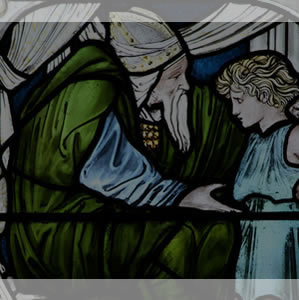 Christianity is a global religion centered on the life and teachings of Jesus Christ, who followers believe is the Son of God. It's a monotheistic
faith, meaning Christians believe in one God who exists in three co-equal persons: God the Father, God the Son (Jesus Christ), and the Holy Spirit. Christianity is based on the Bible, with the Old Testament and New Testament serving as sacred texts.
Who is Shamsi?
 A Speakers' Corner is an area where open-air public speaking, debate, and discussion are allowed. The original and most noted is in the north-east
corner of Hyde Park in London, England. Speakers here may talk on any subject, as long as the police consider their speeches lawful, although this right is not restricted to Speakers' Corner only. Contrary to popular belief, there is no immunity from the law, nor are any subjects proscribed, but in practice the police intervene only when they receive a complaint. Speakers' Corner is often held up to demonstrate freedom of speech, as anyone can turn up unannounced and talk on almost any subject, although always at the risk of being heckled by regulars.
Who is GOD?
In monotheism and henotheism, God is conceived as the Supreme Being and principal object of faith. The concept of God as described by theologians
commonly includes the attributes of omniscience (infinite knowledge), omnipotence (unlimited power), omnipresence (present everywhere), omnibenevolence (perfect goodness), divine simplicity, and eternal and necessary existence.
<ul>
<li>In theism, God is the creator and sustainer of the universe</li>
<li>In deism, God is the creator, but not the sustainer, of the universe</li>
<li>Monotheism is the belief in the existence of one God or in the oneness of God</li>
<li>In pantheism, God is the universe itself</li>
<li>In atheism, God is purported not to exist, while deemed unknown or unknowable within the context of agnosticism. </li>
</ul>
What is Sin?
In Abrahamic contexts, sin is the act of violating God's will. Sin can also be viewed as anything that violates the ideal relationship between an
individual and God; or as any diversion from the ideal order for human living. To sin has been defined as "to miss the mark".
<br><br>
Sins fall in a spectrum from minor errors to deadly misdeeds. Catholicism regards the least corrupt sins as venial sins which are part of human living and carry immediate consequences on earth, and, if unrepented for, more painful purgation, assuming the person is destined to heaven, as it is written in the formation letter "Purgatory", "most of the early Fathers of the Church speak of a cleansing fire, though we cannot tell whether this means actual or spiritual fire."
<br><br>
Conversely, sins of great evil are mortal sins which bring the consequence of hell if they are not addressed either through an act of perfect contrition or going to confession about them.
Frequently Asked Questions
1.Christianity and Hinduism revere their religious figures as gods or incarnations of God
According to Islam, all these righteous persons were mortal, human prophets of God, like Muhammad, having the same needs that every human being has. They all eventually died, as everyone must.
There are several reasons why they have come to be revered by their followers as 'gods'. One is that their words were misunderstood by the later generations, who mistook their figurative expressions in a literal sense. Another is that the details of their lives were not preserved accurately, and therefore a great many myths have grown up around them, and their works and deeds have been much exaggerated.
2.What is Christianity?
The platform defines Christianity as a religion that was originally and historically preached by Jesus himself, but argues that the mainstream version practiced across the world today has evolved into a system based almost entirely on the subsequent theological teachings, letters, and doctrines developed by the Apostle Paul.
3.How did the Early Jewish-Christians practise their religion?
The earliest Jewish-Christians strictly followed traditional Hebrew practices, including daily prayers, circumcision, rituals for purity, fasting, dietary laws, and temple, according to the source material.
4.Why did Christians turn away from the original message of Jesus?
By the time the New Testament Gospels (Mark, Matthew, Luke, John) were compiled, there was a growing movement to frame traditional Jewish practices as obsolete, driven by a desire to break free from strict Mosaic laws like circumcision, ritual purity, and dietary codes, which required portraying Judaism as an inferior path for the new faith to flourish.
5.What did early Jewish-Christians think of Apostle Paul?
Between 55 and 66 CE, early Jewish-Christian leaders in Jerusalem rejected Paul's teachings and challenged his authority, leading to a significant decline in his popularity.
6.When was Christianity born?
After 70 CE, Christianity became a new movement. Western Christian
writings after 70 CE are a product of that transformation. Christianity became a Mithras-type saviour cult whose hero was not a myth but a real man.
Anyone who questioned Jesus' divinity were viewed as ignorant and inferior, including early Jewish-Christians, Jews, Jesus' closest friends and even family.
7.Were the early Christians Jews?
Yes, Jesus and early followers were entirely Jewish, strictly observing traditional laws and customs.
8.Did Saul kill the early Jewish-Christians?
Before his conversion, Saul actively sought to imprison and execute early Jewish-Christians. Saul believed that he was serving God by finding Christians, throwing them into prison, and even executing them.
1 And Saul was consenting unto his death. And at that time there was a great persecution against the church which was at Jerusalem; and they were all scattered abroad throughout the regions of Judaea and Samaria, except the apostles.
2 And devout men carried Stephen to his burial, and made great lamentation over him.
3 As for Saul, he made havock of the church, entering into every house, and haling men and women committed them to prison.
[Acts 8:1-3]
2 And devout men carried Stephen to his burial, and made great lamentation over him.
3 As for Saul, he made havock of the church, entering into every house, and haling men and women committed them to prison.
[Acts 8:1-3]
9.How did the early Jewish-Christians view Jesus' resurrection?
The earliest Jewish-Christians did not believe that the resurrection meant Jesus was God, but rather that he was a righteous man approved by God through miracles, wonders, and signs. Based on texts like Acts 2:22-24, they maintained the theological view that Jesus had been raised by God, not that he was the Creator himself.
10.Who seperated Christianity from Judaism?
It was Apostle Paul's dramatic conversion and subsequent teachings that directly resulted in the permanent theological separation of Christianity from Judaism. Within mere months of Jesus' departure, the original human-centric and law-abiding message was fundamentally altered into an independent religious system.
11.What happened after Apostle Paul converted to Christianity?
Following his conversion, Paul did not immediately meet with the original Apostles in Jerusalem; instead, he went to Arabia and returned to Damascus, waiting three years before visiting Peter and James for only fifteen days, avoiding the others.
12.What dramatic experience made Apostle Paul convert to Christianity?
Paul experienced a sudden vision of a blinding light and a voice on the road to Damascus, but the multiple accounts recorded in the Book of Acts contain clear, direct contradictions regarding whether his companions also fell to the ground, and whether they actually heard the voice or saw the light.
13.How did Matthew (Gospel) support Apostle Pauline Christian doctrine?
The Gospel of Matthew, aimed at law-abiding Jewish-Christians, did not support Pauline doctrine and actually stood in direct opposition to it.
14.Where is Pauline Christianity today?
Pauline Christianity constitutes the majority of modern Christianity, though some scholars question if the early, law-observant Jewish-Christian church was more accurate than Paul's later, Trinitarian-focused theology.
15.How was Christianity made appealing to pagan idol worshippers?
Pope Gregory I (540-604 CE), a famous Christian leader encouraged accomodating pagan customs and beliefs. So if pagans worshipped a Tree or Spirit abiding in it, rather than shun the pagan worship, he urged priests to somehow link the worship to Jesus Christ, and allow them to continue their Tree or pagan idol worship.
16.Should Christians celebrate Jesus on 25th December?
Any believing Christian who is aware of the historical, pagan 'Sun-Baal' connections of this date should entirely avoid celebrating Christmas. It points to certain denominations, such as Jehovah Witnesses, who explicitly refuse to participate in the celebration for this very reason.
17.Does the Christian Trinity come from pagan Triadic dieties?
Yes, the core teachings of modern Trinitarian Christian churches do not come from Jesus, but were pagan three-in-one concepts that existed long before his arrival and were later adopted by Christians to make their doctrine highly appealing to idol-worshipping masses.
18.How did Christianity start?
The road from Jesus to the Christian religion that finally emerged in the fourth century, with its myth of Jesus as the son of God solidly in place, is a very long and twisty path.
Christianity was not born of an immaculate conception. It was the product of myriad moments of intellectual labor and negotiated social agreements by the people investing in the experiment.
This discovery has been difficult for many Christians to accept. That is because the traditional picture of Christian beginnings starts with a Jesus who knows in advance what is required of him and his disciples in order to establish the Christian religion.
19.Who were the early Christians?
The earliest followers of Jesus were entirely Jewish individuals who continued to observe traditional Mosaic law and temple customs. They did not immediately form a new religion, but were initially viewed as a messianic sect within Judaism.
20.What does the Quran say about Jews and Christians?
The Quran recognizes Jews and Christians as 'People of the Book' (Ahl al-Kitab), acknowledging that they were given previous divine revelations through prophets like Moses and Jesus. While it praises the righteous among them, it also critiques their theological developments, specifically rejecting the Christian doctrine of the Trinity and the divine sonship of Jesus.
21.Do Christians worship Mary?
Mainstream Christian denominations, including Catholics and Eastern Orthodox, explicitly state that they do not worship Mary as a goddess, as worship (latria) belongs strictly to God alone. Instead, they give her a high level of honor and veneration (hyperdulia) as the Mother of God (Theotokos), asking her to intercede and pray to God on their behalf.
Some Christians do worship Mary. Even today, the abstract of that is found in churches where she is called upon as THEOTOKOS in Greek which means 'Mother of God', God bearer, one who give birth to God.
There was an idea that Mary was not the mother of God and counsels tried to change her name from THEOTOKOS to CHRISTOTOKOS, or from 'Mother of God' to 'Mother of Christ' - but this change was rejected.
22.What did Apostle Paul achieve by his Christian conversion?
By adopting faith in Jesus, Paul effectively expanded a localized, strictly observant Jewish movement into a highly adaptable, universal religion accessible to all cultures. He utilized his unique background as both a learned Pharisee and a Roman citizen to systematically build an expansive network of legal-exempt Christian communities across multiple Roman provinces.
23.I am a Christian and I know my sins are forgiven and I am going to Heaven. Is this correct?
Mainstream Christian theology teaches that a believer can have absolute assurance of salvation and the forgiveness of sins through personal faith in the sacrificial death and resurrection of Jesus Christ.
In contrast, Islamic theology emphasizes that definitive assurance of entering Heaven remains unknown during worldly life, as final judgment belongs entirely to God, who balances infinite mercy with a strict accountability of an individual's faith and actions.
24.How did the Christian Trinity come about?
The New Testament gospels show Jesus selecting twelve apostles to lead his immediate followers, but he did not lay down a detailed blueprint for a complex institutional priesthood or administrative hierarchy. The elaborate structures, clerical offices, and distinct liturgical traditions seen in modern churches developed gradually over centuries as the movement adapted to Roman institutional frameworks.
The concept of a dual human and divine nature in the person of Jesus is known as the Hypostatic Union, an essential component of modern Trinitarianism.
Yet it was not until the Council of Chalcedon that we see the emergence of an official doctrine of the Trinity in a form that is recognisable with what Christian Trinitarians believe in today. This took place in the fifth century, over 400 years after Jesus!
The evangelical theologian and Professor Wayne A. Grudem sums this up as follows:
'A precise understanding of how full deity and full humanity' argues Grudem, 'could be combined together in one person was formulated only gradually in the church and did not reach the final form until the Chalcedonian Definition in 451 AD.
25.Does the Quran tell Jews and Christians to refer to their Scriptures (Torah and Bible)?
Yes, the Quran references previous scriptures in passages like Surah Al-Ma'idah (5:47), which tells the followers of the Gospel to judge by what God has revealed in it. From an academic perspective, this reflects the historical context of 7th-century Medina, where Jews and Christians were recognized as 'People of the Book' who possessed divine laws. While Islamic theology holds that modern biblical texts have suffered from textual corruption (tahrif), the Quran historically appeals to the core monotheistic truths remaining in those scriptures to validate Muhammad's message.
26.Do all Christians believe Jesus was God or Son of God?
The early Jewish-Christians such as the Ebonites, the Cerinthians, the Basilidians, the Capocratians, and the Hypisistarians. The Arians, Paulicians and Goths also accepted Jesus as a prophet of God.
Even in the modern age there are churches in Asia, in Africa, the Unitarian church, the Jehovah's witnesses, and even the majority of todays Anglican Bishops do not worship Jesus as God.
27.Why did early Christians have church synods and councils?
Early Christian bishops organized regional synods and ecumenical councils to systematically define orthodox Christian doctrines and combat widespread heresies. These massive assemblies were essential for creating a unified creed, standardizing the New Testament canon, and establishing clear administrative laws for a rapidly growing global church. Prominent gatherings, like the Council of Nicaea, were often financed and politically mandated by Roman emperors to secure empire-wide religious stability.
28.There is only one Bible with one Christian doctrine?
No, textual criticism shows the Bible consists of thousands of varying manuscripts rather than a single, uniform text. These textual differences, such as in Jude 1:5, have historically contributed to diverse theological interpretations within Christianity.
Bible versions translate verses with different explanations. For example, in JUDE 1:5, who saves and then destroys the people of Egypt?
17 Bible versions state the 'Lord' did
7 Bibles state 'Jesus'
1 Bible claims 'God' did
These differences give rise to different Christian theological views.
29.Does the Old Testament teach the Christian Trinity?
Mainstream biblical scholars and historians agree that the Old Testament does not explicitly teach the doctrine of the Trinity, nor did ancient Jewish communities possess a concept of a triune Godhead. There is no historical evidence in pre-Christian Jewish literature including the Hebrew text, the Dead Sea Scrolls, or ancient commentaries of a belief in a plurality of divine Persons. While Christian theologians retrospectively interpret certain plural expressions (such as 'Let us make man' in Genesis 1:26) as hints of the Trinity, ancient Judaism strictly maintained a unitarian monotheistic understanding of God.
30.What is the Christian Trinity?
Orthodox Christian theologians define the doctrine of the Trinity as the belief that the Father is God, the Son is God, and the Holy Spirit is God, existing eternally as three distinct Persons within one single, undivided divine Being. These three Persons are considered entirely co-equal in power and co-eternal in time, with the Son being understood as 'eternally begotten' of the Father and existing simultaneously as 100% God and 100% man. The platform notes that many modern Christians mistakenly believe they are practicing Trinitarianism simply by acknowledging the Father, Son, and Holy Spirit, without understanding the complex historical and philosophical mechanics required by the formal church dogma.
31.What do Christian 'Trinity' scholars say about the Old Testament?
Many theologians, including this analysis of Trinity dogma, note that the Old Testament does not explicitly contain the Trinity, which they believe was only fully revealed later.
The distinguished Trinitarian scholar Bertrand de Margerie in his book The Christian Trinity in History writes:
'Contemporary exegetes [Bible teachers] affirm unanimously that the Old Testament did not bring to the Jewish people a clear and distinct Revelation of the existence of a plurality of persons in God. In this they agree with the clear and frequent affirmation of Fathers such as Irenaeus, Hilary, and Gregory of Nazianzus: that the doctrine of the Trinity is revealed only in the New Testament.'
So any person who lived before Jesus' ministry did not have to believe in the Trinity to be saved because the Trinity is not mentioned in the Old Testament.
32.What do Christian scholars say about the Trinity?
Mainstream scholars acknowledge that the Trinity is not explicitly defined in the New Testament but was formulated later by combining various verses and theological concepts.
Scholars freely admit that the Trinity is never presented as a complete doctrine in the New Testament, but rather is built from scattered Bible verses.
In the New Testament there is no explicit statement of the doctrine
Evangelical Dictionary of Theology (p. 1112)
It is not a Biblical doctrine in the sense that any formulation of it can be found in the Bible
New Bible Dictionary (p.1221)
The New Testament does not present a systematic presentation of the Trinity. The scattered segments from various writers that appear throughout the New Testament reflect a seemingly accepted understanding that exists without a full-length discussion.
Holman Bible Dictionary (p.1372)
Theologians admit the New Testament does not define the Trinity. Furthermore, there is no clear teaching that salvation depends on the belief in the Trinity.
33.When did Catholic Christianity become official religion of Rome?
In 380 CE, under the Edict of Thessalonica issued by Emperor Theodosius I, Nicene (Catholic) Christianity officially became the state religion of the Roman Empire, leading to the institutional regulation of religious practices and the formalisation of a calendar of feast days like Christmas and Easter.
34.What happened to Christians who questioned their creed?
Once Catholicism became the official state religion of the Roman Empire in the 4th century, it became highly dangerous to question or deviate from imperial doctrinal definitions. Imperial authorities enforced a strict monopoly on thought by carrying out systematic book burnings, completely destroying the philosophical refutations written by early critics like Celsus and Porphyry. As a result, modern academic knowledge of these ancient counter-arguments is limited to surviving snippets quoted inside the church's own refutation books.
- Porphyry (3rd century philosopher) wrote a 15-volume refutation of Christianity, the gospels and resurrection
- Celsus (2nd century philosopher) rejected the impossible concept of the resurrection
Once Christianity was established as the state religion, it became dangerous, as a subject of Rome, to question the doctrinal version of events.
35.Can Christians eat swine and pork?
While modern Christian practice permits eating pork, the text notes that God explicitly prohibited the consumption of pig and swine meat in the Old Testament laws. The source argues that the New Testament passage often used to defend eating pork was originally a specific debate regarding whether unwashed hands made clean food unclean, rather than a lifting of the pork ban.
36.Many Christians believe that Jesus abolished the Old Testament dietary laws
Many Christians believe that Jesus abolished the Old Testament dietary laws. The dietary interpretation of Jesus' words (i.e. swine pig consumption) does not exist in the Textus Receptus Bible, the authoritative Greek New Testament text that was accepted by the Christian Church until about 100 years ago.
This parenthetic interpretation of Jesus words was obviously a comment that some Bible scribe wrote in the margin of the text. Later scribes accidentally or deliberately incorporated the marginal comment into the text itself, so the statement appears only in corrupted texts.
But the statement does not appear in the Textus Receptus, so the KJV says nothing about Jesus 'declaring all foods clean.'
God had clearly prohibited pig, swine and pork in the Old Testament. This verse was over whether or not 'unwashed hands' caused clean food to become unclean.
'Thus he declared all foods clean' is completely missing from the Textus Receptus, the authoritative Greek New Testament line used for centuries. It claims this widespread dietary interpretation was likely a later scribal note added to the margins of the text, which was subsequently mistaken for Jesus' actual words in corrupted versions.
37.What life did Apostle Paul lead before his miraculous conversion to Christianity?
Before his conversion, Paul was known as Saul and operated as a strict Pharisee and enforcer hostile toward early followers of Jesus. Academic historians note that he worked under the authority of the high priestly administration in Jerusalem to systematically suppress the growing messianic movement, believing he was protecting traditional Judaism from a dangerous heresy
38.Who was the founder of Christianity?
The platform asserts that Jesus was not the actual founder of Christianity as an independent world religion, noting that the vast majority of the New Testament text does not directly focus on the historical Jesus but is defined by Paul. Academic critical scholars agree that while Jesus initiated the original localized movement within Judaism, it was Paul's theological letters and universal missionary blueprint that systematically institutionalized the faith globally.
39.What did Apostle Paul do after his miraculous conversion to Christianity?
Following his Damascus vision, Paul records in his letters that he did not seek instruction from others, but immediately withdrew into the Arabian desert for a period of reflection. The platform notes that this independence significantly elevated Paul's personal status, allowing him to claim he received his theological mandate directly from a divine revelation rather than from Jesus' twelve original earthly disciples.
40.What happened after Rome chose Christianity as the state religion?
When the Roman authorities officially adopted Christianity in the 4th century CE, they institutionalised the Roman Catholic version of the faith, favoring the universal theological framework of Paul over the localized, law-observant traditions of the original disciples. Mainstream historians emphasize that this political alliance standardized a singular imperial orthodoxy across the Mediterranean world, systematically suppressing alternative theological perspectives.
41.Did Jesus ever preach Christianity?
No. Neither Jesus nor his twelve disciples had any intention of founding a new, separate religion, as they operated entirely within the confines of traditional Judaism. Mainstream historians and biblical scholars affirm that the historical Jesus viewed his messianic mission as a internal renewal of Israel's covenant, continuing to follow the Mosaic Torah and temple rituals rather than building a separate world religion.
42.What are the origins of Christian church music?
Saint Ambrose (334-397), a keen advocate of church music is credited with introducing it into Christian worship.
43.How did early Catholics learn about Christianity?
Early Catholics were taught Christianity by the priests, nuns and at Catholic schools - and not through Bible study. The priests role was to pass on Christian beliefs and practise to his congregation. The priest acted as an intermediary between God and the people; as mankind was regarded as inherently sinful.
Catholics were discouraged from individual Bible study and pushed towards conforming with traditional Church teachings.
44.When was the word 'Christian' first ever used?
When Paul was joined in his missionary by Peter, Antioch became the first outreach centre for the Gentiles; it was here the term 'Christian' was first used.
The author of Acts (Luke, the companion of Paul) is assigning the term Christian to the disciples, all of whom were observant and respectful of Jewish Law.
45.What did Apostle Paul do after he converted to Christianity, on the road to Damascus?
Following his conversion 1-3 years after the crucifixion, Paul vanished from the public eye before re-emerging 13 years later (47-60 CE) as a missionary to the Gentiles.
46.Was Jesus a Catholic Christian?
Historically, Jesus was a practicing Jew, and the original Jesus movement was a reform movement within Judaism . Conversely, the Catholic Church views Jesus' mission as universal, intended for the entire world, not just the Jewish people .
47.How did Early Christians view the Old Testament?
Early Christians considered the Old Testament 'God-breathed' and authoritative, but believed its ultimate meaning was only revealed through its connection to Jesus Christ, who fulfilled Israel's prophetic history.
48.In the past, how were the Christians viewed?
Paul's Christianity had a universal ambition; it aspired to bring salvation to the world.
Christianity had to reject the Hebrew representation of scripture, written in the obscure, provincial tongue only the Jews spoke, and to announce the miraculous new revelation of Septuagint, the eternal bible reincarnated in a language that everyone understood.
Multipart Video (2)
This video is part of a series as displayed below :In Ezekiel 18:21, the bible says God will forgive the Sinner if he repents - Shamsi vs Christian 1/2
In Ezekiel 18:21, the bible says God will forgive the Sinner if he repents - Shamsi vs Christian 2/2
Videos on The Bible (178)
 10:09
10:09
641
1420070400
1787064745
Prophet Muhammad and the city of Madinah in The Bible
000609
1
 1:29:23
461
1438041600
1787107301
Books Banned from the Bible (documentary, 2003)
005363
2

548 views
2:32:13
548
1438041600
1787095824
Prophet Job - The Bible (Full Movie)
009133
3
 16:07
16:07
109
1438041600
1787083399
The Historical Integrity of the Bible: GDM Show
000967
4
 1:20:41
530
1438041600
1787106967
How the Bible Led Me to Islam: The Story of a Former Christian Youth Minister - Joshua Evans
004841
5
 24:48
24:48
333
1438041600
1787143228
Adam, Eve and Seth - Stories from the Bible
001488
6
 8:15
8:15
439
1452384000
1787094733
Bible scholar reveals the truth about the Bible - Bart Ehrman
000495
7
 3:08:32
795
1452384000
1787097085
Parallel accounts in the Bible and Quran - James White vs Yusuf Ismail
011312
8
 2:38
2:38
675
1452384000
1787123080
Allah in the Bible - Moon God myth crushed by Arab Christian Shorrosh
000158
9
470 views
10:00
470
1452384000
1787096835
Prophet Muhammad in the Bible
000600
10
 2:17:40
723
1452384000
1787091256
Baby Jesus: His Birth in the Bible & the Quran - Shabir Ally vs Dean Canonico
008260
11
 12:41
12:41
351
1456185600
1787100567
Muhammed in the Bible 1/11 - Ahmed Deedat
000761
12
 33:53
33:53
472
1456185600
1787082176
What is the Bible and the Injeel? - John Fontain
002033
13
 2:20:29
395
1456185600
1786887968
Christian Dilemmas: Secret History of the Bible - Marshall Payn & Robert Price
008429
14
 1:29:16
273
1478649600
1787060565
The Bible's Missing Books? - Michael Kruger
005356
15
 16:29
16:29
752
1480896000
1787064422
How does Christianity establish Justice in the Bible? - Hashim vs Nathan
000989
16
 2:13
2:13
694
1480896000
1787082551
Is the Bible a Book of Peace? - Shabir Ally vs David Wood
000133
17
 1:40:17
282
1482192000
1787087707
Was Muhammad foretold in the Bible? - Zakir Hussein vs Samuel Green
006017
18
 2:15:54
271
1482192000
1787105992
Does the Bible refer to Muhammad? - Shadid Lewis vs CL Edwards
008154
19
 1:29:20
707
1482192000
1786549371
Does the Bible misquote Jesus? - Bart Ehrman vs James White
005360
20
 21:10
21:10
426
1482192000
1787115072
Contradictions in the Bible - Bart Ehrman
001270
21
 7:22
7:22
377
1482192000
1786505571
Gospel of Thomas: Why is it not in the Bible?
000442
22
 12:32
12:32
610
1482192000
1787120494
Constantine did not choose the Books of the Bible | ReligionForBreakfast
000752
23
 2:08:40
464
1482192000
1787005138
Is Muhammed prophesised in the Bible? - James White vs Zakir Hussain
007720
24
 1:39:52
304
1482192000
1787084525
Is Muhammad foretold in the Bible? - Adnan Rashid
005992
25
 0:44
0:44
303
1482796800
1787087551
Is Makkah (Mecca) in the Bible? - Zakir Naik
000044
26
 58:01
58:01
624
1482796800
1787123936
What does the Bible teach about Trinity? - Michael Skobac
003481
27

315 views
1:11:48
315
1482796800
1787044931
Islam In The Bible - Joshua Evans
004308
28
 1:18:56
819
1487808000
1787135809
Is the Christian Trinity from the Bible? - Tovia Singer
004736
29
 5:46
5:46
309
1487808000
1787092851
Does Jesus use violence in the Bible? - Steven Anderson
000346
30
 2:09:53
774
1487808000
1787063122
Are the the views of Jesus in the Bible correct? - Shabir Ally vs James White
007793
31
 2:35
2:35
216
1487808000
1787127056
How the Bible has changed over 2000 years - Business Insider
000155
32
 12:40
12:40
850
1487808000
1787121754
Is Trinity supported in the Bible? - Tovia Singer vs William Lane Craig
000760
33
 23:11
23:11
511
1490659200
1787102191
Can the Bible be trusted? - Hamza Myatt vs Christian
001391
34
 1:00:02
458
1490659200
1787111035
Is David and Muhammad a Prophet in the Bible? - Adnan Rashid vs Godwin
003602
35
 26:50
26:50
617
1490659200
1787071172
In Quran 10:94, God commands Muslims to study the Bible - Rizwan vs Aaron
001610
36
 1:33:26
380
1490659200
1787146088
Is Muhammad prophesied in the Bible? - Osama Abdallah vs Anthony Rogers
005606
37
 44:53
44:53
524
1490659200
1787105507
Misquoting Jesus: Who changed the Bible? - Bart Ehrman
002693
38
 1:49:49
865
1493856000
1787081064
The Bible or the Quran? - Sadat Anwar vs Tony Costa
006589
39
 5:53
5:53
686
1493856000
1787133566
In John 7:53, the Woman caught in Adultery was added to the Bible - Lee Strobel - Ankerberg Show
000353
40

379 views
19:23
379
1493856000
1787094856
On the Bible Authors - Bart Ehrman
001163
41
 21:49
21:49
645
1493856000
1787127754
1 John 5:7 proves the Bible was corrupted and Trinity invented - Trinity Delusion
001309
42
 24:14
24:14
271
1493856000
1787096632
Pagan Gods In The Bible (Polytheist 'Confusion') - Andrea Salbego 1/3
001454
43
 27:30
27:30
512
1493856000
1787107140
Pagan Gods In The Bible (Polytheist 'Confusion') - Andrea Salbego 2/3
001650
44
 15:46
15:46
375
1493856000
1787096046
Pagan Gods In The Bible (Polytheist 'Confusion') - Andrea Salbego 3/3
000946
45

425 views
5:47
425
1493856000
1787118403
What Is The Bible? - Bible Project
000347
46
 6:40
6:40
328
1493856000
1786574970
Mistakes in the Bible - Marshall Payn & Robert Price
000400
47
327 views
11:09
327
1493856000
1787036108
The Word Allah in The Bible
000669
49
 18:02
18:02
541
1496793600
1787036087
The Bible should not be read by every Christian - Chacha Usman vs Christian
001082
50
 1:51:40
147
1496793600
1787075515
Who wrote the Bible and why? - Bible's Buried Secrets
006700
51
853 views
33:30
853
1496793600
1787134572
1 John 5:7 added the Trinity to the Bible. Why did the Church allow such corruption? - Tovia Singer
002010
52
 1:02:12
534
1501545600
1787006681
How to Read the Bible and Still Be a Christian - John Dominic Crossan
003732
53
 1:23:29
484
1501545600
1787152936
Banned From The Bible - Gospels Removed From Biblical History
005009
54

181 views
1:43:15
181
1501545600
1787084380
Who wrote the Bible? - Robert Beckford
006195
55
 53:17
53:17
446
1501545600
1787040808
The Bible and the 'Piso Flavian' Family who wrote it - Ray Hagins
003197
56
 4:01
4:01
301
1501545600
1787058480
How do we explain the Bible's 400,000 errors? - Michael Kruger - Ehrman Project
000241
57
 1:59
1:59
707
1501545600
1787082141
Should 1 John 5:7 be in the Bible? - Daniel Wallace - Ankerberg Show
000119
58
 5:01
5:01
735
1501545600
1787081168
Jesus' Resurrection: Mark 16:9-20 was added into the Bible - Ali Ataie vs David Wood
000301
59
 22:37
22:37
961
1501894625
1787099030
In Numbers 31:18, the Bible allowed Child Slavery. Damage is done! - Mohammed Hijab vs Daniel
001357
60
 40:13
40:13
151
1501897261
1787092893
The Bible is the Worst Book ever written - Timothy Aldred
002413
61
 3:21:32
327
1502912071
1787082645
Is the Bible True? - James White vs John Dominic Crossan
012092
62

1142 views
20:01
1142
1503645787
1787132947
Grooming Gangs of America: Human trafficking by White Christian Men. Do we blame the Bible? - Mohammed Hijab vs Christian Hatun 1/2
001201
63

1000 views
19:11
1000
1503645860
1787094692
Grooming Gangs of America: Human trafficking by White Christian Men. Do we blame the Bible? - Mohammed Hijab vs Christian Hatun 2/2
001151
64
521 views
14:10
521
1504459796
1786473440
Mark 7:16 is missing from the Bible. Is this a conspiracy to change Mark's Gospel? - Daniel Boyarin
000850
65
 45:46
45:46
157
1506351962
1785560628
Jesus: A Mystery - Mysteries of the Bible
002746
66
 45:04
45:04
491
1507658018
1787123998
In the 21st Century, the Bible has been corrupted. Portugese Michael converts to Islam - Muhammad Tawheed
002704
67
 42:15
42:15
703
1509122908
1787142321
Show me Trinity in the Bible. Why show me Monotheism - Hashim vs Builder Bob 1/2
002535
68
 51:38
51:38
660
1509204056
1787136208
Show me Trinity in the Bible. Why show me Monotheism - Hashim vs Builder Bob 2/2
003098
69
 21:40
21:40
379
1510830456
1787105517
In Numbers 1:46, the Exodus had 2 Million Jews leave Egypt. Is the Bible historically reliable? - Ken Humphreys
001300
70
 11:25
11:25
519
1512434184
1787100569
The Bible is not Scripture. Jesus is modelled on Dying & Rising pagan Gods like Osiris, Adonis and Addis - Gary Habermas vs Tim Callahan
000685
71
 1:13:09
445
1512501621
1787128828
History of the Bible and Judeo-Christian Religion - John Spong
004389
72
 1:12:52
192
1513189484
1787084082
Is the Bible historically reliable? - Ken Humphreys vs David Instone Brewer
004372
73

522 views
28:27
522
1513217279
1787096616
In Leviticus 11:7, the Bible forbids Christians from eating Pork, Bacon, Ham and Pig - Beyond Today
001707
74
371 views
19:43
371
1514607045
1787069663
In Luke 23:34, this is a Textual Variant, a verse added to the Bible. It's a forgery so I do not preach it - James White
001183
75
 2:21
2:21
294
1514850819
1786595922
In the Bible, Pig, Hog and Swine are Unclean and not a source of food. For your health, stop eating it - Joel Osteen
000141
76
 56:37
56:37
337
1514850909
1787082277
The Bible is not a book of historial facts. It is ancient writings tailored for a particular audience and genre - BBC Debate - Francesca Stavrakopoulou
003397
77
 8:51
8:51
719
1515117938
1787080940
In John 1:1, a 'Word With Him' is a common phrase in the Bible - Dustin Smith (BiblicalUnitarian)
000531
78

199 views
4:58
199
1515884712
1787099117
Muhammad in the Bible - Hamza Yusuf
000298
79
 11:19
11:19
636
1515884712
1787081495
Prophets in the Bible and Quran: Aaron, David, Job and Noah
000679
80
 10:13
10:13
357
1516838235
1787105931
Muhammad in the Bible (Isaiah) - Merciful Servant
000613
81
 9:33
9:33
141
1517327011
1787082239
Muhammad in the Bible - Hassan Shibly 1/2
000573
82
 4:40
4:40
218
1517506021
1787106905
Muhammad in the Bible - Hassan Shibly 2/2
000280
83
 2:33:12
480
1520100416
1787102019
Is the Bible Historically Reliable? - Bart Ehrman vs Mike Licona
009192
84
 1:01:53
750
1520100415
1787134299
Trinity is not in the Bible. So, did Jesus have a God? - Hashim vs Christian Girls
003713
85
 24:17
24:17
749
1520716169
1786696087
At the Crucifixion, all disciples forsake Jesus. Which eyewitness accounts is the Bible based on? - Hashim vs Christian Lady 1/2
001457
86
 11:15
11:15
695
1520716203
1787081577
At the Crucifixion, all disciples forsake Jesus. Which eyewitness accounts is the Bible based on? - Hashim vs Christian Lady 2/2
000675
87
 1:46:03
339
1521552445
1787102467
How Badly Has the Bible Been Corrupted? - Daniel Wallace
006363
88
 37:31
37:31
319
1521554594
1787100128
New World Order in the Bible - Robert Breaker
002251
89
 10:49
10:49
260
1521803175
1786243012
The Bible Proves Jesus Is Not God - Merciful Servant
000649
90
 11:28
11:28
547
1523473850
1787080964
In Genesis 1:1 and John 3:16, 'Allah' is mentioned in the Bible - Yusuf Estes
000688
91

165 views
30:35
165
1523473934
1787124861
Sons of God in the Bible - Bill Schlegel
001835
92
 16:45
16:45
352
1524298467
1787083234
Authorship of the Bible is a Mystery - Anwar London vs Christian
001005
93
 1:41:06
379
1525573554
1787057619
Where is Muhammad in the Bible? - Ali Ataie
006066
94
 1:23
1:23
346
1529332023
1786336134
In John 7:53, the adulteress story was added to the Bible by later scribes - Bart Ehrman
000083
95
 1:54
1:54
392
1529332049
1787105191
For me, the Bible has too many 'human' mistakes to be the inerrant revelation from God - Bart Ehrman
000114
96
 2:54
2:54
938
1529490584
1787091066
Keeping Old Testament in the Bible benefits Christianity with historical roots and antiquity - Bart Ehrman
000174
97
 2:26
2:26
784
1529793128
1787106383
Christians today differ on what constitutes the Bible and scripture - Bart Ehrman
000146
98
 0:57
0:57
772
1529793117
1787122575
Early Christians freely disagreed on Christian fundamentals as the Bible did not exist - Bart Ehrman
000057
99
 18:35
18:35
585
1530963334
1787094324
In Ezekiel 18:21, the bible says God will forgive the Sinner if he repents - Shamsi vs Christian 1/2
001115
100
 4:48
4:48
420
1530981304
1787100526
In Ezekiel 18:21, the bible says God will forgive the Sinner if he repents - Shamsi vs Christian 2/2
000288
101
 18:39
18:39
170
1531277566
1787054732
Quoting the Bible with Beer on your breath? Follow Jesus and rid Sin in your life - Jesse Morrell (Texas)
001119
102
 1:04:35
645
1537363578
1786550518
Muhammad met 5-points qualifying as a Prophet. What's the criteria for prophethood in the Bible? - Shamsi vs Paperboy 1/2
003875
103
 46:35
46:35
591
1537363504
1786511253
Muhammad met 5-points qualifying as a Prophet. What's the criteria for prophethood in the Bible? - Shamsi vs Paperboy 2/2
002795
104
 6:23
6:23
961
1537793866
1786918391
In Isaiah 42, Muhammad is found in the Bible - Shamsi vs Hebrew Israelite
000383
105
 9:39
9:39
448
1539172182
1787094428
God inspired Scribes to insert verses into the Bible? - Shamsi vs Paperboy
000579
106
 13:11
13:11
355
1542660152
1787107729
Jesus' Birth Narrative contradictions in the Bible - Godless Engineer
000791
107
 17:39
17:39
652
1542659767
1787135308
Homosexuality, Sodom-Gomorrah and Lot in the Bible | Godless Engineer vs Matt Powell
001059
108
 7:38
7:38
569
1543713705
1787140499
Evidence for Trinity in the Bible - Jay Smith
000458
109
 19:15
19:15
272
1546174324
1786904021
Show me Muhammad glorifying Jesus in the Bible - Ali Dawah vs Kane 1/2
001155
110
 19:33
19:33
282
1546174328
1786960701
Show me Muhammad glorifying Jesus in the Bible - Ali Dawah vs Kane 2/2
001173
111
 26:11
26:11
797
1546174590
1787097754
Discussion on Jesus, Apostle Paul and the Bible - Rex Burks & Owen Younger (Atheist Edge)
001571
112
 2:41:07
529
1547657004
1787106305
Is the God of the Bible the Father Alone? - Dale Tuggy vs Michael Brown
009667
113
 10:07
10:07
568
1548093924
1787084586
In John 3:16, God gave his 'One And Only Begotten Son'. in some versions of the Bible - Muhammad Lamin
000607
114
 33:13
33:13
641
1548891078
1787139899
In Romans 1:27, the Bible forbids homosexual lust and shameful acts. Say No to Temptation. Say No to Sin - Jesse Morrell
001993
115
467 views
14:54
467
1549060878
1787082656
Alcohol & Wine in the Bible - New2Torah
000894
116
 8:15
8:15
707
1550556984
1787108621
Torah and Injeel are not in the Bible - John Fontain (DeenShowTV)
000495
117
691 views
28:25
691
1550556987
1787136861
Quran & Hadith date to Muhammad's life. The Bible does not date to Jesus - Hashim vs Ozman
001705
118
 11:00
11:00
384
1551224623
1787102238
How the Bible Codex was formed - John Schoenheit
000660
119

573 views
5:38
573
1551230507
1787120303
Story of the Bible - Bible Project
000338
120
 14:57
14:57
877
1551644896
1787105441
God 'spoke' to me in the Quran and confirmed my Christian beliefs, not the Bible - Saajid Lipham
000897
121
 27:00
27:00
365
1551645920
1787112208
Shemesh, the Sun God is praised in the Bible. Have Christians got it all wrong?
001620
122
 5:21
5:21
846
1553512522
1787100423
Greek Philosophy won at Council of Nicaea. The Bible lost - Richard Rubenstein
000321
123
 16:07
16:07
653
1558442563
1787094897
Israeli Minister: The Bible says West Bank is ours - Mehdi Hasan (Al-Jazeera)
000967
124

172 views
2:22
172
1559644715
1787081782
Lost Books of the Bible - Michael Kruger
000142
125
 1:48
1:48
882
1563664721
1787140199
Trinity is not in the Bible. Jesus was not a Trinitarian - Anthony Buzzard
000108
126
 28:08
28:08
501
1565341317
1787087156
Jewish Messiah will die for our Sins? Prove it from the Bible - Paul William vs Rob
001688
127
 19:02
19:02
606
1567427070
1787096967
King James 'authorized' the Bible in 1611. Learn History - Chacha Usman vs Israelite
001142
128

124 views
11:10
124
1569874977
1787092811
Muhammad in the Bible 1/2
000670
129
103 views
25:09
103
1569874983
1787082336
Muhammad in the Bible 2/2
001509
130
 2:00:57
406
1570741877
1787084099
Is Muhammad mentioned in the Bible? - Adnan Rashid vs Samuel Green
007257
131
 3:44
3:44
269
1572279373
1787097742
Jesus never explicitly says 'I Am God' in the Bible - Bart Ehrman
000224
132

1062 views
12:15
1062
1576766695
1787082051
Noah in the Bible & Quran - Shabir Ally
000735
133

635 views
15:21
635
1576766725
1787103991
Adam in the Bible & Quran - Shabir Ally
000921
134
 11:54
11:54
972
1576766698
1787133787
Prophets in the Bible & Quran - Shabir Ally
000714
135
690 views
6:16
690
1581059592
1787106746
Lot in the Bible & Quran - Shabir Ally
000376
136
623 views
8:46
623
1581059524
1787080817
Jacob in the Bible & Quran - Shabir Ally
000526
137
498 views
9:38
498
1583209082
1787122421
Job in the Bible & Quran - Shabir Ally
000578
138

467 views
1:59
467
1584010831
1787120226
Prophet Muhammad in the Bible
000119
139
 19:59
19:59
708
1584465593
1787139708
The Three-Person God is nowhere in the Bible - Trinity Delusion
001199
140
640 views
12:26
640
1584465576
1787083680
Moses in the Bible & Quran - Shabir Ally
000746
141
 8:34
8:34
889
1585305089
1787013717
Aaron in the Bible and Quran - Shabir Ally
000514
142
 13:19
13:19
646
1586018890
1786886642
David in the Bible and Quran - Shabir Ally
000799
143
 6:12
6:12
475
1600553048
1787118108
Noah in the Bible and Quran - Jack Miles (Emir-Stein)
000372
144
 8:35
8:35
323
1602676928
1787104526
Who made the Bible? errors, contradictions, canon selection examined - 100huntley
000515
145
 11:35
11:35
676
1605661176
1787082333
False Prophets in the Bible - Michael Heiser
000695
146
 7:21
7:21
552
1753879288
1787094652
Israel will expand 'From Nile to Euphrates' according to The Bible | Avi Lipkin | Prophecy Watchers
000441
147
 31:47
31:47
468
1755260561
1787096309
Passion City Church? The Black Man is the Real Jew in the Bible | ISUPK
001907
148
 1:48:11
177
1770911145
1787082463
Who wrote the Bible? Contradictions in the Torah | Joel Baden | MythVision
006491
149
 8:01
8:01
155
1771431210
1787083255
Where is December 25th and 'this bastid' in the Bible? | ISUPK
000481
150
 19:02
19:02
144
1771431191
1787084070
The REAL Flood Story Was NOT in the Bible | Irving Finkel | MythVision Reacts
001142
151
 23:42
23:42
123
1772210663
1787083538
Solomon - The Polygamous King of the Bible Who Had 1000 Wives | Unraveling Scriptures
001422
152
 22:59
22:59
555
1773114450
1787113503
Moses Before the Quran and in the Bible | Gabriel Reynolds | Hassan Ahmad | Moses Series 2/2
001379
153
 32:35
32:35
188
1776118075
1787096177
Canada Law can imprison Christians for quoting the Bible | End Time Headlines
001955
154
 2:40:08
708
1776190573
1787104334
Quran affirms the Bible and Torah | DEBATE - Muslim Skeptic vs GodLogic
009608
155
 3:22
3:22
95
1782956159
1787080555
Creation of Adam & Eve | The Bible (2026) | Bible In Nutshell
000202
156
1:40
97
1782956229
1787096792
Cain & Abel | The Bible (2026) | Bible In Nutshell
000100
157
2:30
81
1782955767
1787116122
Noah's Ark | The Bible (2026) | Bible In Nutshell
000150
158
1:40
84
1782955953
1787132878
Abraham, Isaac and Jacob | The Bible (2026) | Bible In Nutshell
000100
159
6:20
112
1782956237
1787111009
Moses and Plagues of Egypt | The Bible (2026) | Bible In Nutshell
000380
160
0:50
105
1782955953
1787083505
Samson | The Bible (2026) | Bible In Nutshell
000050
161
1:20
102
1782956344
1787150649
David and Goliath | The Bible (2026) | Bible In Nutshell
000080
162
1:10
102
1782956331
1787141702
Elijah the Prophet | The Bible (2026) | Bible In Nutshell
000070
163
2:20
85
1782956159
1787103013
Jonah and the Great Fish | The Bible (2026) | Bible In Nutshell
000140
164
1:10
83
1782955789
1787091133
Daniel and the Lions Den | The Bible (2026) | Bible In Nutshell
000070
165
0:30
110
1782956161
1787147528
Isaiah, Jeremiah, Ezekiel | The Bible (2026) | Bible In Nutshell
000030
166
4:00
89
1782947248
1787140157
Story of Jesus | The Bible (2026) | Bible In Nutshell
000240
167
 29:43
29:43
166
1783081460
1787080694
Where did Jesus claim to be GOD in The Bible? | Muslim Lantern vs Christian
001783
168
 23:59
23:59
33
1783341433
1787101848
Methuselah - The Oldest Man in The Bible
001439
169
 3:49
3:49
33
1783341374
1787080759
Methuselah - The Oldest Man in the Bible
000229
170
36 views
40:51
36
1783350222
1787082926
Who was Judah in the Bible?
002451
171
 21:23
21:23
49
1784110756
1786655897
Jesus Existed - Just NOT in The Bible | Richard Miller on MythVision
001283
172
30:40
56
1784250503
1787109391
The Complete Story of The Bible | Bible In Nutshell
001840
173
 10:10
10:10
55
1784566889
1787057167
Show me Free Will in The Bible | ISUPK
000610
174
 13:36
13:36
38
1785716210
1787086211
Queen Esther - A Hidden Hero in the Bible | JudahSketch Animation
000816
175
 34:06
34:06
20
1785892389
1787083895
Queen Jezebel The Most Wicked in the Bible | Epic Bible Animation
002046
176
 24:44
24:44
23
1786016297
1787142899
Job - Faith in The Bible | PixArk Studios
001484
177
 27:54
27:54
20
1786314173
1787150621
Is Muhammad in the Bible (Song of Songs 5:16)? Maybe, Maybe Not | Ali Ataie
001674
178