11:01
1130 views
·
Last viewed: 18 hrs ago
Uploaded: 15 Jul 2012 (14 years ago) · Shared: 02 Oct 2019
Video Description (from Youtube)
Continuing to look at the secular references Christians claim speak of Jesus' existence. This vid will touch on Pliny the Younger then shift to Tacitus. The next vid (which I will upload immediatelyafter this one is up) will examine an oddity found in many early references regarding the label, Christians and look at the idea that perhaps this wasn't the earliest name for the sect.
DISCLAIMER
All videos are shared for educational and information purposes only. All videos are hosted and viewable on Youtube servers. Video titles are generated using the original video title; overall content theme including actual dialogue and speech (Transcript); and A.I-based recommendations with a focus on SEO, keyword density, and internal search functions. The video title does not represent the views held by the Youtube video uploader, or any individual, organisation or business.
If you spot any mistake, omission or give feedback, kindly Contact Us with details
EXPLORE TOPICS :
JOSEPHUS |
13
TACITUS |
4
SECULAR |
7
PLINY |
4
TRUTHSURGE |
39
CELSUS |
4
LUCIAN |
4
THALLUS |
4
Search Results on 'Secular Christian history is Unreliable. Josephus, Pliny, Tacitus, Seutonius, Thallus, Lucian & Celsus' prove nothing! - TruthSurge'
SCROLL TO:TOPICS | 8NEWS | 0ARTICLES | 0FAQ | 0VIDEO | 56LINKS | 0Topics include Josephus, Tacitus, Secular, Pliny, TruthSurge, Celsus, Lucian, Thallus (8)
Who was Josephus?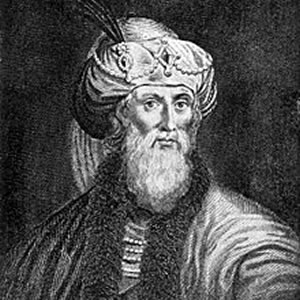 Titus Flavius Josephus (37-100 AD), known as 'Josephus' was a first-century Romano-Jewish scholar. He was a historian and hagiographer, who was born in Jerusalem, then part of Roman Judea, to a father of priestly descent and a mother who claimed royal ancestry.
<br><br>
He initially fought against
Titus Flavius Josephus (37-100 AD), known as 'Josephus' was a first-century Romano-Jewish scholar. He was a historian and hagiographer, who was born in Jerusalem, then part of Roman Judea, to a father of priestly descent and a mother who claimed royal ancestry.
<br><br>
He initially fought against
the Romans during the First Jewish-Roman War as head of Jewish forces in Galilee, until surrendering in 67 CE to Roman forces led by Vespasian after the six-week siege of Jotapata. Josephus claimed the Jewish Messianic prophecies that initiated the First Roman-Jewish War made reference to Vespasian becoming Emperor of Rome. In response Vespasian decided to keep Josephus as a slave and presumably interpreter. <br><br> After Vespasian became Emperor in 69 CE, he granted Josephus his freedom, at which time Josephus assumed the emperor's family name of Flavius. Flavius Josephus fully defected to the Roman side and was granted Roman citizenship. He became an advisor and friend of Vespasian's son Titus, serving as his translator when Titus led the Siege of Jerusalem. |
Who was Tacitus? Gaius Cornelius Tacitus (56-120 AD), known as 'Tacitus', was a senator and a historian of the Roman Empire. The surviving portions of his two major works: the Annals and the Histories, examine the reigns of the emperors Tiberius, Claudius, Nero, and those who reigned in the Year of the Four
Emperors (69 AD). These two works span the history of the Roman Empire from the death of Augustus, in 14 AD, to the years of the First Jewish-Roman War, in 70 AD. <br><br> Tacitus is considered to be one of the greatest Roman historians. |
What is Secular? As a philosophy, secularism seeks to interpret life on principles taken solely from the material world, without recourse to religion. In political terms, secularism is the principle of the separation of government institutions and persons mandated to represent the state from religious institution
and religious dignitaries (the attainment of such is termed secularity). Under a brief definition, secularism means that governments should remain neutral on the matter of religion and should not enforce nor prohibit the free exercise of religion, leaving religious choice to the liberty of the people. <br><br> Secularism draws its intellectual roots from Greek and Roman philosophers such as Zeno of Citium and Marcus Aurelius; from Enlightenment thinkers such as Erasmus, John Locke, Denis Diderot, Voltaire, Baruch Spinoza, James Madison, Thomas Jefferson, and Thomas Paine; and from more recent freethinkers and atheists such as Robert Ingersoll, Bertrand Russell, and Christopher Hitchens. It shifts the focus from religion to other 'temporal' and 'this-worldly' things with emphasis on nature, reason, science, and development. |
Who was Pliny?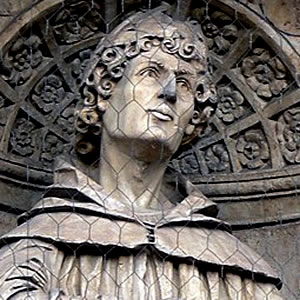 Pliny the Elder (23-79 AD) was a Roman author. Also, he was a naturalist and natural philosopher, a naval and army commander of the early Roman Empire, and friend of emperor Vespasian.
|
Who are TruthSurge? I am a Youtuber who enjoys making videos on music, religion and other stuff. I am an ex-Christian atheist with many thoughts and ideas to share concerning Christianity and its origins.
|
Who was Celsus?
Celsus was a 2nd-century Greek philosopher and opponent of early Christianity. He is known for his literary work, On The True Doctrine (or Discourse, Account), which survives exclusively in quotations from it in Contra Celsum, a refutation written in 248 by Origen of Alexandria. On The True Doctrine
is the earliest known comprehensive criticism of Christianity. It was written c. 175 to 177, shortly after the death of Justin Martyr (who was possibly the first Christian apologist), and was probably a response to his work. |
Who was Lucian?
Lucian of Samosata (125-180 AD) was a Syrian satirist and rhetorician. He is best known for his characteristic tongue-in-cheek style, with which he frequently ridiculed superstition, religious practices, and belief in the paranormal. Although his native language was probably Syriac, all of his
extant works are written entirely in Ancient Greek (mostly in the Atticized dialect popular during the Second Sophistic period). |
Who was Thallus?
Thallus was an early historian who wrote in Koine Greek. He wrote a three-volume history of the Mediterranean world from before the Trojan War to the 167th Olympiad, c. 112-109 BC. Most of his work, like the vast majority of ancient literature, has been lost, although some of his writings were
quoted by Sextus Julius Africanus in his History of the World.<br><br> The works are considered important by some Christians because they believe them to confirm the historicity of Jesus and provide non-Christian validation of the Gospel accounts: a reference to a historical eclipse, attributed to Thallus, has been taken as a mention of the darkness described in the Synoptic gospels account of the death of Jesus, although an eclipse could not have taken place during Passover when this took place. A common view in modern scholarship is that the Crucifixion darkness is a literary creation rather than a historical event. |
Youtube Videos on Josephus, Tacitus, Secular, Pliny, TruthSurge, Celsus, Lucian, Thallus (56)
|
421 views
50:42
|
|
540 views
5:00
|
|
324 views
1:01:45
|
|
465 views
22:41
|
|
820 views
26:36
|
|
362 views
24:16
|
|
407 views
14:28
|
|
251 views
15:27
|
|
448 views
2:40
|
|
1034 views
8:23
|
|
1196 views
16:46
|
|
655 views
12:24
|
|
151 views
6:19
|
|
401 views
22:21
|
|
528 views
20:28
|
|
235 views
4:27
|
|
791 views
10:13
|
|
817 views
5:55
|
|
468 views
15:06
|
|
778 views
12:10
|
|
640 views
8:40
|
|
728 views
10:58
|
|
562 views
14:59
|
|
482 views
3:55
|
|
404 views
11:21
|
|
459 views
14:44
|
|
826 views
9:52
|
 In John 8:1-11, the 'Adulterous Woman' story is missing from earliest Bible manuscripts - TruthSurge
647 views
8:28
|
|
304 views
13:04
|
|
182 views
12:48
|
|
519 views
13:32
|
|
428 views
8:30
|
|
1130 views
11:01
|
|
776 views
8:25
|
|
738 views
12:08
|
|
811 views
11:22
|
|
653 views
8:44
|
|
221 views
3:44
|
|
534 views
2:15
|
|
596 views
6:42
|
|
531 views
6:31
|
|
541 views
4:40
|
|
489 views
4:50
|
|
855 views
2:40
|
|
452 views
1:53
|
|
652 views
2:28
|
|
179 views
2:32
|
|
408 views
2:30
|
|
587 views
8:41
|
|
639 views
2:41
|
|
599 views
17:14
|
|
777 views
8:57
|
|
668 views
5:16
|
|
1013 views
14:30
|
|
888 views
26:02
|
|
624 views
26:39
|
 Who was Flavius
 Jesus was unknown outside of the Gospels. We need
  Greek: Iesous is not a translation of Hebrew: Yeshua, claimed
  Morality in

 Church of England abandoned me by adopting
 In Numbers 31:18, Child Marriage was encouraged. Today, Christianity is conditioned by liberal,
  Was Mark's Gospel copied from
  Quick introduction to Flavius
 Ancient Greeks believed Asclepius, Achilles, Castor, Alcmene, Heracles, Melicertes resurrected after Death as Gods -
  Jesus' Resurrection (Mark 9-20) is missing in earliest Bible Manuscripts, Codex Sinaiticus and Vaticanus -
  Mark's Gospel is a Hero biography, written in a 'fiction-like' Third-Person style -
  Homer's Odyssey (800 BC, Greek myth) parallels Jesus in Mark's Gospel (70 AD) -
 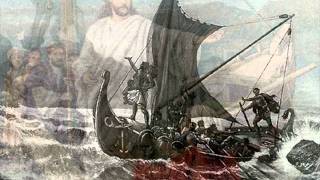 Homer's Odyssey (800 BC, Greek myth) parallels Jesus in Mark's Gospel (70 AD) -
 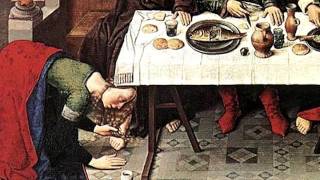 Homer's Odyssey (800 BC, Greek myth) parallels Jesus in Mark's Gospel (70 AD) -
 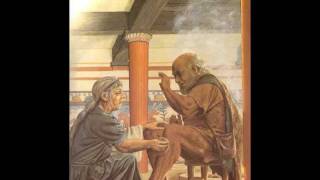 Homer's Odyssey (800 BC, Greek myth) parallels Jesus in Mark's Gospel (70 AD) -
 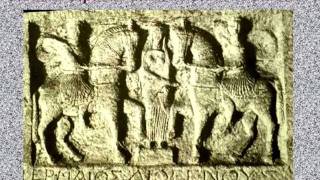 Mark's Gospel casts James & John, Jesus' disciples from Castor & Polydeuces, brothers in Greek mythology -
  Homer's Odysseus (800 BC, Greek myth), a skilled Craftsman ('tekton') parallels Jesus the Carpenter in Mark's Gospel (70 AD) -
  Dead Heros ascend to Heaven. Crucified Jesus ascend to Heaven in Mark 9-20 -
  New Testament authors copied Errors from the Septuagint, Greek Old Testament -
  New Testament authors copied Errors from the Septuagint, Greek Old Testament -
  Bible verses were added later for Theological reasons -
  The Mystery of Jesus' hidden Tomb -
  For Apostle Paul, Jesus Christ was Hidden, and revealed though him alone -
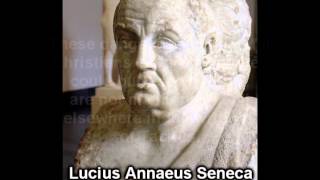
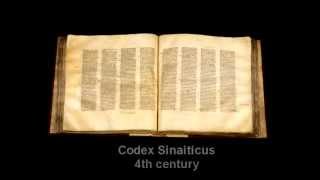 Ancient Bible manuscript corruption led to 'Chrestians, from Chrestos' became 'Christians, from Christ' -
  Gospel of Mark: 29% Reliability Score against 'US Federal Rules' -
  Gospel of Matthew: 29% Reliability Score against 'US Federal Rules' -
 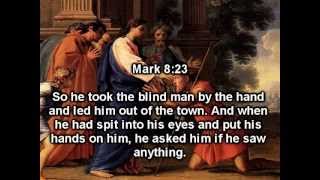 Gospel of Matthew: 29% Reliability Score against 'US Federal Rules' -
  Mark 9-20 is a late Textual forgery due to Vocabulary, Text style & Content -
 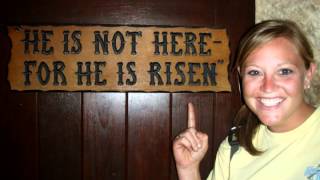 No
No  Suetonius (121 AD) wrote of Jewish riots led by Chrestus -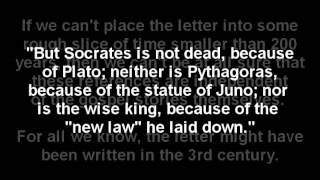
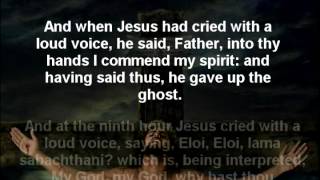 Gospel of Luke: 14% Reliability Score against 'US Federal Rules' -
  Gospel of John: 29% Reliability Score against 'US Federal Rules' -
 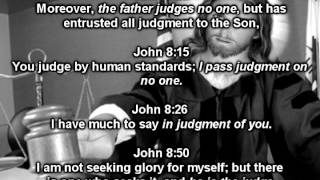 Gospel of John: 29% Reliability Score against 'US Federal Rules' -
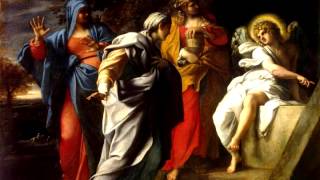
  Jesus' Resurrection: Gospel Contradictions -
 The Talmud (400 AD), Mara Bar-Serapion (73),
EXPLORE TOPICS :
JOSEPHUS |
13
TACITUS |
4
SECULAR |
7
PLINY |
4
TRUTHSURGE |
39
CELSUS |
4
LUCIAN |
4
THALLUS |
4