893 views
·
Last viewed: 4 days ago
Uploaded: 15 Jul 2019 (7 years ago) · Shared: 23 Jul 2019
into question. Were the Gnostic Gospels legal?
Support us on Patreon!: https://www.patreon.com/religionforbreakfast
Follow me on Twitter: @andrewmarkhenry
Bibliography:
Mark Goodacre: https://www.academia.edu/26053912/How_reliable_is_the_story_of_the_Nag_Hammadi_discovery
Nicola Denzey Lewis and Justine Ariel Blount: https://www.academia.edu/8105963/_Rethinking_the_Origins_of_the_Nag_Hammadi_Library_
Brent Nongbri, 'The Nag Hammadi Discovery Story,' https://brentnongbri.com/2018/08/20/the-nag-hammadi-discovery-story/
Tony Burke, 'What Do We Talk About When We Talk About the Nag Hammadi Library?' http://www.tonyburke.ca/wp-content/uploads/What-Do-We-Talk-About.pdf
Lundhaug and Jenott, The Monastic Origins of the Nag Hammadi Codices
Photo credits:
Amulet: https://commons.wikimedia.org/wiki/File:Jasper_intaglio-_Harpocrates_seated_on_lotus_in_papyrus_boat_MET_DP280467.jpg
Coptic Magical Text: https://commons.wikimedia.org/wiki/File:Coptic_magical_text_599v_apis.jpg
Book of the Dead: https://commons.wikimedia.org/wiki/File:Imhotep%27s_Book_of_the_Dead.jpg
Byzantine Amuletic Armband: https://commons.wikimedia.org/wiki/File:Byzantine_-_Amuletic_Armband_with_Holy_Rider,_Saints,_and_Magical_Symbols_-_Walters_542657.jpg
Codex II: http://ccdl.libraries.claremont.edu/cdm/singleitem/collection/nha/id/1381
Codex V Interior: http://ccdl.libraries.claremont.edu/cdm/singleitem/collection/nha/id/1997/rec/1
Gospel of Thomas manuscript: https://commons.wikimedia.org/wiki/File:El_Evangelio_de_Tom%C3%A1s-Gospel_of_Thomas-_Codex_II_Manuscritos_de_Nag_Hammadi-The_Nag_Hammadi_manuscripts.png
Uploaded: 15 Jul 2019 (7 years ago) · Shared: 23 Jul 2019
Video Description (from Youtube)
A common theory is that the Nag Hammadi Library, a collection of Gnostic texts, were an illegal stash of books hidden from Orthodox Christian authorities. But recent scholarship has called this theoryinto question. Were the Gnostic Gospels legal?
Support us on Patreon!: https://www.patreon.com/religionforbreakfast
Follow me on Twitter: @andrewmarkhenry
Bibliography:
Mark Goodacre: https://www.academia.edu/26053912/How_reliable_is_the_story_of_the_Nag_Hammadi_discovery
Nicola Denzey Lewis and Justine Ariel Blount: https://www.academia.edu/8105963/_Rethinking_the_Origins_of_the_Nag_Hammadi_Library_
Brent Nongbri, 'The Nag Hammadi Discovery Story,' https://brentnongbri.com/2018/08/20/the-nag-hammadi-discovery-story/
Tony Burke, 'What Do We Talk About When We Talk About the Nag Hammadi Library?' http://www.tonyburke.ca/wp-content/uploads/What-Do-We-Talk-About.pdf
Lundhaug and Jenott, The Monastic Origins of the Nag Hammadi Codices
Photo credits:
Amulet: https://commons.wikimedia.org/wiki/File:Jasper_intaglio-_Harpocrates_seated_on_lotus_in_papyrus_boat_MET_DP280467.jpg
Coptic Magical Text: https://commons.wikimedia.org/wiki/File:Coptic_magical_text_599v_apis.jpg
Book of the Dead: https://commons.wikimedia.org/wiki/File:Imhotep%27s_Book_of_the_Dead.jpg
Byzantine Amuletic Armband: https://commons.wikimedia.org/wiki/File:Byzantine_-_Amuletic_Armband_with_Holy_Rider,_Saints,_and_Magical_Symbols_-_Walters_542657.jpg
Codex II: http://ccdl.libraries.claremont.edu/cdm/singleitem/collection/nha/id/1381
Codex V Interior: http://ccdl.libraries.claremont.edu/cdm/singleitem/collection/nha/id/1997/rec/1
Gospel of Thomas manuscript: https://commons.wikimedia.org/wiki/File:El_Evangelio_de_Tom%C3%A1s-Gospel_of_Thomas-_Codex_II_Manuscritos_de_Nag_Hammadi-The_Nag_Hammadi_manuscripts.png
Search Results on 'In 367 AD, Athanasius decreed the 27 New Testament books. The Nag Hammadi Gnostic gospels declared illegal | ReligionForBreakfast'
SCROLL TO :TOPICS | 5NEWS | 10ARTICLES | 4FAQ | 4VIDEO | 184LINKS | 0TOPICS #RELIGIONFORBREAKFAST NEW TESTAMENT GNOSTIC ATHANASIUS
Topics include ReligionForBreakfast, New Testament, Gnostic, Athanasius (5)
Who are ReligionForBreakfast? ReligionForBreakfast is an educational channel dedicated to the academic, nonsectarian study of religion. We strive to raise the level of conversation about religion on YouTube by exploring surprising facts about humanity's beliefs and rituals through an anthropological, sociological, and
archaeological lens. Here at RFB we respect everyone: religious, non-religious, and everyone in between. |
What is New Testament? The New Testament is the second part of the Christian biblical canon. The first part being the Old Testament, based on the Hebrew Bible. The New Testament discusses the teachings and person of Jesus, as well as events in first-century Christianity. Christians regard both the Old and New Testaments
together as sacred scripture. The New Testament (in whole or in part) has frequently accompanied the spread of Christianity around the world. It reflects and serves as a source for Christian theology and morality. |
What is Gnostic? Gnosticism (from Ancient Greek: gnostikos, "having knowledge") is a modern name for a variety of ancient religious ideas and systems. Originating in Jewish-Christian milieus in the first and second century AD. These systems believed that the material world is created by an emanation of the highest
God, trapping the divine spark within the human body.<br><br>Gnosticism is also defined as the belief in, dualism of good and bad and special knowledge for salvation. |
Who was Athanasius?
Athanasius of Alexandria (298-373 AD), also called Athanasius the Great, Athanasius the Confessor or Athanasius the Apostolic was the 20th bishop of Alexandria (as Athanasius I). His on-again-off-again episcopate spanned 45 years of which over 17 encompassed five exiles, when his episcopate was
replaced on the order of four different Roman emperors. Athanasius was a Christian theologian, a Church Father, the chief defender of Trinitarianism against Arianism, and a noted Egyptian leader of the fourth century. Conflict with Arius and Arianism as well as successive Roman emperors shaped Athanasius' career. In 325 AD, at the age of 27, Athanasius began his leading role against the Arians as a deacon and assistant to Bishop Alexander of Alexandria during the First Council of Nicaea. Roman emperor Constantine the Great had convened the council in August 325 to address the Arian position that the Son of God, Jesus of Nazareth, is of a distinct substance from the Father. |
Who is Gnostic Informant?
Gnostic Informant is a channel by Neal Sendlak, focusing on History, Mythology, and Comparative Religion.
|
News on ReligionForBreakfast, New Testament, Gnostic, Athanasius (10)
Articles on ReligionForBreakfast, New Testament, Gnostic, Athanasius (4)
Arius vs Bishop Athanasius

28,203 views
|
| Bible - 12% of New Testament copied from Old Testament
15,659 views
|
| Timeline of New Testament Bible
20,719 views
|
Bible NT - 55% of New Testament Papyrus contain under 3% of Biblical Text

21,351 views
|
FAQ on ReligionForBreakfast, New Testament, Gnostic, Athanasius (4)
Youtube Videos on ReligionForBreakfast, New Testament, Gnostic, Athanasius (184)
 Fallacies of the
  Fallacies of the
  Fallacies of the
  Fallacies of the
  Fallacies of the
  Fallacies of the
  Fallacies of the
  Fallacies of the
  Why are
  How did the
  Constantine did not choose the Books of the Bible |
  How did the Nicene Creed confirm the Trinity? |
  Jesus was Jewish. When did Christianity and Judaism officially split? |
  A Jewish critique of the
  Jesus in the
  Who authored the
  Is the original
  Is the
  Can we trust the
  In 1 John 5:8, the Church corrupted the
  God revealed scripture: Torah, Gospels, Injeel,
 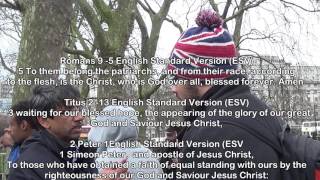 God revealed scripture: Torah, Gospels, Injeel,
 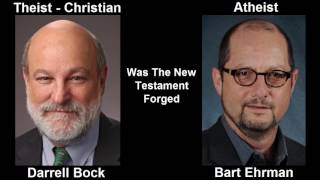 Was the
 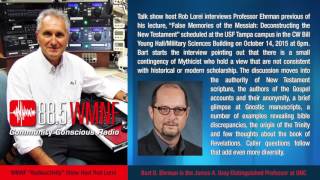 Deconstructing the
  Does the
 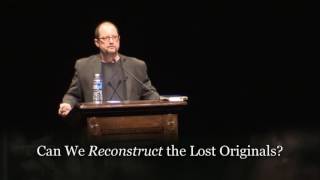 Is the
  Can we trust the
  Authenticity of the
  Origins of the
  Do we have the Original Manuscripts of the
  Can we reconstruct the Original Manuscripts of





 Was the
  Using Logic to understand the
  The Gospel of Mary Magdalene and
  Why is Christmas on December 25th? |
  Trinity is from Paganism; not found in
  Who chose the
 Who Wrote the Dead Sea Scrolls? |
  Halloween: Pagan or Christian? |
  In Matthew 2:1, Three Wise Men came to Baby Jesus bearing gifts of Gold, Frankincense and Myrrh - OR - Were they actually Magicians and Sorcerers? |
  Why did the Romans Persecute Christians? |
  In Isaiah 7:14, Jesus was called Immanuel. Who called Jesus by this name in the
  Early Christianity: Arius,
  Original Sin is a false belief in the
  Arius,
  In Jeremiah 31:32 and Hebrews 8:9, God established a
  Cult of Mithras Explained |
  For 300 years, we have worked to restore the original
  For 300 years, we have worked to restore the original
  Apostle Paul wrote only 7 Letters (of 13) in the
 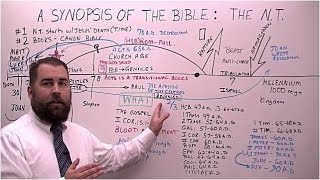 A Synopsis of
  Apostle Paul, Paganism and
  Introduction to Islam |
  The Pre-Christian Origins of Baptism |
  Archaeologists discover Yahweh, the Jewish God had a Goddess wife, Asherah |
  According to the
 75% of
  We do not have the original
  Greek
Greek 
 We are getting closer to the original
 Early Christians did not believe Trinity, or write about it in
 Jesus, an Aramaic speaking Palestinian.
  Original text of all
  In John 7:53, Scribes added, later removed, the Adulteress story from
  In Mark 16:9-20, Scribes wrote a 'longer ending' to
 In 367 AD, the
  In 1545 AD, Council of Trent was first ecumenical council to officially recognise 27
  Apocalypse of Peter almost made it into the
 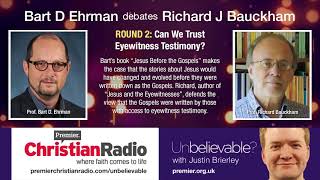 Early Christians invented Jesus' stories, sayings and sermons; aka
  5,300
5,300  Church growth led to demand for
  RSV (Revised Standard Version) is most accurate
  Bart Ehrman is most well-known, prolific writer and Professor of
 Origen (Lebanon, 253 AD) &
  Jesus' resurrection is nowhere to be found in the
  After Nicaea 325 AD, Constantine had Eusebius determine the earliest
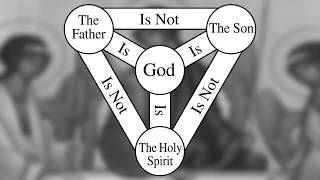 In 500 AD,
  In 367 AD,
  The original
  Jesus preached the Oral Gospel (Injeel), not
 Christians believed in Jesus' Resurrection before the
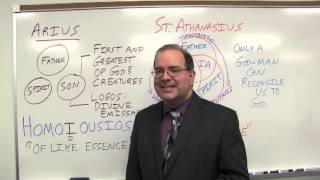 Jesus' Divinity: Decided by Arius and Bishop
  There is only one, true God, a 'Unitarian' Father in
  History of Al-Aqsa Mosque, Dome of the Rock (Palestine) |
  Inside the Al-Aqsa Mosque, Dome of the Rock (Palestine) |
  Trinity (Triune Gods) are found in
  Athanasian Creed was NOT written by
  Belief in Jesus' Crucifixion & Resurrection determine our Salvation, not the
  Which Church Council gave
  Codex Sinaiticus: Oldest Surviving Christian
  Marcion (85-160 AD) listed 11 books in
  Christianity needs Jesus' Resurrection, not the
  History of
 In Revelation 13:18, what does #666 really mean? |
  Trinity is a false doctrine not found in Old
 Catholic tradition decided the
  In 367 AD,
  Is John 11:1 written of Mary Magdalene or Mary Bethany. Did Bible scribes make a mistake? |
 What is the Hajj pilgrimage (Kabah)? |
  What Did
  Homoousios ('same substance') was a confusing and theologically Ambiguous word used by
  John's Gospel is different from Mark, Matthew and Luke due to emerging
  Rise of the Atheist/Godless Church |
  Early Church Fathers &
  How the Old &
 Apostle Paul and his
  Apostle Paul and his
  King James Bible (KJV) |
  Why Is Swine Pork Forbidden in Judaism, Christianity and Islam? |
  Khonsu: The Egyptian Moon God |
  Did Quran 7:40 quote a mistranslated Bible verse? |
  Eshmun: Dying & Rising God of Healing (6 BC) preceding Jesus (33 AD) -
  History of Animal Sacrifice |
  Thusia (800 BC), Animal Sacrifice to The Gods of Greece |
  Exploring Jesus The Muslim | Gabriel Reynolds |
  Are Biblical Prophets based on Ancient Myth Stories? | Robert Price |
  Angel Gabriel in Islam |
  Is the
  What was the Real Name of Jesus? |
  Did Rome Create the
  Why is Christmas on December 25th? | Tom Schmidt |
  Did Apostle Paul know his Letters would appear in the
  Who Was Baal and Yahweh to Elijah? |
  Islamic Dilemma - Does The Quran confirm
 Edom (Christianity, Rome, Europe, USA) must FALL for Israel to RISE | Adam Green |
  What is the Kabah? |
  Why is the Number 7 EVERYWHERE in Religion? |
 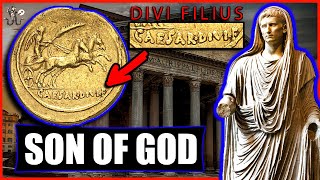 Caesar Augustus (63 BC-14 AD): Saviour of Rome and Original Son of God |
  The Idols & Gods of Pre-Islam Arabia |
  Was Goddess Asherah the Wife of God? |
 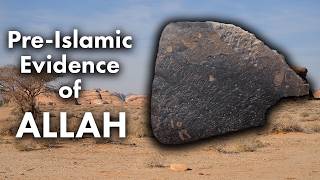 Who was Allah in Pre-Islam Arabia? |
DISCLAIMER
All videos are shared for educational and information purposes only. All videos are hosted and viewable on Youtube servers. Video titles are generated using the original video title; overall content theme including actual dialogue and speech (Transcript); and A.I-based recommendations with a focus on SEO, keyword density, and internal search functions. The video title does not represent the views held by the Youtube video uploader, or any individual, organisation or business.
If you spot any mistake, omission or give feedback, kindly contact us with details
All videos are shared for educational and information purposes only. All videos are hosted and viewable on Youtube servers. Video titles are generated using the original video title; overall content theme including actual dialogue and speech (Transcript); and A.I-based recommendations with a focus on SEO, keyword density, and internal search functions. The video title does not represent the views held by the Youtube video uploader, or any individual, organisation or business.
If you spot any mistake, omission or give feedback, kindly contact us with details