39:46
877 views
·
Last viewed: 12 hrs ago
Uploaded: 18 Mar 2016 (10 years ago) · Shared: 20 Dec 2016
Who are the Nephilim?
 The Nephilim are enigmatic figures mentioned in several passages of the Hebrew Bible and later Jewish and Christian literature. They are traditionally associated with extraordinary size, strength, or status, though the biblical texts provide only brief and ambiguous descriptions. Their identity, origin, and role in early biblical history have been the subject of extensive debate among scholars, theologians, and interpreters.
The meaning of the term Nephilim is uncertain. Many translations render the word as "giants," influenced by the Septuagint's use of the Greek term gigantes. Because the biblical text does not define the term explicitly, later Jewish and Christian writings played a major role in shaping the modern understanding of the Nephilim.
The Nephilim are enigmatic figures mentioned in several passages of the Hebrew Bible and later Jewish and Christian literature. They are traditionally associated with extraordinary size, strength, or status, though the biblical texts provide only brief and ambiguous descriptions. Their identity, origin, and role in early biblical history have been the subject of extensive debate among scholars, theologians, and interpreters.
The meaning of the term Nephilim is uncertain. Many translations render the word as "giants," influenced by the Septuagint's use of the Greek term gigantes. Because the biblical text does not define the term explicitly, later Jewish and Christian writings played a major role in shaping the modern understanding of the Nephilim.What is Quran?
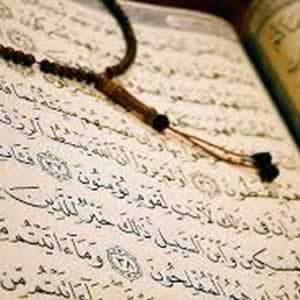 Quran, literally meaning "the recitation" is the central religious text of Islam, which Muslims believe to be a revelation from God (Allah). It is widely regarded as the finest work in classical Arabic literature. The Quran is divided into chapters (surah in Arabic), which are then divided into verses (ayah). Muslims believe that the Quran was verbally revealed by God to Muhammad through the angel Gabriel (Jibril), gradually over a period of approximately 23 years, beginning on 22 December 609 CE, when Muhammad was 40, and concluding in 632, the year of his death. Muslims regard the Quran as the most important miracle of Muhammad, a proof of his prophethood, and the culmination of a series of divine messages that started with the messages revealed to Adam and ended with Muhammad.
 Video Description (from Youtube)
This documentary takes a look at and discusses the biblical giants mentioned in the Holy Books around the world.
Music: "Frequency" by Silent Partner
Music: "Frequency" by Silent Partner
DISCLAIMER
All videos are shared for educational and information purposes only. All videos are hosted and viewable on Youtube servers. Video titles are generated using the original video title; overall content theme including actual dialogue and speech (Transcript); and A.I-based recommendations with a focus on SEO, keyword density, and internal search functions. The video title does not represent the views held by the Youtube video uploader, or any individual, organisation or business.
If you spot any mistake, omission or give feedback, kindly Contact Us with details
Videos on Nephilim (5)
 39:46
39:46
877
1482192000
1786540921
In Quran 27:39, did Solomon encounter Nephilim (Biblical Giants)?
002386
1
 1:26:04
637
1496793600
1786272457
Book of Enoch: Fallen Angels, Nephilim, Devils & Men
005164
2
 0:35
0:35
276
1529623242
1786387819
In Genesis, 'sons of God' married beautiful earthly women reproduced Giants (Nephilim) - Bart Ehrman
000035
3
 13:22
13:22
175
1535194561
1786242690
Evidence for Nephilim, Giants & Eber - Klaus Dona
000802
4
 10:35
10:35
9
1786532506
1786575794
The Nephilim - Fallen Giants & The Flood | Bible Chronicles Animation
000635
5