45:09
1033 views
·
Last viewed: 2 days ago
Uploaded: 28 Jul 2014 (12 years ago) · Shared: 27 Dec 2016
Video Description (from Youtube)
St Paul and the First Christians The First Christians Documentary Early Christianity is the period of Christianity preceding the First Council of Nicaea in 325 AD. It is typically divided into theApostolic Age and the Ante-Nicene Period (from the Apostolic Age until Nicea).
The first Christians, as described in the first chapters of the Acts of the Apostles, were all Jewish, either by birth, or conversion for which the biblical term proselyte is used, and referred to by historians as the Jewish Christians. The early Gospel message was spread orally; probably in Aramaic. The New Testament's Book of Acts and Epistle to the Galatians record that the first Christian community was centered in Jerusalem and its leaders included Peter, James, and John. Paul of Tarsus, after his conversion to Christianity, claimed the title of "Apostle to the Gentiles". Paul's influence on Christian thinking is said to be more significant than any other New Testament writer. By the end of the 1st century, Christianity began to be recognized internally and externally as a separate religion from Rabbinic Judaism which itself was refined and developed further in the centuries after the destruction of the Second Jerusalem Temple. As shown by the numerous quotations in the New Testament books and other Christian writings of the 1st centuries, early Christians generally used and revered the Jewish Bible as Scripture, mostly in the Greek (Septuagint) or Aramaic (Targum) translations, much of which is written in narrative form where "in the biblical story God is the protagonist, Satan (or evil people/powers) are the antagonists, and God's people are the agonists".
As the New Testament canon developed, the Letters of Paul, the Canonical Gospels and various other works were also recognized as scripture to be read in church. Paul's letters, especially Romans, established a theology based on Christ rather than on the Mosaic Law, but most Christian denominations today still consider the "moral prescriptions" of the Mosaic Law, such as the Ten Commandments, Great Commandment, and Golden Rule, to be relevant. Early Christians demonstrated a wide range of beliefs and practices, many of which were later rejected as heretical.
DISCLAIMER
All videos are shared for educational and information purposes only. All videos are hosted and viewable on Youtube servers. Video titles are generated using the original video title; overall content theme including actual dialogue and speech (Transcript); and A.I-based recommendations with a focus on SEO, keyword density, and internal search functions. The video title does not represent the views held by the Youtube video uploader, or any individual, organisation or business.
If you spot any mistake, omission or give feedback, kindly Contact Us with details
Overview & Key Concepts
Who was Apostle Paul?
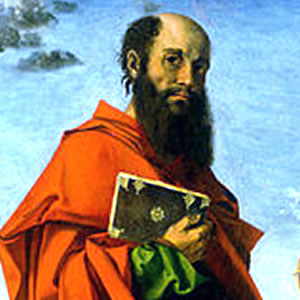 Paul the Apostle (Latin: Paulus), commonly known as Saint Paul and also known by his Jewish name Saul of Tarsus was an apostle (though not one of the
Twelve Apostles) who taught the gospel of Christ to the first century world. Paul is generally considered one of the most important figures of the Apostolic Age and in the mid-30s to the mid-50s AD he founded several churches in Asia Minor and Europe. He took advantage of his status as both a Jew and a Roman citizen to minister to both Jewish and Roman audiences. According to writings in the New Testament and prior to his conversion, Paul was dedicated to persecuting the early disciples of Jesus in the area of Jerusalem. In Acts, Paul was traveling on the road from Jerusalem to Damascus on a mission to 'arrest them and bring them back to Jerusalem' when the resurrected Jesus appeared to him in a great light. He was struck blind, but after three days his sight was restored by Ananias of Damascus and Paul began to preach that Jesus of Nazareth is the Jewish Messiah and the Son of God.
Who are Lost Worlds?
 Lost Worlds is a documentary television series by The History Channel. The series explores a variety of "lost" locations from ancient to modern times
These "great feats of engineering, technology, and culture" are revealed through the use of archaeological evidence, interviews with relevant experts while examining the sites, and CGI reproductions. These visual re-creations take the form of rendered 3D environments and photo manipulated overlays, allowing the "lost world" to be seen over its present-day state.
What is Christian?
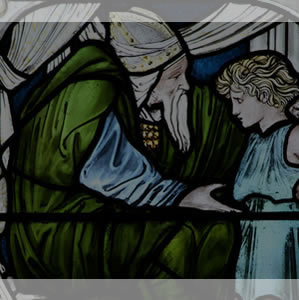 Christianity is a global religion centered on the life and teachings of Jesus Christ, who followers believe is the Son of God. It's a monotheistic
faith, meaning Christians believe in one God who exists in three co-equal persons: God the Father, God the Son (Jesus Christ), and the Holy Spirit. Christianity is based on the Bible, with the Old Testament and New Testament serving as sacred texts.
Frequently Asked Questions
1.Why did Apostle Paul preach a new religion?
When Rome adopted Christianity with the conversion of the Roman Emperor (4th Century) and his official campaign to repress anyone who refused to conform; to kill those Christians who refused to follow Romes 'Trinitarian Christianity'.
Paul knew that the victors wrote history and in order to win 'he had to be all things to all men' (I Corinthians 9:24-27).
Those who dig their heels in 'beat the air' and refused to compromise any detail of the true faith ended their days as martyrs.
2.What did early Jewish-Christians think of Apostle Paul?
Between 55 and 66 CE, early Jewish-Christian leaders in Jerusalem rejected Paul's teachings and challenged his authority, leading to a significant decline in his popularity.
3.How did Saul become Apostle Paul?
A young man named Saul of Tarsus was bent on murdering all the Christians he could. He was a Jew, a Pharisee (well-versed in the Law of Moses), a man of knowledge, letters and spirit.
Following a dramatic experience, where according to Saul, Jesus Christ appeared to him on the road to Damascus.
Saul converted to Christianity and now became the beloved apostle, saint, evangelist, theologian, and pastor we call Apostle Paul.
4.How was Apostle Paul's message different to Jesus?
Paul introduced a new theology focusing on Jesus as a divine sacrifice, arguing that Jewish law was unnecessary for salvation and largely disregarding Jesus's earthly teachings.
5.How did Apostle Paul view Jesus?
Paul viewed Jesus as the divine image of God, the firstborn of creation, and the fullness of God, as outlined in Colossians 1:15-20.
6.How did the Jews view Apostle Paul?
Faithful Jews viewed Paul's salvation theory as blatant blasphemy because his theological teachings explicitly ridiculed all previous revelations from God, including the sacred Torah, while teaching a doctrine that went against the absolute oneness of God.
7.How did Apostle Paul become the authority?
Following his dramatic conversion experience on the road to Damascus, Paul claimed direct divine authority to speak on behalf of God and began preaching that salvation depended entirely on believing that Jesus was part of the divine Godhead.
8.According to Apostle Paul, why did God give Jews the Torah?
Paul viewed the Torah as a temporary guide, claiming it was given to the Jews until they could be saved through faith in Jesus Christ.
9.How did Apostle Paul differ with the Jewish Rabbis?
The Jewish Rabbis preached a person was saved so long as their intention was to remain within the covenant, and one truly repented and seek forgiveness for their sins.
Paul preached that every person was 'damned' until they was offered salvation. Mans problem was that he was 'in the flesh' in bondage to the Law, sold under Sin, enslaved by the fundamental spirits of the universe (ie. dead).
Paul preached the only cure was liberation from slavery and death by union with Christ, who had conquered death and sin.
10.What was the core message of Apostle Paul's teachings?
The core of Paul's theology rested entirely on the absolute necessity of the crucifixion and resurrection of Jesus Christ, arguing in his letters that if righteousness could be achieved through the Mosaic Torah, then Christ died for absolutely nothing. He insisted to his followers that if Christ was not raised from the dead, then all Christian preaching and faith were completely vain and empty.
11.What happened after Apostle Paul converted to Christianity?
Following his conversion, Paul did not immediately meet with the original Apostles in Jerusalem; instead, he went to Arabia and returned to Damascus, waiting three years before visiting Peter and James for only fifteen days, avoiding the others.
12.What about Apostle Paul's writings?
Paul authored 13 of the 27 books in the modern New Testament, comprising a major portion of the text. This is significant due to his differing theological teachings to the law-observant teachings of Jesus.
13.What books did Apostle Paul write?
Romans
Paul explains how the gospel works and how to respond. Paul wrote this letter before he had visited the Roman church.
1 Corinthians
In 55 A.D., Paul admonished the local church that he had founded in Corinth.
2 Corinthians
Come 56 A.D., the Corinthian church had escalated and then resolved their conflict with Paul. Second Corinthians is Paul's a letter of forgiveness and reconciliation.
Galatians
Someone had misled the churches of Galatia re-subjecting them to the Law of Moses and devaluing God's grace. Paul writes the Galatians an aggressive letter to set them straight on their freedom in Christ.
Ephesians
Paul outlines doctrines of grace, peace, and salvation, and then instructs the church to walk in a manner worthy of Jesus Christ.
Philippians
Even though he's suffering in prison, Paul finds joy in Christ. He writes to the church at Philippi urging them to take on a Christlike attitude.
Colossians
This letter explains to the church at Colossae who they are in Christ.
1 Thessalonians
The church of Thessalonica is setting a great example for other churches, even though they're being persecuted for their faith. Paul encourages them to 'excel still more'.
2 Thessalonians
The affliction just won't let up on the Thessalonian church, so Paul coaches them on standing firm until Jesus return.
1 Timothy
This is Paul's guide to godliness and sound teaching for the young pastor Timothy at Ephesus.
2 Timothy
Paul's death is drawing near, and he charges Timothy to carry on his gospel work.
Titus
Paul had left Titus at Crete to set up order in the churches there. Now he writes Titus instructions for leading a
counter-cultural church.
Philemon
It's a message to Philemon, a leader in the Colossian church.
14.Why is believing in Apostle Paul so wrong?
Accepting Paul's theology implies that Jesus mistakenly selected the wrong individuals as his original twelve disciples,
It renders Jesus's earthly life and direct moral teachings completely irrelevant, and
Ignores the fact that Paul never actually met Jesus in person yet rejected the guidance of those who lived and learned directly from him.
Furthermore, it notes that the final New Testament canon restricted competing eyewitness accounts by omitting the gospels of Peter, Barnabas, and James.
15.What did Apostle Paul think of his fellow Gospel writers?
Paul was deeply unyielding toward alternative views of the faith, explicitly writing in Galatians 1:9 that if any person preached a gospel different from the one his followers had received, that individual should be completely accursed. This indicates he aggressively dismissed the legalistic, Jewish-Christian perspectives held by original disciples like James and Peter.
16.How did Apostle Paul break Gods Law?
Paul is described as rejecting the binding authority of the Torah, specifically mandatory male circumcision as an everlasting covenant and laws regarding dietary purity. Thereby breaking away from divine commands given to the Hebrew people.
17.How was Apostle Paul viewed in his time?
Paul's controversial doctrine of justification through faith alone made him an implacable enemy of the Jewish population who vehemently refused to accept his arguments. Concurrently, many early Christians viewed him as an outsider and a dangerous theological threat, as his teachings ultimately caused the absolute severance of Christianity from its original Judaism roots.
18.Was Apostle Paul an Apostle?
An Apostle is one of the original 12 disciples called by Jesus to
preach the gospel: Simon Peter, the brothers James and John,
Andrew, Philip, Bartholomew, Matthew, Thomas, James the son of
Alpheus, Thaddaeus, Simon the Zealot, Judas Iscariot.
As Paul never met Jesus, many Galatians and Corinthian Christians
actively challanged Pauls right to even teach, and his right to
call himself an Apostle.
19.What dramatic experience made Apostle Paul convert to Christianity?
Paul experienced a sudden vision of a blinding light and a voice on the road to Damascus, but the multiple accounts recorded in the Book of Acts contain clear, direct contradictions regarding whether his companions also fell to the ground, and whether they actually heard the voice or saw the light.
20.How did Matthew (Gospel) support Apostle Pauline Christian doctrine?
The Gospel of Matthew, aimed at law-abiding Jewish-Christians, did not support Pauline doctrine and actually stood in direct opposition to it.
21.Why was Apostle Paul superior to other Apostles?
Paul insisted that his gospel possessed a superior divine authority because he claimed it was delivered directly by the risen Lord Jesus, rather than the earthly, historical Jesus whom the twelve disciples had trained under in-person; this supposed heavenly origin entitled him to act entirely independently of the original Jewish-Christian beliefs and modify their doctrine.
22.Did Apostle Paul face any opposition. If so how?
Yes, early gospel writers strongly opposed Paul's innovations, with John the Evangelist and John of Patmos writing sharp warnings in 1 John and the Book of Revelation to guard believers against a dangerous heretic, a false Jew, a false apostle, and a deceitful doctrine that broke God's commandments.
23.What was the message preached by Apostle Paul?
Paul's theology centered on the message that salvation is a gift from God obtained through faith in the death and resurrection of Jesus Christ, rather than through performing the works of the Mosaic law. He argued that Christ's sacrifice fulfilled the ultimate requirements of the law, opening the path to redemption and righteousness for both Jews and Gentiles globally.
24.Why did Apostle Paul choose to preach to the Gentiles?
Historically, Paul's mission shifted toward non-Jewish Gentiles because the majority of mainstream Jewish communities rejected his messianic doctrines regarding Jesus. In orthodox Christian history, this decision is also framed as a direct divine calling following his conversion, leading him to systematically establish multi-ethnic churches across the Roman Empire.
Paul was a Pharisee and would have been familiar with the knowledge, teachings, methodologies and mistakes of his Pharasaic brothers. Thus, he would have been the best person to preach to them his interpretation of soteriology. Yet he chose not to; leaving this task to James, Peter and the rest, dubbing them as the 'super apostles'.
The real reason why Paul preached to the gentiles is because they were ignorant. They did not know the Torah. They did not possess intimate knowledge of Judaism, its scripture or its doctrine.
Therefore Paul was not presenting his new religion to his own brethren because they would be able to debunk him. Due to this, logically speaking, he preached to those who would find his new faith appealing.
The gentiles would not argue about Christ's deity, or about the new doctrine of salvation, but the Jews would and vehemently so. Thus the path of least resistance is among the gentiles who would eventually see him as an authoritative figure, as opposed to the Jews who would see him as a heretic and shame him.
Yet with the gentiles, he is able to avoid these problems and ascend to power and authority very quickly.
25.How was Apostle Paul viewed by the Jews?
Paul was widely viewed by mainstream Jewish communities as a radical apostate and religious heretic because he preached that observance of the Mosaic Torah was no longer required for salvation. This fierce theological conflict frequently resulted in severe public opposition, legal charges before Roman authorities, and physical riots during his travel throughout ancient Mediterranean cities.
26.What did Apostle Paul achieve by his Christian conversion?
By adopting faith in Jesus, Paul effectively expanded a localized, strictly observant Jewish movement into a highly adaptable, universal religion accessible to all cultures. He utilized his unique background as both a learned Pharisee and a Roman citizen to systematically build an expansive network of legal-exempt Christian communities across multiple Roman provinces.
27.What did Apostle Paul say about the other gospels?
In Galatians 1:6-9, Paul strongly condemned anyone preaching a different gospel, reflecting a significant conflict in the early church between his Gentile-inclusive mission and strict adherence to the Law.
28.How important was Jesus' crucifixion to Apostle Paul?
In his surviving epistles, the Apostle Paul demonstrates almost no interest in the day-to-day earthly life, chronological career, or specific moral parables of Jesus of Nazareth. Instead, his extensive theology is completely fixated on the cosmic, atoning meaning of the crucifixion and subsequent resurrection of the figure he addresses as 'the Lord'. Secular historians analyze this focus to illustrate how early Christian theology transformed from an inward-looking Jewish prophetic movement into a universal savior faith.
29.Was Apostle Paul a disciple of Jesus?
No, Paul never met Jesus during his ministry. He is considered an independent figure whose teachings, influenced by Hellenism, shifted the focus toward a divine Christ.
30.What life did Apostle Paul lead before his miraculous conversion to Christianity?
Before his conversion, Paul was known as Saul and operated as a strict Pharisee and enforcer hostile toward early followers of Jesus. Academic historians note that he worked under the authority of the high priestly administration in Jerusalem to systematically suppress the growing messianic movement, believing he was protecting traditional Judaism from a dangerous heresy
31.Why did James allow Apostle Paul to preach a new religion?
It is suggested James tolerated Paul's expansive missionary activities because the financial collections Paul raised from wealthy Gentile communities directly supported the impoverished Jerusalem mother church. Critical historians clarify that this financial collection, detailed across Paul's letters, was an official diplomatic agreement meant to preserve a fragile unity between Paul's Gentile converts and James' law-abiding Jewish-Christian community.
32.How did Apostle Paul view Jesus' teachings?
According to the source text, Paul's theology effectively relegated Jesus' specific earthly, Jewish ethical teachings to a position of secondary importance, prioritizing instead a cosmic message centered entirely on the crucifixion and resurrection for salvation. Textual analysis demonstrates that Paul's letters rarely quote Jesus' parables or earthly sermons, focusing almost exclusively on his identity as a divine savior figure.
33.What did Apostle Paul do after his miraculous conversion to Christianity?
Following his Damascus vision, Paul records in his letters that he did not seek instruction from others, but immediately withdrew into the Arabian desert for a period of reflection. The platform notes that this independence significantly elevated Paul's personal status, allowing him to claim he received his theological mandate directly from a divine revelation rather than from Jesus' twelve original earthly disciples.
34.What was the main difference between Apostle Paul's religion and the message of Jesus?
The core difference lies in the theological meaning of Jesus' life, with Paul's creed fundamentally focusing on the crucifixion as a necessary cosmic sacrifice to save mankind from sin. While Jesus preached repentance and the ethical arrival of the Kingdom of God, Paul's Damascus vision shifted the entire framework to a savior faith centered on the mechanical necessity of Jesus' violent death and resurrection for salvation.
35.How did Apostle Paul convince the Gentiles?
Paul's theological message had a strategic advantage because it stayed close to the authority of the Hebrew Scriptures while thoroughly re-interpreting them to forecast the saving death of Jesus. This scriptural grounding gave his teachings a unique legitimacy that proved highly attractive and persuasive to the Gentile masses.
36.How did James, leader of the Jerusalem Church, view Apostle Paul?
Paul's new doctrine met with disapproval from the Jewish-Christians of the Jerusalem Church led by James, who regarded the substitution of Jesus' atoning death for the observance of the Torah as a lapse into paganism.
Paul was duly summoned to Jerusalem by the leaders James, Peter and John to explain his doctrine in 50 AD.
37.What was Apostle Paul's view on circumcision?
Paul considered the physical act of circumcision to be unimportant, prioritizing faith and adherence to God's commandments as more significant than the physical ritual.
38.What did Apostle Paul do after he converted to Christianity, on the road to Damascus?
Following his conversion 1-3 years after the crucifixion, Paul vanished from the public eye before re-emerging 13 years later (47-60 CE) as a missionary to the Gentiles.
Videos on Lost Worlds (3)

431 views
15:01
431
1482796800
1787143926
Jesus' Jerusalem - Lost Worlds
000901
1
 45:09
45:09
1033
1482796800
1787038290
The First Christians & Apostle Paul - Lost Worlds
002709
2
 45:22
45:22
323
1503303588
1786389253
Knights Templar: Lost Worlds - David Nicolle
002722
3