7:46
1316 views
·
Last viewed: 1 hr ago
Uploaded: 20 Mar 2019 (7 years ago) · Shared: 28 Mar 2019
Video Description (from Youtube)
***SHORT CLIP*** The Aqeedah (beliefs) of the Pagan Arabs and Calling Upon Awliya [7 minutes] This clip was taken from the beginning of the following lecture: "Seerah of the Prophet MuhammadPart 6: The Birth of the Prophet and Why Arabia?"
This series has been highly recommend by many Muslims. You can watch it as a family, listen to it on your way to work, or play it while doing chores or while at the gym.
Disclaimer: as Dr. Yasir Qadhi (hafidhullah) stated in this talk, we sometimes put people above their place, and give them a status higher than they deserve. This includes Dr. Yasir Qadhi himself as he would agree. It is our belief as Ahlus Sunnah, that no scholar or da'ee is perfect. Therefore, we don't have to agree with every single thing Dr. Yasir Qadhi says or does (i.e. his political stances). But we can respect and appreciate his points when he brings us evidence regarding what the best human being did, the Prophet Muhammad (s), and how the Sahabah understood Islam. And all praise and perfection belongs to Allah subhana wa t'ala, "You alone we worship, and You alone we ask for help" (Al-Fatihah 1:5).
__________
If you call upon them, they cannot hear your calls. And if they were to hear, they could not respond to you. On the Day of Judgment they will disown your worship ˹of them˺. And no one can inform you ˹O Prophet˺ like the All-Knowledgeable.
[Fatir 35:14]
Muḥammad is no more than a messenger; other messengers have gone before him. If he were to die or to be killed, would you regress into disbelief? Those who do so will not harm Allah whatsoever. And Allah will reward those who are grateful.
[Ale Imran 3:144]
Say (O Muhammad SAW): "I possess no power of benefit or hurt to myself except as Allah wills. If I had the knowledge of the Ghaib (unseen), I should have secured for myself an abundance of wealth, and no evil should have touched me. I am but a warner, and a bringer of glad tidings unto people who believe."
[Al'Araf 7:188]
You ˹alone˺ we worship and You ˹alone˺ we ask for help.
[Al Fatihah 1:5]
Or ˹ask them,˺ “Who responds to the distressed when they cry to Him, relieving ˹their˺ affliction, and ˹Who˺ makes you successors in the earth? Is it another god besides Allah? Yet you are hardly mindful!”
[AlNaml 27:62]
In Sunan At-Tirmidhi 3247: An-Nu’man ibn Basheer reported: I heard the Prophet, peace and blessings be upon him, say, “Supplication is worship.” Then the Prophet recited the verse, “Your Lord says: Call upon Me and I will respond to you. Verily, those who disdain My worship will enter Hell in humiliation.” [Ghafir 40:60]
"...so invoke not anyone along with Allah." [AlJinn 72: 18]
Some Ayaat related to this topic:
AlFatihah 1: 05
AlBaqarah 2:186
AhleImran 3:144
Al'Araf 7:180
Al'Araf 7:188
Yunus 10:18
Yunus 10:33
ArRaad 13:14
AlFurqan 25:68
AlNaml 27:62
AlNaml 27:65
AlNaml 27:80
Saba 34:23
Fatir 35:13
Fatir 35:14
Fatir 35:22
AzZumar 39:03
AzZumar 39:30
Ghafir 40:60
AlAhqaf 46:05
AlAhqaf 46:06
AlJinn 72: 18
DISCLAIMER
All videos are shared for educational and information purposes only. All videos are hosted and viewable on Youtube servers. Video titles are generated using the original video title; overall content theme including actual dialogue and speech (Transcript); and A.I-based recommendations with a focus on SEO, keyword density, and internal search functions. The video title does not represent the views held by the Youtube video uploader, or any individual, organisation or business.
If you spot any mistake, omission or give feedback, kindly Contact Us with details
EXPLORE TOPICS :
YASIR QADHI |
42
ALLAH |
60
MOON GOD |
11
POLYTHEISM |
11
THE GODS |
11
IDOLS |
10
PAGAN |
133
HUBAL |
4
PRE-ISLAM |
27
ARABS |
12
ISLAM |
448
EARLY ISLAM |
16
MUSLIM |
305
GOD |
0
Overview & Key Concepts
Who is Yasir Qadhi?
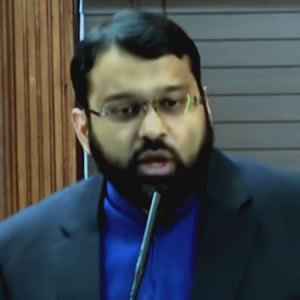 Yasir Qadhi is an American Muslim scholar and writer of Pakistani descent. Since 2001, he has served as Dean of Academic Affairs at the Al-Maghrib
Institute, an international Islamic educational institution with a center in Houston, Texas. He also teaches in the Religious Studies department at Rhodes College in Memphis, Tennessee, where he resides. Qadhi has written numerous books and lectured widely on Islam and contemporary Muslim issues. A 2011 The New York Times Magazine essay by Andea Elliott described Qadhi as "one of the most influential conservative clerics in American Islam."
What is Pre-Islam?
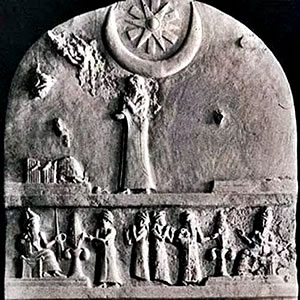 Pre-Islam refers to the period in history before the emergence and widespread adoption of Islam. It specifically denotes the time before the Prophet
Muhammad's revelations and the establishment of Islamic faith, culture, and civilization.
Who is the Moon God?
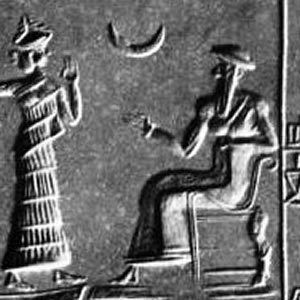 In modern times it is claimed Allah (God in Islam) historically originates as a Moon God. Therefore this Moon God was worshipped in pre-Islamic Arabia
originates in early 20th-century scholarship, most prominently advocated by American evangelicals from the 1990s. The idea was proposed by archeologist Hugo Winckler in 1901. It was proliferated in the USA in the 1990s, first via the publication of Robert Morey's pamphlet The Moon-god Allah: In Archeology of the Middle East (1994). Morey argues that "Allah" was the name of a moon god in pre-Islamic Arabic mythology, the implication being that "Allah" as the term for God in Islam implies that Muslims worship a different deity than the Judeo-Christian one. Joseph Lumbard, a professor of classical Islam, has stated the idea is "not only an insult to Muslims but also an insult to Arab Christians who use the name 'Allah' for God."
Who is Allah?
 Allah is the Arabic word for God in Abrahamic religions. In the English language, the word generally refers to God in Islam. The word is thought to be
derived by contraction from al-ilah, which means 'the god', and is related to El and Elah, the Hebrew and Aramaic words for God. The word Allah has been used by Arabic people of different religions since pre-Islamic times. More specifically, it has been used as a term for God by Muslims (both Arab and non-Arab) and Arab Christians.
What is Idols?
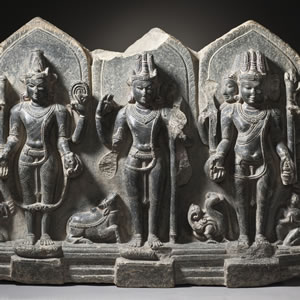 Polytheism is the worship of or belief in multiple deities, usually as a pantheon of gods and goddesses. In most religions which accept polytheism
the different gods and goddesses are representations of forces of nature or ancestral principles, and can be viewed either as autonomous or as aspects or emanations of a creator deity or transcendental absolute principle (monistic theologies), which manifests immanently in nature (panentheistic and pantheistic theologies). Most of the polytheistic deities of ancient religions, with the notable exceptions of the Ancient Egyptian and Hindu deities, were conceived as having physical bodies. Polytheism is a type of theism. Within theism, it contrasts with monotheism, the belief in a singular God, in most cases transcendent. Important polytheistic religions practiced today include Chinese traditional religion, Hinduism, Japanese Shinto, and various neopagan faiths.
What is Pagan?
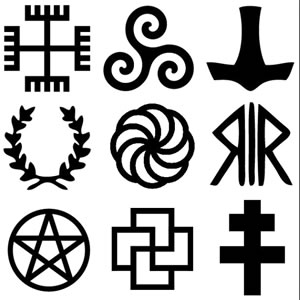 Paganism is a term first used in the fourth century by early Christians. It was applied on populations of the Roman Empire who practiced polytheism
either because they were increasingly rural and provincial relative to the Christian population or because they were not milites Christi (soldiers of Christ). Alternate terms in Christian texts for the same group were hellene, gentile, and heathen. Pagan and paganism were pejorative terms for the same polytheistic group, implying its inferiority. Paganism has broadly connoted the "religion of the peasantry", and for much of its history was a derogatory term. Both during and after the Middle Ages, pagan was a pejorative term that was applied to any non-Abrahamic or unfamiliar religion, and the term presumed a belief in false god(s).
Who was Hubal?
Hubal was a deity worshipped in pre-Islamic Arabia, particularly by the Quraysh tribe at the Kaaba in Mecca. He was believed to be the head moon-god
of the Arab pantheon and was worshipped through rituals involving divination and arrow tossing. The idol of Hubal was one of many in the Kaaba and was eventually destroyed by Muhammad upon his conquest of Mecca.
Who are Arabs?
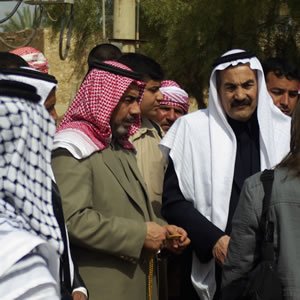 Arabs are an ethnic group mainly inhabiting the Arab world in West Asia and North Africa. A significant Arab diaspora is present in various parts of
the world.
Arabs from Morocco to Iraq share a common bond based on ethnicity, language, culture, history, identity, ancestry, nationalism, geography, unity, and politics which give the region a distinct identity and distinguish it from other parts of the Muslim world. They also have their own customs, literature, music, dance, media, food, clothing, society, sports, architecture, art and, mythology. Arabs have significantly influenced and contributed to human progress in many fields, including science, technology, philosophy, ethics, literature, politics, business, art, music, comedy, theatre, cinema, architecture, food, medicine, and religion. Before Islam, most Arabs followed polytheistic Semitic religion, while some tribes adopted Judaism or Christianity and a few individuals, known as the hanifs, followed a form of monotheism.
Frequently Asked Questions
1.Who is Allah?
Allah is the Arabic word for God.
The name Allah is unique. It has no feminine or masculine form (unlike god or goddess). It also has no plural form (unlike gods and goddesses). Allah simply means "The One and Only True God."
The name Allah was not a name invented by the Arabs. In the Torah, we find God gave Himself the name "Elah", or in some cases, "Eloh". It was also used in the Aramaic language spoken by Jesus.
Editor Note: For the sake of simplicity, we have used the word God on this website, in place of Allah.
2.Is Allah the Moon-God?
Robert Morey, a Christian pastor first claimed Allah was a pagan Moon God. This is a false claim
3.Where did the name Allah come from?
The word Allah is used in all Arabic translations of the Bible. It was used in some English translations of the Bible like the original "Scofield Reference Bible"
In the New Testament, Jesus is believed to cry before his death "ELOI, ELOI, LAMA SABACHTHANI?” Eloi is the exact Arabic word "Elahi" which comes from the same root as Allah.
4.How was Christianity made appealing to pagan idol worshippers?
In order to increase the number of Christian converts, Christian
missionaries deliberately adopted pre-existing pagan holy places,
shrines, special days and even pagan statues of God.
Pope Gregory I (540-604 CE), a famous Christian leader encouraged
accomodating pagan customs and beliefs. So if pagans worshipped a
Tree or Spirit abiding in it, rather than shun the pagan worship,
he urged priests to somehow link the worship to Jesus Christ, and
allow them to continue their Tree or pagan idol worship.
5.How was 25th December celebrated by pagans?
December 25th was the most important of Sun Festivals, the new
birth of the God, rising three days after 'dying' at the winter
solstice. Today, the celebration continues and its many features
can be witnessed. A few of these include:
* Excessive eating, drinking and merry was commin in Saturnalia
festival
* Father Christmas (Red Man) - who was originally Apollo, the
Sun-God or Thor God depicted as an elderly man, jovial or
friendly, of heavy build with a long white beard who drove a
chariot through the sky
* Fireplace - the fireplace in pagan homes was sacred to Thor
God which he would descend though the chimney
* Giving of gifts - a feature of Saturnalia festival
* Christmas card bearing the cheeky robin bird (with its chest
bearing the flame symbol)
* Snowman - who melts when the Sun comes out (is defeated by
the Sun)
* Fir-tree trinkets and decorations, symbolising life in the
'dead' parts of the world
* Holly - to deflect evil goblins in winter solstice
* Ivy - the female version of the 'male' holly
* Mistletoe - used by pagan druids in their worship
* Yule Log - sacred to the Thor God which is symbolised today
as a chocolate cake
6.How were the Triadic or 'Trinity-like' Pagan Gods presented?
The pagan Triadic dieties were shown as a single-head with 3 faces, 3 mouths but only 4 mouths. Such images were preserved across the Roman Empire.
7.Does the Christian Trinity come from pagan Triadic dieties?
Does the Christian Trinity come from pagan Triadic dieties?
Yes. The core teachings of the Trinitarian Christian churches
today do not come from Jesus.
The three-in-one Gods are pagan concepts that existed long before
Jesus arrived. Later on, Christians adopted this concept and
instantly made Christian doctrine an appealing alternative to the
pagan God worshipping masses.
8.Why are their so many similarities between Jesus Christ and all the pagan Gods?
It is highly likely the reason why the Church priests burned and destroyed the earlier records of pagan Gods was to hide the evidence for the real origins of their own Christian mythology.
9.What is Islam?
Islam means Submission and full surrender to God. In this sense, all prophets, from the start of mankind, including Adam, Noah, Abraham, Isaac, Ishmael, Jacob, Joseph, Moses, David, Solomon, Jesus, and Mohammad (peace upon all of them) are Islam prophets
10.Who is a Muslim?
A Muslim is a follower of the religion of Islam, a monotheistic Abrahamic religion revealed to prophet Muhammad
11.Were all Prophets Muslim?
In essence, all the prophets were Muslim because they preached Monotheism (i.e. the worship of one God, and not the worship false dieties).
12.Do Muslims believe in Prophets?
A Muslim must believe, honour and respect each and every prophet of God
13.Why choose the name MuslimProphets.com?
All Prophets preached Monotheism. The worship of one God and forbade the worship of false diety. Therefore, all Prophets 'in-essence' are considered to be Muslim.
14.Does Islam promote extremism, terrorism and violence?
Islam is a religion of peace and tolerance. This was the message of all the prophets and it is from God's way
15.Where can I learn more about Islam?
Their are many online sources of information, such as http://www.onereason.org
16.Do Muslims believe in the Bible?
And We sent, following in their footsteps, Jesus, the son of Mary, confirming that which came before him in the Torah; and We gave him the Gospel, in which was guidance and light and confirming that which preceded it of the Torah as guidance and instruction for the righteous. [Quran 5:46]
Therefore Muslims believe their was a Gospel and it was revealed by God.
17.What is the basic teaching of Islam?
It is to make peace with God, which means to submit to and obey God completely
18.How did Islam come into the world?
The religion of Islam in its present form came to us through the teachings of the Prophet Muhammad, who lived and preached in Arabia some 1400 years ago (born 571 CE, died 632 CE). However, the Holy Prophet taught that he was not bringing a completely new religion into the world, because the basic principles of Islam had also been preached by all the great founders of the various religions before him. Islam, therefore, did not begin with Muhammad, but was also the religion of Abraham, Moses, Jesus and every other prophet of God.
19.If all prophets taught Islam, what was so different about Muhammad?
The teachings delivered by previous prophets had gradually become lost, altered and obscured. God then sent Muhammad to:
* re-establish those original principles,
* preach other truths which had not been preached before, but were necessary now because mankind had advanced,
* to collect together the best of every religion into one faith.
So Muhammad appeared as the Last Prophet to give to the whole world one, perfect and ever-lasting, religion - Islam.
20.What do I have to do to become a Muslim?
A person becomes a Muslim by declaring in public an oath of: I bear witness that there is no god except Allah. And I bear witness that Muhammad is the Messenger of Allah.
21.What do Muslims believe?
The Muslim belief consists of 5 fundamentals:
1. God, Who possess the most perfect and excellent qualities.
2. Angels, who act upon the heart of each person, inspiring him to do good.
3. Prophets and Messengers of God, sent to all the nations of the world, who taught virtue by their own high moral example.
4. Books of God, which were revealed to all the nations through their respective prophets, containing guidance on how man should live and conduct himself.
5. Life after death, when each person shall become conscious of all the deeds, good or bad, he/she did in this life, and shall face the consequences.
22.What is the most important point Islam teaches about belief?
It is this, that belief does not just mean believing something in ones heart, but also acting on the belief. Mere faith counts for nothing if not carried into practice. The purpose of belief is to show us what to do in practice. No 'belief' by itself can bring salvation.
23.What is the basic teaching of Islam about God?
Islam teaches that there is one, and only one, God Who is the Creator and Controller of the entire universe. He is unique in every respect, and there is nothing which bears any likeness to Him. He is the Knower of all things, and has full power over the whole of creation. He does not stand in need of anything at all, while everything is totally dependent on Him. He possesses all the perfect qualities, and man should worship Him, and Him alone.
24.Does Islam give any arguments to prove the existence of God?
The Holy Quran gives three kinds of arguments on this point.
Firstly, it refers us to the physical world which shows great order and arrangement, works according to laws, and where everything has a set purpose in the whole scheme of things. There is also immense beauty in nature which attracts man's heart. Science is discovering more and more of these characteristics of the world all the time. So behind this highly purposeful and beautiful working of nature must be One, single Intelligence of great beauty and attraction.
Secondly, the Quran tells us about the close and deep connection between God and the inner nature of every person. There is an in-built desire in each and every person to search for something higher than oneself, and when in difficulties a person instinctively wants to call upon a Hidden Power to help him.
Thirdly, and most convincingly, Prophets and men of God appeared in every nation in the world and showed their people the reality of God through their teachings and works. Just as most of us learn about science not by making all the discoveries ourselves, but by accepting the work and evidence of those who devote themselves to the study of science, similarly the proof of the existence of God is provided by the lives of the great luminaries whom God sent all over the world for this very purpose.
25.Other religions also teach the existence of God. Is there any difference between their teaching and the Islamic concept of God?
The first major difference is that Islam teaches the absolute one-ness of God, with Whom no one can share in Divinity. No idol or heavenly object, nor any religious or spiritual teacher, can possess some Divine power or attribute.
Secondly, Islam teaches the highest conception of God, and does not accept any limitation to His power and knowledge, while other religions set limits to Him. For instance, Islam rejects the Hindu belief that God is not the Creator of matter and souls but exists alongside them. It also rejects the Christian doctrine that God is unable to forgive sins unless He punishes someone, and so He sent His 'son' to suffer the punishment for the sins of all humanity. Moreover, a son is needed to take the place of the father when the father dies, and clearly this cannot apply if God is perfect.
Thirdly, Islam refutes the idea that any human being, however great, was a 'manifestation' of God on earth, or a Divine incarnate.
26.Which prophets do Muslims have to believe in?
Muslims have to believe in all the prophets and messengers of God, equally, without distinction, wherever they may have appeared.
27.Since Muslims believe in all the Prophets equally, why is Muhammad special?
All Prophets were equally from God, and equally true, but the scope of their missions varied. The messengers before Muhammad were each given teachings limited to their respective nations, because in those times a nation did not have much to do with other nations.
Furthermore, the teachings of each Prophet applied for a limited period of time only, after which God would raise another Prophet to revise some of the teachings for the new circumstances.
The time came to unite all the nations upon a single religion so that mankind may live in peace as one nation. Muhammad, to whom God gave teachings for the whole world for all time to come fulfilled this purpose.
28.Do Muslims believe in scripture other than their own Quran?
Muslims believe the scripture given to other prophets including Moses, David and Jesus have some elements of truth in them. But the Quran is the final revelation from God and takes precedence over other scripture.
29.Is the Star and Crescent a symbol of Islam?
The crescent is not a symbol of Islam, but of the Ottoman Empire. The Ottomans are those tribes that moved to Turkey from east and middle Asia. They converted to Islam and built a huge Muslim Empire that ruled the whole Muslim world for centuries. When they took Islam as a religion they started using the lunar calendar, the calendar that was used by Muslims, Jews and early Christians. Even today, the flag of Turkey has a crescent on it. There was no crescent on any mosque built before the Ottomans era.
30.How are Noah, Abraham, Moses and Jesus considered Muslim Prophets, when Islam came 600-years after Jesus?
A Muslim is essentially a person who believes in one God.
All of the prophets of God preached the message of 'Monotheism' (they all called people to the worship of one God). Based on this fact, they are considered 'in-essence', in terms of their basic beliefs to be Muslim.
31.Can Muslims eat Pork?
The Muslim’s diet, like all other aspects of his or her life, is governed by divine law. Muslims (male and female) implement the commandments of Islam because the fundamental concept of Islam is submission to Allah, Almighty God, recognising that in His infinite knowledge, He knows what is best for His creation.
This passage also clearly prohibits the consumption of meat and other products derived from both wild and domestic pigs, including pork, bacon, and ham.
Furthermore, it is not only Muslims who refrain from eating pork, with both Jews and some Christian denominations refraining from doing so, and the Old Testament describing pork as unclean.
32.Do Muslims believe in a God?
Yes, Muslims believe in Allah(God)
Muslims believe that Allah is the all-powerful Creator of a perfect, ordered universe.
He is transcendent and not a part of his creation. He is all-powerful, absolutely Just and He is First, Last, and Everlasting; He was when nothing was, and will be when nothing else remains. Also, There is no other entity in the entire universe worthy of worship besides Him.
This belief in God is how one becomes a Muslim and is similar to the first commandment of Christianity and Judaism: You shall have no other gods before Me.
The Quran presents this belief in Allah as:
Say He is Allah,the One,
Allah the Eternal,Absolute;
He does not beget,not nor is He begotten,
And there is none like Him.
Al-Ikhlas(1:1-4)
33.In Islam, can God become a Man?
God is perfect and He is all powerful. Both Muslims and Christians accept that this is true. The ontological term for this is that God is "immutable" or absolute in His perfect nature. In the Christian faith, God's incarnation is seen as a manifestation of His power, whereas in Islam it is seen as the changing of God's nature. If God is perfect, and God's nature changes, how can He be perfect?
It would have to mean that He was not perfect before and is now perfect, which would not make Him God or that He was perfect before and is now not perfect, which would also not
make Him God.
If God is perfect, then there is no need for Him to become anything, so that He can grant us salvation. Since He's already perfect, loving and merciful, why would He need to change His nature to a weaker, human nature to grant us salvation? That's a contradiction. Therefore, when the Christian argues that God changing His nature makes Him perfect, this is not the case. They need to think before they speak.
If God is perfect and you add something to His nature, does that mean He was not perfect before? Which means He was not a God before this addition?
If God is perfect and you add something to His nature, that would mean He lacked something before and thus could not be a God.
34.Does the Quran encourage violence against the disbelievers (non-Muslims)?
The historical context is that this Quran verse was revealed at the Battle of Badr, a battle in which the pagans of Makkah traveled over 200 miles to destroy the Muslims of Madinah. The Pagans of Makkah had an army of about 1000 while the Muslims were only 300 followers. Muhammad and his followers had suffered severe persecutions and torture for 13 years in the city of Makkah. Having fled from Makkah to the safety of Madinah, they found that they were once again threatened.
It is obvious from historical and textual context therefore that this Quran verse does not promote the killing of innocents.
35.Does Islam encourage violence?
No. Islam forbids violence. It allows for defensive war where if Muslims are attacked first, then they are allowed to fight back.
36.Why should non-Muslims pay the Jizya (tax)?
This Quran verse refers to the Jizya, a tax levied on non-Muslims living in an Islamic State. Also, Muslims would have to pay the Zakah (charity tax) to the Islamic State. It is universally agreed that any civilized government or system requires residents to financially contribute towards its running. In return, the state offers basic services such as education, security, welfare, protection, amenities etc.
37.Are Muslims told to kill polytheists in the Quran?
This Quran verse is often quoted out of context. The preceeding Quran verses inform us there was a war treaty between the Muslims and pagan Arabs, which the pagans of Arabia broke.
Therefore this verse applies to a very specific historical event and applied only to those who broke the agreement.
Naturally, in war violence is expected. If country A declares war with country B because a peace treaty was violated, then both countries will expect their soldiers to kill or be killed.
38.Can the Muslims have non-Muslim friends?
In this verse, the words “Awliya”- plural- or “wali” – singular- has been (badly) translated as “friends” or “friend”; however, the more appropriate translation would be a “guardian, protector, or advocate”. Muslims are to be advocates and protectors for each other. And friends with everyone.
Muhammad was kind to the pagans of Mecca and fought them only when they fought him. He made treaties with the Jews of Madinah and honored the treaties until they broke them. He received the Christians of Najran with kindness in Madinah. They argued with him about Islam, but he treated them with honor and respect.
Some translate this verse to mean that Muslim should not take the Jews and the Christians for friends who are exclusively friends of each other at the exclusion and detriment of the Muslims, as is seen in Zionism and the Islamophobic lobby.
39.Does the Quran encourage Muslims to kill non-Muslims?
This verse was revealed about the Battle of Badr. The pagans of Mecca travelled more than 200 miles to Madinah with an army of about 1000 to kill the Muslims who numbered around 300. The Prophet Muhammad and fellow Muslims had suffered severe persecution, torture and even murder of their brethren for 13 years in the city of Mecca at the hands of these very same pagans.
And once the Muslims had fled Mecca and found a sanctuary in the city of Madinah, they were followed by the pagans of Mecca. By this verse God gave the order to Muslims to fight to defend their lives and faith, as they had previously been forbidden from defending themselves.
40.Why should non-Muslims pay a Jizyah tax?
These verses are also historical in context. They are about the Battles of Mu'tah and Tabuk.
These verse were in reference to The Byzantine Empire instigating war against the Muslims. They murdered an ambassador of Muhammad who was carrying a message to the ruler of Busra. The Chosroe of Persia even ordered his commander in Yemen to kill Muhammad, and they mobilized their forces to fight the Prophet. The Muslims confronted them.
There are many people who misunderstand over the Jizyah (a tax on non-Muslims living under the protection of a Muslim authority) claiming it is discriminatory. But the truth is that Muslims are not exempt from taxes, they just go by a different term.
The tax collected from non-Muslims is only imposed on adult males. It exempts them from military service; affords them protection under the law; and freedom to practice their religion. And Muslim taxes go to welfare programs.
41.Can the Muslims be harsh to non-Muslims?
This verse is speaking about the hypocrites who were among the Muslims in the time of Muhammad. The 'unbelievers who are near you' were, in actuality, non-Muslims posing as Muslims who sought to corrupt the believing Muslims from within. The instruction was to fight them (here, 'fight' means to resist the hypocrites’ skepticism, as we will see in the next verse) without preferential treatment for the social or economic standing.
42.Does the Quran encourage ill-treatment of non-Muslims?
The 'disbelievers' in this verse refers to those who persecuted and attacked the Muslims. This is not a verse directing Muslim to just go out and be awful to non-Muslims.
In fact there is a lot in the Quran and hadith collections that command Muslims to be compassionate and kind to all of God's creation. One such hadith states: Whoever is deprived of gentleness is deprived of all good. (Muslim, Abu Dawood)
It is also reported by Abu Dawood (a hadith collection) that Muhammad said, 'Beware! Whoever is cruel and hard on a non-Muslim minority, or curtails their rights, or burdens them with more than they can bear, or takes anything from them against their free will; I (Muhammad) will complain against the person on the Day of Judgement.'
43.Why do Muslims say non-Muslims will go to Hell?
One of the basic teachings of Islam is that God does not have a favorable opinion of those who knowingly deny His right to be worshiped alone (as He alone is responsible for our creation, our sustenance, and our judgement) and reject any of His messengers.
This is not to say that there will be conveyor belts for each religion, and we just jump on and go to either Heaven or Hell according to what we call ourselves. Each person will be judged based on their understanding of God's message, as well as his or her capability and intentions to follow the path to God as best he or she could.
Muslims are not allowed to say that someone will go to hell just because they call themselves a Christian, Jew, or Polytheist. Muslims are not allowed to speak without knowledge. And each person's destination in the Hereafter is known only to God.
It is interesting to note that some people of different faiths insist on telling everyone who does not go to their specific place of worship that they will certainly be going to Hell (knowledge they do not have). But when they see this Quran verse, they are upset by it.
44.Why do Muslims sacrifice livestock (goat, sheep, cow etc.) on Eid Al-Adha?
The animal sacrifice is to honor the willingness of Abraham to sacrifice Ishmael, his eldest son, as an act of submission to God's command. At the point of sacrifice, God intervened and replaced his son with a ram (male sheep) which had been slaughtered instead.
Abraham had passed the test by his willingness to carry out God's command
Videos on Kenosis (0)
EXPLORE TOPICS :
YASIR QADHI |
42
ALLAH |
60
MOON GOD |
11
POLYTHEISM |
11
THE GODS |
11
IDOLS |
10
PAGAN |
133
HUBAL |
4
PRE-ISLAM |
27
ARABS |
12
ISLAM |
448
EARLY ISLAM |
16
MUSLIM |
305
GOD |
0