1:16:00
482 views
·
Last viewed: 14 mins ago
Uploaded: 09 Sep 2015 (11 years ago) · Shared: 04 May 2017
Video Description (from Youtube)
The Tribunal of the Holy Office of the Inquisition was established in 1478 by Catholic Monarchs Ferdinand II of Aragon and Isabella I of Castile. It was intended to maintain Christian Catholicorthodoxy in their kingdoms and to replace the Medieval Inquisition, which was under Papal control.
DISCLAIMER
All videos are shared for educational and information purposes only. All videos are hosted and viewable on Youtube servers. Video titles are generated using the original video title; overall content theme including actual dialogue and speech (Transcript); and A.I-based recommendations with a focus on SEO, keyword density, and internal search functions. The video title does not represent the views held by the Youtube video uploader, or any individual, organisation or business.
If you spot any mistake, omission or give feedback, kindly Contact Us with details
EXPLORE TOPICS :
CATHOLIC |
106
SPANISH INQUISITION |
1
ISLAM |
448
EARLY ISLAM |
16
MUSLIM |
305
CHURCH |
256
Overview & Key Concepts
What is the Spanish Inquisition?
 The Spanish Inquisition was established in 1478 by Catholic Monarchs Ferdinand II of Aragon and Isabella I of Castile. It was intended to maintain
Catholic orthodoxy in their kingdoms and to replace the Medieval Inquisition, which was under Papal control. The Inquisition was originally intended primarily to identify heretics among those who converted from Judaism and Islam to Catholicism. The regulation of the faith of newly converted Catholics was intensified after the royal decrees issued in 1492 and 1502 ordering Jews and Muslims to convert to Catholicism or leave Spain.
What is Catholic?
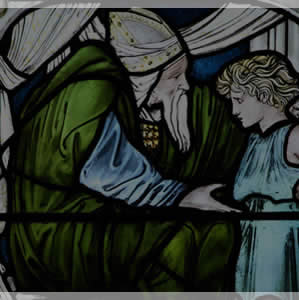 The Catholic Church, also known as the Roman Catholic Church. This is the largest Christian church, with approximately 1.3 billion baptised Catholics
worldwide, as of 2016. As one of the oldest religious institutions in the world, it has played a prominent role in the history and development of Western civilisation. The church is headed by the Bishop of Rome, known as the Pope. Its central administration, the Holy See, is in the Vatican City, an enclave within Rome, Italy. Catholic theology is based on the Nicene Creed.
What is Muslim?
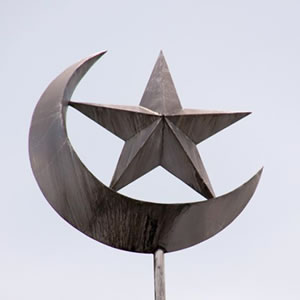 Early Islam or the history of Islam is believed, by most historians to have originated with Muhammad's mission in Mecca and Medina at the start of the
7th century CE. Although Muslims regard this time as a return to the original faith passed down by the Abrahamic prophets, such as Adam, Noah, Abraham, Moses, David, Solomon, and Jesus, with the submission (Islam) to the will of God. According to the traditional account, the Islamic prophet Muhammad began receiving what Muslims consider to be divine revelations in 610 CE, calling for submission to the one God, preparation for the imminent Last Judgement, and charity for the poor and needy.
What is the Church?
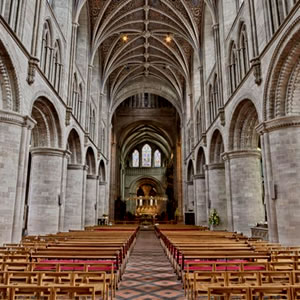 A church is a building used for Christian worship services and Christian activities. The earliest identified Christian church is a house church
founded between 233 AD and 256 AD. The word church also describes a body or assembly of Christian believers, while "the Church" refers to the worldwide Christian religious community.
What is Islam?
Early Islam or the history of Islam is believed, by most historians to have originated with Muhammad's mission in Mecca and Medina at the start of the
7th century CE. Although Muslims regard this time as a return to the original faith passed down by the Abrahamic prophets, such as Adam, Noah, Abraham, Moses, David, Solomon, and Jesus, with the submission (Islam) to the will of God. According to the traditional account, the Islamic prophet Muhammad began receiving what Muslims consider to be divine revelations in 610 CE, calling for submission to the one God, preparation for the imminent Last Judgement, and charity for the poor and needy.
Frequently Asked Questions
1.When was the word 'Catholic' first used?
2.When did Catholic Christianity become official religion of Rome?
3.How did early Catholics learn about Christianity?
4.When were Catholics encouraged to read the Bible for themselves?
5.Was Jesus a Catholic Christian?
6.Why did early Christians have church synods and councils?
7.How did James, leader of the Jerusalem Church, view Apostle Paul?
8.What are the origins of Christian church music?
9.What are the main practices of the Aladura Church?
|
|
|
|
10.Why do Aladura church members wear white?
|
|
Videos on Church (108)
 39:53
39:53
656
1480896000
1787396718
In Psalm 22:16, how did the Church show the Crucifixion of Jesus? - Tovia Singer
002393
1
 15:00
15:00
363
1482796800
1787396441
Jesus' birthplace (Church of Nativity, Bethlehem) - HolyLandSite
000900
2
 1:35:07
1019
1483401600
1787340491
How the Early Christian Church left its Jewish roots - Hoshana Rabbah
005707
3
 5:32
5:32
377
1490659200
1787353745
Catholic Church Crimes - Cruel Tortures 2/4
000332
4
367 views
6:59
367
1490659200
1787390573
Catholic Church Crimes - Holocaust 3/4
000419
5
 9:53
9:53
573
1490659200
1787354876
Catholic Church Crimes - Hideous Popes 4/4
000593
6
 9:21
9:21
941
1490659200
1787354431
In 1 John 5:8, the Church corrupted the New Testament to support the Christian Trinity - Tovia Singer
000561
7
 1:16:00
482
1493856000
1787417716
Spanish Inquisition - How the Catholic Church removed Muslims from Islamic Spain
004560
8
 6:43
6:43
628
1493856000
1787276882
The Roman Catholic Church changed the Sabbath from Saturday to Sunday, not Jesus
000403
9
 5:37
5:37
847
1496793600
1787363289
Irenaeus, Church Father (202 AD) exposed the Trinity - Dale Tuggy
000337
10
 45:06
45:06
521
1496793600
1787264753
False Church doctrine and False Christian teachings - Yahweh Ministry
002706
11
855 views
33:30
855
1496793600
1787379766
1 John 5:7 added the Trinity to the Bible. Why did the Church allow such corruption? - Tovia Singer
002010
12
 28:18
28:18
593
1501545600
1787396926
Why the Church chose not to fix Bible errors? - Tovia Singer
001698
13
 1:23:25
631
1501545600
1787290617
Early Church Fathers rejected the Trinity - Adnan Rashid vs PhD Josh
005005
14
 6:49
6:49
1100
1501545600
1787378132
Crusades: Roman Catholic Church began the African Slave Trade - John Henrik Clarke
000409
15
 37:17
37:17
260
1501545600
1787396492
Jesus' brother, James was leader of Early Church - Robert Eisenman
002237
16
 52:39
52:39
485
1501545600
1787390504
The Catholic Church hid the Truth and presented the 'best-dressed' Lie - Ray Hagins
003159
17
 1:21:54
830
1501545600
1787264744
Christianity is over and Church in decline - Ray Hagins
004914
18
 40:53
40:53
799
1501545600
1787396386
Constantine, Mithras and Paganism of the Church Exposed - Simcha Jacobovici
002453
19
 34:30
34:30
633
1501545600
1787355296
Paganism in Today's Christian Church - Jim Staley
002070
20
1014 views
17:47
1014
1501545600
1787315171
Jesus' Resurrection: Mark 16:9-20 was quoted by Early Church Fathers: Papias, Justin Martyr, Irenaeous, Hippolytus, Vincentius, Augustine - Chuck Missler
001067
21
 8:18
8:18
906
1504459849
1787396282
In 325 AD, Constantine imposed his vision of the Imperial Church on the Early Christians
000498
22
 33:06
33:06
256
1505867176
1787396415
Persecution in the Early Church 100-240 AD - Ryan Reeves
001986
23
 14:55
14:55
796
1506687193
1787264707
Orthodox Christian Church on Homosexuality and Same-sex Marriage - Abraham Wassef
000895
24
 45:17
45:17
1105
1506722498
1787271784
Rome: Constantine & The Early Roman Church - Paul Freedman 3/18
002717
25
514 views
24:18
514
1508492951
1787396402
Creeds and Church Councils - Ryan Reeves
001458
26
 29:17
29:17
650
1508492986
1787289903
Early Church and Trinity: Father and Son - Ryan Reeves
001757
27
 17:57
17:57
834
1509580270
1787396914
Pornography ruins our Childhood. The Amish Church saved me - Mohammed Hijab vs Amish Man 1/3
001077
28
 20:01
20:01
720
1509580317
1787397051
Pornography ruins our Childhood. The Amish Church saved me - Mohammed Hijab vs Amish Man 2/3
001201
29
 20:01
20:01
748
1509580309
1787396612
Pornography ruins our Childhood. The Amish Church saved me - Mohammed Hijab vs Amish Man 3/3
001201
30
 9:57
9:57
391
1510298365
1787401567
The Crucifixion of Truth by Tony Bushby (Reading) - Hidden Church Scrolls 2/9
000597
31
 1:00:07
614
1510767841
1787411887
Origins of Christmas: Early Church Fathers condemned Birthdays - Ken Humphreys
003607
32
 58:24
58:24
637
1513217161
1787398899
Prophet Haggai: Straight Talk to the Church of God - BeyondTV
003504
33
 1:03:52
248
1513602049
1787396732
Many follow Jesus, do Works, yet will go to Hellfire. Follow the Risen Jesus, have Faith, obey the Church Age to get Heaven - Robert Breaker
003832
34
 5:29
5:29
1131
1514850975
1787362104
In Matthew 28:19, is not a Trinitarian verse. Trinity came through evolution and Early Church Fathers in 325 and 451 AD finally - Anthony Buzzard
000329
35
 4:25
4:25
858
1516193781
1787385286
Russian Orthodox Church influenced Putin to save Christians in Syria from ISIS
000265
36
 21:21
21:21
575
1520082428
1787389653
Holding The Key: Jerusalem's Church of the Holy Sepulchre - Al-Jazeera
001281
37
 53:09
53:09
785
1525208904
1787415923
Church Fathers, Historians, Manuscripts and blind Faith prove Jesus spoke in John 1:1 - Anwar London vs Christian Jools
003189
38
 1:16
1:16
206
1526694836
1787396899
Early Church rejected any writings written by anonymous Authors, i.e. 3 Corinthians - Daniel Wallace
000076
39
 50:14
50:14
879
1528133244
1787369449
In 325 AD, Trinity became Official Church Doctrine at Council of Nicaea - Tovia Singer
003014
40
 3:06
3:06
888
1528561274
1787409751
Christmas, 25th December was Ancient Pagan festival. Church absorbed it into Christian theology - Doug Michael
000186
41
 1:10
1:10
726
1528563500
1787400898
The Christian Church adopted the 'Sun God' Mithras and pagan festivals from Mithraism - Doug Michael
000070
42
 1:13
1:13
835
1528496826
1787411484
In 601 AD, Pope Gregory I adopted Pagan customs and festivals into Christian Church - Doug Michael
000073
43
 1:20
1:20
886
1528567045
1787141487
Apostle Paul disrespects Jesus' disciples, Jesus' family and Jerusalem Church - David Fitzgerald
000080
44
 7:18
7:18
1333
1529453913
1787411683
Paul was 'Apostle to Gentiles' and claimed superiority over Jewish-Christians in Jerusalem Church - Tovia Singer
000438
45
 1:09
1:09
526
1531551995
1787394560
Church growth led to demand for New Testament; mass copying preferred over accuracy - Bruce Metzger
000069
46
 1:09
1:09
483
1531553864
1787372773
Church was slow to translate the Christian Bible into different languages - Bruce Metzger
000069
47
 2:31
2:31
493
1531853643
1787396654
Church Father, Irenaeus (France, 202 AD) wrote of 21 from 27 NT Bible books - Craig Blomberg
000151
48
 0:57
0:57
576
1531860271
1787396792
Church Father, Tertullian (Tunisia, 220 AD) wrote of 23 from 27 NT Bible books - Craig Blomberg
000057
49
 0:36
0:36
465
1532158496
1787314450
Early Church advanced Jesus to divinity, and later, to Triune 'Trinity' Godhead - Charles Hedrick
000036
50
 0:38
0:38
966
1533564004
1787336950
After 100 years, Church Fathers refered to gospels as Matthew, Mark, Luke & John - Bart Ehrman
000038
51
 2:36
2:36
833
1533865705
1787362098
Papias (d. 163 AD), a Proto-orthodox Church Father believed in Orthodox Christianity, before it was declared Orthodox – Bart Ehrman
000156
52
 7:32
7:32
864
1533869027
1787302343
21 Ecumenical Church Councils defined Catholic Christianity, between 325 AD and 1962
000452
53
1417 views
5:42
1417
1534072414
1787344569
In 382 AD, Council of Rome was earliest church council to list the 'canon' books in both OT & NT Bible - Jimmy Akin
000342
54
 50:18
50:18
724
1534710016
1787396956
Church sells Hope to 'enslaved' Black Communities deep in crisis & suffering - Umar Johnson
003018
55
 28:10
28:10
447
1535194545
1787396823
Apostolic Fathers (75-200 AD) put context to the Early Church - Ryan Reeves
001690
56
 6:11
6:11
844
1535194684
1787350226
By 381 AD, the Church had affirmed the Trinity doctrine, or was it 500 AD? - Daniel Wallace
000371
57
 2:19
2:19
459
1536234709
1787355508
It's Time to Quit the Catholic Church - Andrew Seidel
000139
58
 59:21
59:21
271
1536234906
1786383429
Heresy in the Early Church - Keith Mathison
003561
59
 13:44
13:44
774
1538524162
1786552299
Prove the Church Fathers believed in Trinity - Hamza Saudi vs Christian
000824
60
 28:39
28:39
404
1538524251
1787396703
Which Early Church Father said Jesus is CO-EQUAL with the Father? - Adnan Rashid vs Paperboy
001719
61
 28:31
28:31
270
1545226473
1787396658
History of Church of England - Mike Lawrence (NotoriUK)
001711
62
 39:15
39:15
717
1545226475
1787396462
Church of England: Control through Bigotry, Education and Slavery - Mike Lawrence (NotoriUK)
002355
63
881 views
35:56
881
1546290213
1787365550
Pauline Christianity came to dominate the early Church after 300 years of conflict - Mike Aus
002156
64
 53:41
53:41
608
1548534761
1787291668
Trinity took 400 years to develop with Church Fathers at the helm - Sean Finnegan
003221
65
 4:04
4:04
460
1549213443
1787374061
Church of England to hold Transgender services - BBC News
000244
66
 2:23
2:23
1048
1549451023
1787405718
Eusebius, an early Church Father loyal to Philo of Alexandria, who added the 'God From God' pagan idea to the Nicene Creed in 325 AD - approvedofGod
000143
67
 1:37
1:37
732
1549453502
1787396269
Early Church Fathers and their contributions - approvedofGod
000097
68
 2:40
2:40
447
1549989178
1787264737
Church of England abandoned me by adopting Secular, Anti-Christian values from Europe - Gavin Ashenden
000160
69
 27:33
27:33
428
1550019472
1787396506
Absolute Equality forced the Church of England to choose between Revelation or Revolution. I chose to leave - Gavin Ashenden
001653
70
976 views
56:50
976
1552936918
1787394565
Which Church Council gave Athanasius authority to decide the 27 New Testament books? - Mohammed Hijab vs Jason
003410
71
467 views
14:41
467
1552936954
1787396222
Origen, an Early Church Father, was known to tamper and corrupt Biblical manuscripts - Robert Wieland
000881
72
 14:14
14:14
550
1553512482
1787390578
Historically, St Paul's Cathedral was not a Christian Church - swilliamism
000854
73
 11:19
11:19
538
1553512496
1787396303
Book of Revelation was rejected by many early Church Fathers - Tovia Singer
000679
74
 11:55
11:55
1012
1553512494
1787371938
Christian Church claim Jesus' Crucifixion is in the Jewish Talmud/Scriptures is False - Tovia Singer
000715
75
 15:50
15:50
628
1559051914
1787373141
In 1646, the Church canonized 66 books of the Christian Bible. No one knows how or why - RTC
000950
76
514 views
16:46
514
1561323502
1787412663
Catholic Church challanges Transgender ideology as attack on Christian family values - Mark Dowd vs Jules Gomes
001006
77
 4:41
4:41
448
1562176468
1787397001
Biggest challenges facing the Church today? - William Lane Craig
000281
78
 8:53
8:53
682
1563022040
1787264749
Role of Israel in the Christian Church - Christian Diversity 1/2
000533
79
 9:21
9:21
693
1563022032
1787395269
Role of Israel in the Christian Church - Christian Diversity 2/2
000561
80
 11:44
11:44
587
1563022026
1787264760
Homosexuality cause of conflict in Christian Church - Christian Diversity 1/2
000704
81
 10:33
10:33
717
1563022020
1787082716
Homosexuality cause of conflict in Christian Church - Christian Diversity 2/2
000633
82
 5:15
5:15
402
1565054414
1787345206
Why I left the Church of England - Peter Sanlon (Christian Concern)
000315
83
 10:48
10:48
775
1567015597
1787396777
Rise of the Atheist/Godless Church | ReligionForBreakfast
000648
84
 2:02
2:02
662
1567036185
1787374147
Child Abuse is everywhere, not just the Catholic Church - Robert Barron
000122
85
946 views
4:48
946
1568332777
1787391664
Early Church Fathers & Gnostic Christianity pointed to dualism in Godhead and Nature - Robert Sullivan IV
000288
86
 9:37
9:37
1079
1591959651
1787276297
Catholic Church joins Trump to fight against the Deep State | Remnant Video
000577
87
 6:08
6:08
411
1593736788
1787396237
Dennis, Glendale, disabled, divorced at 60 years, spent savings, sleeping homeless on church patio - Invisible People
000368
88
 1:32:03
302
1595787893
1787396839
Hagia Sophia conversion into Mosque from Museum or Imperial Church puts Al-Aqsa Mosque at risk - Dialogue: Omar Baloch
005523
89
 11:25
11:25
958
1599291248
1787382014
California, USA: Our Church will not bow to COVID Fear. The Congregation fear God More - John MacArthur
000685
90
 6:38
6:38
850
1600611527
1787344878
Church threatened by Gay Pride and LGBT community for their unwavering Christian stand - Christian Concern
000398
91
 10:33
10:33
756
1610323288
1787376437
NWO and Vatican Catholic Church unite to build 'Inclusive Capitalism' - maneco64
000633
92
 14:25
14:25
547
1612721463
1787400097
Why Christian Church celebrates Jesus Birthday on 25 December? - Tovia Singer
000865
93
 40:55
40:55
817
1617622818
1787396257
Jesus crucifixion, burial tomb, resurrection in Golgotha, Calvary. Church of Holy Sepulchre - HolyLandSite
002455
94
 15:55
15:55
299
1746530135
1787396870
Let Women keep Silent in the Church | ISUPK
000955
95
 39:20
39:20
409
1770766511
1787401285
Israeli Zionists demand Christians and Catholic Church LEAVE Palestine | Taylor Marshall
002360
96
 9:16
9:16
180
1770948001
1787396208
Jesus Never Claimed to Be God. The Church Made It Up | Tovia Singer
000556
97
 4:16
4:16
207
1771261375
1787396762
Fear of Losing My Daughter in the Israeli Church Attacks | Jason Jones Show
000256
98
165 views
6:00
165
1771431186
1787397032
The Church gave us Christmas | ISUPK
000360
99
 24:04
24:04
270
1771847620
1787349082
Christian Church Under Attack by Hindutva Hindus in India | Impact Evangelism
001444
100
 6:20
6:20
300
1772050911
1787264754
Israel recruits Christian Church Pastors to promote Jewish-positive message | Young Turks
000380
101
 43:51
43:51
286
1773751419
1787350092
Hellfire does not exist in Christianity. Did your Church tell you? | Paul Wallis
002631
102
 20:20
20:20
128
1777484330
1787396568
Black Man told to act like White Jesus. Forgive everyone except his Own People | Umar Johnson vs Church boy
001220
103
 21:00
21:00
128
1777514297
1787396506
Emperor Constantine and Augustine influence over the Early Church | Peter Bolland
001260
104
 12:14
12:14
259
1778068686
1787264759
Christian Church storytelling of Jewish Antisemitism | Tovia Singer
000734
105
 40:37
40:37
127
1782165831
1787364092
Christian Church points to 'ambiguous' Bible verses to claim Jesus is GOD | Muslim Lantern vs Lady Caller
002437
106
 13:14
13:14
92
1783104766
1787179194
Tour of Ephesus, the City where Apostle Paul established a Church | Hoshana Rabbah
000794
107
 21:06
21:06
58
1785624362
1787388857
Israel Attacks Zawtar's Church of Mother Mary, South Lebanon | Free Palestine TV
001266
108
EXPLORE TOPICS :
CATHOLIC |
106
SPANISH INQUISITION |
1
ISLAM |
448
EARLY ISLAM |
16
MUSLIM |
305
CHURCH |
256