44:38
776 views
·
Last viewed: 1 hr ago
Uploaded: 01 Sep 2009 (17 years ago) · Shared: 04 May 2017
Video Description (from Youtube)
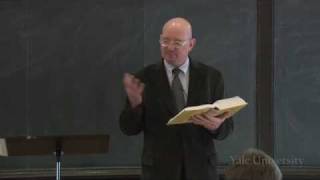
Introduction to New Testament (RLST 152) The Gospels of the New Testament are not biographies, and, in this class, they are read through a historical critical lens. This means that the events theynarrate are not taken at face value as historical. The Gospel of Mark illustrates how the gospel writer skillfully crafts a narrative in order to deliver a message. It is a message that emphasizes a suffering messiah, and the necessity of suffering before glory. The gospel's apocalyptic passages predict troubles for the Jewish temple and incorporate this prediction with its understanding of the future coming of the Son of Man.
00:00 - Chapter 1. The Gospels Not As Biographies
13:44 - Chapter 2. A Historical Critical Reading of Mark
22:18 - Chapter 3. Mark's Messiah
30:26 - Chapter 4. The Apocalyptic in Mark
Complete course materials are available at the Open Yale Courses website: http://open.yale.edu/courses
This course was recorded in Spring 2009.
DISCLAIMER
All videos are shared for educational and information purposes only. All videos are hosted and viewable on Youtube servers. Video titles are generated using the original video title; overall content theme including actual dialogue and speech (Transcript); and A.I-based recommendations with a focus on SEO, keyword density, and internal search functions. The video title does not represent the views held by the Youtube video uploader, or any individual, organisation or business.
If you spot any mistake, omission or give feedback, kindly Contact Us with details
Overview & Key Concepts
What is New Testament?
 The New Testament is the second part of the Christian biblical canon. The first part being the Old Testament, based on the Hebrew Bible. The New
Testament discusses the teachings and person of Jesus, as well as events in first-century Christianity. Christians regard both the Old and New Testaments together as sacred scripture. The New Testament (in whole or in part) has frequently accompanied the spread of Christianity around the world. It reflects and serves as a source for Christian theology and morality.
Who is Dale Martin?
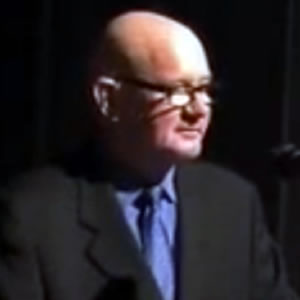 Dale Martin (born 1954) is an American New Testament scholar. He is Woolsey Professor of Religious Studies at Yale University. He has degrees from
Abilene Christian University, Princeton Theological Seminary, and Yale. Martin previously taught at Rhodes College and Duke University. Martin was elected a Fellow of the American Academy of Arts and Sciences in 2009.
What is Gospel?
 Gospel is the Old English translation of Greek evangelion, meaning "good news". It originally meant the Christian message itself, but in the 2nd
century it came to be used for the books in which the message was set out. The four gospels of the New Testament: Matthew, Mark, Luke and John are the main source of information on the life of Jesus.
Frequently Asked Questions
1.What is the King James Version (KJV) of the New Testament?
2.Is the New Testament historically authentic?
3.What is the oldest manuscript of the Bible New Testament?
4.What language is the earliest New Testament in?
5.What do Synoptic Gospels say about Jesus?
6.What did Apostle Paul think of his fellow Gospel writers?
7.How did Matthew (Gospel) support Apostle Pauline Christian doctrine?
8.When were the Gospels written?
9.What did Apostle Paul say about the other gospels?
10.Who wrote John's gospel?
11.What were the Apocryphal Gospels?
12.What is the significance of the Gospel of Thomas?
13.How was the Gospel of John viewed?
14.In 325 AD, did Emperor Constantine burn gospels, writings and religious text?
Multipart Video (1)
This video is part of a series as displayed below :New Testament: Gospel of Mark - Dale Martin 3/23