Zoom into photo with mouse scroll wheel, drag to pan
 Prophet Shem
Plains of Shinar / Babylon Basin (Central Iraq): Shem migrated south into these fertile plains to establish the early Semitic territories, where he lived out his centuries witnessing the rise of early Mesopotamian cities.
Genesis 11:10
Location: 32.536 - 44.421
View on Map
View on Map
What is the significance of Prophet Shem in Judaism, Christianity, and Islam?
Judaism
Regarded as the son of Noah and a transmitter of divine tradition, he is considered the ancestor of the Semitic peoples and the forefather of Abraham.
Christianity
Similar to Judaism, Christianity views Shem in the genealogy of Jesus, continuing the holy line from Noah to Abraham.
Islam
He is considered a righteous son of Noah and is venerated by some Islamic scholars as a prophet who inherited divine wisdom.
Explore More
Mesopotamia Babylon Iraq SHEMSearch Google Search Explore Topics
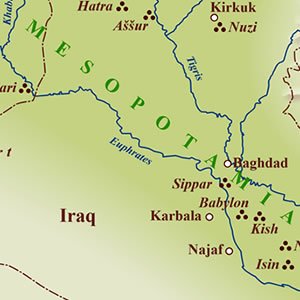 Where was Mesopotamia?
Mesopotamia is a historical region of West Asia situated within the Tigris-Euphrates river system, in the northern part of the Fertile Crescent. It corresponds roughly to the territory of modern Iraq and forms the eastern geographic boundary of the modern Middle East. Just beyond it lies southwestern Iran, where the region transitions into the Persian plateau, marking the shift from the Arab world to Iran. In the broader sense, the historical region of Mesopotamia also includes parts of present-day Iran (southwest), Turkey (southeast), Syria (northeast), and Kuwait. Mesopotamia is the site of the earliest developments of the Neolithic Revolution from around 10,000 BC. It has been identified as having "inspired some of the most important developments in human history, including the invention of the wheel, the planting of the first cereal crops, the development of cursive script, mathematics, astronomy, and agriculture". It is recognised as the cradle of some of the world's earliest civilizations.
 Where is Babylon?
Babylon was an ancient city located on the lower Euphrates river in southern Mesopotamia, within modern-day Hillah, Iraq. This is about 85 kilometres (53 miles) south of modern-day Baghdad. Babylon functioned as the main cultural and political centre of the Akkadian-speaking region of Babylonia. Its rulers established two important empires in antiquity, the 19th-16th century BC Old Babylonian Empire, and the 7th-6th century BC Neo-Babylonian Empire. Babylon was also used as a regional capital of other empires, such as the Achaemenid Empire. Babylon was one of the most important urban centres of the ancient Near East, until its decline during the Hellenistic period.
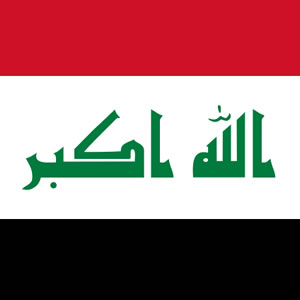 What is Iraq?
Iraq, officially known as the Republic of Iraq is a country in Western Asia. It is bordered by Turkey to the north, Iran to the east, Kuwait to the southeast, Saudi Arabia to the south, Jordan to the southwest and Syria to the west. The capital, and largest city, is Baghdad. Iraq is home to diverse ethnic groups including Arabs, Kurds, Assyrians, Turkmen, Shabakis, Yazidis, Armenians, Mandeans, Circassians and Kawliya. Around 95% of the country's 37 million citizens are Muslims, with Christianity, Yarsan, Yezidism and Mandeanism also present. The official languages of Iraq are Arabic and Kurdish.