When Yahweh was about to take Elijah up by a whirlwind into heaven, Elijah went with Elisha from Gilgal.
Elijah said to Elisha, “Please wait here, for Yahweh has sent me as far as Bethel.”
Elisha said, “As Yahweh lives, and as your soul lives, I will not leave you.” So they went down to Bethel.
The sons of the prophets who were at Bethel came out to Elisha, and said to him, “Do you know that Yahweh will take away your master from your head today?”
He said, “Yes, I know it. Hold your peace.”
Elijah said to him, “Elisha, please wait here, for Yahweh has sent me to Jericho.”
He said, “As Yahweh lives, and as your soul lives, I will not leave you.” So they came to Jericho.
The sons of the prophets who were at Jericho came near to Elisha, and said to him, “Do you know that Yahweh will take away your master from your head today?”
He answered, “Yes, I know it. Hold your peace.”
Elijah said to him, “Please wait here, for Yahweh has sent me to the Jordan.”
He said, “As Yahweh lives, and as your soul lives, I will not leave you.” Then they both went on.
Fifty men of the sons of the prophets went, and stood opposite them at a distance; and they both stood by the Jordan.
Elijah took his mantle, and rolled it up, and struck the waters, and they were divided here and there, so that they both went over on dry ground.
When they had gone over, Elijah said to Elisha, “Ask what I shall do for you, before I am taken from you.”
Elisha said, “Please let a double portion of your spirit be on me.”
He said, “You have asked a hard thing. If you see me when I am taken from you, it will be so for you; but if not, it will not be so.”
As they continued on and talked, behold, a chariot of fire and horses of fire separated them, and Elijah went up by a whirlwind into heaven.
Elisha saw it, and he cried, “My father, my father, the chariots of Israel and its horsemen!”
He saw him no more. Then he took hold of his own clothes, and tore them in two pieces.
He also took up Elijah’s mantle that fell from him, and went back, and stood by the bank of the Jordan.
He took Elijah’s mantle that fell from him, and struck the waters, and said, “Where is Yahweh, the God of Elijah?” When he also had struck the waters, they were divided apart, and Elisha went over.
When the sons of the prophets who were at Jericho over against him saw him, they said, “The spirit of Elijah rests on Elisha.” They came to meet him, and bowed themselves to the ground before him.
They said to him, “See now, there are with your servants fifty strong men. Please let them go and seek your master. Perhaps Yahweh’s Spirit has taken him up, and put him on some mountain, or into some valley.”
He said, “Don’t send them.”
When they urged him until he was ashamed, he said, “Send them.”
Therefore they sent fifty men; and they searched for three days, but didn’t find him.
They came back to him, while he stayed at Jericho; and he said to them, “Didn’t I tell you, ‘Don’t go?’”
2 Kings 2:1-18
Prophet Elijah in 2 Kings 2:1-18 | Taken to Heaven in Chariot
Witness the spectacular departure as Prophet Elijah is caught up into heaven by a fiery chariot and whirlwind, a miraculous event in 2 Kings 2:1-18.
ELIJAH
1798 views · Last view: 2 days ago
Witness the spectacular departure as Prophet Elijah is caught up into heaven by a fiery chariot and whirlwind, a miraculous event in 2 Kings 2:1-18.
ELIJAH
1798 views · Last view: 2 days ago
Explore More
Search Google Search Explore Topics Prophet Heaven What is a Prophet?
In religion, a prophet is an individual who is regarded as being in contact with a divine being and is said to speak on that entity's behalf. They claim to be serving as an intermediary with humanity by delivering messages or teachings from the supernatural source to other people. The message that the prophet conveys is called a prophecy. In Islam, all prophetic messengers are prophets (such as Adam, Noah, Abraham, Moses, Jesus, and Muhammad) though not all prophets are prophetic messengers. The primary distinction is that a prophet is required to demonstrate God's law through his actions, character, and behavior without necessarily calling people to follow him, while a prophetic messenger is required to pronounce God's law (i.e. revelation) and call his people to submit and follow him.
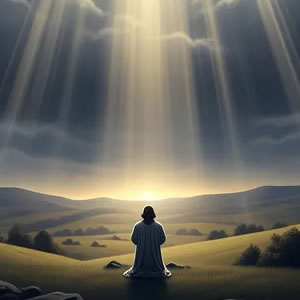 What is Heaven?
Heaven, or the Heavens, is a common religious cosmological or supernatural place where beings such as deities, angels, souls, saints, or venerated ancestors are said to originate, be enthroned, or reside. Heaven is often described as a 'highest place', the holiest place, a paradise, in contrast to Hell or the Underworld or the 'low places' and universally or conditionally accessible by earthly beings according to various standards of divinity, goodness, piety, faith, or other virtues or right beliefs or simply divine will.