But after a while, in the time of wheat harvest, Samson visited his wife with a young goat. He said, “I will go in to my wife’s room.”
But her father wouldn’t allow him to go in.
Her father said, “I most certainly thought that you utterly hated her; therefore I gave her to your companion. Isn’t her younger sister more beautiful than she? Please take her, instead.”
Samson said to them, “This time I will be blameless in the case of the Philistines, when I harm them.”
Samson went and caught three hundred foxes, and took torches, and turned tail to tail, and put a torch in the middle between every two tails.
When he had set the torches on fire, he let them go into the standing grain of the Philistines, and burned up both the shocks and the standing grain, and also the olive groves.
Then the Philistines said, “Who has done this?”
They said, “Samson, the son-in-law of the Timnite, because he has taken his wife, and given her to his companion.” The Philistines came up, and burned her and her father with fire.
Samson said to them, “If you behave like this, surely I will take revenge on you, and after that I will cease.”
He struck them hip and thigh with a great slaughter; and he went down and lived in the cave in Etam’s rock.
Then the Philistines went up, encamped in Judah, and spread themselves in Lehi.
The men of Judah said, “Why have you come up against us?”
They said, “We have come up to bind Samson, to do to him as he has done to us.”
Then three thousand men of Judah went down to the cave in Etam’s rock, and said to Samson, “Don’t you know that the Philistines are rulers over us? What then is this that you have done to us?”
He said to them, “As they did to me, so I have done to them.”
They said to him, “We have come down to bind you, that we may deliver you into the hand of the Philistines.”
Samson said to them, “Swear to me that you will not attack me yourselves.”
They spoke to him, saying, “No; but we will bind you securely, and deliver you into their hands; but surely we will not kill you.” They bound him with two new ropes, and brought him up from the rock.
When he came to Lehi, the Philistines shouted as they met him. Then Yahweh’s Spirit came mightily on him, and the ropes that were on his arms became as flax that was burned with fire, and his bands dropped from off his hands.
He found a fresh jawbone of a donkey, put out his hand, took it, and struck a thousand men with it.
Samson said, “With the jawbone of a donkey, heaps on heaps; with the jawbone of a donkey I have struck a thousand men.”
When he had finished speaking, he threw the jawbone out of his hand; and that place was called Ramath Lehi.
He was very thirsty, and called on Yahweh, and said, “You have given this great deliverance by the hand of your servant; and now shall I die of thirst, and fall into the hands of the uncircumcised?”
But God split the hollow place that is in Lehi, and water came out of it. When he had drunk, his spirit came again, and he revived. Therefore its name was called En Hakkore, which is in Lehi, to this day.
He judged Israel twenty years in the days of the Philistines.
Judges 15
Samson & the Donkey Jawbone Victory (Judges 15)
Relive the miraculous military triumph where Samson defeats a Philistine garrison using only a fresh donkey jawbone, guided by Prophet leadership. 1394 views · Last view: 18 hrs ago
Relive the miraculous military triumph where Samson defeats a Philistine garrison using only a fresh donkey jawbone, guided by Prophet leadership. 1394 views · Last view: 18 hrs ago
Explore More
Search Google Search Explore Topics Samson Bon Who was Samson?
Samson was the last of the judges of the ancient Israelites mentioned in the Book of Judges (chapters 13 to 16). He was one of the last leaders who "judged" the twelve tribes of Israel before the institution of the monarchy. He is sometimes regarded as an Israelite version of the popular Near Eastern folk hero archetype also embodied by the Sumerian Gilgamesh and Enkidu, as well as the Greek Heracles. Samson was given superhuman powers by God in the form of extreme strength. The biblical account states that Samson was a Nazirite and that he was given immense strength to aid him against his enemies and allow him to perform superhuman feats, including slaying a lion with his bare hands and massacring a Philistine army with a donkey's jawbone. The cutting of Samson's long hair would violate his Nazirite vow and nullify his super strength ability.
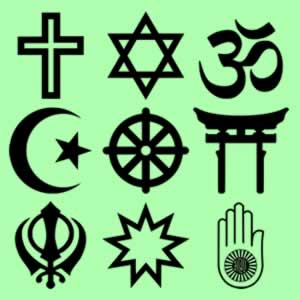 What is Bon?
The ancient religion of Tibet, Bon has gone through several incarnations as Tibet has changed rulers over its many years of existence. The origins of Bon were grounded in animistic, shamanistic, and mystic-like practices, but would later evolve to inherit texts and traditions (known as the Yungdrung Bon). The religion is still followed today by a small percentage of Tibetans; much of the religion is based on the five elemental processes of earth, water, fire, air, and space.