A man of the house of Levi went and took a daughter of Levi as his wife.
The woman conceived, and bore a son. When she saw that he was a fine child, she hid him three months.
When she could no longer hide him, she took a papyrus basket for him, and coated it with tar and with pitch. She put the child in it, and laid it in the reeds by the river’s bank.
His sister stood far off, to see what would be done to him.
Pharaoh’s daughter came down to bathe at the river. Her maidens walked along by the riverside. She saw the basket among the reeds, and sent her servant to get it.
She opened it, and saw the child, and behold, the baby cried. She had compassion on him, and said, “This is one of the Hebrews’ children.”
Then his sister said to Pharaoh’s daughter, “Should I go and call a nurse for you from the Hebrew women, that she may nurse the child for you?”
Pharaoh’s daughter said to her, “Go.”
The young woman went and called the child’s mother.
Pharaoh’s daughter said to her, “Take this child away, and nurse him for me, and I will give you your wages.”
The woman took the child, and nursed it.
The child grew, and she brought him to Pharaoh’s daughter, and he became her son. She named him Moses, and said, “Because I drew him out of the water.”
Exodus 2:1-10
Prophet Moses' Birth & Pharaoh's Daughter (Exodus 2:1-10)
Explore the miraculous birth of Prophet Moses and his dramatic rescue by Pharaoh's daughter, bridging historical narratives from Exodus and Islamic texts.
MOSES
1510 views · Last view: 18 hrs ago
Explore the miraculous birth of Prophet Moses and his dramatic rescue by Pharaoh's daughter, bridging historical narratives from Exodus and Islamic texts.
MOSES
1510 views · Last view: 18 hrs ago
Explore More
Search Google Search Explore Topics Daughter Pharaoh Prophet What is Daughter?
A daughter is a female offspring; a girl or a woman in relation to her parents. Daughterhood is the state, condition or quality of being someone's daughter. The male counterpart is a son. Analogously the name is used in several areas to show relations between groups or elements. From biological perspective, a daughter is a first degree relative. The word daughter also has several other connotations attached to it, one of these being used in reference to a female descendant or consanguinity. It can also be used as a term of endearment coming from an elder.
 Who is Pharaoh?
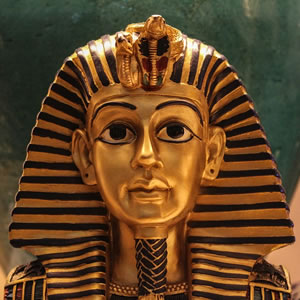
Pharaoh is the common title of the monarchs of ancient Egypt. Coming from the First Dynasty (c. 3150 BCE) until the annexation of Egypt by the Roman Empire in 30 BCE,[2] although the actual term "Pharaoh" was not used contemporaneously for a ruler until Merneptah, c. 1200 BCE.
 What is a Prophet?
In religion, a prophet is an individual who is regarded as being in contact with a divine being and is said to speak on that entity's behalf. They claim to be serving as an intermediary with humanity by delivering messages or teachings from the supernatural source to other people. The message that the prophet conveys is called a prophecy. In Islam, all prophetic messengers are prophets (such as Adam, Noah, Abraham, Moses, Jesus, and Muhammad) though not all prophets are prophetic messengers. The primary distinction is that a prophet is required to demonstrate God's law through his actions, character, and behavior without necessarily calling people to follow him, while a prophetic messenger is required to pronounce God's law (i.e. revelation) and call his people to submit and follow him.

![Video: Prophet Adam [The First Human]](https://img.youtube.com/vi/NhbHHN-Y1fM/mqdefault.jpg)