Q Who built the Kabah in Saudi Arabia?
A Prophet Abraham built the Kaaba for people to worship God. While pagan Arabs admitted this fact and even kept the stone where he used to stand to build the Kaaba (Abraham's station), they brought idols to the Kaaba and worshiped them to get closer to Abraham's Lord, Allah, God of gods. Prophet Muhammad came with the monotheistic message of Islam. Arabs defended these idols and refused to give up the religion of their fathers and grandfathers.
2 views (3 hrs ago)
A Prophet Abraham built the Kaaba for people to worship God. While pagan Arabs admitted this fact and even kept the stone where he used to stand to build the Kaaba (Abraham's station), they brought idols to the Kaaba and worshiped them to get closer to Abraham's Lord, Allah, God of gods. Prophet Muhammad came with the monotheistic message of Islam. Arabs defended these idols and refused to give up the religion of their fathers and grandfathers.
Explore More
Saudi Arabia KabahSearch Google Search Explore Topics
 What is Saudi Arabia?
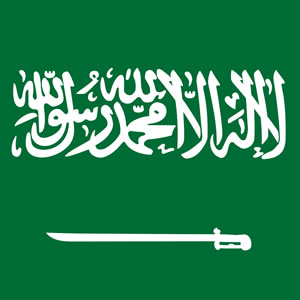
Saudi Arabia, officially the Kingdom of Saudi Arabia (KSA) is a country in Western Asia constituting the bulk of the Arabian Peninsula. With a land area of approximately 2,150,000 km2 (830,000 sq mi), Saudi Arabia is geographically the largest sovereign state in the Middle East, the 2nd largest in the Arab world (after Algeria), the 5th largest in Asia, and the 12th largest in the world. Saudi Arabia is bordered by Jordan and Iraq to the north, Kuwait to the northeast, Qatar, Bahrain, and the United Arab Emirates to the east, Oman to the southeast and Yemen to the south; most of its terrain consists of arid desert, lowland and mountains. As of October 2018, the Saudi economy was the largest in the Middle East and the 18th largest in the world. Saudi Arabia also enjoys one of the world's youngest populations; 50% of its 33.4 million people are under 25 years old.
 What is Kabah?
The Black Stone (al-Hajaru al-Aswad, "Black Stone") is a rock set into the eastern corner of the Kaaba, the ancient building located in the center of the Grand Mosque in Mecca, Saudi Arabia. It is revered by Muslims as an Islamic relic which, according to Muslim tradition, dates back to the time of Adam and Eve. The stone was venerated at the Kaaba in pre-Islamic pagan times. According to Islamic tradition, it was set intact into the Kaaba's wall by the prophet Muhammad in 605 CE, five years before his first revelation. Since then it has been broken into fragments and is now cemented into a silver frame in the side of the Kaaba. Muslim pilgrims circle the Kaaba as a part of the tawaf ritual during the hajj and many try to stop and kiss the Black Stone, emulating the kiss that Islamic tradition records that it received from Muhammad. Muslims do not worship the Black Stone.


![Video: Prophet Adam [The First Human]](https://img.youtube.com/vi/NhbHHN-Y1fM/mqdefault.jpg)