Q How is Elijah connected to Baalbek?
A The prophet Elijah is directly associated with Baalbek. According to classical Quranic commentaries and Islamic tradition (such as the writings of Ibn Kathir and Al-Tabari), Prophet Elijah was sent to the region of Baalbek to preach against the worship of the Canaanite storm god, Baal. The city's original ancient name stems from this deity, meaning 'Lord of the Beqaa Valley'.
In Chapter 37 of the Quran (Surah As-Saffat), Elijah's direct confrontation with his idol-worshipping people is mentioned: 'And Elijah was indeed one of the messengers. Remember when he said to his people, 'Will you not fear God? Do you call upon Baal and leave the Best of Creators, Allah...?' (Quran 37:123-126).
While the Biblical text places Elijah's confrontation with the prophets of Baal primarily in the Kingdom of Israel (such as Mount Carmel), early Middle Eastern geographic traditions linked the worship of Baal and Elijah's mission directly to the city of Baalbek. Near the ancient city, local folklore and regional geography still mark sites and traditions referencing Elijah's presence during his hiding and preaching.
2 views (4 days ago)
A The prophet Elijah is directly associated with Baalbek. According to classical Quranic commentaries and Islamic tradition (such as the writings of Ibn Kathir and Al-Tabari), Prophet Elijah was sent to the region of Baalbek to preach against the worship of the Canaanite storm god, Baal. The city's original ancient name stems from this deity, meaning 'Lord of the Beqaa Valley'.
In Chapter 37 of the Quran (Surah As-Saffat), Elijah's direct confrontation with his idol-worshipping people is mentioned: 'And Elijah was indeed one of the messengers. Remember when he said to his people, 'Will you not fear God? Do you call upon Baal and leave the Best of Creators, Allah...?' (Quran 37:123-126).
While the Biblical text places Elijah's confrontation with the prophets of Baal primarily in the Kingdom of Israel (such as Mount Carmel), early Middle Eastern geographic traditions linked the worship of Baal and Elijah's mission directly to the city of Baalbek. Near the ancient city, local folklore and regional geography still mark sites and traditions referencing Elijah's presence during his hiding and preaching.
Explore More
Baalbek Baal
ELIJAH
Search Google Search Explore Topics
 What is Baalbek?
Baalbek is a city located east of the Litani River in Lebanon's Beqaa Valley, about 67 km (42 mi) northeast of Beirut. It is the capital of Baalbek-Hermel Governorate. In 1998, the city had a population of 82,608. Most of the population consists of Shia Muslims, followed by Sunni Muslims and Christians; in 2017, there was also a large presence of Syrian refugees. Baalbek's history dates back at least 11,000 years. After Alexander the Great conquered the city in 334 BCE, he renamed it Heliopolis. The city flourished under Roman rule. However, it underwent transformations during the Christianization period and the subsequent rise of Islam following the Arab conquest in the 7th century. In later periods, the city was sacked by the Mongols and faced a series of earthquakes, resulting in a decline in importance during the Ottoman and modern periods.
 Who is Baal?
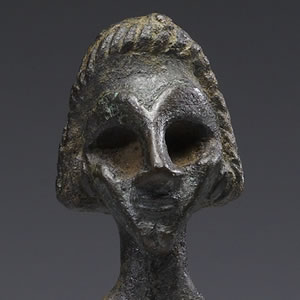
Baal was a title and honorific meaning 'owner' or 'lord' in the Northwest Semitic languages spoken in the Levant during antiquity. From its use among people, it came to be applied to gods. Scholars previously associated the theonym with solar cults and with a variety of unrelated patron deities, but inscriptions have shown that the name Baal was particularly associated with the storm and fertility god Hadad and his local manifestations. Known by epithets like 'rider of the clouds' and 'Victorious Baal', he was associated with rain, lightning, wind, fertility, and kingship, and was often depicted in opposition to sea and death deities like Yammu and Mot. Worship of Baal spread throughout the Levant, Egypt, and the Mediterranean. The Hebrew Bible includes use of the term in reference to various Levantine deities, often with application towards Hadad, who was decried as a false god. In the Hebrew Bible, Baal appears frequently as a foreign or rival deity, with prophets like Elijah opposing his cult, while in early Israelite contexts, the title may have sometimes referred to Yahweh. Depiction as a false god was taken over into Christianity and Islam, sometimes under the form Beelzebub in demonology.