
Q How is John connected to the Umayyad Mosque in Damascus, Syria?
A The primary tradition holds that his head was recovered after his beheading and interred in Damascus. The Shrine of Saint John the Baptist inside the mosque's main prayer hall is believed to house his head and is venerated by both Muslims and Christians.
4 views (3 hrs ago)
A The primary tradition holds that his head was recovered after his beheading and interred in Damascus. The Shrine of Saint John the Baptist inside the mosque's main prayer hall is believed to house his head and is venerated by both Muslims and Christians.
Explore More
Damascus Umayyad Syria
JOHN
Search Google Search Explore Topics
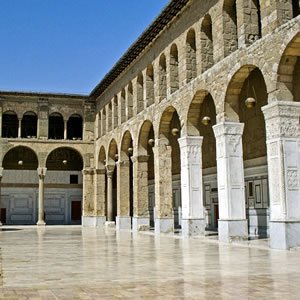 Where is Damascus?
Damascus is the capital of the Syrian Arab Republic. It is also the country's largest city, following the decline in population of Aleppo due to the battle for the city. In addition to being one of the oldest continuously inhabited cities in the world, Damascus is a major cultural center of the Levant and the Arab world. The city has an estimated population of 1,711,000 as of 2009.
 What was Umayyad?
The Umayyad Caliphate or the Umayyad Empire was the second caliphate established after the death of the Islamic prophet Muhammad and was ruled by the Umayyad dynasty from 661 to 750. It succeeded the Rashidun Caliphate, of which the third caliph, Uthman ibn Affan, was also a member of the Umayyad clan. The Umayyad family established hereditary rule under Muawiya ibn Abi Sufyan, the long-time governor of Greater Syria, who became caliph after emerging victorious in the First Fitna following the assassination of Ali in 661. Syria remained the Umayyads' core power base thereafter, with Damascus as their capital. After Muawiya's death in 680, Umayyad authority was challenged in the Second Fitna, during which the Sufyanid line was replaced in 684 by Marwan ibn al-Hakam, who founded the Marwanid line that restored Umayyad rule over the Caliphate.
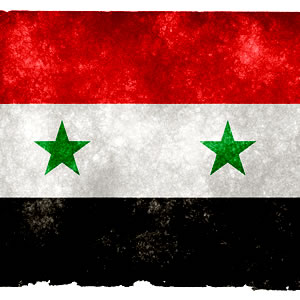 What is Syria?
Syria, officially the Syrian Arab Republic is a country in Western Asia, bordering Lebanon to the southwest, the Mediterranean Sea to the west, Turkey to the north, Iraq to the east, Jordan to the south, and Israel to the southwest. A country of fertile plains, high mountains, and deserts, Syria is home to diverse ethnic and religious groups, including Syrian Arabs, Greeks, Armenians, Assyrians, Kurds, Circassians, Mandeans and Turkemens. Religious groups include Sunnis, Christians, Alawites, Druze, Isma'ilis, Mandeans, Shiites, Salafis, Yazidis, and Jews. Sunnis make up the largest religious group in Syria.




![Video: Prophet Adam [The First Human]](https://img.youtube.com/vi/NhbHHN-Y1fM/mqdefault.jpg)