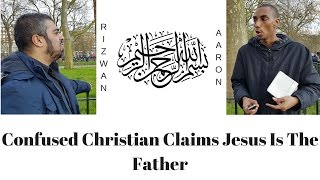
Q In Islam, can God become a Man?
A No, God is perfect and He is all powerful. Both Muslims and Christians accept that this is true. The ontological term for this is that God is 'immutable' or absolute in His perfect nature. In the Christian faith, God's incarnation is seen as a manifestation of His power, whereas in Islam it is seen as the changing of God's nature. If God is perfect, and God's nature changes, how can He be perfect?
It would have to mean that He was not perfect before and is now perfect, which would not make Him God or that He was perfect before and is now not perfect, which would also not make Him God.
If God is perfect, then there is no need for Him to become anything, so that He can grant us salvation. Since He's already perfect, loving and merciful, why would He need to change His nature to a weaker, human nature to grant us salvation? That's a contradiction. Therefore, when the Christian argues that God changing His nature makes Him perfect, this is not the case. They need to think before they speak. If God is perfect and you add something to His nature, does that mean He was not perfect before? Which means He was not a God before this addition?
If God is perfect and you add something to His nature, that would mean He lacked something before and thus could not be a God.
0 views (57 years ago)
A No, God is perfect and He is all powerful. Both Muslims and Christians accept that this is true. The ontological term for this is that God is 'immutable' or absolute in His perfect nature. In the Christian faith, God's incarnation is seen as a manifestation of His power, whereas in Islam it is seen as the changing of God's nature. If God is perfect, and God's nature changes, how can He be perfect?
It would have to mean that He was not perfect before and is now perfect, which would not make Him God or that He was perfect before and is now not perfect, which would also not make Him God.
If God is perfect, then there is no need for Him to become anything, so that He can grant us salvation. Since He's already perfect, loving and merciful, why would He need to change His nature to a weaker, human nature to grant us salvation? That's a contradiction. Therefore, when the Christian argues that God changing His nature makes Him perfect, this is not the case. They need to think before they speak. If God is perfect and you add something to His nature, does that mean He was not perfect before? Which means He was not a God before this addition?
If God is perfect and you add something to His nature, that would mean He lacked something before and thus could not be a God.
Explore More
Islam GODSearch Google Search Explore Topics
 What is Islam?
One of the major religions of the world, Islam literally translates to "submission," as a follower of Islam (Muslims) devotes their life to that of their God. The religion began with the teachings of Muhammad in the 7th century. The theology of Islam is based on the Qur'an, which was given to Muhammad by God. Some of the major fundamental principles of Islam include the Five Pillars, which hope to unite all Muslims into a community. Two different factions of Muslims exist - the majority are known as Sunni, with a small percentage known as Shi'a - both predominantly reside throughout the Middle East. Muhammad died in 632 AD and the religion of Islam formally started after his death. The Quran was formally compiled and finalised in 650 AD, prior to which it was 'memorised' and written across many parchments.
 Who is GOD?
In monotheism and henotheism, God is conceived as the Supreme Being and principal object of faith. The concept of God as described by theologians commonly includes the attributes of omniscience (infinite knowledge), omnipotence (unlimited power), omnipresence (present everywhere), omnibenevolence (perfect goodness), divine simplicity, and eternal and necessary existence. In theism, God is the creator and sustainer of the universe In deism, God is the creator, but not the sustainer, of the universe Monotheism is the belief in the existence of one God or in the oneness of God In pantheism, God is the universe itself In atheism, God is purported not to exist, while deemed unknown or unknowable within the context of agnosticism.