Q Who was Mithras, the Sun-God?
A Long before Jesus arrived, the Sun-God Mithras was worshipped.
* Mithras was said to have been a great mediator between God and humanity
* Mithras was born of a virgin in a cave on December 25th
* Mithras travelled far and wide with 12 disciples
* Mithras died in the service of humanity.
* Mithras rose again from the tomb, and his resurrection was celebrated with great rejoicing.
* His great festivals were the Winter Solstice and the Vernal Equinox.
* Mithras was called Saviour and sometimes figures as a lamb. People were initiated into the cult through the baptism of blood
2 views (3 days ago)
A Long before Jesus arrived, the Sun-God Mithras was worshipped.
* Mithras was said to have been a great mediator between God and humanity
* Mithras was born of a virgin in a cave on December 25th
* Mithras travelled far and wide with 12 disciples
* Mithras died in the service of humanity.
* Mithras rose again from the tomb, and his resurrection was celebrated with great rejoicing.
* His great festivals were the Winter Solstice and the Vernal Equinox.
* Mithras was called Saviour and sometimes figures as a lamb. People were initiated into the cult through the baptism of blood
Explore More
Mithras GODSearch Google Search Explore Topics
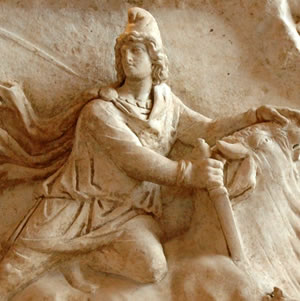 Who was Mithras?
Mithraism, was a mystery religion centered on the god Mithras that was practised in the Roman Empire from about the 1st to the 4th century CE. The religion was inspired by Persian worship of the god Mithra (Proto-Indo-Iranian/Vedic Mitra), though the Greek Mithras was linked to a new and distinctive imagery, and the level of continuity between Persian and Greco-Roman practice is debated. Worshippers of Mithras had a complex system of seven grades of initiation and communal ritual meals. Initiates called themselves syndexioi, those "united by the handshake". They met in underground temples, called mithraea, which survive in large numbers. The cult appears to have had its centre in Rome.
 Who is GOD?
In monotheism and henotheism, God is conceived as the Supreme Being and principal object of faith. The concept of God as described by theologians commonly includes the attributes of omniscience (infinite knowledge), omnipotence (unlimited power), omnipresence (present everywhere), omnibenevolence (perfect goodness), divine simplicity, and eternal and necessary existence. In theism, God is the creator and sustainer of the universe In deism, God is the creator, but not the sustainer, of the universe Monotheism is the belief in the existence of one God or in the oneness of God In pantheism, God is the universe itself In atheism, God is purported not to exist, while deemed unknown or unknowable within the context of agnosticism.