Q Do Unitarian Universalism followers believe in God or an afterlife?
A Because UU is a pluralistic faith, beliefs about God and the afterlife vary completely from person to person within the same congregation. Some members hold a traditional monotheistic belief in God, others hold pantheistic views of a universal life force, and many identify as Atheists or Secular Humanists. Similarly, there is no official doctrine on the afterlife; the religious focus is entirely placed on creating a just, loving world in the present life rather than securing salvation for the next.
0 views (57 years ago)
A Because UU is a pluralistic faith, beliefs about God and the afterlife vary completely from person to person within the same congregation. Some members hold a traditional monotheistic belief in God, others hold pantheistic views of a universal life force, and many identify as Atheists or Secular Humanists. Similarly, there is no official doctrine on the afterlife; the religious focus is entirely placed on creating a just, loving world in the present life rather than securing salvation for the next.
Explore More
Unitarian Universalism Afterlife Unitarian GODSearch Google Search Explore Topics
 What is Unitarian Universalism?
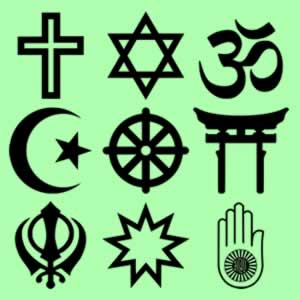
Unitarian Universalism ("UU") adherents do not necessarily share a common creed or subscribe to a specific doctrine. Instead, followers hold bylaws and values that are shared as a philosophy for life. Congregations of Unified Universalism began as Christian Protestants, and still share many of the traditions of Christianity today. However, followers are allowed to include other beliefs from separate religions to develop their own, as one of the main theories of the religion is its support of a "free and responsible search for truth and meaning".
 What is Afterlife?
In religion, the afterlife (also referred to as life after death or the Hereafter) is the concept of a realm, or the realm itself, in which an essential part of an individual's identity or consciousness continues to exist after the death of the body in the individual's lifetime. Some belief systems, such as those in the Abrahamic tradition, hold that the dead go to a specific plane of existence after death, as determined by god based on their actions or beliefs during life.
 What is Unitarian?
Unitarianism can be viewed as a form of Nontrinitarianism which is a form of Christianity that rejects the mainstream Christian doctrine of the Trinity. The teaching that God is three distinct hypostases or persons who are coeternal, coequal, and indivisibly united in one being, or essence (from the Greek ousia). Certain religious groups that emerged during the Protestant Reformation have historically been known as antitrinitarian, but are not considered Protestant in popular discourse due to their nontrinitarian nature. According to churches that consider the decisions of ecumenical councils final, Trinitarianism was definitively declared to be Christian doctrine at the 4th-century ecumenical councils, that of the First Council of Nicaea (325 AD), which declared the full divinity of the Son, and the First Council of Constantinople (381 AD), which declared the divinity of the Holy Spirit. In terms of number of adherents, nontrinitarian denominations comprise a minority of modern Christianity. The largest nontrinitarian Christian denominations are The Church of Jesus Christ of Latter-day Saints ("Mormons") and Jehovah's Witnesses.
Who is GOD?In monotheism and henotheism, God is conceived as the Supreme Being and principal object of faith. The concept of God as described by theologians commonly includes the attributes of omniscience (infinite knowledge), omnipotence (unlimited power), omnipresence (present everywhere), omnibenevolence (perfect goodness), divine simplicity, and eternal and necessary existence. In theism, God is the creator and sustainer of the universe In deism, God is the creator, but not the sustainer, of the universe Monotheism is the belief in the existence of one God or in the oneness of God In pantheism, God is the universe itself In atheism, God is purported not to exist, while deemed unknown or unknowable within the context of agnosticism.