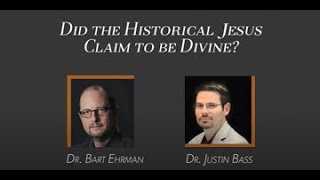
Is the original New Testament Bible lost? - Bart Ehrman vs Daniel Wallace
1:56:52
684 views
·
Last viewed: 11 hrs ago Uploaded:
12 Feb 2012 (15 years ago)
·
Shared: 23 Feb 2017
Video Description (from Youtube)
An evening of scholarly dialogue on the origins, the transmission, and the reliability of the New Testament. Do we have the original manuscripts? Can we trust the copies passed down to us? How
accurate is our New Testament today? These questions and more were discussed by two top-tier NT scholars. Both Dr. Ehrman and Dr. Wallace presented their respective positions before opening the floor for a time of Q&A.
http://ehrmanproject.com
DISCLAIMER
All videos are shared for educational and information purposes only. All videos are hosted and viewable on Youtube servers. Video titles are generated using the original video title; overall content theme including actual dialogue and speech (Transcript); and A.I-based recommendations with a focus on SEO, keyword density, and internal search functions. The video title does not represent the views held by the Youtube video uploader, or any individual, organisation or business.
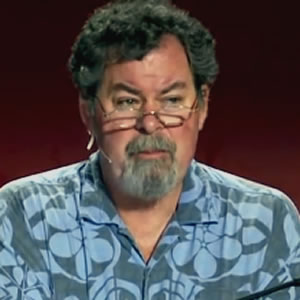
Daniel Wallace (born 1952) is an American professor of New Testament Studies at Dallas Theological Seminary. Wallace is also the founder and executive
director of the Center for the Study of New Testament Manuscripts, who seek to digitize all known Greek manuscripts of the New Testament via digital photographs.
The New Testament is the second part of the Christian biblical canon. The first part being the Old Testament, based on the Hebrew Bible. The New
Testament discusses the teachings and person of Jesus, as well as events in first-century Christianity. Christians regard both the Old and New Testaments together as sacred scripture. The New Testament (in whole or in part) has frequently accompanied the spread of Christianity around the world. It reflects and serves as a source for Christian theology and morality.

Bart Ehrman (born 1955) is an American New Testament scholar focusing on textual criticism of New Testament, historical Jesus, and development of
early Christianity. Ehrman has written and edited 30 books, including three college textbooks. He has also authored six New York Times bestsellers. He is currently the James A. Gray Distinguished Professor of Religious Studies at the University of North Carolina at Chapel Hill.

The King James Version (KJV) of the New Testament was completed in 1611 by 8 members of the Church of England.
There were (and still are) no original texts to translate. The oldest manuscripts we have were written down hundreds of years after the last Apostle died. There are over 8000 of these old manuscripts, with no two alike.
The King James translators chose to use none of the texts. Instead, they edited previous translations to create the New Testament their king and parliament would approve.
So today, 21st century Christians believe the 'Word of God' is a book edited in the 17th century from 16th century translations of 8000 contradictory copies of 4th century scrolls that claim to copies of lost letters written in the 1st century by unknown authors.
Textual critics note that the original autographs of the New Testament books no longer exist, leaving thousands of handwritten Greek manuscripts that contain thousands of minor variants, mostly consisting of spelling or word order differences. Despite these historical copy changes, scholars emphasize that modern textual reconstruction methods allow historians to confidently identify the original 1st-century text, ensuring no essential historical narrative or Christian doctrine is left in doubt.
It is of enormous importance in establishing the biblical text. There are three earliest manuscripts of the Bible New Testament:
1. Codex Alexandrinus is one of the earliest and most important manuscripts of the entire Bible in Greek
2. Codex Sinaiticus is one of the most important books in the world and is kept in the British Library. Handwritten well over 1600 years ago, the manuscript contains the Christian Bible in Greek, including the oldest complete copy of the New Testament.
The earliest New Testament manuscripts are in Koine Greek. But there are Aramaic phrases in the Gospels. Therefore, Scholars believe an Aramaic layer lies beneath the written Greek of the New Testament, one which may never have been written down.
If true, the Greek text is itself a translation, and English text would be a translation of a translation, which raises textual inerrancy and corruption issue.
Since every translation is a personal judgement of which word to best use, made at the translators discretion.
Jesus' disciples were Aramaic speaking, lower class, uneducated labourers. Gospels were written by highly educated, Greeks 50 years after Jesus - Bart Ehrman