Uploaded: 22 Jun 2018 (8 years ago) · Shared: 23 Jun 2018
Duration: 0:13
Video Description
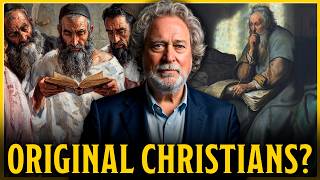
Explore the fascinating evolution of theological thought with renowned New Testament scholar Bart Ehrman as he delves into the surprising diversity of early Christian beliefs. While modern readers often view the Christian faith through a unified monotheistic lens, the early history of the Church reveals a vast spectrum of theological ideas. In this insightful discussion, Ehrman unpacks how different ancient sects interpreted divine nature, with some accepting one God, while others recognized two, thirty, or even 365 distinct deities.
Understanding these ancient perspectives offers valuable context for students of comparative religion and Abrahamic faiths, including Christianity, Judaism, and Islam. By examining how early doctrines developed before orthodoxy was established, viewers gain a deeper appreciation for the historical context of the Bible and the evolution of religious thought. Discover the fascinating debates that shaped the foundational history of global faith.
Explore More
Early Christian Bart Ehrman GODSearch Google Search Explore Topics
 What is Early Christian?
Early Christianity, the period of Christianity preceding the First Council of Nicaea in 325 AD. This typically divides historically into the Apostolic Age and the Ante-Nicene Period (from the Apostolic Age until Nicea). The first Christians, as described in the first chapters of the Book of Acts, were all Jews either by birth or conversion and historians refer to them as Jewish Christians. The early Gospel message spread orally, probably originally in Aramaic, and later in Greek. The New Testament's Acts of the Apostles and Epistle to the Galatians record that the first Christian community centered on Jerusalem and that its leaders included Peter, James, the brother of Jesus, and John the Apostle.
 Who is Bart Ehrman?
Bart Ehrman (born 1955) is an American New Testament scholar focusing on textual criticism of New Testament, historical Jesus, and development of early Christianity. Ehrman has written and edited 30 books, including three college textbooks. He has also authored six New York Times bestsellers. He is currently the James A. Gray Distinguished Professor of Religious Studies at the University of North Carolina at Chapel Hill.
 Who is GOD?
In monotheism and henotheism, God is conceived as the Supreme Being and principal object of faith. The concept of God as described by theologians commonly includes the attributes of omniscience (infinite knowledge), omnipotence (unlimited power), omnipresence (present everywhere), omnibenevolence (perfect goodness), divine simplicity, and eternal and necessary existence. In theism, God is the creator and sustainer of the universe In deism, God is the creator, but not the sustainer, of the universe Monotheism is the belief in the existence of one God or in the oneness of God In pantheism, God is the universe itself In atheism, God is purported not to exist, while deemed unknown or unknowable within the context of agnosticism.