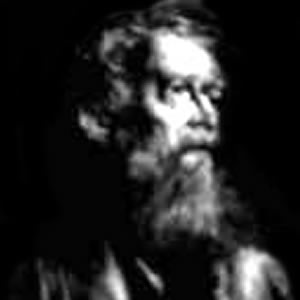
ENGLISH: Terah
HEBREW: Terach
ARAMAIC: Tarah
ARABIC: Azar
BIRTH: 2345 BC
DEATH: 2140 BC
AGE: 205 Years
SCRIPTURE: Unknown
Who was Terah?
Terah was also, a high priest of the idol worshippers. He had twelve chief gods, one for each month of the year, and other idols. In fact, there was a workshop in Terah's house, where idols of wood, stone, silver and gold were made. People came to offer sacrifices to these idols, and Terah had a thriving business.
Eventually, Abraham persuaded his father Terah to give up his idolatry and he went with Abraham to the land of Canaan.
Why did God send Terah?
The primary purpose of prophets was to deliver divine guidance, moral laws, and spiritual warnings directly from God to humanity.
Judaism: Speaking truth to power, correcting kings, and calling Israel back to its covenant with God.
Christianity: Foretelling the Messiah (Jesus) and preparing humanity for the Kingdom of God.
Islam: Establishing absolute monotheism (Tawhid) and delivering legal frameworks to every nation.
What was Terah's role?
The father of Abraham, representing the early migration of his family from Mesopotamia towards the land of Canaan.
What was Terah's core message to the people?
Describe the society/world Terah came into
| The Environment |
| The sophisticated, hyper-urbanized, and densely populated imperial cities of ancient Mesopotamia, specifically Ur of the Chaldeans and later the trading outpost of Harran. |
| The Society |
| A powerful, highly educated, and advanced Bronze Age civilization dominated by complex administrative hierarchies and extensive commercial trade networks. |
| The Social Climate |
| Thoroughly saturated with state-sponsored polytheism, astrology, and pagan idol manufacturing (a lucrative family business Terah ran, according to biblical and Islamic traditions), making any divergence into ethical monotheism a socially dangerous act of treason. |
List the countries Terah set foot in?
- Tell el-Muqayyar region (Chaldea), Iraq
- Tell el-Muqayyar (Ur), Iraq
- Harran, Turkey
- Euphrates River valley trading routes, Iraq / Syria
- Harran, Turkey
- Harran, Turkey
On googlemaps, where was Terah sent?
When was Terah on Earth?
Who is Terah in other religions?
| Terah in Judaism |
| Viewed in the biblical narrative as the father of Abraham, rabbinic traditions depict him negatively as an idol-maker or idolater from Ur who underwent a spiritual failing. |
| Terah in Christianity |
| Mentioned in the New Testament in the ancestral lineage of Jesus, he is historically viewed as the patriarch who began the migration of God's chosen people from Ur. |
| Terah in Islam |
| He is remembered as the father of Abraham who made idols and opposed his son's monotheistic teachings. |
Was Terah related to other prophets?
What photo evidence exists for Terah?
Is Terah in the news today?
What interesting facts are there about Terah?
TERAH
130 years old when Abraham was born
TERAH
Lived and talked with both Noah and Shem
TERAH
Lived for 205 years
TERAH
Three times great grandson of Eber
What faq questions are asked of Terah?
Where can I learn more of Terah?
What did Terah finally achieve?
What Youtube videos can I watch to learn more on Terah?
 34:45
34:45
14
1783345873
1784349924
God separates Abraham from his father, Terah
002085
1
 4:34
4:34
13
1783345803
1784313676
Story of Terah - Father of Abraham
000274
2

 10:49
10:49
12
1783346231
1784343160
Terah - True Father to Abraham
000649
4
 18:34
18:34
11
1783346484
1784324560
Terah separated from his father, Abraham
001114
5
Do any scripture texts refer to Terah?
Terah in the Torah
Torah is the first 5 books* of the Old Testament: Genesis, Exodus, Leviticus, Numbers and Deuteronomy.Terah in the Psalms
Psalms is the third section of the Hebrew Bible. Many of the Psalms are linked to David.Terah in the Bible (Old Testament)
The Old Testament consists of 39 books* including the Jewish Torah (Genesis, Exodus, Leviticus, Numbers and Deuteronomy).Terah in the Bible (New Testament)
The New Testament (Christianity) consists of 66 books*. 39 books from the Old Testament, and 27 additional books including Matthew, Mark, Luke and John.Terah in the Quran
The Quran was revealed to Muhammad through the Angel Gabrial. It is the central religious text of Islam, which Muslims believe to be a direct revelation from God.Terah in Hadith
Hadith are the "prophetic traditions" of Muhammad; his teachings, actions, deeds and sayings. Hadith were compiled from oral reports in circulation in society around the time of their compilation.Terah in Ibn Kathir
Ibn Kathir (1300-1373) was an influential Muslim scholar/historian who wrote the reknowned 'Qisas Al-Anbiya' (Stories of the Prophets) book. An authorative and respected thesis on the many prophets of GodIMPORTANT NOTE: Ibn Kathir is NOT Revealed Scripture. It appears here as it contains relevant information