JORDAN
Jordan is bordered by Saudi Arabia to the south and the east, Iraq to the north-east, Syria to the north and Israel and Palestine (West Bank) to the west. The Dead Sea is located along its western borders and the country has a small coastline to the Red Sea in its extreme south-west, but is otherwise landlocked. Jordan is strategically located at the crossroads of Asia, Africa and Europe. The capital, Amman, is Jordan's most populous city as well as the country's economic, political and cultural centre.
Photos on Jordan (25)






Youtube Videos on Jordan (20)
 The
 John the Baptist was baptizing in the River
 In Mark 1:5, John the Baptist baptized in the River
 Was Petra (
 In Psalm 83, is Israel and USA going to war with Palestine, Iran, Iraq, Lebanon,
 The ZamZam Well was most likely in Petra,
 Why do I have to give God a Name? - Shamsi vs
 Can Dan Gibson prove Early Muslims prayed to Petra,
 Petra,
 Tour of
 Tour of Petra,
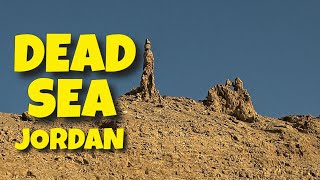 Tour of Dead Sea,
 Tour of Roman Amphitheatre, Amman,
 Tour of Jerash,
 Tour of Amman Citadel,
 Tour of Lot's Cave overlooking Sodom-Gomorrah,

 How Saudi Arabia, UAE,
 Egypt,
 Saudi Arabia, Egypt,
FAQ on Jordan (13)
1.How did John The Baptist prepare for the coming of Jesus?
In biblical history, John the Baptist acted as the prophetic herald or forerunner to Jesus, fulfilling ancient prophecies of a 'voice crying in the wilderness' to prepare the way of the Lord. He prepared the population by preaching a message of urgent moral repentance and performing a baptism of water in the Jordan River, explicitly directing his disciples to look forward to the greater figure coming after him.
2.How is John connected to the Damascus Gate in Jerusalem?
Coming from the Judean wilderness and the Jordan River region to the north and east, traditional accounts place his movements and preaching in the areas surrounding Jerusalem's northern and eastern entry points.
3.How did Prophet Aaron die and where is he buried?
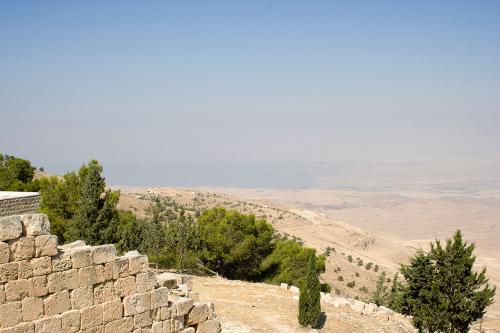
Aaron passed away at the age of 123 atop Mount Hor before the Israelites entered the Promised Land. His traditional tomb (Jabal Harun or Tomb of Aaron) is located near Petra, Jordan.
4.What major miracles were performed through Prophet Elisha?
God granted Elisha numerous astonishing miracles, including parting the Jordan River, purifying a poisoned water spring, multiplying a poor widow's jars of oil to save her family from debt, raising a young boy from the dead, and curing the Syrian military commander Naaman of leprosy.
5.Who was Prophet Jethro in religious and historical tradition?
Jethro (known as Shoaib in Islam and Reuel in early biblical passages) was a wise prophet, elder, and priest of Midian (located near modern-day northwest Saudi Arabia and Jordan). He was the father-in-law of Moses, offering him refuge and guidance after Moses fled Egypt.
6.What was John's primary spiritual role and connection to Jesus?
John served as a spiritual herald and precursor to Jesus. In Christianity, he baptized people in the Jordan River including Jesus symbolizing spiritual purification and preparing the public for the Messiah's ministry. In Islam, he is revered as a noble prophet who confirmed the truth of Jesus's message.
7.Who was Prophet Joshua in religious and historical tradition?
Joshua (known as Yusha' ibn Nun in Islam and Yehoshua in Judaism) was a courageous military general, prophet, and the chosen successor to Moses. Born in Egypt during the Israelites' bondage, he led the Twelve Tribes across the Jordan River to conquer Canaan and fulfill the promise of entering the Holy Land.
8.How long did Prophet Joshua live, and where is he buried?
Joshua lived to be 110 years old. After dividing the land of Canaan among the Twelve Tribes of Israel and renewing their covenant with God, he died and was buried in his inherited land at Timnat-serah. A historical shrine dedicated to him (Nabi Yusha') also stands near Salt, Jordan.
9.Who was Prophet Lot in religious and historical tradition?
Lot (known as Lut in Islam) was a righteous patriarch, prophet, and nephew of Abraham. Sent to the Jordan River valley, he served as a messenger to the cities of Sodom and Gomorrah, urging the people to abandon rampant immorality, highway robbery, and corruption.
10.Where was the ancient region of Midian located?
The region settled by Midian and his descendants was located east of the Gulf of Aqaba, spanning present-day northwest Saudi Arabia, southern Jordan, and parts of the Sinai Peninsula. Its position along major ancient trade routes made it a major commercial hub.
11.Where did Prophet Moses die, and where is he buried?
After leading the Israelites through 40 years of wandering in the wilderness, Moses viewed the Promised Land from Mount Nebo in modern-day Jordan. He passed away at the age of 120 without entering the land. According to biblical and Islamic traditions, his exact grave location was kept hidden by God to prevent idolization, though a historical shrine (Nabi Musa) stands near Jericho.
12.What role did Phinehas play as a military and political leader?
Beyond his priestly duties, Phinehas served as a trusted leader in times of conflict. He accompanied the Israelite army into battle against Midian, led diplomatic delegations to avert civil war among the tribes near the Jordan River, and guarded the Ark of the Covenant during the era of the Judges.
13.Where do the Druze live today and what is their population?
There are an estimated 800,000 to 2 million Druze worldwide, concentrated almost entirely in the mountainous regions of the Levant. Syria holds the largest population (primarily in the Jabal al-Druze region), followed by significant, influential communities in Lebanon, Israel (specifically the Galilee and Carmel mountains), and Jordan. Due to historical emigration, vibrant diaspora communities also exist in Latin America (especially Venezuela) and North America.
News on Jordan (10)
Photo Album on Jordan (4)
Scripture Themes on Jordan (2)
| 1. Joshua leads Israel across the Jordan River | Joshua 3 |
| 2. Israel sets up a stone memorial after crossing the Jordan | Joshua 4 |