HEBREW
A regional dialect of the Canaanite languages, it was natively spoken by the Israelites and remained in regular use as a first language until after 200 CE and as the liturgical language of Judaism (since the Second Temple period) and Samaritanism. The language was revived as a spoken language in the 19th century, and is the only successful large-scale example of linguistic revival. It is the only Canaanite language still spoken today. It is also one of the only two Northwest Semitic languages with contemporary speakers, the other being Aramaic. Nearly all of the Hebrew Bible is written in Biblical Hebrew, with much of its present form in the dialect that scholars believe flourished around the 6th century BCE, during the time of the Babylonian captivity.
FAQ on Hebrew (34)
1.Who is Allah?
Allah is the official Arabic word used to signify God. The title is entirely unique because it has no plural or gendered forms, unlike standard words like gods or goddesses. It simply translates to 'The One and Only True God'. Linguistic origins show variants like 'Elah' or 'Eloh' in the Hebrew Torah, as well as in the original Aramaic language spoken by Jesus.
2.How did the Early Jewish-Christians practise their religion?
The earliest Jewish-Christians strictly followed traditional Hebrew practices, including daily prayers, circumcision, rituals for purity, fasting, dietary laws, and temple, according to the source material.
3.How did Apostle Paul break Gods Law?
Paul is described as rejecting the binding authority of the Torah, specifically mandatory male circumcision as an everlasting covenant and laws regarding dietary purity. Thereby breaking away from divine commands given to the Hebrew people.
4.Is Jesus the English name for Yeshua?
Yes, 'Jesus' is the modern English translation of the historical Hebrew and Aramaic name Yeshua. It evolved phonetically over centuries as it passed from the original Aramaic into Greek as Iesous, then into Latin as Iesus, before eventually taking its current English form.
5.What does the name Jesus mean?
Linguistically, the name Yeshua (Jesus) means 'Yahweh is salvation' or 'The Lord saves' in ancient Hebrew. It is the exact same name as the Old Testament figure Joshua, highlighting a theological theme of deliverance and salvation within biblical history.
6.Where did the name Yahweh come from?
The name Yahweh is the principal, sacred vocalisation of the Hebrew Tetragrammaton (YHWH), revealed historically to Moses in the Old Testament Book of Exodus as God's personal covenant name. Biblical scholars note its linguistic roots link directly to an archaic Hebrew verb meaning 'To Be,' signifying the eternal, self-existing, and uncreated nature of the Creator.
7.How did the prophets Moses, Jesus, Abraham etc. call out to God?
Historical and linguistic evidence shows that these prophets spoke ancient Semitic languages, meaning they addressed God using linguistic cognates tightly linked to the Arabic word Allah. Abraham and Moses historically used the Hebrew names El or Elohim, while Jesus addressed God in Aramaic using Elah or Alaha, all of which share identical ancient roots across the Semitic language family tree.
8.Is Muhammad mentioned in the Bible?
Mainstream Christian and Jewish biblical scholars state that Muhammad is not mentioned anywhere in the Hebrew Bible or New Testament, as these texts predate Islam by centuries. However, Islamic theology interprets specific biblical passages as prophecies of his coming, most notably Deuteronomy 18:18 (a prophet 'from among their brothers') and the promised 'Comforter' (Paracletos) in John 14-16, which Muslims believe refers to Muhammad rather than the Holy Spirit.
9.How did God address Abraham and his wives?
In the text of the Hebrew Bible (Genesis 12-25), God speaks directly to Abraham on multiple occasions, renaming him from Abram and establishing an everlasting covenant through his descendants. God addresses his first wife, Sarah, by changing her name from Sarai and promising her a son in her old age, and also directly addresses his second wife, Hagar, through an angel in the wilderness, comforting her and promising to make a great nation out of her son Ishmael.
10.What did Moses command his people to do?
In the text of the Hebrew Bible (the Torah), Moses explicitly commanded the Israelites to strictly observe the covenantal laws, moral statutes, and civil judgments given by God at Mount Sinai, summarized in Deuteronomy 6:4-5. Historical-critical scholars emphasize that Moses' mission was to establish a highly structured, law-observant community that rejected ancient polytheism and maintained a unique identity through dietary codes (Kosher), Sabbath observance, and sacrificial rituals. Both Jewish and Islamic traditions view Moses as a lawgiver whose primary instruction was obedience to divine law.
11.Is their violence in the Quran?
Like many ancient religious scriptures, including the Hebrew Bible, the Quran contains passages dealing with warfare, military engagement, and state-level defense. Academic historians note that these specific verses were revealed chronologically during the 7th century to regulate battle conduct, enforce military discipline, and motivate the early Muslim community when they were heavily outnumbered by hostile pagan forces in Arabia.
12.Who did Abraham sacrifice: Ishmael or Isaac?
This question highlights a foundational narrative variance between the Abrahamic scriptures. The Hebrew Bible (Genesis 22) explicitly names Isaac as the son brought to Mount Moriah for the binding sacrifice. In contrast, while the Quranic text (Surah As-Saffat 37:100-113) does not explicitly name the sacrificial son, the vast majority of mainstream Islamic tradition identifies Ishmael as the intended sacrifice, pointing to the narrative timeline where Abraham is promised Isaac only after passing the ultimate test of his willingness to offer his firstborn.
13.Does the Old Testament teach the Christian Trinity?
Mainstream biblical scholars and historians agree that the Old Testament does not explicitly teach the doctrine of the Trinity, nor did ancient Jewish communities possess a concept of a triune Godhead. There is no historical evidence in pre-Christian Jewish literature including the Hebrew text, the Dead Sea Scrolls, or ancient commentaries of a belief in a plurality of divine Persons. While Christian theologians retrospectively interpret certain plural expressions (such as 'Let us make man' in Genesis 1:26) as hints of the Trinity, ancient Judaism strictly maintained a unitarian monotheistic understanding of God.
14.Did Jesus confirm the oneness of God?
Yes. Throughout his ministry, Jesus consistently reinforced that the Creator is a single, unique entity, adhering to the monotheism of the Hebrew prophets.
15.How did Apostle Paul convince the Gentiles?
Paul's theological message had a strategic advantage because it stayed close to the authority of the Hebrew Scriptures while thoroughly re-interpreting them to forecast the saving death of Jesus. This scriptural grounding gave his teachings a unique legitimacy that proved highly attractive and persuasive to the Gentile masses.
16.How is the Hebrew Bible different from the Greek Bible (Septuagint)?
Even in their earliest days, important differences existed between the Hebrew text and the Greek Septuagint because the latter's increasing popularity led to thousands of handwritten copies where scribes multiplied mistakes. Over time, marginal notes and footnotes were accidentally added into the body of the text, causing the Greek and Hebrew Bibles to diverge more widely through a process of continual corruption.
17.How did Jews view the Greek Bible (Septuagint)?
The Jewish community regarded the Septuagint only as a translation of the original Hebrew, never as an independent or authoritative scripture.
18.In the past, how were the Christians viewed?
Paul's Christianity had a universal ambition; it aspired to bring salvation to the world.
Christianity had to reject the Hebrew representation of scripture, written in the obscure, provincial tongue only the Jews spoke, and to announce the miraculous new revelation of Septuagint, the eternal bible reincarnated in a language that everyone understood.
19.How is Cain linked to Iraq linguistically?
Some theories propose a connection between Enoch (also rendered Erech in Genesis 10:10) and Uruk. In Hebrew, Erech is directly identified by modern historians as the ancient city of Uruk (in Iraq)
20.Who was Prophet Seth, and what does his name mean?
Seth was the third son of Adam and Eve, born after the murder of Abel. His name originates from Hebrew (Sheth) and Arabic (Sheeth), meaning 'granted', 'placed', or 'appointed'. His mother, Eve, named him Seth because God granted him as a divine gift and spiritual successor to replace Abel.
21.Who was Prophet Abel, and what does his name mean?
Abel was the second son of Adam and Eve and the younger brother of Cain (Qabil). His name originates from Hebrew (Habel or Hevel), meaning 'breath,' 'vapor,' or 'transitory,' reflecting the brief nature of his earthly life. He was a humble shepherd who served as humanity's first righteous servant and first martyr.
22.What nation or people descended from Aram?
Aram is traditional considered the progenitor of the Arameans, an ancient Semitic group that inhabited regions of modern-day Syria and upper Mesopotamia. The region of Syria is often referred to as 'Aram' in the Hebrew Scriptures, and his descendants gave rise to the Aramaic language, the historical language spoken by Jesus.
23.What is the origin of the word 'Hebrew' according to tradition?
Linguistically and historically, the term 'Hebrew' is derived directly from the name Eber. His descendants were referred to as the 'Hebrews', denoting those descended from his righteous lineage.
24.What is the Book of Enoch?
The Book of Enoch is an ancient apocryphal religious text attributed to Enoch. It details his visions of heaven, angels, divine judgment, and the fallen watchman, though it is not included in the standard canon of the Hebrew Bible or modern Protestant Bibles.
25.What administrative advice did Jethro give to Moses?
In the Hebrew Bible (Exodus 18), when Jethro saw Moses single-handedly trying to judge every dispute among the Israelites in the wilderness, he advised him to establish a structured judicial system by delegating minor disputes to trustworthy leaders, setting a foundational principle for governance.
26.How is Prophet Job revered in different religious traditions?
Judaism & Christianity: His story is recorded in the Book of Job in the Old Testament/Hebrew Bible, celebrating his integrity and wrestling with deep questions about divine justice.
Islam: Revered as the prophet Ayyub in the Quran (Surah Al-Anbiya and Surah Sad), praised by God as an excellent, patient servant who constantly turned back to the Creator.
27.How is the story of Joseph viewed in different holy texts?
Judaism & Christianity: His life is detailed across the final chapters of Genesis in the Hebrew Bible / Old Testament, highlighting God's providence in turning human evil into divine good.
Islam: An entire chapter of the Quran (Surah Yusuf) is dedicated to his life, designated by God as the 'Best of Stories' (Ahsan al-Qasas) to highlight faith, chastity, and patience.
28.Is Prophet Joshua mentioned in the Quran and the Bible?
Hebrew Bible / Old Testament: He is the central figure in the Book of Joshua and features prominently in Exodus and Numbers as Moses' loyal attendant and one of the 12 spies sent to scout Canaan.
Islam: While not explicitly mentioned by proper name in the Quran, classical Islamic scholars identify him as the young companion who accompanied Moses on his journey to meet Al-Khidr (Surah Al-Kahf). His status as a prophet is explicitly affirmed in Hadith literature.
29.How did Moses survive infancy in Egypt?
Born during Pharaoh's decree to kill all newborn Hebrew boys, Moses was hidden by his mother and placed in a waterproof basket on the Nile River. Discovered by Pharaoh's family (Pharaoh's daughter in biblical tradition; Pharaoh's wife, Asiya, in Islamic tradition), he was adopted into the Egyptian royal court and raised as a prince.
30.Where did Noahs Ark come to rest after the Great Flood?
After months at sea, the floodwaters receded and the Ark came to rest upon a mountain peak. The Hebrew Bible identifies this location as the Mountains of Ararat (in modern-day eastern Turkey), while the Quran specifies Mount Judi (located in the same region near the Turkish-Iraqi border).
31.How is Shem connected to the origin and meaning of the term 'Semitic'?
The term 'Semitic' used to describe a major family of Middle Eastern languages (including Arabic, Hebrew, Aramaic, and Amharic) and ethnic groups originates directly from the name Shem (Sem). As the patriarchal ancestor of these nations, his lineage is central to Middle Eastern history.
32.How is Terah's relationship with Abraham depicted across scriptures?
Hebrew Bible / Old Testament: Depicted as the patriarchal father of Abraham who initiated the family's journey out of Ur toward Canaan before passing away in Haran.
Quran & Islamic Tradition: Highlights the sharp contrast between Terah/Azar's devotion to idol sculpting and Abraham's gentle, respectful attempts to invite his father to divine monotheism, serving as a timeless lesson on personal faith over ancestral traditions.
33.What is the difference between the Torah and the Talmud?
The Torah is the primary, foundational text of Judaism, consisting of the first five books of the Hebrew Bible (the Written Law) given to Moses on Mount Sinai. The Talmud is the comprehensive compilation of ancient rabbinic debates, commentaries, and discussions (the Oral Law) that interpret and explain how to apply the Torah's laws to everyday life.
34.What do Jews believe about the afterlife?
Judaism is primarily focused on this world and actions taken in the present life (Olam Ha-Zeh). While there is a firm belief in an afterlife where the soul returns to God (Olam Ha-Ba), the Hebrew Bible contains very few specific descriptions of it. There is no definitive concept of a permanent physical hell like in other Western religions.
Youtube Videos on Hebrew (20)
 Did Apostle Paul read the Jewish
 Jewish Scripture translated from
 Is Islam from Satan? - Hamza Myatt vs
 Black-on-black crime plagues our Community - Shamsi vs
 Textual Corruption in the Old Testament and
 Moses the
 In
 In
 In
 Papias (163 AD) described Matthew's Gospel as Jesus' sayings written in
 After Marcion (160 AD) rejected 'Angry' OT
 Jews disagreed on the
 Greek: Iesous is not a translation of
 In Isaiah 42, Muhammad is found in the Bible - Shamsi vs
 In Jewish and
 King James bible (KJV) translators 'twisted' the Jewish
 Moses was not a Jew who spoke modern
 Yeshua was Jesus'
 Apostle Paul Lied!
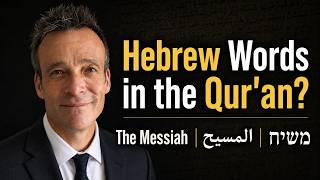 Does Quran acknowledge the Semitic languages: Arabic,
Articles on Hebrew (3)



Topics with Hebrew (2)

News on Hebrew (2)
| 1. Cherokee's lost tribe of Issachar preserved the hebrew name of YaHuWaH | Ye Olde Journalist |
| 2. Old Testament Foundations And Hebrew Roots | Patheos |
Scripture Themes on Hebrew (1)
| 1. Moses flees Egypt to the desert of Midian | Exodus 2:11-25 |