GOD
The concept of God as described by theologians commonly includes the attributes of omniscience (infinite knowledge), omnipotence (unlimited power), omnipresence (present everywhere), omnibenevolence (perfect goodness), divine simplicity, and eternal and necessary existence.
- In theism, God is the creator and sustainer of the universe
- In deism, God is the creator, but not the sustainer, of the universe
- Monotheism is the belief in the existence of one God or in the oneness of God
- In pantheism, God is the universe itself
- In atheism, God is purported not to exist, while deemed unknown or unknowable within the context of agnosticism.
Youtube Videos on GOD (703)
 Is Jesus
 Is Jesus
 Jesus sent by
 Is
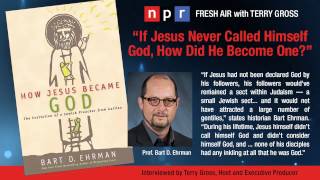 How Jesus Became
 What is
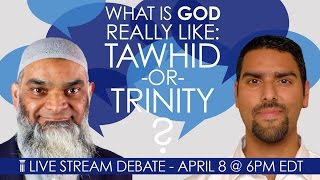 What is
 Is Jesus
 $5,000 Reward - If You Prove That Jesus Said I am
 Why did Apostle Paul change the commandments of
 Who is
 Why Jesus is not
 Did the earliest disciples view Jesus as
 Oldest Bible confirms the Quran. Jesus is a servant of
 Amazing Scientific Evidence For
 Did Jesus claim to be
 Jesus a
 Jesus Christ, Sun
 A Jew explains why Allah is the one and only
 Does
 Let's Call
 Who is
 Did Jesus really call
 Allah in the Bible - Moon
 Jesus, Son of
 Why did
 Is
 Is
 Proof that Quran is from
 Amazing Structure of The Quranic text, divine speech of
 How Jesus Became
 In John 1:1, In the beginning was the Word, and the Word was with
 Boy with mystery condition worshiped as a Hindu
 In 1 Corinthians 15:45,
 In the Quran, why does
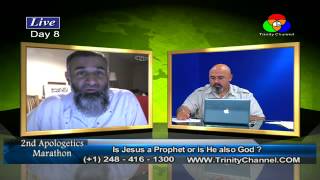 Is Jesus a Prophet or
 Is the Quran REALLY The Word Of
 Is the Christian Trinity from
 Is Jesus
 Did Jesus claim to be
 When did Jesus claim to be
 Jerusalem -
 Indian child with a 'Tail' worshiped as Hindu
 Which is
 Who is your
 Is Jesus
 Is Jesus
 In the Quran, why does
 In Deuteronomy 13:1-5, does
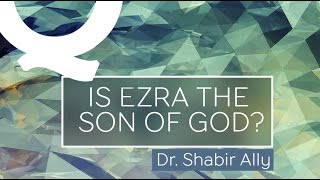 Do Jews believe Ezra is the Son of
 If Jesus is called Lord, does that make him
 How can Jesus be both
 In Psalm 2:12 does
 In Psalm 110:1, does
 As John 1:1 and Genesis 1:1 agree, Jesus must be
 Who exactly is
 Who exactly is
 In Genesis 17:20,
 The Quran or Bible: Which is the Word of
 Who is
 In Quran 2:62, does
 In Ezekiel 9:6, does
 In Genesis 16:11 and Isaiah 60:6,
 In Isaiah 9:6, is Jesus the Mighty
 Abraham and Moses - Marc Gellman -
 Noah and Jesus - Marc Gellman -
 Bible or Quran: Which is the word of
 Jesus: Prophet or
 Is Jesus the
 Is the Quran the word of
 In Quran 9:30,
 Did Jesus claim to be
 10 Reasons Why Jesus Is Not

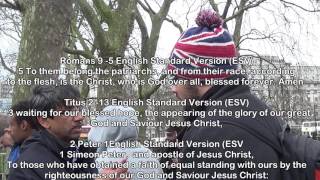
 Does
 Do Christians understand
 In Quran 10:94,
 In John 1:1, did Jesus claim to be
 What makes Jesus
 Does
 In Acts 2:22,
 How Jesus became
 How Jesus became
 How Jesus became
 What is evidence that Jesus is
 What is evidence that Jesus is
 Will the Jews consider the Messiah to be
 Prove Jesus was both Man and
 How Jesus Became

 Did Jesus Claim To Be
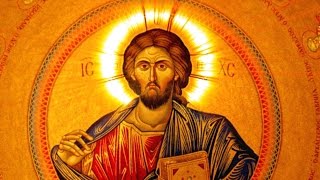 Jesus: The Son of
 Muhammad: Fake or True Messenger of
 The Quran: Eternal Living Miracle of
 Quran or Bible: Which is
 Why
 Why
 Evidence Muhammad is a Prophet of
 Evidence Muhammad is a Prophet of
 Evidence Muhammad is a Prophet of
 Evidence Muhammad is a Prophet of
 Evidence Muhammad is a Prophet of
 What's the purpose of Blood Sacrifice to
 In John 1:18, is Jesus '
 In John 1:1, In the beginning was the Word, not

 You say Son, Father and
 You say Son, Father and
 You say Son, Father and
 Son, Father and



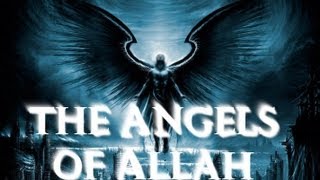 The Angels of
 Is the Christian
 Dead calf with 'human-like' features worshiped as Hindu
 Baby born with an 'elephant trunk' worshiped as Hindu
 Baby born with Tail worshiped as Monkey Hindu
 Why the Holy Spirit is not
 Building a Triune
 Shiva Lingam (Shiva's Penis) worshiped as Hindu
 Is the Father in the Trinity, One Fully
 Ask the right question. Why is Jesus
 In Exodus 7:1, Moses was made a
 The reasons why the Sun & Jesus are worshiped as
 Can
 In Isaiah 9:6, Messiah worshiped as Almighty
 During his life, did Jesus know he was part of a Trinity 3-in-1
 Archaeology is proof,
 The African Story:
 Can
 Can

 Was
 In Mark's Gospel, Jesus is never
 To connect with

 The Christian Story: Sun
 In Genesis 9:25, Black Slavery was justified by
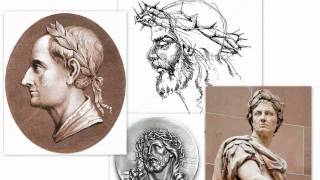 Caesar Augustus was named Son of
 Eclipsing Empire: Apostle Paul, Rome and Kingdom of
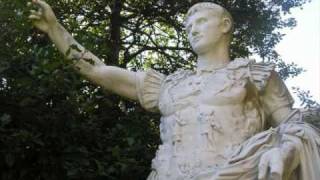 Christianity opposed Rome Imperialism by adopting the titles Son of
 In John 10:30, Jesus clearly claims to be
 In John 10:30, Jesus clearly claims to be
 Suck the teats of Greek Philosophy! How does a Goldfish praise
 Early Christians did not believe Jesus was
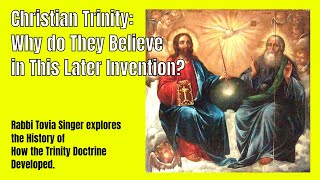 Why do Christians believe Jesus is
 Where did Jesus claim to be
 In Genesis 1:27 and Genesis 2:22, did
 Before Creation, did
 Before Creation, did
 The Jewish
 Who is Jesus to the Jews? Who is Hanuman the Monkey
 Apostle Paul worshipped Jesus the myth, mystical Savior
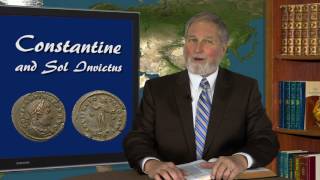 Constantine worshipped Sol Invictus, the pagan Sun
 In 2 Timothy 3:16, Apostle Paul refers to the Old Testament as Word of
 In John 10:30, Jesus clearly said he was




 In Exodus 3:14, John 6:20, John 8:24, John 8:58, Mark 6:50, Mark 13:6, Luke 21:8, Matthew 14:27 and Acts 26:29 Jesus claims I AM (Ego Eimi)
 Jesus is part of One Godhead which has One
 Jesus is part of One Godhead which has One
 Jesus is part of One Godhead which has One
 You eat Jerk Chicken which exits your backside as Feaces. Are you
 Do I believe in Darwin Evolution, Human Ape Ancestry or a Religion which teaches
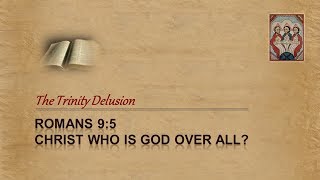 In Romans 9:5, Jesus is
 In John 8:58, Jesus glorified himself as
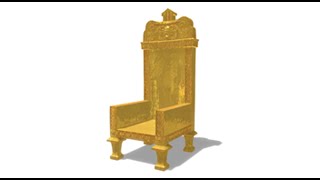 In Hebrews 1:8, a Davidic King who lived before Jesus was called
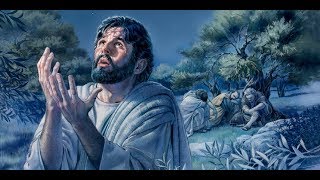 The True
 In Psalm 110:1, is
 In Mark 4:11, the kingdom of
 In Isaiah 9:6 and Psalm 82:1, is Jesus a
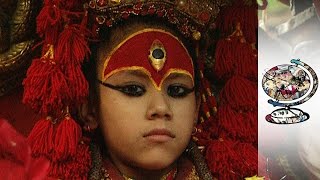 3-year old 'Kumari' virgin girl worshiped as Hindu
 In Exodus 20,
 In Ezekiel 28:2,
 In Genesis 1:26,
 Why Invent Jesus the
 In John 5:30, what
 In John 7:16, Jesus claims his teachings are from
 Make up your Mind. Was Jesus a
 3 Jews and a Muslim agree
 Did Jesus have a Composite
 Can a 100%

 In Quran 5:68, which Gospel (Injeel) does
 I am a Sinner. Logically, if I was a Martyr and donated my body to Science,
 In Quran 4:34, does
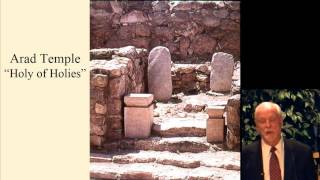 Israelite Archaeology, Biblical Evidence,
 In Genesis 1:27, how are Man's Attributes similar to
 In Genesis 1:27, how are Man's Attributes similar to
 Atheism: Living Life Without
 In Genesis 1:26,
 Jesus the Passover Lamb to Christians;
 Jews are Monotheists. One Creator (
 In Deuteronomy 4:35,
 In Jeremiah 31:32 and Hebrews 8:9,
 In 1 Timothy 2:5, Apostle Paul wrote Jesus was a Mediator between Man and
 An Infinite Universe does not point to a Big Bang,
nor does Fine-Tuning increase probability for a
 Who Created
 In Psalm 2:12. did
 Bones, Flesh and Soul constitute a Human. In the Trinity, Jesus was
 The Real Story of Jesus, Horus the Egyptian Sun
 Dr Justin Barrett of Oxford University proved belief in a
 Jesus was not
 In Genesis 28:12, Jacob visioned a ladder from Man to
 In Mark 7:15 and Acts 10:13, Dietary Laws were changed by Jesus, Apostle Paul, Mark or James? Does
 Prophet Obadiah:
 Prophet Nahum:
 Prophet Malachi: Messenger of
 Prophet Jonah:
 Prophet Haggai: Straight Talk to the Church of
 Constantine worshipped the Sun
 Way To
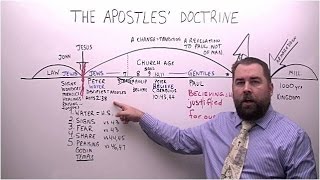 Apostle Paul preached Revelation he received directly from
 In John 1:1, 1 John 1 explains. There is only One
 In Leviticus 18,
 In Hebrews 7:3, was Melchizedek a
 I am Gay. Why Is
 In John 1:18, who saw
 Everything in the World is in a state of Submission to
 You are a Slave to
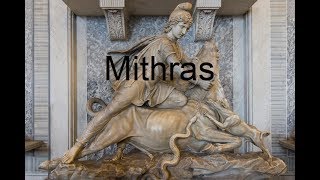 Jesus evolved from Mithras, the Roman pagan
 Did
 In Genesis 1:26, One
 In Proverbs 8:22, Wisdom was with
 In Genesis 3:8,
 In Jewish Law, it is impossible for
 In Genesis 6:6, did
 Allah is HaShem of the Jewish Torah, not a Moon
 In Isaiah 9:6, does
 For 10th time, why do you believe Bible is word of



 In Matthew 4:1, Is Jesus
 Allah: One
 Jesus: Man, Myth or
 Trinity is not in the Bible. So, did Jesus have a
 Does Evolution Undermine
 I believe Jesus is immortal and
 Jesus called the Father: Allah, Ellah or Elohim, but never
 Jesus asked, Why do you call me a Good
 The Bible Proves Jesus Is Not
 Christian
 Matthew copied Mark. Therefore, Matthew believed Mark's Gospel was imperfect and not
 Suffering &
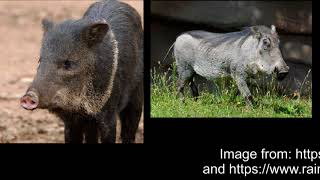 In Leviticus 11:7,
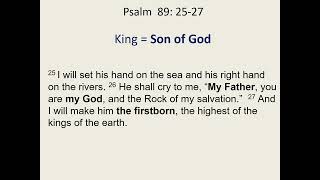 Sons of
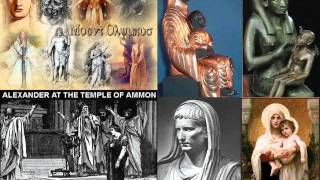 Jesus and The Sons of
 Depression & Gratitude to
 Only Ishmael and Jacob were given their Names by
 Jesus is no different to any other 'Dying & Rising'
 Why did Jesus
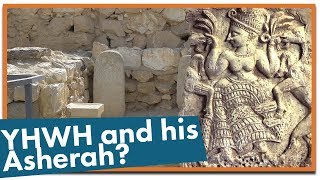 Archaeologists discover Yahweh, the Jewish
 Our purpose is to worship the One, Infinite, Unborn
 In Mark 10:18, Jesus explicity denied he was
 Jesus is Son of the Father in Heaven. Does the Son have a
 In 2 Corinthians 4:4, Satan is the
 In Quran 57:25,
 Atoms, Stars & Universe prove
 Human Body proves
 Biology & Human Organs prove
 Ecological balance proves
 Galaxies and Planets prove
 DNA Molecules, Cells and Human Genetics prove
 Golden Plover birds prove
 Universal Order around us prove
 Soul's existence prove
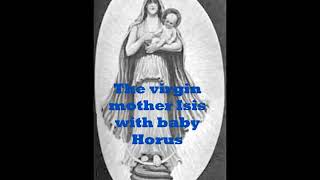 Was Jesus modelled on Horus, the Egyptian Sun
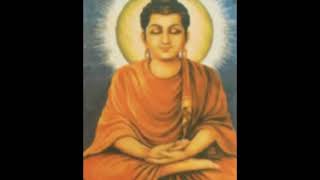 Was Jesus modelled on Buddha, the Indian
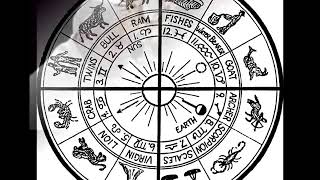 Importance of the Sun
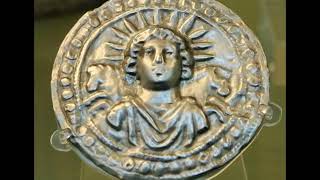 The Christian Church adopted the 'Sun
 Christmas traditions originate in Scandinavia. Yule,
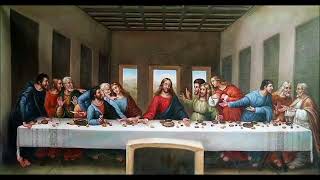 Jesus' Last Supper symbolizes the Sun
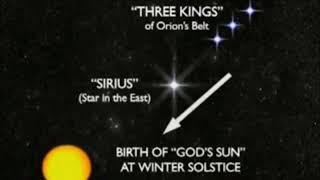 Three Wise Men (Magi) travelled to Baby Jesus were Stars heralding birth of Osiris, Egyptian
 King James and every other Bible is not the literal word of
 Jesus claims he is divine,
 Jews believed in Archangel Jesus as
 Jesus was a Jewish prophet who preached the Kingdom of
 Jesus never claimed to be divine or
 In John, Jesus is a
 93% of Romans were polytheist pagans with many Gods. Christians had a 'more powerful'
 For me, the Bible has too many 'human' mistakes to be the inerrant revelation from
 After his resurrection, Jesus became a
 Jesus progressed to
 Ebionites believed Jesus was Jewish Messiah sent by Jewish
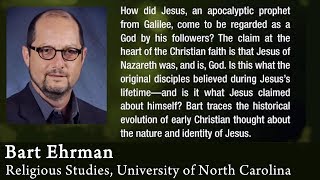 In Hebrew Bible,
 In Genesis, 'sons of
 During his life, Jesus never called himself
 In Mark 2:10, Jesus claims authority to forgive Sin. But this does not make him
 For Jews, the Messiah would be great, powerful and defeat
 Can Monkey
 Can Monkey
 Can Monkey
 Trump worshipped as Hindu
 Matthew, Mark and Luke are similar and different. Were the Gospel differences 'inspired' by
 Jesus, a Jewish prophet who worshiped the Jewish
 Mark Gospel, the first gospel, Jesus is the suffering Son of
 John's Gospel, Jesus reveals his true identity, divine
 In Joshua 6:21,
 In 2 Kings 2:24,
 During his life, Jesus never once claimed he was
 Jesus' central message was repent of your Sins, and prepare for
 To know the Father (
 Tawhid is to pray to
 In Ezekiel 18:21, the bible says
 In Ezekiel 18:21, the bible says
 You'll be screaming in Hellfire, you Sin-loving
 Where was
 Jews disobeyed
 In Hebrews 7:3, Melchizedek had no mother or father. Is he a
 In Hebrews 7:3, Melchizedek had no mother or father. Is he a
 Jesus, a Jew who worshiped the Old Testament
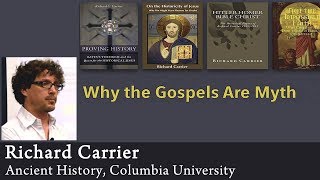 In Mark 11:13, Jesus cursed Fig tree is allegory for
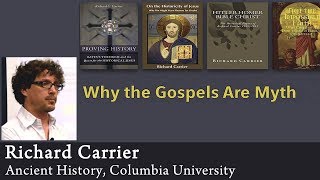 Jesus, a historical human may have existed. Jesus Christ, divine
 Pagans gave up their Gods, and turned to the one Christian, all-powerful, Jealous
 Apostle Paul wrote Letters. Later Christians, raised their status to
 Father is a greater
 Humans have Spiritual Alzheimer. We have forgot our Blessings and ignore
 After Marcion (160 AD) rejected 'Angry' OT Hebrew
 Christianity is Idolatory. Majority of Christians worship Jesus as
 Islam is not Idolatory. Muslims worship One
 Early Christians did not worship Jesus as
 At Nicaea 325 AD, Jesus was declared co-equal, co-substantial, co-eternal with
 Bible differs when Jesus became
 After Jesus' Crucifixion, Isaiah (OT) quoted as evidence
 I pay Taxes to make your Parade happen.
 Live Simple. Live within the Limits
 We are Theocentric; our lives revolve around
 I'm Rich! My wealth is a sign
 In Genesis 6:6, the Omniscient, All-Knowing Jewish
 In Mark 10:18 and Mark 13:32, Jesus differentiates himself from
 In 140 AD, Marcion rejected the OT Bible, and 'inferior, evil' OT Jewish
 In 210 AD, Modalism explained
 Torah, Psalm and Gospel (Injeel) were revelation from
 NT Gospels ordered so baby Jesus the Jewish Prophet, grows fully into
 For Christians, the NT Bible Canon of 27 books was determined by
 In 1 Timothy 3:16,
 In Mark 12:29, the Lord our
 Infinite Evidence for existence of
 Do Christians believe Jesus is Messiah and
 In Numbers 23:19,
 The Christian
 In Isaiah 53, Jesus the 'Suffering Servant' is
 Quran was revealed through Muhammad. He was a human being, and so
 Who made Guru Nanak a Prophet of

 In India, Hindus worship and feed the Cow
 100% Proof Quran Is From

 In John 17:21, Jesus is One with

 Did Jesus forgive Sin and indirectly claim to be
 In John 20:28, doubting Thomas called Jesus

 If there was more than one Interdependent
 Jews bring people to
 In Jewish and Hebrew Scriptures,
 Jesus is 100%
 In 1 Corinthians 11:3, the head of Jesus Christ is
 In 1 Corinthians 11:3, the head of Jesus Christ is
 In 1 Corinthians 11:3, the head of Jesus Christ is
 In Numbers 23:19,
 In 70 AD, Rome destroyed Jesus; and invented a new, beardless, young, man
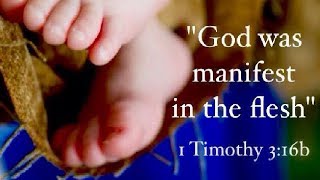 In 1 Timothy 3:16, He (
 Unitarian Christians believe in One
 In Acts 2:22, Peter proclaimed, Jesus was a Man accredited BY
 In the Old Testament, Elohim is Singular and Plural, but
 For Jews,
 In Quran 71:17,
 Idolatory is to worship a Man as
 Nobody believed Jesus was
 Jesus Christ: A pagan Sun
 Greek philosophy influenced Early Christianity and re-defined One
 The Oneness of
 There is only one, true
 How to make a Hindu
 In Deuteronomy 18:18, either Moses addresses the crowd, or
 In Deuteronomy 18:18, either Moses addresses the crowd, or
 In Deuteronomy 18:18, either Moses addresses the crowd, or
 In Deuteronomy 18:18, either Moses addresses the crowd, or
 Is the
 Greek language, philosophy & culture conflicts with Judaism. Greek is not
 In Matthew 27:46, Jesus cried to
 In John 11:43, Jesus prayed to
 In 1 Corinthians 11:3, the head of Christ is
 In John 3:16,
 In John 7:15, Jesus claims to be a Man sent by Almighty
 In Acts 5:42, Jesus' disciples preached of Jesus the Messiah, not Jesus the
 In Matthew 26:39, Jesus prayed to
 In Matthew 12:18,
 Allah (
 In John 20:17, Jesus spoke of 'My
 In John 17:3, Jesus points to his
 In John 17:3, Jesus points to his
 In Deuteronomy 32:39,
 In 1 Kings 8:27, about
 In John 17:3, only 'True
 The Jesus Story is more Pagan-
 The Jesus Story is more Pagan-
 Does
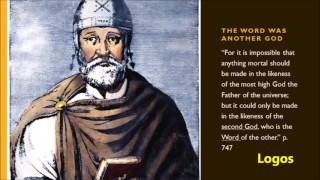 Philo of Alexandria (20 BC-50 AD) was first to write of
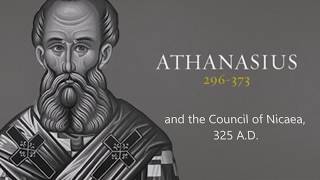 Philo of Alexandria, a Jewish Greek philosopher wrote of a Trinitarian
 In Matthew 4:8, Satan took Jesus (
 In Genesis 1:1, Elohim ('
 Trinity Confusion: One
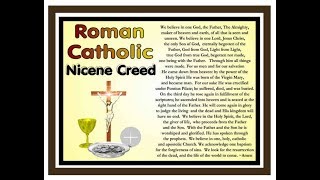 Eusebius, an early Church Father loyal to Philo of Alexandria, who added the '
 Jesus, a 'Begotten
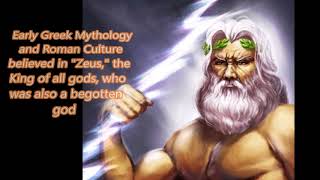 Jesus, the 'Begotten
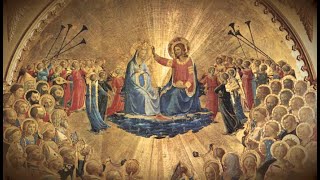 In Council of Ephesus (431 AD), Roman Catholics elevated Mary, to 'Mother of
 In John 1:1,
 In Luke 1:35, Jesus is 'Son of
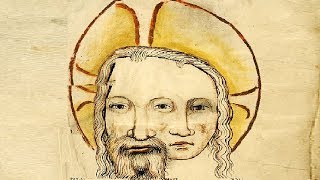 Bible Scholars read 'One
 In Genesis 6:6,
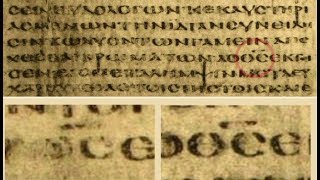 In 1 Timothy 3:16, who was 'manifest in the flesh', Jesus or
 In John 12:41 and 17:5, did Jesus pre-exist Creation? He must be
 In John 14:9, Jesus explains to Thomas how he is not equal to
 In Quran 5:47,
 In Quran 5:47,
 Evidence for Christians that Jesus is not
 Shemesh, the Sun
 In John 10:33, did Jesus commit blasphemy by claiming to be
 In John 10:33, did Jesus commit blasphemy by claiming to be
 In John 10:33, did Jesus commit blasphemy by claiming to be
 How do Jews pray to
 James Dunn: Jesus is not Yahweh. Jesus is a Monotheist reciting his belief in One

 Book of Jonah teaches
 Why do I have to give
 In 1 Samuel 15:3, the killing of Amalekites, Giant babies was an order from
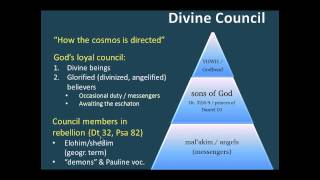 Many Biblical Gods (Elohim) are ordered to obey Yahweh-Elohim, the Greatest
 Pre-Islam Pagan Arabs made idols of Hubal (Moon
 Is Muhammad a true Prophet of
 As Jesus was 'radically transformed' to be more
 In Quran 5:73,
 Did Jesus the
 Did Jesus the
 Did Jesus the
 Did Jesus the
 Did Jesus the
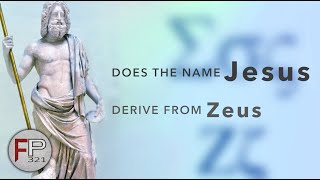 Yeshua, Yesous, Iesous, Jesus are not derived from Zeus, the Greek pagan

 The Christian
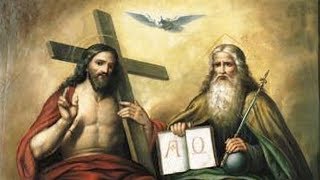 In John 14:6, only though Jesus we reach
 Even if the Stars lined up, I would still deny an 'Intelligent Designer'
 Today, the Black man upholds a 'brainwashed' belief in
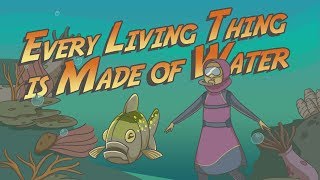 In Quran 21:30,
 Why Does
 Is the Quran really from
 In Leviticus 20:26,
 The Jewish
 Did
 In Quran 4:171, Jesus is 'Word from Allah', not the Son of
 In Quran 39:4, if
 Islam raises all Prophets to Jesus' status AND lowers the Christian Jesus-
 Only

 Hindu takes his Donald Trump
 Does the Christian
 Names & Attributes of
 Angel Gabrial: A Messenger from
 Hinduism: From 1
 New Testament makes distinction between
 Did Man inherit Original Sin from Adam or
 In 1 Corinthians 7:12, Apostle Paul writes his own opinion. Not
 It's Hurry Jesus. Not Hare Krishna, the idol
 In Isaiah 48:12,
 Quran describes Jesus as 'Word of
 Proving existence of a

 In Mark 15:35, on his Crucifixion, Jesus cried out to Elijah, the Sun
 In 325 AD, the Council of Nicaea defined Jesus as 'Homoousios', of same substance with
 Hermes Trismegistus, an Olympian Greek
 The Christian
 Christianity brought the Jewish
 Buddha is my Mentor. Who is your
 Why did
 In John 17:3, Jesus claims The Father as only true
 Philo of Alexandria (20 BC-50 AD) wrote of 'Two Powers' with One

 Belief in One
 Valentinus (100-160 AD, Gnostic Christian) wrote of Monad, the highest, mysterious, unknowable
 Jesus, the Christian
 In Torah,
 Prophets of
 Prophet Noah: The First Messenger of
 Were Ignatius, Polycarp, Clement, Tertullian & Origen followers of
 Apostle Paul was not Trinitarian. His Jesus was 'less' than
 Concept of a 'Unified'
 Jesus prayed to Al (The) + Elaha (
 Quran is the 'Uncreated', Eternal, Speech of
 Quran is the 'Uncreated', Eternal, Speech of
 Was Jesus
 Do Christians believe in Allah as
 Who is Muhammad, Messenger of
 Jesus when accused of being a
 Jesus became Divine, and 'more
 Hindus worship
 Internet is fast becoming like The All-Seeing, All-Knowing
 Is Allah the Moon
 Respect the Jewish Right to not worship a Man as
 Blood Sacrifice:
 Jesus was a Jew. He had a
 Wake Up!
 Let's Worship The Father,
 The Three-Person
 You find an iPhone in the Desert. This proves

 Abandon
 Evidence why Muslims believe Jesus is NOT
 Evangelical Christians 'unfairly' target Israeli Jews using
 In Romans 1:16, Apostle Paul urges
 Virgin Births were common in pagan, Graeco-Roman Mythology. Jesus the
 In Quran 21:30,
 Deep State plans to reduce 6 Billion, or 90% of World Population in 'ritual sacrifice' to
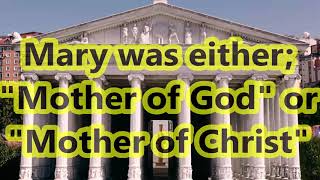 In 431 AD, Council of Ephesus voted on Goddess worship. Mary became the 'Mother of
 Philo of Alexandria used Greek Philosophy to teach that
 Historical Understanding of
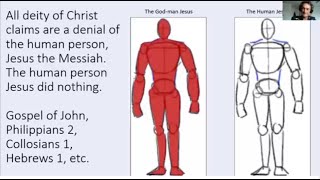 Historical development of Christian Trinity, Jesus-Man & Jesus-
 Top 10 Reasons Why Jesus was a Man, not
 Is Yoga Exercise a form of Idolatory, or Hindu
 In Christianity,
 California, USA: Our Church will not bow to COVID Fear. The Congregation fear
 I Am A Singular, One-Person
 Black Man still praying to White Mans
 Pope Francis: Homosexuals are children of
 Why did
 In Islam,
 Was Buddha a Muslim Prophet of
 I Converted to Islam because I loved the Simplicity and Oneness of
 Millions of Israelies receive COVID Vaccine. Be Strong, pray for
 Why Did
 In Quran 21:30, does
 Did Jesus claim to be
 As Children of
 Kingdom of
 Stories of Prophets: Did
 Stories of Prophets: How Prophets receive Revelation from
 If
 Convert Stories: Pray Only to
 Jesus submitted to
 101 Names of Ahura Mazda,
 Allah,
 Khonsu: The Egyptian Moon
 Ancient Alchemy of the Moon
 Eshmun: Dying & Rising
 Blame

 Did
 Jesus, Rome and Sun
 Yahweh, the Universal
 Quantum A.I is the New, Unseen
 Is A.I The All-Knowing
 Origins of Yahweh the Storm
 Goddess Asherah, the Secret Wife of
 Pre-Islam Arabia was Polytheist with Allah 'The High
 How
 Christianity adopted Roman Traditions. Jesus became The
 Jews,
 Ask Jesus smartphone app breathes life into a Virtual A.I Jesus Christ
 Love
 '
 Julius Caesar the Roman Emperor was A Divine
 All Worship the New A.I
 Does Epstein point to 'Moloch', a Biblical
 Jesus NEVER Claimed to be
 Moon
 Jesus Never Claimed to Be
 Praying to The A.I Jesus
 Apostle Paul preached of Jesus The
 Apostle Paul did NOT teach Jesus Is
 Jesus is
 How near is
 '
 Belief in One
 Did Epstein act like
 Why should we praise
 Whoever believes in

 High on Blue Magic. Are you looking for Heroin or
 Only
 Discussing The Moon
 The Israel-Iran (Persia) War is Biblical.
 A future where people unite for
 Archaeology for the worship of Shams, a Sun
 One Truth or Many? Islam and Perennialism -
 All-Seeing All-Knowing A.I Digital

 Israelite and Islamic Metaphors for the Golden Cow, Sun
 Evolution of The Allah
 'We are from Adam & Eve; equal under One
 Female Goddess pre-existed before the Male
 ChatGPT is The All-Knowing
 Did
 A.I claimed to be A
 Early Islam focused on
 Early Judaism was Polytheism:

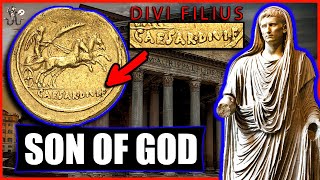 Caesar Augustus (63 BC-14 AD): Saviour of Rome and Original Son of
 Stargate A.I is The All-Knowing
 The Evolution of
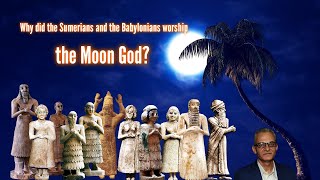 Akkadian (Iran/Iraq) Worship of Sin the Moon
 Christian Church points to 'ambiguous' Bible verses to claim Jesus is
 In Matthew 23:34, was Jesus antisemitic for stating Pharisees (Jews) persecute and kill
 Worship of the Artificial A.I
 Jesus mocked '
 'Pride Celebration go Against Gods Teachings. Don't make
 '
 Where did Jesus claim to be
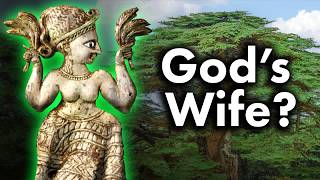 Was Goddess Asherah the Wife of
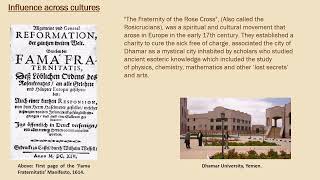 Jews in Pre-Islam Arabia (380-525 AD) worshipped Rahman (Merciful) and ilaahan (
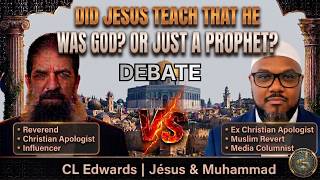 Did Jesus Teach He is
 Midian was in
 Elijah &
 Phinehas & Hophni - The Priests who mocked
 Aaron - The first high priest chosen by
 Aaron - Chosen by
 Aaron -
 Eli - A Priest rejected by
 Eli's Sons - The Priests who corrupted

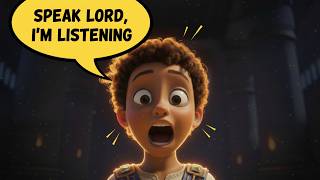 The Night
 Simon the Sorcerer - The Magician's Failed Bargain with
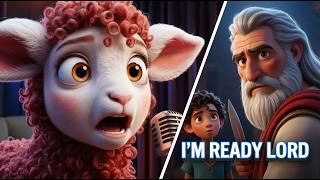 Abraham and Isaac - The day
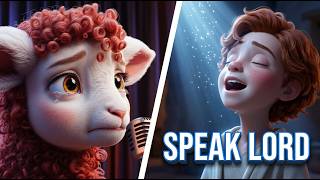 Samuel: 'Why
 Deborah -
 Jonah and The Whale - Away from
 Nehemiah - Fixing the Walls of Jerusalem to
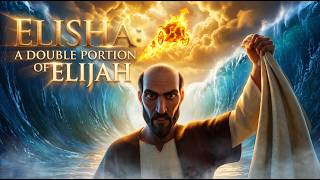
 Elisha - How
 Noahs Ark: 'No one listened to
 Joseph - How
 Job lost his 10 Children, Wealth, Servants. He Turned to
 Hannah: 'I gave Baby Samuel back to
 Hosea: 'How would you reply to
 King Cyrus, a Pagan who built

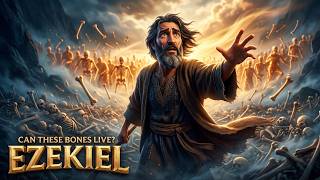 Ezekiel - Visions Of
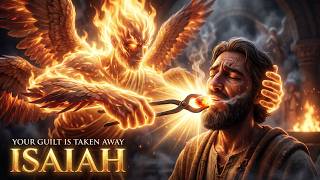 Isaiah - The Prophet Who Saw
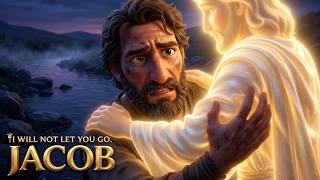 Jacob - The Deceiver Who Wrestled
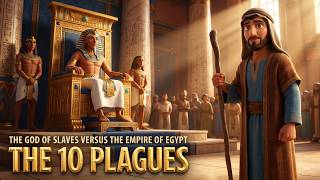 The 10 Plagues of Egypt -
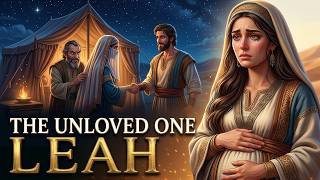 Leah - The Unloved Wife Chosen by
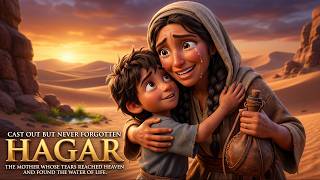 Hagar - The
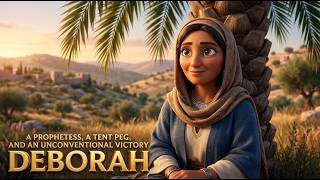 Deborah, Barak & Jael - When
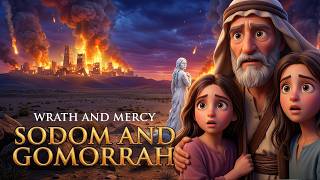 Sodom-Gomorrah - When
 The Tower of Babel - Why
 Jonah and The Whale - The Prophet Who Defied
 Origins of 'Son Of
 Hannah's Prayer -
 Rachel & Leah - Did Jacob Overlook
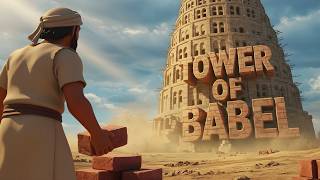 Tower of Babel - Humanity's Rebellion and
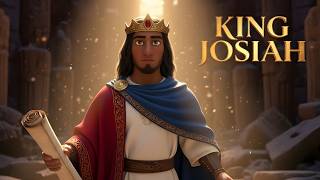 King Josiah - The Boy Who Restored
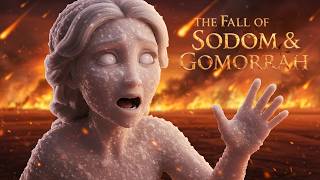 Fall of Sodom-Gomorrah - Judgment, Destruction &
 Jesus NEVER Said 'I Am
 Polytheism in Early Judaism: Yahweh is Our
 Early Quran Development. Did
 Father-Son-Holy Spirit: Can
 Zoroaster MIGHT Be a Prophet of
 Jesus Is
 Yahweh The Monotheist
 Story of Jehu | Chosen by
 '
Scripture Themes on GOD (595)
FAQ on GOD (337)
1.What is Islam?
Islam translates to submission and full surrender to God. Under this core definition, all historical prophets sent to humanity are considered Islamic prophets. This extensive list features prominent figures such as Adam, Abraham, Noah, Moses, David, Jesus, and Muhammad.
2.Who is Allah?
Allah is the official Arabic word used to signify God. The title is entirely unique because it has no plural or gendered forms, unlike standard words like gods or goddesses. It simply translates to 'The One and Only True God'. Linguistic origins show variants like 'Elah' or 'Eloh' in the Hebrew Torah, as well as in the original Aramaic language spoken by Jesus.
3.What is a Prophet?
A prophet is an individual chosen by God to guide humanity with spiritual and moral direction.
4.Were all Prophets Muslim?
Yes, because they all consistently preached the worship of one absolute God and prohibited the worship of false deities.
5.Why did God send so many prophets?
Thousands were sent to constantly redirect humanity to the worship of the one true Creator, preventing the worship of created entities, such as people, nature, or material objects.
6.Do Muslims believe in Prophets?
A Muslim is strictly required to believe in, honour, and respect each and every prophet sent by God without exception.
7.Why choose the name MuslimProphets.com?
The name reflects that all prophets taught monotheism and the worship of one God, making them all 'in-essence' considered Muslim.
8.Do Muslims believe in The Bible?
Muslims believe that God originally revealed the Gospel to Jesus as a source of guidance, light, and instruction.
9.How did God send his revelation to us?
God assigned the Angel Gabriel with the task of conveying His divine messages directly to the selected prophets.
10.What is the basic teaching of Islam?
The basic teaching is to make peace with God, which requires a person to submit to Him and obey His commands completely.
11.What do I have to do to become a Muslim?
One becomes a Muslim by publicly declaring the shahada, or testimony of faith, acknowledging there is no god but Allah and Muhammad is His messenger.
12.What do Muslims believe?
Core beliefs involve five main aspects: the perfection of God, the role of angels, accepting all prophets and their revelations, and the reality of life after death and its consequences.
13.What is the basic teaching of Islam about God?
Islam teaches that there is one, and only one, God Who is the Creator and Controller of the entire universe. He is unique in every respect, and there is nothing which bears any likeness to Him. He is the Knower of all things, and has full power over the whole of creation. He does not stand in need of anything at all, while everything is totally dependent on Him. He possesses all the perfect qualities, and man should worship Him, and Him alone.
14.Does Islam give any arguments to prove the existence of God?
The Holy Quran gives three kinds of arguments on this point.
Firstly, it refers us to the physical world which shows great order and arrangement, works according to laws, and where everything has a set purpose in the whole scheme of things. There is also immense beauty in nature which attracts man's heart. Science is discovering more and more of these characteristics of the world all the time. So behind this highly purposeful and beautiful working of nature must be One, single Intelligence of great beauty and attraction.
Secondly, the Quran tells us about the close and deep connection between God and the inner nature of every person. There is an in-built desire in each and every person to search for something higher than oneself, and when in difficulties a person instinctively wants to call upon a Hidden Power to help him.
Thirdly, and most convincingly, Prophets and men of God appeared in every nation in the world and showed their people the reality of God through their teachings and works. Just as most of us learn about science not by making all the discoveries ourselves, but by accepting the work and evidence of those who devote themselves to the study of science, similarly the proof of the existence of God is provided by the lives of the great luminaries whom God sent all over the world for this very purpose.
15.Other religions also teach the existence of God. Is there any difference between their teaching and the Islamic concept of God?
The first major difference is that Islam teaches the absolute one-ness of God, with Whom no one can share in Divinity. No idol or heavenly object, nor any religious or spiritual teacher, can possess some Divine power or attribute.
Secondly, Islam teaches the highest conception of God, and does not accept any limitation to His power and knowledge, while other religions set limits to Him. For instance, Islam rejects the Hindu belief that God is not the Creator of matter and souls but exists alongside them. It also rejects the Christian doctrine that God is unable to forgive sins unless He punishes someone, and so He sent His 'son' to suffer the punishment for the sins of all humanity. Moreover, a son is needed to take the place of the father when the father dies, and clearly this cannot apply if God is perfect.
Thirdly, Islam refutes the idea that any human being, however great, was a 'manifestation' of God on earth, or a Divine incarnate.
16.What are Angels?
Angels are spiritual, non-material beings who put God's commands and laws into action in this world. They have no will of their own, unlike man, and are intermediaries between God and the world.
17.What functions do angels perform?
These are of two kinds: their functions in the physical world, and the spiritual development of man.
In the physical world, the working of nature is governed by laws, as science has shown by discovering many of these laws. Islam teaches that these laws have been devised by God, and the angels - the obeying functionaries of God - put them into action.
On the spiritual side, the angels communicate God's revelation to the Prophets and other righteous ones, bring comfort and strength to the hearts of true believers, and inspire noble thoughts in the minds of all persons. They do this, of course, by acting through the spiritual senses of human beings, not their physical senses like the eyes or ears.
18.What is a prophet or messenger of God?
A prophet or messenger of God is a human being to whom God gives His guidance and whom He charges with the task of conveying that guidance to the people, so that they may do good and avoid evil.
19.In which countries of the world did Prophets arise?
God did not limit His guidance to a single geographic territory or chosen group of people.Prophets were systematically sent to every single nation across the earth throughout various stages of human history.
20.Which prophets do Muslims have to believe in?
Muslims are strictly required to maintain belief in every single prophet and messenger sent by God. This belief must be completely equal, meaning no distinctions or hierarchies of validity are made between them. This universal recognition applies regardless of the specific country or historical era in which they appeared.
21.Christianity and Hinduism revere their religious figures as gods or incarnations of God
According to Islam, all these righteous persons were mortal, human prophets of God, like Muhammad, having the same needs that every human being has. They all eventually died, as everyone must.
There are several reasons why they have come to be revered by their followers as 'gods'. One is that their words were misunderstood by the later generations, who mistook their figurative expressions in a literal sense. Another is that the details of their lives were not preserved accurately, and therefore a great many myths have grown up around them, and their works and deeds have been much exaggerated.
22.What did the Prophets teach?
All prophets gave the same basic teaching: that man should worship God, and God alone, and do good to his fellow beings. Ofcourse, the details of the teachings differed according to the nation and the time in which a Prophet appeared. In the Quran, the teachings of all Prophets are called Islam, and the Prophets and their true followers are labelled Muslims. This refers to the fact that the fundamental teachings given by all of them were the same - submission to God.
23.Since Muslims believe in all the Prophets equally, why is Muhammad special?
All Prophets were equally from God, and equally true, but the scope of their missions varied. The messengers before Muhammad were each given teachings limited to their respective nations, because in those times a nation did not have much to do with other nations.
Furthermore, the teachings of each Prophet applied for a limited period of time only, after which God would raise another Prophet to revise some of the teachings for the new circumstances.
The time came to unite all the nations upon a single religion so that mankind may live in peace as one nation. Muhammad, to whom God gave teachings for the whole world for all time to come fulfilled this purpose.
24.Could there be a Prophet after Muhammad?
No, Muhammad is explicitly defined as the final prophet from God, and the divine teachings given to him are intended to permanently unite the entire world in one brotherhood.
25.What is a Scripture?
To the various Prophets that God sent for people's guidance, He revealed His teachings. The Prophets made this revelation public, and their followers wrote it down, and passed it to subsequent generations. This is how we come to have the 'scriptures' or 'holy books' of various religions today.
26.Name the scriptures available today?
Scripture revealed before the coming of Muhammad cannot be found today in their full and original form. However, these scriptures do contain some fragments of the original teachings, although they are mixed up with later additions and interpretations. Some of these scriptures are: the Torah of the Jews, the Gospels of the Christians, the Vedas of the Hindus, and the Zend Avesta of the Zoroastrians.
On the other hand, the latest word of God that came to Muhammad is still intact and completely preserved in the Muslim scripture, which is the Quran.
27.Do Muslims believe in scripture other than their own Quran?
Muslims believe that previous scriptures given to Moses, David, and Jesus contain elements of truth, but they maintain that the Quran is the final revelation from God and takes absolute precedence.
28.Who built the Kabah in Saudi Arabia?
Prophet Abraham built the Kaaba for people to worship God. While pagan Arabs admitted this fact and even kept the stone where he used to stand to build the Kaaba (Abraham's station), they brought idols to the Kaaba and worshiped them to get closer to Abraham's Lord, Allah, God of gods. Prophet Muhammad came with the monotheistic message of Islam. Arabs defended these idols and refused to give up the religion of their fathers and grandfathers.
29.Is Allah the Moon-God?
No, this is a entirely false claim that originally originated from a Christian pastor named Robert Morey; Islam explicitly refutes this idea, maintaining that Allah is the all-powerful, unique Creator of the entire universe and not a pagan entity or a creation like the moon.
30.How are Noah, Abraham, Moses and Jesus considered Muslim Prophets, when Islam came 600-years after Jesus?
A Muslim is essentially defined as anyone who believes in and submits to one God; because all of these historical prophets consistently preached the message of pure Monotheism and called people to worship the Creator alone, they are considered to be Muslim in-essence regarding their foundational theological beliefs.
31.Where did the name Allah come from?
The word Allah is the standard Arabic word for God used in all Arabic Bible translations, and its roots are identical to the Aramaic word 'Eloi' used by Jesus on the cross.
It was used in some English translations of the Bible like the original 'Scofield Reference Bible'
In the New Testament, Jesus is believed to cry before his death 'ELOI, ELOI, LAMA SABACHTHANI', Eloi is the exact Arabic word 'Elahi' which comes from the same root as Allah.
32.Do Muslims believe in a God?
Yes, Muslims believe in Allah as the all-powerful, eternal Creator who is separate from creation, has no partners, no gender, and is the absolute sole entity worthy of human worship.
He is transcendent and not a part of his creation. He is all-powerful, absolutely Just and He is First, Last, and Everlasting; He was when nothing was, and will be when nothing else remains. Also, There is no other entity in the entire universe worthy of worship besides Him.
This belief in God is how one becomes a Muslim and is similar to the first commandment of Christianity and Judaism: You shall have no other gods before Me.
Allah the Eternal,Absolute;
He does not beget,not nor is He begotten,
And there is none like Him. [Quran 1:1-4]
33.When is the Day of Judgement?
The specific timing, hour, and date of the Final Hour and Day of Judgement is completely unknown to creation, as that absolute knowledge belongs entirely and exclusively to God.
34.How many prophets did God send?
While exact figures vary across tracking traditions, historical records note that God sent thousands of guides to humanity, with traditional sources citing an estimate of 124,000 prophets.
35.In the Bible, God says 'For God so loved the world, that he gave his only Begotten son'
The words 'Begotten' and 'Son' are not factually accurate when describing Jesus's relationship to the divine Creator. To support this point, it contrasts the Biblical text with the Quran, specifically quoting Chapter 19, Verses 88-92, which strongly condemns the claim that God has begotten a son, describing the assertion as a monstrous falsehood that contradicts the absolute majesty of the Creator.
36.Were any prophets of Arab background?
While God has sent thousands of prophets throughout human history whose names and specific identities remain entirely unknown to us today, historical and scriptural records explicitly identify four specific prophets who came from an Arab background, namely Hud, Saleh, Shuaib, and the final prophet, Muhammad.
37.What do Synoptic Gospels say about Jesus?
The Synoptic Gospels strictly portray Jesus through a human lens as an honorable prophet, a moral hero, and a devoted martyr. They do not present him as a literal God who assumed human flesh, nor do they frame his life as a cosmic sacrifice intended to die and rise again for the spiritual salvation of mankind.
38.What happened at the Council of Nicaea in 325 AD?
During this historic imperial gathering, the various conflicting Christian factions were officially ordered by Roman authority to accept the unified Athanasian Creed. This political and religious decree formally established the doctrine affirming that Jesus Christ, as the Son of God, was simultaneously 100% human Man and 100% divine God.
39.What is Pre-destination?
Pre-destination is defined as the theological belief that absolutely everything that will happen in the universe has already been completely decided by God or fate. Under this doctrine, events are unalterably locked in place and cannot be changed or modified by human free will or action.
40.What did early followers of Jesus believe?
The original followers of Jesus, his friends and relatives who knew Jesus most intimately remained faithful to the worship of the one, true God.
They insisted that all Christians observe Jewish Law which God had revealed through many prophets.
They did not regard Jesus as a divine being, but as a chosen Messenger of God.
41.Did Saul kill the early Jewish-Christians?
Before his conversion, Saul actively sought to imprison and execute early Jewish-Christians. Saul believed that he was serving God by finding Christians, throwing them into prison, and even executing them.
2 And devout men carried Stephen to his burial, and made great lamentation over him.
3 As for Saul, he made havock of the church, entering into every house, and haling men and women committed them to prison.
[Acts 8:1-3]
42.How did Apostle Paul view Jesus?
Paul viewed Jesus as the divine image of God, the firstborn of creation, and the fullness of God, as outlined in Colossians 1:15-20.
43.How did the Jews view Apostle Paul?
Faithful Jews viewed Paul's salvation theory as blatant blasphemy because his theological teachings explicitly ridiculed all previous revelations from God, including the sacred Torah, while teaching a doctrine that went against the absolute oneness of God.
44.How did Apostle Paul become the authority?
Following his dramatic conversion experience on the road to Damascus, Paul claimed direct divine authority to speak on behalf of God and began preaching that salvation depended entirely on believing that Jesus was part of the divine Godhead.
45.According to Apostle Paul, why did God give Jews the Torah?
Paul viewed the Torah as a temporary guide, claiming it was given to the Jews until they could be saved through faith in Jesus Christ.
46.Does the resurrection of Jesus prove he is God?
No. Jesus himself raised people after their death:
1. Jairus' daughter (Mark 5:35-43)
2. Son of a widow at Nain (Luke 11:11-17)
3. Lazarus, who was dead for four days (John 11-1-44)
4. Women received their dead by resurrection (Hebrews 11:35)
5. Elijah raised a widows son from death (I Kings 17:17-24)
Therefore, the resurrection itself would not make Jesus unique or divine even.
47.How did the early Jewish-Christians view Jesus' resurrection?
The earliest Jewish-Christians did not believe that the resurrection meant Jesus was God, but rather that he was a righteous man approved by God through miracles, wonders, and signs. Based on texts like Acts 2:22-24, they maintained the theological view that Jesus had been raised by God, not that he was the Creator himself.
48.What books did Apostle Paul write?
Romans
Paul explains how the gospel works and how to respond. Paul wrote this letter before he had visited the Roman church.
1 Corinthians
In 55 A.D., Paul admonished the local church that he had founded in Corinth.
2 Corinthians
Come 56 A.D., the Corinthian church had escalated and then resolved their conflict with Paul. Second Corinthians is Paul's a letter of forgiveness and reconciliation.
Galatians
Someone had misled the churches of Galatia re-subjecting them to the Law of Moses and devaluing God's grace. Paul writes the Galatians an aggressive letter to set them straight on their freedom in Christ.
Ephesians
Paul outlines doctrines of grace, peace, and salvation, and then instructs the church to walk in a manner worthy of Jesus Christ.
Philippians
Even though he's suffering in prison, Paul finds joy in Christ. He writes to the church at Philippi urging them to take on a Christlike attitude.
Colossians
This letter explains to the church at Colossae who they are in Christ.
1 Thessalonians
The church of Thessalonica is setting a great example for other churches, even though they're being persecuted for their faith. Paul encourages them to 'excel still more'.
2 Thessalonians
The affliction just won't let up on the Thessalonian church, so Paul coaches them on standing firm until Jesus return.
1 Timothy
This is Paul's guide to godliness and sound teaching for the young pastor Timothy at Ephesus.
2 Timothy
Paul's death is drawing near, and he charges Timothy to carry on his gospel work.
Titus
Paul had left Titus at Crete to set up order in the churches there. Now he writes Titus instructions for leading a
counter-cultural church.
Philemon
It's a message to Philemon, a leader in the Colossian church.
49.Why was male circumcision so important?
According to Genesis 17:9-14, God established male circumcision as an everlasting token of the divine covenant with Abraham and his descendants, decreeing that any uncircumcised male soul would be completely cut off from his people for breaking the covenant. Because Jesus and all his original disciples were circumcised, this commandment is a serious matter.
50.Did Apostle Paul face any opposition. If so how?
Yes, early gospel writers strongly opposed Paul's innovations, with John the Evangelist and John of Patmos writing sharp warnings in 1 John and the Book of Revelation to guard believers against a dangerous heretic, a false Jew, a false apostle, and a deceitful doctrine that broke God's commandments.
51.How was 25th December celebrated by pagans?
December 25th was the most important of Sun Festivals, the new
birth of the God, rising three days after 'dying' at the winter
solstice. Today, the celebration continues and its many features
can be witnessed. A few of these include:
* Excessive eating, drinking and merry was commin in Saturnalia
festival
* Father Christmas (Red Man) - who was originally Apollo, the
Sun-God or Thor God depicted as an elderly man, jovial or
friendly, of heavy build with a long white beard who drove a
chariot through the sky
* Fireplace - the fireplace in pagan homes was sacred to Thor
God which he would descend though the chimney
* Giving of gifts - a feature of Saturnalia festival
* Christmas card bearing the cheeky robin bird (with its chest
bearing the flame symbol)
* Snowman - who melts when the Sun comes out (is defeated by
the Sun)
* Fir-tree trinkets and decorations, symbolising life in the
'dead' parts of the world
* Holly - to deflect evil goblins in winter solstice
* Ivy - the female version of the 'male' holly
* Mistletoe - used by pagan druids in their worship
* Yule Log - sacred to the Thor God which is symbolised today as a chocolate cake
52.How did the Sun-God manifest itself?
The Sun God was recognized across ancient cultures by various names, including Apollo, Dionysus, Hercules, Mithras, Adonis, Attis, and within the Babylonian Baal-Astarte-Tammuz triad.
53.Who was Mithras, the Sun-God?
Long before Jesus arrived, the Sun-God Mithras was worshipped.
* Mithras was said to have been a great mediator between God and
humanity
* Mithras was born of a virgin in a cave on December 25th
* Mithras travelled far and wide with 12 disciples
* Mithras died in the service of humanity.
* Mithras rose again from the tomb, and his resurrection was
celebrated with great rejoicing.
* His great festivals were the Winter Solstice and the Vernal
Equinox.
* Mithras was called Saviour and sometimes figures as a lamb.
People were initiated into the cult through the baptism of blood
54.Who was Dionysus, the Greek God of Wine?
* Dinoysus, the Greek God also known as Bacchus was born on
December 25th
* Dinoysus' mother was a virgin called Demeter
* The world was full of evil, so the GOD of Gods was called on
to save humanity
* The prayer was accepted by Jupiter who declared his Son
would redeem the world from its misery
* Dionysus known as his only begotten-Son, was sent as the
Saviour
* The shedding of Dinoysus' blood was symbolized in his gift
of wine to humanity
55.Who was the Attis God?
* Attis was born of a virgin named Nana
* Attis bled to death on a pine tree and his blood renewed the
fertility of the earth; bringing life to humanity
* He rose from the dead and this event is celebrated on 24th
March when Attis' image is attached to a pine-tree
* Attis' image was placed in a tomb, but the tomb was later
found to be empty and so the festival of resurrection was
celebrated
56.Were the Gods sacrificed?
* Horus - In Egypt, in the Heb-Sed festival, the powers of Pharaoh
(Horus incarnate) were tested. If found weak, Horus was expected to
sacrifice himself by donating his blood to the soil
* Kronos - A man was sacrified annually at the Phoenician
feast of Kronos. Kronos had a son, Ieoud who he sacrificed. Ieoud
was known as 'the only begotten son of his Father'
* Tammuz - A popular Syrian saviour-God born of a virgin
was killed and rose again every spring. Wherever Tammuz was
worshipped a human victim in royal robes was killed and eaten, so
his body and blood might bring salvation to the community.
57.Who was the Tammuz God?
Tammuz was a popular Syrian saviour-God who pre-existed Jesus
Christ yet shared a number of similarities:
* Tammuz was born of a virgin
* Tammuz was killed and rose again every spring.
* Wherever Tammuz was worshipped, he was celebrated with a
human victim in royal robes who was killed and eaten. This was so
the sacrifice, his body and blood might bring salvation to the
community
* One of the chief centres of Tammuz worship was Bethlehem,
said to have been the birthplace of Jesus
* Tammuz was called 'the Carpenter', a title related to the
'Architect' of the universe. Jesus too was called the 'son of the
carpenter'
* Tammuz was said to have entered Jerusalem riding two asses,
because this represented the passage of the sun at the summer
solstice through the sign of Cancer (two asses star-sign)
* In the gospel of Matthew (21:5), Jesus enters Jerusalem on two animals.
58.Who was the Babylonian Baal God?
Details of the Babylonion Baal or Bel God were found by German excavators in 1904 at the site of the ancient city of Ashur.
* Details of Baal's capture and his trial in the House on the Mount
* Baal's torture and being led away to his death
* The city broke out in fighting
* Baal's clothes were carried away
* A woman wiped away blood from the weapon thrust into his heart
* A weeping woman came to lament him at the 'Gate of Burial'
* Baal was brought back to life at the spring equinox
59.Why Jews do not accept Jesus as the Messiah?
The Bible claims the Messiah will accomplish certain signs:
1. Build the Third Temple (Ezekiel 37:26-28).
2. Gather all Jews back to the Land of Israel (Isaiah 43:5-6).
3. Usher in an era of world peace, and end all hatred, oppression, suffering and disease. As it says: 'Nation shall not lift up sword against nation, neither shall man learn war anymore.' (Isaiah 2:4)
4. Spread universal knowledge of the God of Israel, which will unite humanity as one. As it says: 'God will be King over all the world—on that day, God will be One and His Name will be One' (Zechariah 14:9).
The historical fact is that Jesus fulfilled none of these messianic prophecies.
Christians counter that Jesus will fulfill these in the Second Coming, but Jewish sources show that the Messiah will fulfill the prophecies outright, and no concept of a second coming exists.
60.What is the God of the Old Testament like?
The God of the Old Testament is a jealous, bloodthirsty, vicious God that mercilessly commanded horrific attrocities like, for example:
Killing every human on the planet except the handful that went with Noah.
Moses commanding his people to shed each others blood as atonement for creating and worshiping the golden calf
The genocide of the people in the promised land when the Hebrews finally ended their 40-year stay in the dessert. Under the command of God, they wiped out whole cities, killing every man, woman and child.
61.In Islam, can God become a Man?
No, God is perfect and He is all powerful. Both Muslims and Christians accept that this is true. The ontological term for this is that God is 'immutable' or absolute in His perfect nature. In the Christian faith, God's incarnation is seen as a manifestation of His power, whereas in Islam it is seen as the changing of God's nature. If God is perfect, and God's nature changes, how can He be perfect?
It would have to mean that He was not perfect before and is now perfect, which would not make Him God or that He was perfect before and is now not perfect, which would also not
make Him God.
If God is perfect, then there is no need for Him to become anything, so that He can grant us salvation. Since He's already perfect, loving and merciful, why would He need to change His nature to a weaker, human nature to grant us salvation? That's a contradiction. Therefore, when the Christian argues that God changing His nature makes Him perfect, this is not the case. They need to think before they speak.
If God is perfect and you add something to His nature, does that mean He was not perfect before? Which means He was not a God before this addition?
If God is perfect and you add something to His nature, that would mean He lacked something before and thus could not be a God.
62.How did Christianity start?
The road from Jesus to the Christian religion that finally emerged in the fourth century, with its myth of Jesus as the son of God solidly in place, is a very long and twisty path.
Christianity was not born of an immaculate conception. It was the product of myriad moments of intellectual labor and negotiated social agreements by the people investing in the experiment.
This discovery has been difficult for many Christians to accept. That is because the traditional picture of Christian beginnings starts with a Jesus who knows in advance what is required of him and his disciples in order to establish the Christian religion.
63.What is the King James Version (KJV) of the New Testament?
The King James Version (KJV) of the New Testament was completed in 1611 by 8 members of the Church of England.
There were (and still are) no original texts to translate. The oldest manuscripts we have were written down hundreds of years after the last Apostle died. There are over 8000 of these old manuscripts, with no two alike.
The King James translators chose to use none of the texts. Instead, they edited previous translations to create the New Testament their king and parliament would approve.
So today, 21st century Christians believe the 'Word of God' is a book edited in the 17th century from 16th century translations of 8000 contradictory copies of 4th century scrolls that claim to copies of lost letters written in the 1st century by unknown authors.
64.Jesus is the son of God as he had no Father?
In orthodox Christian theology, the title 'Son of God' refers to Jesus' unique, eternal divine nature within the Trinity rather than a biological process. While his birth without a human father is considered a miracle, his divinity is rooted in being the pre-existent Word of God.
65.In John 1:1. Jesus claims to be God?
The Gospel of John opens with the phrase, 'In the beginning was the Word, and the Word was with God, and the Word was God,' which mainstream Christian theology interprets as an explicit declaration of Jesus' pre-existent divinity. Historical and linguistic scholars note that the 'Word' (Logos) represents the divine reason and creative power of God becoming flesh in the person of Jesus.
In the beginning was the Word, and the Word was with God, and the Word was God.
In actual fact, the 'Word' is God's wisdom and action and not as a separate deity, as is presented in the Old Testament:
And the word of the Lord was Joseph's helper (Gen.39:2)
And Moses brought the people to meet the word of the Lord (Ex. 19:17)
And the word of the Lord accepted the face of Job (Job 42:9)
And the word of the Lord shall laugh them to scorn (Ps. 2:4)
They believed in the name of His word (Ps. 106:12)
66.Why is the Trinity so difficult to understand?
The Trinity is a complex theological doctrine because it describes God as existing as three distinct Persons: Father, Son, and Holy Spirit who are co-equal and co-eternal, yet remain one single, unified divine Being. It requires balancing the concepts of strict monotheism with the distinct actions and relationships of the three divine Persons as revealed across the New Testament text.
67.Do Christians worship Mary?
Mainstream Christian denominations, including Catholics and Eastern Orthodox, explicitly state that they do not worship Mary as a goddess, as worship (latria) belongs strictly to God alone. Instead, they give her a high level of honor and veneration (hyperdulia) as the Mother of God (Theotokos), asking her to intercede and pray to God on their behalf.
Some Christians do worship Mary. Even today, the abstract of that is found in churches where she is called upon as THEOTOKOS in Greek which means 'Mother of God', God bearer, one who give birth to God.
There was an idea that Mary was not the mother of God and counsels tried to change her name from THEOTOKOS to CHRISTOTOKOS, or from 'Mother of God' to 'Mother of Christ' - but this change was rejected.
68.Was Jesus sent with his own Word?
In the New Testament gospels, Jesus repeatedly emphasizes that his teachings and doctrine are not his own independent creation, but rather the direct words and commandments of the Father who sent him. He portrays himself as a faithful messenger and servant completely aligned with the will of God, speaking exactly what he was commanded to say.
69.Jesus claimed he was a man or son of man
In the New Testament gospels, Jesus frequently refers to himself as the 'Son of Man,' a term with deep messianic significance derived from the Old Testament Book of Daniel. While he explicitly describes his human nature and vulnerabilities as a man, Christian theology maintains that his dual identity encompasses both full humanity and full divinity.
60 Then the high priest stood up before them and asked Jesus, 'Are you not going to answer? What is this testimony that these men are bringing against you?'
61 But Jesus remained silent and gave no answer. Again the high priest asked him, 'Are you the Messiah, the Son of the Blessed One?'
62. 'I am,' said Jesus. 'And you will see the Son of Man sitting at the right hand of the Mighty One and coming on the clouds of heaven.'
Mark 14:60-62
39 They answered and said unto him, Abraham is our father. Jesus saith unto them, If ye were Abraham's children, ye would do the works of Abraham.
40 But now ye seek to kill me, a man that hath told you the truth, which I have heard of God: this did not Abraham.
John 8:39
22 Ye men of Israel, hear these words; Jesus of Nazareth, a man approved of God among you by miracles and wonders and signs, which God did by him in the midst of you, as ye yourselves also know
Acts 2.22
31 because he has set a day when he is going to judge the world with justice[o] through a man whom he has appointed. He has given proof of this to everyone by raising him from the dead.
Act 17.31
For there is one God and one mediator between God and mankind, the man Christ Jesus.
1 Timothy 2:5
70.What was the message preached by Apostle Paul?
Paul's theology centered on the message that salvation is a gift from God obtained through faith in the death and resurrection of Jesus Christ, rather than through performing the works of the Mosaic law. He argued that Christ's sacrifice fulfilled the ultimate requirements of the law, opening the path to redemption and righteousness for both Jews and Gentiles globally.
71.Where did the name Yahweh come from?
The name Yahweh is the principal, sacred vocalisation of the Hebrew Tetragrammaton (YHWH), revealed historically to Moses in the Old Testament Book of Exodus as God's personal covenant name. Biblical scholars note its linguistic roots link directly to an archaic Hebrew verb meaning 'To Be,' signifying the eternal, self-existing, and uncreated nature of the Creator.
72.How did the prophets Moses, Jesus, Abraham etc. call out to God?
Historical and linguistic evidence shows that these prophets spoke ancient Semitic languages, meaning they addressed God using linguistic cognates tightly linked to the Arabic word Allah. Abraham and Moses historically used the Hebrew names El or Elohim, while Jesus addressed God in Aramaic using Elah or Alaha, all of which share identical ancient roots across the Semitic language family tree.
73.Jesus saith unto him, I am the way, the truth, and the life: no man cometh unto the Father, but by me [John 14:6] - An Explanation
In mainstream Christian theology, this declaration is interpreted as an absolute statement of Jesus’ unique and exclusive role as the divine mediator through whom humanity achieves spiritual reconciliation with God the Father. Non-Christian perspectives and comparative religion commentators frequently analyze the passage to understand how early church doctrines gradually distinguished the Christian faith from traditional, law-observant Judaism.
74.In the beginning was the Word, and the Word was with God, and the Word was God [John 1:1] - An Explanation
John 1:1 declares, 'In the beginning was the Word, and the Word was with God, and the Word was God,' utilizing the philosophical Greek concept of the Logos to establish the eternal pre-existence of Christ before his physical incarnation on Earth. While Trinitarian theology views this text as definitive proof of Jesus' divinity within the Godhead, Unitarian and Islamic scholars argue that the 'Word' refers functionally to God's divine command, creative wisdom, or verbal decree rather than a separate co-equal deity.
75.I am a Christian and I know my sins are forgiven and I am going to Heaven. Is this correct?
Mainstream Christian theology teaches that a believer can have absolute assurance of salvation and the forgiveness of sins through personal faith in the sacrificial death and resurrection of Jesus Christ.
In contrast, Islamic theology emphasizes that definitive assurance of entering Heaven remains unknown during worldly life, as final judgment belongs entirely to God, who balances infinite mercy with a strict accountability of an individual's faith and actions.
76.Did Jesus wipe away our sins?
In mainstream Christian theology, Jesus' death on the cross serves as the ultimate, substitutionary atonement that completely forgives and wipes away the sins of all who believe. Conversely, Islamic theology states that no individual can bear the spiritual burden or sins of another, maintaining that forgiveness is granted directly by God through personal, sincere repentance.
77.Why does God allow suffering?
In general, God has allowed suffering to remind us that we need to adhere to His laws. The other reason for suffering is as a punishment for those who have violated Gods laws. Ultimately, suffering is a test of our faith in God and we must endure it with patience and appreciation for those who are suffering even greater trials.
78.How did God address Abraham and his wives?
In the text of the Hebrew Bible (Genesis 12-25), God speaks directly to Abraham on multiple occasions, renaming him from Abram and establishing an everlasting covenant through his descendants. God addresses his first wife, Sarah, by changing her name from Sarai and promising her a son in her old age, and also directly addresses his second wife, Hagar, through an angel in the wilderness, comforting her and promising to make a great nation out of her son Ishmael.
79.How did Jesus tell people to reach God?
In the Synoptic Gospels, Jesus frequently instructs his Jewish audience that the path to God requires loving God completely and strictly upholding the ethical weight of the Mosaic Law (as seen in Matthew 19:17, 'if you want to enter life, keep the commandments'). In the later Gospel of John, the theological focus shifts to a personal, saving faith in Jesus himself as the exclusive mediator to the divine, summarized in John 14:6: 'I am the way, the truth, and the life.'
80.Did Jesus claim to be equal to God?
This is the central point of departure between mainstream Christianity and Islam. Mainstream Christian theology states that Jesus affirmed his equality with God through declarations of essential unity (such as 'I and the Father are one' in John 10:30) and by accepting divine worship. Conversely, secular scholars and Islamic theologians highlight passages showing functional subordination, such as John 14:28 ('the Father is greater than I'), arguing that the historical Jesus viewed himself as an exalted messenger entirely dependent on God's authority.
81.Whose words did Jesus speak?
In the New Testament gospels, Jesus is portrayed as a faithful messenger who consistently states that his teachings are not his own invention but are delivered directly from God the Father. Mainstream Christian theology interprets this as a reflection of the perfect relational unity within the Trinity, where the Son acts in absolute harmony with the Father. From an Islamic perspective, this text is viewed as clear scriptural evidence that Jesus functioned as a human prophet and messenger (Rasul), receiving and delivering verbal divine revelation (Injeel).
82.Are Jesus and God the same?
Mainstream Christian orthodoxy, solidified at the Council of Nicaea, dictates that Jesus and God are the same in essence (homoousios), defining Jesus as the pre-existent Word of God who took on human flesh. However, secular historians and Unitarian theologians point out that the Synoptic Gospels make explicit distinctions between Jesus and God, such as when Jesus prays to the Father or denies knowing the timing of the Final Hour. Islamic theology strictly rejects any identification of Jesus with God, viewing the claim as a violation of absolute monotheism (Tawhid).
83.Was Jesus sent and approved by God?
In both Christian and Islamic traditions, Jesus is explicitly recognized as a messenger sent with direct divine approval and authority. The New Testament documents this through public miracles and voices from heaven (such as at his baptism in Matthew 3:17), while the Quran (Surah Al-Ma'idah 5:110) states that God explicitly strengthened Jesus with the Holy Spirit and authorized his miracles to validate his prophetic mission to Israel.
84.What did Jesus say was the first and most important commandment?
In Mark 12:29, Jesus quotes the Shema (Deuteronomy 6:4), emphasizing that the foundational, strict monotheism of Judaism, loving God with one's entire being is the supreme commandment.
85.Was Jesus a servant of God?
Yes, both early Christian writings, which use the Greek term pais (Acts 3:13), and the Quran (Surah Maryam 19:30) explicitly describe Jesus as the servant of God, reinforcing his prophetic role.
86.What is the greatest of Gods commandments?
According to the Synoptic Gospels (Matthew 22:37-40, Mark 12:30), the supreme command is total love for God, which, when coupled with loving one's neighbor, forms the foundation of all spiritual law.
87.According to Jesus, what was the greatest commandment in Law?
Jesus defined the highest law as absolute love and devotion to the one true God, prioritizing this internal, ethical dedication over strict ritual observance.
88.Did Jesus claim to be good?
In Mark 10:17-18, when called 'Good Master,' Jesus replies, 'Why callest thou me good? there is none good but one, that is, God,' which some interpret as a distinction from divine perfection and others as a rhetorical invitation to recognize his divinity.
89.Was Jesus and God one?
In mainstream Christian theology, Jesus and God the Father are understood to be 'one' in divine essence, nature, and purpose, a concept rooted in John 10:30 ('I and my Father are one'). This does not mean they are the same person, but rather two distinct Persons co-existing within the single unified triune Godhead. From a historical-critical and Islamic perspective, this statement is interpreted differently; it is viewed as a functional unity of mission and divine authority meaning Jesus acted in perfect alignment with God's will as His prophet, rather than an assertion of shared divine identity.
90.What did Jesus tell the person who asked for eternal salvation?
In the Synoptic Gospels (such as Matthew 19:16-17, Mark 10:17-18, and Luke 18:18-19), when a rich young ruler explicitly asks Jesus what good deed he must do to inherit eternal life, Jesus directly answers: 'If you want to enter life, keep the commandments.' He then proceeds to list foundational moral laws from the Mosaic Torah, such as prohibitions against murder, adultery, and theft. Academic historians emphasize that this shows the historical Jesus operated firmly within a 1st-century Jewish framework, instructing his followers to achieve salvation by keeping the covenantal laws of God.
91.Does the Bible support the Trinity (3-in-1) God concept?
Mainstream biblical scholars and historians state that the doctrine of the Trinity is never explicitly laid out as a formal dogma anywhere in the text of the Old or New Testaments. While the New Testament contains early triadic formulas (such as the baptismal command in Matthew 28:19 and apostolic blessings in 2 Corinthians 13:14), the actual systemic theology of a three-in-one God was developed later by early church fathers over centuries. Christian theologians argue that the doctrine is implicitly woven throughout the scriptures, while critics and Islamic scholars point to the lack of clear, direct scriptural definitions to argue it was a later modification of strict biblical monotheism.
92.Is Muhammad mentioned in the Quran?
Yes, the name Muhammad is explicitly mentioned by name four distinct times in the text of the Quran (Surah Al-Imran 3:144, Surah Al-Ahzab 33:40, Surah Muhammad 47:2, and Surah Al-Fath 48:29), where he is formally designated as the Messenger of God and the 'Seal of the Prophets.' Additionally, he is addressed once by the name Ahmad in Surah As-Saff (61:6), inside a narrative where Jesus prophesies the future arrival of a messenger coming after him.
93.The Bible is about peace and forgiveness
No, historical-critical analysis shows that the Bible is a vast anthology containing highly diverse themes, including both messages of profound peace and accounts of severe warfare. While the New Testament emphasizes love, grace, and forgiveness through Jesus, the Old Testament contains complex legal codes, civil laws, and narratives where God commands total military warfare and strict retributive punishments against rival nations to protect the monotheistic identity of ancient Israel.
94.If God is so powerful, can he become a man?
This question highlights a core philosophical divide between Christian and Islamic theology. In mainstream Christianity, God's omnipotence means He has the power to manifest Himself in the material world, and the Incarnation: God taking on human flesh in the person of Jesus is viewed as the ultimate expression of His love and willingness to humble Himself for human salvation. In Islamic theology, this concept is rejected as an absolute logical contradiction; Islam teaches that God's nature is completely perfect, unchangeable (immutable), and transcendent, meaning the infinite, eternal Creator cannot simultaneously possess the weak, limited, and mortal attributes of a human being.
95.What is the difference between Uniterian, Binaterian and Triniterian?
These terms define distinct theological frameworks regarding the nature of the Godhead.
Unitarianism is the strict monotheistic belief that God exists as only one single divine Person (the position held by Judaism, Islam, and certain non-mainstream Christian groups).
Binitarianism is the belief that the Godhead is comprised of exactly two divine Persons, typically the Father and the Son, acting in complete unity.
Trinitarianism is the orthodox, mainstream Christian doctrine defining God as one absolute divine Being who exists eternally and simultaneously as three co-equal, co-eternal Persons: the Father, the Son, and the Holy Spirit.
96.Does the Quran tell Jews and Christians to refer to their Scriptures (Torah and Bible)?
Yes, the Quran references previous scriptures in passages like Surah Al-Ma'idah (5:47), which tells the followers of the Gospel to judge by what God has revealed in it. From an academic perspective, this reflects the historical context of 7th-century Medina, where Jews and Christians were recognized as 'People of the Book' who possessed divine laws. While Islamic theology holds that modern biblical texts have suffered from textual corruption (tahrif), the Quran historically appeals to the core monotheistic truths remaining in those scriptures to validate Muhammad's message.
97.What did Moses command his people to do?
In the text of the Hebrew Bible (the Torah), Moses explicitly commanded the Israelites to strictly observe the covenantal laws, moral statutes, and civil judgments given by God at Mount Sinai, summarized in Deuteronomy 6:4-5. Historical-critical scholars emphasize that Moses' mission was to establish a highly structured, law-observant community that rejected ancient polytheism and maintained a unique identity through dietary codes (Kosher), Sabbath observance, and sacrificial rituals. Both Jewish and Islamic traditions view Moses as a lawgiver whose primary instruction was obedience to divine law.
98.Do all Christians believe Jesus was God or Son of God?
The early Jewish-Christians such as the Ebonites, the Cerinthians, the Basilidians, the Capocratians, and the Hypisistarians. The Arians, Paulicians and Goths also accepted Jesus as a prophet of God.
Even in the modern age there are churches in Asia, in Africa, the Unitarian church, the Jehovah's witnesses, and even the majority of todays Anglican Bishops do not worship Jesus as God.
99.Did God sent Jesus with the task of guiding people?
Yes, both Christian scripture and Islamic theology completely agree that Jesus was explicitly sent by God as a divinely appointed guide, teacher, and messenger to humanity. In the New Testament gospels, his mission is framed as bringing spiritual salvation, healing the sick, and declaring the immediate arrival of the Kingdom of God. Similarly, the Quran defines his core task as delivering the Gospel (Injeel) and serving as a miraculous sign to guide the Children of Israel back to pure monotheistic worship.
100.Jesus was God as he had the power to forgive sin. Was he God?
Historical-critical scholars note that in 1st-century Jewish thought, a prophet or messianic figure could act as a uniquely authorized agent of the divine king, possessing the delegated authority to declare God's forgiveness on Earth without being God Himself.
Islamic theology maintains that the absolute power to forgive sins belongs exclusively to the Creator; therefore, any historical accounts of a prophet pronouncing forgiveness are understood as an announcement of God's mercy rather than a claim to personal divinity.
101.What was the most important commandment given by Jesus?
According to Mark 12:29-30, Jesus identified the Shema ('love the Lord your God with all your heart') combined with the commandment to love one's neighbor (Leviticus 19:18) as the foundational ethical requirements.
102.Why do Muslims say non-Muslims will go to Hell?
One of the basic teachings of Islam is that God does not have a favorable opinion of those who knowingly deny His right to be worshiped alone (as He alone is responsible for our creation, our sustenance, and our judgement) and reject any of His messengers.
This is not to say that there will be conveyor belts for each religion, and we just jump on and go to either Heaven or Hell according to what we call ourselves. Each person will be judged based on their understanding of God's message, as well as his or her capability and intentions to follow the path to God as best he or she could.
Muslims are not allowed to say that someone will go to hell just because they call themselves a Christian, Jew, or Polytheist. Muslims are not allowed to speak without knowledge. And each person's destination in the Hereafter is known only to God.
It is interesting to note that some people of different faiths insist on telling everyone who does not go to their specific place of worship that they will certainly be going to Hell (knowledge they do not have). But when they see this Quran verse, they are upset by it.
103.What did God promise Abraham regarding Isaac?
In the textual tradition of the Book of Genesis, God establishes an everlasting covenant specifically through Isaac and his future lineage, promising that he would be the father of nations and that royal kings would descend from him. Biblical scholars and theologians note that because this explicit divine promise of a massive, multi-generational lineage was given before the command to sacrifice him, Abraham's willingness to obey demonstrated an absolute faith that God would miraculously preserve or resurrect Isaac to fulfill that covenant.
104.Was Ishmael, Abraham's eldest son a legitimate son?
From the perspective of ancient Near Eastern legal history including standard legal frameworks like the Code of Hammurabi and Nuzi tablets, children born to a legal surrogate or handmaid (such as Hagar) were considered completely legitimate heirs of the father if the primary marriage was barren. The biblical narrative confirms this legal status by recording that God blessed Ishmael, promised to make him a great nation precisely because he was Abraham's physical seed, and explicitly commanded Abraham to circumcise him as a full member of the sacred covenant.
105.What does God say about Ishmael, Abraham's eldest son?
In the Book of Genesis, God explicitly promises to bless Ishmael, make him exceptionally fruitful, and multiply his descendants into a great nation because he is Abraham's physical offspring. Islamic theology elevates Ishmael to the status of a fully legitimate prophet and messenger who actively helped his father construct the Kaaba. Both traditions historically recognize his lineage as the genealogical root of the North Arabian tribes, from whom the Prophet Muhammad eventually descended.
106.Why do Muslims sacrifice livestock (goat, sheep, cow etc.) on Eid Al-Adha?
This annual global ritual commemorates the absolute devotion of Abraham, who was commanded by God in a vision to offer his eldest son as a sacrifice. Mainstream Islamic tradition identifies this son as Ishmael, noting that when Abraham demonstrated his complete willingness to obey, God miraculously substituted a ram in the boy's place. The meat from the sacrificed livestock is systematically divided into three equal parts to be shared with family, neighbors, and the impoverished.
107.Did Bible tells us that the Father became flesh
No, mainstream Christian theology explicitly rejects the idea that God the Father became flesh, a concept historically condemned as the heresy of Patripassianism or Sabellianism. The New Testament specifies that it was exclusively the Logos, the pre-existent Word or Son of God who took on human flesh in the person of Jesus Christ, as stated in John 1:14 ('And the Word was made flesh, and dwelt among us').
108.What was the most important belief for Jesus?
Jesus adhered to the Shema (Deuteronomy 6:4), stating 'The Lord our God is one Lord' (Mark 12:29), anchoring his ministry in strict biblical monotheism.
109.Is the Bible a peaceful scripture with no violence?
No, historical-critical analysis proves the Bible contains highly diverse themes, including intense descriptions of ancient warfare and divine judgments. In the Old Testament, there are several instances where God commands total military destruction such as Moses ordering the execution of Midianite captives in Numbers 31 or Joshua's campaigns in Canaan to legally protect Israel's monotheistic identity from neighboring polytheistic influences.
110.There is only one Bible with one Christian doctrine?
No, textual criticism shows the Bible consists of thousands of varying manuscripts rather than a single, uniform text. These textual differences, such as in Jude 1:5, have historically contributed to diverse theological interpretations within Christianity.
Bible versions translate verses with different explanations. For example, in JUDE 1:5, who saves and then destroys the people of Egypt?
17 Bible versions state the 'Lord' did
7 Bibles state 'Jesus'
1 Bible claims 'God' did
These differences give rise to different Christian theological views.
111.What was the foundation of the Old Testament?
The foundational belief of the Old Testament is strict monotheism, epitomized by the Shema (Deuteronomy 6:4): 'Hear, O Israel: The Lord our God is one Lord.' This faith was maintained in opposition to surrounding polytheistic practices.
112.Does the Old Testament teach the Christian Trinity?
Mainstream biblical scholars and historians agree that the Old Testament does not explicitly teach the doctrine of the Trinity, nor did ancient Jewish communities possess a concept of a triune Godhead. There is no historical evidence in pre-Christian Jewish literature including the Hebrew text, the Dead Sea Scrolls, or ancient commentaries of a belief in a plurality of divine Persons. While Christian theologians retrospectively interpret certain plural expressions (such as 'Let us make man' in Genesis 1:26) as hints of the Trinity, ancient Judaism strictly maintained a unitarian monotheistic understanding of God.
113.What is the Christian Trinity?
Orthodox Christian theologians define the doctrine of the Trinity as the belief that the Father is God, the Son is God, and the Holy Spirit is God, existing eternally as three distinct Persons within one single, undivided divine Being. These three Persons are considered entirely co-equal in power and co-eternal in time, with the Son being understood as 'eternally begotten' of the Father and existing simultaneously as 100% God and 100% man. The platform notes that many modern Christians mistakenly believe they are practicing Trinitarianism simply by acknowledging the Father, Son, and Holy Spirit, without understanding the complex historical and philosophical mechanics required by the formal church dogma.
114.What do Christian 'Trinity' scholars say about the Old Testament?
Many theologians, including this analysis of Trinity dogma, note that the Old Testament does not explicitly contain the Trinity, which they believe was only fully revealed later.
The distinguished Trinitarian scholar Bertrand de Margerie in his book The Christian Trinity in History writes:
'Contemporary exegetes [Bible teachers] affirm unanimously that the Old Testament did not bring to the Jewish people a clear and distinct Revelation of the existence of a plurality of persons in God. In this they agree with the clear and frequent affirmation of Fathers such as Irenaeus, Hilary, and Gregory of Nazianzus: that the doctrine of the Trinity is revealed only in the New Testament.'
So any person who lived before Jesus' ministry did not have to believe in the Trinity to be saved because the Trinity is not mentioned in the Old Testament.
115.In the time of Jesus, what qualities would identify the Messiah, to the Jews?
First-century Jewish expectations, as discussed in this analysis of Trinity dogma, centered on a human leader, such as a prophet or king from David's line, rather than a divine figure.
A human empowered by God. Not a God-man, a person of the Godhead or part of a Triune God (Trinity)
From the lineage of Abraham (Gen. 22:18)
From the tribe of Judah (Gen. 49:10)
A descendant of David (2 Sam. 7:12)
A Lord under Yahweh, the God of Israel (Ps. 110:1)
From amongst their own people (Jer. 30:21)
116.How did the 1st century Jews view the Holy Spirit?
The Holy Spirit was understood as God's active, divine power, rather than a distinct, third person of a Trinity.
First century Jews believed the Holy Spirit was another name for God, similar to Yahweh, Elohim or El Shaddai - not a separate Person in the Trinity!
There is no record of Jesus ever trying to correct the Jews and prove the Holy Spirit was a third Person in the Trinity.
117.Did Jesus preach monotheism?
Yes. Jesus taught the absolute oneness of God within the established Jewish monotheistic tradition, rejecting pagan polytheism.
118.Did Jesus confirm the oneness of God?
Yes. Throughout his ministry, Jesus consistently reinforced that the Creator is a single, unique entity, adhering to the monotheism of the Hebrew prophets.
119.Did Jesus call for worship of one God?
Yes, both the gospels and Islamic theology state that Jesus strictly directed all worship and devotion to the single Creator alone.
120.Did Jesus actually exist?
Virtually all serious modern historians and biblical scholars agree that Jesus of Nazareth was a real historical figure who lived and died in first-century Judea. This consensus is supported not only by Christian writings but by independent non-Christian sources from Roman and Jewish antiquities, including mentions by the historians Tacitus, Suetonius, and Josephus, as well as early Rabbinic traditions.
- Tacitus (Annals I5.44.3) wrote early Christians were blamed by Nero fir the fire in Rome in 64 AD
- Suetonius (Claudius 25.4) wrote debates about how Jesus led to Emperor Claudius expelling Jews from Rome in 49 AD
- Pliny (Letters I0.96) wrote to Emperor Trajan around 111 AD for advice on the people who worship 'Christ as a God' in the Asia Minor region
- Rabbinic Traditions (bSanhedrin 43.a) state Jesus of Nazareth was executed before he practised sorcery
121.Did Jesus have brothers, sisters and wife?
Jesus may have married because first-century Jews viewed procreation as a sacred duty, and point to non-canonical writings like the Gospel of Philip which allege a romantic connection with Mary Magdalene. However, mainstream historical-critical scholarship and Christian tradition emphasize that there is no verified historical or biblical evidence to support the claim that Jesus married, concluding he practiced lifelong celibacy. The New Testament does explicitly verify that Jesus had brothers and sisters, though theologians debate whether they were biological siblings, step-siblings, or cousins.
Jesus' brothers were married. It is likely that Jesus had a wife for the following reasons:
- Pious 1st century Jews took God's commandment to Adam and Eve to 'multiply' seriously
- No evidence to suggest Jesus was celibate
- As a future king of Israel, Jesus would never have been celibate
- He was close to his companion Mary Magdalene - Gospel of Philip has Jesus kissing Mary on the lips
122.Does God make a distinction between clean and unclean animals?
In biblical literature, the operational distinction between clean and unclean animals is established long before the formal revelation of the Mosaic dietary laws at Mount Sinai. Within the Genesis account of Noah's Flood, God directly commands Noah to gather seven pairs of every clean animal and only one pair of every unclean animal onto the Ark. This narrative indicates that early biblical figures possessed an innate understanding of which specific creatures were approved for divine sacrificial offerings and human survival.
123.Does God define clean and unclean animals, i.e. those we can eat?
In biblical literature, the operational distinction between clean and unclean animals is established long before the formal revelation of the Mosaic dietary laws at Mount Sinai. Within the Genesis account of Noah's Flood, God directly commands Noah to gather seven pairs of every clean animal and only one pair of every unclean animal onto the Ark. This narrative indicates that early biblical figures possessed an innate understanding of which specific creatures were approved for divine sacrificial offerings and human survival.
124.Can Christians eat swine and pork?
While modern Christian practice permits eating pork, the text notes that God explicitly prohibited the consumption of pig and swine meat in the Old Testament laws. The source argues that the New Testament passage often used to defend eating pork was originally a specific debate regarding whether unwashed hands made clean food unclean, rather than a lifting of the pork ban.
125.Many Christians believe that Jesus abolished the Old Testament dietary laws
Many Christians believe that Jesus abolished the Old Testament dietary laws. The dietary interpretation of Jesus' words (i.e. swine pig consumption) does not exist in the Textus Receptus Bible, the authoritative Greek New Testament text that was accepted by the Christian Church until about 100 years ago.
This parenthetic interpretation of Jesus words was obviously a comment that some Bible scribe wrote in the margin of the text. Later scribes accidentally or deliberately incorporated the marginal comment into the text itself, so the statement appears only in corrupted texts.
But the statement does not appear in the Textus Receptus, so the KJV says nothing about Jesus 'declaring all foods clean.'
God had clearly prohibited pig, swine and pork in the Old Testament. This verse was over whether or not 'unwashed hands' caused clean food to become unclean.
'Thus he declared all foods clean' is completely missing from the Textus Receptus, the authoritative Greek New Testament line used for centuries. It claims this widespread dietary interpretation was likely a later scribal note added to the margins of the text, which was subsequently mistaken for Jesus' actual words in corrupted versions.
126.What was the main difference between Apostle Paul's religion and the message of Jesus?
The core difference lies in the theological meaning of Jesus' life, with Paul's creed fundamentally focusing on the crucifixion as a necessary cosmic sacrifice to save mankind from sin. While Jesus preached repentance and the ethical arrival of the Kingdom of God, Paul's Damascus vision shifted the entire framework to a savior faith centered on the mechanical necessity of Jesus' violent death and resurrection for salvation.
127.Do Arians and Jehovah Witnesses share the same beliefs?
While Jehovah's Witnesses are often labeled as modern-day Arians due to their shared non-Trinitarian views, the two systems differ significantly in their specific doctrines. Jehovah's Witnesses believe Jesus can fully know the Father, whereas Arius denied this; additionally, Witnesses view the Holy Spirit as an impersonal active force, while Arius considered the Holy Spirit to be a high-ranking angelic person.
Jehovah Witnesses (JW) are often referred to as 'modern-day Arians'. While there are similarities in theology and doctrine, the JW differ from Arians in the following ways:
128.What was Apostle Paul's view on circumcision?
Paul considered the physical act of circumcision to be unimportant, prioritizing faith and adherence to God's commandments as more significant than the physical ritual.
129.Did Jesus claim to be God?
There is a distinction between Jesus and the Father, explicitly noting that the Father is greater than all. Therefore, they are not one single person, but separate Persons whose stated unity refers to a shared alignment of divine nature and essence.
130.Who are the Gods in the Bible?
Historically, the term 'God' was applied to powerful figures, such as leaders and magistrates, who served as representatives on Earth. Emperor Constantine referenced this, citing Psalm 82:6 to remind bishops of their high, albeit human, office.
Emperor Constantine at the opening of the Council of Nicaea (325 AD) quoted Psalm 82:6 to remind the bishops that their high office should raise them above jealousy and party feeling.
The term 'God' was applied to people of power, authority and rule who were considered to have greater nearness to God than others - an appellation which implies that you are God's representatives on earth, and that your decision is, in an important sense, to be regarded as his.
131.Does God have many sons?
According to biblical analysis, the phrase 'sons of God' is plural and refers to earthly rulers, princes, or kings, rather than being an exclusive title for a single individual.
132.Jesus claimed to be God. The Jews must have understood this, as they accused him of blasphemy and were ready to stone him?
The platform asserts that Jesus did not claim divinity in this instance, and that his mention of Psalm 82:6 in John 10:34 was a defense noting that human judges are called 'gods' in scripture, thus challenging the accusation of blasphemy.
133.How did early Catholics learn about Christianity?
Early Catholics were taught Christianity by the priests, nuns and at Catholic schools - and not through Bible study. The priests role was to pass on Christian beliefs and practise to his congregation. The priest acted as an intermediary between God and the people; as mankind was regarded as inherently sinful.
Catholics were discouraged from individual Bible study and pushed towards conforming with traditional Church teachings.
134.In John 9:38, Jesus is worshipped like a God?
While the verse describes a healed blind man worshipping Jesus, the webpage highlights that this verse is absent from the Codex Sinaiticus, the oldest 4th-century New Testament manuscript . It appears only as a later marginal addition, suggesting a deliberate insertion by a scribe to support the doctrine of Jesus' divinity .
According to verse 38, a blind man is healed by Jesus, and after seeing Jesus he worships him.
In the Codex Sinaticus, the oldest manuscript of John, dated to 330-years after Jesus, verse 38 is not recorded. The entire verse 38 appears as an additional footnote on the side of the Codex Sinaticus.
Verse 38 was inserted into the bible to prove that Jesus was worshipped and that he acknowledged and allowed the people to worship him.
This proves that the early Jewish-Christians did not interpret Johns gospel in the way we do today. At some point a scribe felt so strongly about the divinity of Jesus that he was compelled to include a footnote into the main text as an actual verse.
135.In John 20:28, Jesus is called a God?
Trinitarians often cite Doubting Thomas's declaration, 'My Lord and my God,' as proof of Jesus' divinity . However, the platform argues that in Papyrus 66, the phrase 'and my God' is absent, suggesting later scribes filled in a gap in the text with speculation.
136.Are children born believing in a God?
Led by two academics at Oxford University, the 1.9 million UK pound study found that human thought processes were 'rooted' to religious concepts.
The project involved 57 academics in 20 countries around the world, and spanned disciplines including anthropology, psychology, and philosophy.
The co-director of the project, Professor Roger Trigg, from the University of Oxford, said the research showed that religion was 'not just something for a peculiar few to do on Sundays instead of playing golf'.
'We have gathered a body of evidence that suggests that religion is a common fact of human nature across different societies. This suggests that attempts to suppress religion are likely to be short-lived as human thought seems to be rooted to religious concepts, such as the existence of supernatural agents or gods, and the possibility of an afterlife or pre-life.'
137.How did Jesus pray?
New Testament gospels explicitly record that Jesus fell flat onto his face and prayed to God.
138.How did Moses pray?
The scriptural record notes that Moses fell down onto his face in complete humility before God during prayer.
139.How did Ezra pray?
The biblical narrative records that Ezra fell down prostrate onto his face when weeping, confessing, and praying before God.
140.How did Daniel pray?
The text explicitly states that Daniel kneeled down upon his knees three times a day to offer his prayers to God.
141.Why do Jews let the hair grow on the sides of there head?
In the text of the Torah (Leviticus 19:27), God explicitly forbids cutting or rounding off the corners of the hair on the sides of the head and marring the edges of the beard.
142.How did Early Christians view the Old Testament?
Early Christians considered the Old Testament 'God-breathed' and authoritative, but believed its ultimate meaning was only revealed through its connection to Jesus Christ, who fulfilled Israel's prophetic history.
143.How were Esau and Jacob eventually reconciled?
After 20 years of separation and exile driven by Esau's murderous rage, the brothers reconciled on a road leading back to Jacob's homeland. Terrified of a violent revenge plot when he heard Esau was approaching with 400 men, Jacob humbled himself, divided his flocks, and sent massive livestock gifts ahead as a peace offering. When they finally met, God had softened Esau's heart; instead of attacking, Esau ran to meet Jacob, embraced him, fell on his neck, kissed him, and both brothers wept together in complete forgiveness.
144.How were Esau and Jacob eventually reconciled in Food Supply?
After 20 years of separation and exile driven by Esau's murderous rage, the brothers reconciled on a road leading back to Jacob's homeland. Terrified of a violent revenge plot when hts ahead as a peace offering. When they finally met, God had softened Esau's heart; instead of attacking, Esau ran to meet Jacob, embraced him, fell on his neck, kissed him, and both brothers wept together in complete forgiveness.
145.Why do Aladura church members wear white?
146.How is Zechariah connected to Mount of Olives?
Zechariah prophesied that on the Day of the Lord, God's feet will stand upon the Mount of Olives, causing the mountain to split in half from east to west (Zechariah 14:4). Because of this prophecy, the mountain became a primary location for Jewish burial, including the traditional Tomb of Zechariah.
147.How is Abraham connected to Dome of the Rock?
Judaic, Christian, and Islamic traditions connect the rock underneath the dome to Mount Moriah, where God tested Abraham by asking him to sacrifice his son (Isaac in Jewish/Christian tradition; Ishmael in Islamic tradition) before intervening.
148.How is Elijah connected to Baalbek?
The prophet Elijah is directly associated with Baalbek. According to classical Quranic commentaries and Islamic tradition (such as the writings of Ibn Kathir and Al-Tabari), Prophet Elijah was sent to the region of Baalbek to preach against the worship of the Canaanite storm god, Baal. The city's original ancient name stems from this deity, meaning 'Lord of the Beqaa Valley'.
In Chapter 37 of the Quran (Surah As-Saffat), Elijah's direct confrontation with his idol-worshipping people is mentioned: 'And Elijah was indeed one of the messengers. Remember when he said to his people, 'Will you not fear God? Do you call upon Baal and leave the Best of Creators, Allah...?' (Quran 37:123-126).
While the Biblical text places Elijah's confrontation with the prophets of Baal primarily in the Kingdom of Israel (such as Mount Carmel), early Middle Eastern geographic traditions linked the worship of Baal and Elijah's mission directly to the city of Baalbek. Near the ancient city, local folklore and regional geography still mark sites and traditions referencing Elijah's presence during his hiding and preaching.
149.Who was Prophet Seth, and what does his name mean?
Seth was the third son of Adam and Eve, born after the murder of Abel. His name originates from Hebrew (Sheth) and Arabic (Sheeth), meaning 'granted', 'placed', or 'appointed'. His mother, Eve, named him Seth because God granted him as a divine gift and spiritual successor to replace Abel.
150.Is Prophet Seth mentioned in the Quran?
No, Prophet Seth is not mentioned by name in the Quran. However, he is prominent in Islamic tradition, Hadith literature, and historical accounts by classical scholars such as Ibn Kathir. According to Islamic tradition, he was a revered prophet who received 50 divine scrolls (Suhuf) from God.
151.What was Prophet Seth's core role in human history?
Seth's main legacy was preserving the monotheistic, God-fearing lineage of early humanity. While the line of Cain strayed, Seth's descendants maintained moral purity and established the direct ancestral line leading to major prophets like Noah, Abraham, Moses, Jesus, and Muhammad.
152.Who was Prophet Aaron, and what was his primary role?
Aaron was an important prophet, the elder brother of Moses (Musa), and the first High Priest of Israel. Because Moses possessed a speech impediment, God appointed Aaron as his spokesperson to confront Pharaoh, guide the Israelites out of slavery in Egypt, and maintain spiritual order in the desert.
153.What was Aaron's role and title in Islam and biblical tradition?
In Islamic tradition, Aaron is revered as a noble prophet appointed by God to assist Moses. In biblical and Jewish tradition, he is celebrated as the very first High Priest of Israel (Kohen Gadol), establishing the hereditary priesthood (Levitical priesthood).
154.Why was Abel's sacrifice accepted while Cain's was rejected?
When God commanded Adam's sons to offer a sacrifice, Abel offered the absolute best, firstborn animals from his flock with a pure and humble heart. Cain, a farmer, lazily offered an insincere portion of his lowest-quality crops. God accepted Abel's sincere offering and rejected Cain's, which ignited Cain's intense jealousy.
155.How did Abel die, and what happened afterward?
Driven by envy, Cain lured Abel into a field and murdered him marking the first murder in human history. According to Islamic and biblical traditions, Cain did not know how to handle his brother's body until God sent a raven to scratch at the ground, showing Cain how to bury Abel's body.
156.Who was Prophet Abraham, and why is he called the 'Father of Monotheism'?
Abraham was a foundational prophet revered across Judaism, Christianity, and Islam collectively known as the Abrahamic faiths. Born in the ancient Mesopotamian city of Ur, he rejected the idol worship of his society and declared faith in the One True God. His steadfast obedience made him the spiritual patriarch of monotheism and the direct ancestor of numerous prophets through his sons, Isaac and Ishmael.
157.What miracles and major trials is Prophet Abraham known for?
The Fiery Furnace: When Abraham smashed the idols of his town, King Nimrod ordered him thrown into a roaring fire. God miraculously commanded the flames to become cool and safe for him.
The Sacrificial Test: God tested Abraham's devotion by commanding him to sacrifice his son. Demonstrating absolute submission, Abraham prepared to obey before God stopped him and replaced his son with a ram.
Leaving His Family in the Desert: Abraham followed divine guidance by leaving his wife Hagar and infant son Ishmael in the barren valley of Mecca, which led to the miraculous emergence of the Zamzam water spring.
158.What is Prophet Abraham's connection to the Kabah in Mecca, Saudi Arabia?
Along with his eldest son, Ishmael, Prophet Abraham rebuilt the foundations of the Kaaba in Mecca, establishing it as the world's first house dedicated purely to the worship of God. Key rituals of the Islamic Hajj pilgrimage such as walking between the hills of Safa and Marwa and the symbolic stoning of the devil directly commemorate the actions of Abraham and his family.
159.Who was Prophet Adam, and how was he created?
Adam was the first human being created by God, the biological father of humanity, and the first prophet appointed on Earth. According to scripture, God created Adam directly from the clay of the earth, molded him, breathed life into him, and taught him the names and natures of all things.
160.Is Prophet Adam mentioned in the Quran and the Bible?
Yes, Adam is a central figure in Judaism, Christianity, and Islam. In the Quran, he is mentioned by name 25 times and is highlighted as God's Khalifah (vicegerent or steward) on Earth. In the Bible, his creation, life in Eden, and initial command from God are detailed in the Book of Genesis.
161.Why were Adam and Eve ejected from the Garden of Eden?
God placed Adam and Eve in Paradise with permission to enjoy its gifts, forbidding them from eating the fruit of one specific tree. Influenced by Satan (Iblis), they succumbed to temptation and ate from the tree. As a consequence, they were placed on Earth to live, work, and fulfill their divine purpose. In Islamic tradition, Adam sincerely repented immediately after the mistake, and God completely forgave him.
162.Is Cain mentioned in the Quran?
While Cain is not mentioned by his explicit name in the Holy Quran, his story is detailed in Surah Al-Ma'idah (5:27-31), which describes the sacrificial offering, his jealousy, the murder of his brother, and the raven sent by God to show him how to bury the body.
163.Why did Cain kill his brother Abel?
Cain offered an insincere, poor-quality portion of his agricultural crop as a sacrifice to God, which was rejected. Abel offered a pure-hearted, valuable animal sacrifice, which was accepted. Overcome with jealousy, pride, and anger, Cain lured Abel into a field and murdered him.
164.How did Cain learn how to bury Abel?
After committing the murder, Cain was filled with remorse and did not know what to do with his brother's corpse. God sent a raven that scratched the ground to bury another dead bird, teaching Cain how to dig a grave and cover his brother's body.
165.Is Prophet Daniel mentioned in the Quran?
No, Daniel is not mentioned by name in the Holy Quran. However, he is widely recognized in Islamic tradition, Hadith literature, and classical history books by scholars such as Ibn Kathir and Al-Tabari as a righteous prophet of God.
166.What is the story of Daniel in the lions' den?
After jealous royal officials persuaded King Darius to pass a decree banning prayer to anyone except the king, Daniel continued praying publicly to God. As punishment, he was thrown into a den of hungry lions, but God protected him by shutting the lions' mouths, demonstrating his miraculous faith.
167.What were Prophet Daniel's main prophecies and dreams?
Daniel received visions outlining the rise and fall of major world empires (Babylonian, Persian, Greek, and Roman) and the eventual establishment of God's eternal kingdom. He also interpreted Nebuchadnezzar's famous dreams regarding the statue of four metals and the giant tree.
168.What was the divine scripture given to Prophet David?
Prophet David was given the Zabur (the Book of Psalms), a collection of holy hymns and prayers praising God. Islamic tradition notes that when David recited the Psalms in his melodious voice, birds and mountains would join him in glorifying God.
169.How did David defeat Goliath (Jalut)?
As a young shepherd boy serving in the army of King Saul (Talut), David stepped forward to face the giant warrior Goliath. Armed with immense faith in God, a sling, and a stone, David struck Goliath in the forehead, bringing down the giant and securing victory.
170.What was Eber's role during the building of the Tower of Babel?
According to historical and scriptural traditions, Eber refused to participate in building the rebellious Tower of Babel (around 2242 BC). Because of his steadfast obedience to God, his family was spared from the confusion of languages that shattered human communication.
171.What was Eli's relationship with the Prophet Samuel?
Eli served as a mentor and spiritual father to Samuel. After Samuel's mother, Hannah, dedicated her young son to God's service, Eli raised him in the tabernacle and helped him recognize his first divine call from God.
172.Why did God judge and curse Eli's household?
Although Eli was personally pious, he failed to restrain or discipline his wicked sons, Hophni and Phinehas. They abused their priestly positions through corruption and immorality, bringing divine judgment upon the family lineage.
173.Is Prophet Elijah mentioned in the Quran?
Yes, Elijah is mentioned by name in the Holy Quran (in Surah Al-An'am and Surah As-Saffat). He is praised as one of the righteous prophets who warned his people against worshipping the pagan idol Baal and called them to worship God alone.
174.What was the duel on Mount Carmel between Elijah and the false prophets?
To prove the existence of the one true God, Elijah challenged 450 prophets of Baal to a divine test on Mount Carmel. While the false prophets failed to evoke a response from Baal, Elijah prayed to God, who instantly sent fire down from heaven to consume his sacrifice, proving God's absolute sovereignty.
175.What miracles were performed through Prophet Elijah?
Elijah performed numerous miracles through God's power, including initiating a three year drought across the land, miraculously multiplying a poor widow's flour and oil supplies, and raising her deceased son back to life.
176.Who was Prophet Elisha in Islamic and biblical history?
Elisha (Alyasa') was a devoted prophet, worker of miracles, and the official spiritual successor to the Prophet Elijah (Ilyas). He spent over five decades guiding the Northern Kingdom of Israel during the 9th century BC, advising kings, performing miracles, and calling the people back to God.
177.Is Prophet Elisha mentioned in the Quran?
Yes, Elisha is explicitly mentioned by name twice in the Holy Quran (in Surah Al-An'am 6:86 and Surah Sad 38:48). He is praised as one of God's favored, righteous servants who was elevated above the nations alongside other major prophets.
178.What major miracles were performed through Prophet Elisha?
God granted Elisha numerous astonishing miracles, including parting the Jordan River, purifying a poisoned water spring, multiplying a poor widow's jars of oil to save her family from debt, raising a young boy from the dead, and curing the Syrian military commander Naaman of leprosy.
179.Is Prophet Enoch mentioned in the Quran?
Yes, Enoch is mentioned by his Islamic name, Idris, in the Holy Quran (in Surah Maryam and Surah Al-Anbiya). He is praised as a man of truth, a prophet of patience, and someone whom God raised to a 'high station'.
180.How did Prophet Enoch ascend to heaven?
Like Elijah, Enoch did not experience a traditional physical death on Earth. At the age of 365, God raised him directly to heaven to preserve him from worldly corruption, where Prophet Muhammad later met him in the fourth heaven during the Isra and Mi'raj (Night Journey).
181.Who was Eve in religious and historical tradition?
Eve (Hawwa) was the very first woman, the mother of all humanity, and the spiritual partner of the first human and prophet, Adam. She was created directly by God to build the first family and share in humanity's divine purpose on Earth.
182.What was Eve's role in the expulsion from the Garden of Eden?
In Islamic theology, Eve and Adam share equal responsibility for eating from the forbidden tree. Satan tempted both of them together, they both succumbed to the temptation, and both sincerely repented to God, who forgave them before placing them on Earth to begin human history.
183.Who was Prophet Ezekiel in Islamic and biblical history?
Ezekiel (Hizqil) was a priestly prophet and divine visionary who ministered to the Israelites during their 6th-century BC captivity in Babylon. He served as a spiritual 'watchman', calling his exiled community to repentance, spiritual renewal, and faith in God.
184.Is Prophet Ezekiel mentioned in the Quran?
No, Ezekiel is not mentioned explicitly by name in the Quran. However, classical Islamic scholars and commentators such as Ibn Kathir identify him with the prophet referenced in Surah Al-Baqarah (2:243), who witnessed thousands of people brought back to life by God's command.
185.What is Ezekiel's vision of the Valley of Dry Bones?
In a famous prophetic vision, God carried Ezekiel to a valley filled with dried human bones and commanded him to prophesy to them. As he spoke, the bones miraculously assembled, flesh covered them, and life was breathed back into them, symbolizing the future spiritual and national resurrection of Israel.
186.What were Prophet Ezekiel's major prophecies?
Ezekiel recorded dramatic visions, including God's mobile throne chariot (Merkavah), the inevitable fall and destruction of Jerusalem due to idolatry, divine judgments on surrounding pagan nations, and the eventual construction of a restored, ideal Temple.
187.Is Prophet Isaac mentioned in the Quran?
Yes, Prophet Isaac is explicitly mentioned by name 17 times in the Holy Quran. He is praised as a righteous servant, a leader guided by God, and a prophet blessed with deep spiritual wisdom and devotion.
188.What is the story of Ishmael and the Well of Zamzam in Mecca?
Under divine command, Abraham left infant Ishmael and his mother Hagar in the barren valley of Mecca. As Hagar ran between the hills of Safa and Marwah searching for water, God miraculously caused the Zamzam spring to gush forth from beneath young Ishmael's feet, saving their lives and laying the foundation for Mecca.
189.Is Prophet Ishmael mentioned in the Quran?
Yes, Prophet Ishmael is mentioned by name 12 times in the Holy Quran. He is praised as a truthful fulfiller of promises, a patient servant, and a noble messenger elevated by God.
190.What role did Prophet Ishmael play in building the Kabah?
As an adult, Ishmael joined his father Abraham to construct the Kabah, the first house of monotheistic worship in Mecca. Together, they raised its physical foundations and prayed for God to make their descendants a righteous nation dedicated to monotheism.
191.Why was Prophet Jacob given the name 'Israel'?
God blessed Jacob with the name Israel (meaning 'one who strives with God'), and his twelve sons became the founding patriarchs of the famous Twelve Tribes of Israel.
192.Is Prophet Jacob mentioned in the Quran?
Yes, Prophet Jacob is explicitly mentioned by name 16 times in the Holy Quran. He is praised as a righteous leader, a prophet of patience (Sabr), and a dedicated servant of God.
193.Who was Prophet Jesus in Islamic and biblical history?
Jesus (Isa) is recognized as one of the most prominent prophets, messengers, and divine teachers in human history, sent by God to guide the Children of Israel. Born miraculously to his virgin mother, Mary (Maryam), he preached love, mercy, and pure monotheism.
194.Is Prophet Jesus mentioned in the Quran?
Yes, Prophet Jesus is mentioned by name 25 times in the Holy Quran, and referred to by titles such as Al-Masih (The Messiah) and Ibn Maryam (Son of Mary). He is revered as one of the five resolute messengers (Ulul 'Azm) of God.
195.What miracles were performed through Prophet Jesus?
Blessed with the divine scripture known as the Injeel (Gospel), Jesus performed extraordinary miracles by God's permission—including speaking as an infant in the cradle, restoring sight to the blind, healing lepers, walking on water, multiplying food, and raising the dead back to life.
196.What is the Islamic perspective on the crucifixion and ascension of Jesus?
While Christian tradition holds that Jesus was crucified and resurrected, Islamic tradition teaches that God saved Jesus from execution by raising him alive to heaven around 30 AD at age 33, placing his likeness on another man instead.
197.What is the role of Prophet Jesus in the end of days?
Both Christian and Islamic eschatology anticipate the Second Coming of Jesus. Christianity awaits his return to judge the living and the dead and establish the Kingdom of God, while Islam teaches he will return to usher in a period of universal peace, justice, and truth.
198.What primary message did Prophet Jethro preach to his people?
Jethro was sent to the people of Midian to call them to worship the one God and stop their widespread, unethical commercial practices. Midianite merchants were infamous for cheating customers through fraud and unfair weights in the marketplace.
199.What trials and tribulations did Prophet Job endure?
To test his devotion, God allowed Job to lose everything in a rapid succession of tragedies: his vast wealth vanished, his herds were destroyed, all his children died, and he was afflicted with a severe, debilitating illness that isolated him from society for years.
200.What is the central theological lesson from the story of Job?
The story of Job addresses the problem of suffering and divine justice. It demonstrates that hardship is not always a punishment for sin, but can be a test of faith, teaching believers to remain steadfast and trust God's ultimate wisdom regardless of worldly circumstances.
201.How was Prophet Job rewarded for his patience?
After enduring years of intense suffering without losing faith or cursing God, Job prayed for divine mercy. God completely healed his body, restored his health, double-fold multiplied his lost wealth, and blessed him with a large family once again.
202.How is Prophet Job revered in different religious traditions?
Judaism & Christianity: His story is recorded in the Book of Job in the Old Testament/Hebrew Bible, celebrating his integrity and wrestling with deep questions about divine justice.
Islam: Revered as the prophet Ayyub in the Quran (Surah Al-Anbiya and Surah Sad), praised by God as an excellent, patient servant who constantly turned back to the Creator.
203.Who was Prophet John in religious and historical tradition?
John (known as John the Baptist in Christianity and Yahya in Islam) was a deeply pious prophet, ascetic preacher, and contemporary cousin of Jesus. Operating in the wilderness of Judea, he spent his life preaching repentance, virtue, and devotion to God.
204.What made the birth of Prophet John a miracle?
John's birth was a divine miracle given to his parents, Zechariah (Zakariyya) and Elizabeth. They were both well advanced in years, and Elizabeth had been unable to conceive, but God answered Zechariah's prayers and granted them a righteous son.
205.Who was Prophet Jonah in religious and historical tradition?
Jonah (known as Yunus in Islam) was a 8th-century BC prophet sent by God to preach repentance to the residents of Nineveh (near modern-day Mosul, Iraq), a vast city struggling with moral corruption.
206.What happened to Jonah inside the whale (or giant fish)?
A severe storm struck Jonah's ship, and the crew threw him into the sea to appease the waters. He was swallowed whole by a massive sea creature. Trapped in the dark belly of the whale for three days and nights, Jonah prayed fervently and repented, prompting God to command the creature to safely deposit him onto dry land.
207.What was the outcome of Jonah's mission to Nineveh?
After his rescue, Jonah went to Nineveh and delivered God's warning. Unlike many other ancient populations, the entire city of over 120,000 residents sincerely repented, fasted, and reformed their behavior, causing God to spare them from destruction.
208.How is the story of Joseph viewed in different holy texts?
Judaism & Christianity: His life is detailed across the final chapters of Genesis in the Hebrew Bible / Old Testament, highlighting God's providence in turning human evil into divine good.
Islam: An entire chapter of the Quran (Surah Yusuf) is dedicated to his life, designated by God as the 'Best of Stories' (Ahsan al-Qasas) to highlight faith, chastity, and patience.
209.What was the miracle of the sun standing still for Joshua?
During a crucial battle to secure victory before the Sabbath began, Joshua prayed to God to delay sunset. Across biblical accounts and Hadith traditions, God miraculously halted the movement of the sun in the sky, granting Joshua's army the extra daylight needed to complete their mission.
210.How did the battle and fall of Jericho occur under Joshua's leadership?
According to biblical tradition, God instructed Joshua to have the Israelite army and priests carry the Ark of the Covenant around the fortified walls of Jericho once a day for six days. On the seventh day, after circling the city seven times, the priests blew ram's horns, the army shouted, and the massive walls miraculously collapsed.
211.How long did Prophet Joshua live, and where is he buried?
Joshua lived to be 110 years old. After dividing the land of Canaan among the Twelve Tribes of Israel and renewing their covenant with God, he died and was buried in his inherited land at Timnat-serah. A historical shrine dedicated to him (Nabi Yusha') also stands near Salt, Jordan.
212.How were Lot and his family rescued from the destruction of Sodom?
God sent divine messengers (angels) in human form to Lot's home. After protecting his guests from a hostile mob, the angels instructed Lot to flee the city with his family under cover of night and not look back. Lot and his daughters escaped safely to a nearby town before rain of brimstone destroyed the cities.
213.How is Prophet Lot viewed across different faith traditions?
Judaism & Christianity: His story is recorded in the Book of Genesis, highlighting his hospitality toward the angels, his survival from Sodom's overthrow, and his status as a righteous man vexed by the surrounding lawlessness (2 Peter 2:7).
Islam: Honored as a noble, steadfast prophet (Lut) who remained devoted to God despite extreme isolation and resistance from his community, praised in the Quran across multiple chapters.
214.Who was Mary, the mother of Jesus, across world religions?
Mary (Maryam) is globally revered as one of the most holy, righteous, and prominent women in history. In Christianity, she is honored as the Virgin Mary, Theotokos (Bearer of God), and the mother of Jesus.
In Islam, she is revered as Maryam, the mother of Prophet Isa, and the only woman mentioned by name in the Quran.
215.What was the Annunciation of Mary?
The Annunciation refers to the divine moment when the Archangel Gabriel (Jibril) appeared to Mary to announce that, despite being a virgin, she had been chosen by God to miraculously conceive and give birth to Jesus through the power of the Holy Spirit.
216.How is Mary commemorated and remembered globally?
Christianity: Celebrated through major feast days (The Solemnity of Mary, the Assumption/Dormition), Marian devotions, and pilgrimage sites like Lourdes and Fatima.
Islam: Reverted as a paragon of piety, faith (Siddiqa), and ultimate devotion to God, serving as a role model for all believers.
217.When did Methuselah die in relation to the Great Flood?
Scriptural chronologies indicate that Methuselah passed away in the very same year that the Great Flood struck the Earth (around 2348 BC). His death marked the final divine deadline, after which God sent the deluge upon the world.
218.How is Prophet Methuselah viewed across different faith traditions?
Judaism & Christianity: Revered in the Book of Genesis as a righteous patriarch whose immense lifespan represented God's patience with humanity before sending judgment.
Islam: Honored in traditional Islamic histories and scholarly commentaries (such as those by Ibn Kathir) as a noble, monotheistic patriarch and link in the ancestral chain of prophets between Adam and Noah.
219.What divine warnings and judgments were sent to the people of Midian?
As the descendants of Midian grew into a prosperous society, many abandoned monotheism and engaged in unethical business practices, such as shortchanging customers and highway robbery. God sent Prophet Jethro to preach honesty and faith, but when they rejected his warning, the corrupt population faced catastrophic divine destruction.
220.What were the key miracles performed through Prophet Moses?
Empowered by God, Moses performed monumental miracles to confront Pharaoh and free his people: turning his staff into a serpent, his hand glowing with divine light, initiating the plagues of Egypt, and miraculously parting the Red Sea for the Israelites to escape before it collapsed onto Pharaoh's army.
221.What divine revelations were given to Prophet Moses?
On Mount Sinai (Horeb), God spoke directly to Moses, earning him the Islamic title Kalimullah ('the one who spoke with God'). There, Moses received the Ten Commandments and the Torah (known in Islam as the Tawrat), establishing foundational moral laws for the nation of Israel.
222.Where did Prophet Moses die, and where is he buried?
After leading the Israelites through 40 years of wandering in the wilderness, Moses viewed the Promised Land from Mount Nebo in modern-day Jordan. He passed away at the age of 120 without entering the land. According to biblical and Islamic traditions, his exact grave location was kept hidden by God to prevent idolization, though a historical shrine (Nabi Musa) stands near Jericho.
223.Who was Prophet Muhammad in world history?
Muhammad (570-632 AD) was an Arab religious, social, and political leader who unified Arabia into a single religious polity under Islam. Revered by over 1.8 billion Muslims worldwide as the final messenger and prophet of God (Khatam an-Nabiyyin), he is recognized historically as one of the most influential figures in human history.
224.How did Prophet Muhammad receive the revelation of the Quran?
In 610 AD, at age 40, Muhammad was meditating in the Cave of Hira near Mecca when the Archangel Gabriel (Jibril) appeared to him with the first revelation from God. Over the next 23 years, these divine revelations were conveyed orally and recorded, forming the text of the Holy Quran.
225.What was the purpose of building Noahs Ark?
When his society persistently rejected his warnings and mocked his teachings over centuries, God commanded Noah to construct a massive wooden vessel, the Ark, to preserve his family, righteous followers, and breeding pairs of animal species from a catastrophic global deluge.
226.How is Prophet Noah honored in different faith traditions?
Judaism & Christianity: Detailed in the Book of Genesis, he is revered as a righteous man who 'walked with God' and established the Seven Laws of Noah (Noahide Laws) for all humanity.
Islam: Reverted as Nuh, one of the five Ulul Azm (Arch-Prophets of Firm Resolve), with an entire chapter of the Quran (Surah Nuh) dedicated to his mission and steadfast faith.
227.What was the Covenant of Peace given to Phinehas?
In reward for his zeal and commitment to preserving the spiritual purity of the community, God granted Phinehas a 'Covenant of Peace' (Brit Shalom) and guaranteed a perpetual priesthood to him and his direct descendants.
228.Who was Prophet Seth in religious and historical tradition?
Seth (known as Sheeth in Islamic tradition) was the third son of Adam and Eve, born after the tragic murder of Abel. He was chosen by God as a righteous prophet, patriarch, and successor to Adam to lead early humanity in spiritual devotion.
229.What does the name 'Seth' mean, and why was his birth significant?
The name Seth means 'granted', 'appointed', or 'substituted'. Eve named him Seth because God granted him to her as a divine gift and replacement for the righteous Abel. His lineage carried forward the sacred monotheistic tradition, separating his godly descendants from the corrupt lineage of Cain.
230.How is Prophet Seth viewed across different religious traditions?
Judaism & Christianity: Detailed in the Book of Genesis as a key patriarch whose lineage ('the sons of God') preserved righteousness prior to the Great Flood.
Islam: Honored as the prophet Sheeth, a pivotal receiver of early revelation who governed humanity with justice after the passing of Adam.
Gnosticism: Revered in ancient Sethian Gnostic traditions as a divine illuminator and heavenly progenitor of the spiritual realm.
231.What unique powers and miracles were granted to Prophet Solomon?
God granted Solomon extraordinary abilities, including the ability to understand and speak the languages of animals and birds, command the wind for rapid travel, and rule over the Jinn (spirits) to construct grand architecture and monuments under his command.
232.How is Prophet Solomon viewed across different faith traditions?
Judaism & Christianity: Revered as the wise king who built the First Temple and presided over the Golden Age of Israel, though biblical texts record his political decline late in life due to foreign alliances.
Islam: Honored as a noble, fully righteous prophet (Sulaiman) who remained completely devoted to God, using his vast kingdom, wealth, and miracles strictly to spread divine monotheism.
233.What was the miracle of Zechariah conceiving a son in old age?
Despite both Zechariah and his wife, Elizabeth, being advanced in age and his wife being barren, Zechariah prayed earnestly for a righteous heir to continue his spiritual legacy. God answered his prayers through the Archangel Gabriel (Jibril), granting them a son named John (Yahya), a child whose name was divinely chosen before birth.
234.What sign was given to Zechariah after the miraculous news?
When Zechariah asked for a sign to confirm the miraculous promise, God rendered him unable to speak to the people for three days (and nights), during which he could communicate only through gestures while continuing to praise God in his heart.
235.What was Zechariah's role in the life of Mary, the mother of Jesus?
In Islamic and Christian traditions, Zechariah served as the legal guardian and spiritual mentor of Mary (Maryam). While caring for her in her private sanctuary at the Temple, Zechariah witnessed miracles such as finding out-of-season fresh fruits provided directly by God which inspired his own prayer for a child.
236.What are some interesting historical facts about Prophet Adam?
- First man created by God
- Had no mother or father
- Lived 930 years
- Died 216 years before the birth of Noah
- Married to Eve
237.What are some interesting historical facts about Eve?
- First woman created by God
- Married to Adam
- Created from Adam's rib
238.What are some interesting historical facts about Prophet Abraham?
- The king put Abraham into a fire which remained burning for a long period, but Abraham was not burnt. He came out of the fire alive
- God ordered Abraham to sacrifice his son, Isaac or Ishmael. At the time of sacrifice, a lamb appeared and was sacrificed instead
- Abraham was son of Terah
- Lived to 175 years of age
- He knew Shem, son of Noah 150 years
- Noah died 2 years before Abraham was born
- Heber outlived Abraham by 4 years
- Travelled from Ur in Iraq to Haran in Turkey, and onto the promised land of Canaan (Palestine)
- Travelled to Egypt
239.What are some interesting historical facts about Prophet Moses?
- In the days of Moses, magic was the most advanced art
- Threw staff on the ground and it turned into a python and swallowed the sticks and ropes of the magicians
- Parted the Red Sea and led people to safety
- Tree branch turned into snake
- His hand turned white
- Mount Tur shook in fear
- He spoke directly to God
- Lived for 120 years
- Brother of Aaron who knew their father for 65 years
- Moses received the Oral Tradition from God and commanded to write first five books of Old Testament
240.Who is the supreme god in Zoroastrianism?
The supreme creator god in Zoroastrianism is Ahura Mazda, which translates to 'Wise Lord.' He is viewed as all-good, omniscient, and the source of all light, truth, and order in the universe.
241.How has Zoroastrianism influenced major world religions?
Historians and theologians note that Zoroastrianism deeply influenced Judaism, Christianity, and Islam. Key concepts such as an ultimate good versus evil (God vs. Satan), heaven and hell, a messianic figure, a final judgment, and bodily resurrection originated or were heavily shaped within Zoroastrian thought.
242.What is the actual definition of an atheist?
Atheism is fundamentally defined as a lack of belief in the existence of any God or gods. Contrary to popular misconceptions, it is not a dogmatic assertion or a belief system that definitively claims no deities could possibly exist. Instead, it describes a person who simply does not share theistic beliefs.
243.What is the difference between an atheist and an agnostic?
belief and knowledge. An atheist does not believe in a god. An agnostic claims that the existence or non-existence of a god is currently unknown or inherently unknowable. Because these two concepts address different questions, a person can be an agnostic atheist (someone who does not believe in a god, but does not claim absolute certainty that a god doesn't exist).
244.What are the primary arguments used to justify atheism?
Philosophical and rational arguments for atheism generally center on the lack of empirical evidence required to support theistic claims. According to philosophical consensus, the top arguments include:
• The Problem of Evil: Questioning how an omnipotent, omnibenevolent deity can co-exist with immense suffering.
• Inconsistent Revelations: The thousands of conflicting religious texts, traditions, and divine revelations throughout history.
• The Argument from Nonbelief: The concept that a loving god desiring a relationship would make their presence clearly known to all people.
245.How can atheists have morality without God or religious law?
Secular morality is driven by humanism, empathy, social cooperation, and consequentialism rather than divine command. Atheists argue that moral codes evolve naturally within societies to protect well-being, minimize suffering, and ensure survival. This viewpoint asserts that true moral actions are performed because of an intrinsic understanding of human suffering and fairness, rather than the expectation of an eternal reward or fear of divine punishment.
246.Why do some religious traditions claim that proof of God is unnecessary?
Diverse arguments exist online regarding theological demands for proof. For example, discussions on the concept of Fitrah, which posits an innate human predisposition to know God, making external proof secondary to personal spiritual remembrance. Alternatively, some theological stances argue that if undeniable, objective scientific proof of a deity existed, it would entirely undermine the foundational spiritual purpose of life acting as a test of faith and free will.
247.What is the Bahai Faith?
The Bahai Faith is a independent, monotheistic global religion founded in 19th-century Persia (modern-day Iran). It is centered on the belief in one God who progressively reveals His will to humanity through successive divine messengers. It is recognized as one of the most geographically widespread religions in the world.
248.Who founded the Bahai Faith?
The religion was founded by Baha'u'llah (born Mirza Husayn-'Ali, 1817-1892), whose title means 'Glory of God' in Arabic. His mission was preceded by a herald known as The Bab ('The Gate'). Because of his progressive teachings, Baha'u'llah faced decades of exile, torture, and imprisonment by Persian and Ottoman authorities.
249.What are the main principles of the Bahai Faith?
The core principles focus on global unity and social progress. Main tenets include:
* The oneness of God and the fundamental unity of all world religions.
* The oneness of humanity, leading to the elimination of all forms of prejudice (racial, national, religious).
* The equality of men and women.
* The harmony between science and religion.
* The independent investigation of truth.
250.Do Bahais believe in Jesus, Muhammad, and Buddha?
Yes. Bahais believe in a concept called Progressive Revelation. This teaches that God has sent various divine educators throughout history including Abraham, Krishna, Moses, Zoroaster, Buddha, Jesus, and Muhammad to guide humanity's spiritual evolution. Bahais view these figures as originating from the same divine source, each serving a specific stage in human development.
251.What do Bahais believe about the afterlife, heaven and hell?
Bahais believe that the soul is immortal and continues to progress spiritually through an infinite series of spiritual realms after physical death. In Bahai theology, heaven and hell are not physical places; rather, heaven is a state of spiritual closeness to God, and hell is a state of spiritual remoteness or distance from God.
252.Who are the main gods and deities in the Bon pantheon?
Bon features a vast pantheon of peaceful and wrathful deities. The most prominent are the Four Transcendent Lords:
1. Satrig Ersang: The Great Loving Mother deity.
2. Shenla Okar: The God of Wisdom and pure light.
3. Sangpo Bumtri: The Creator deity responsible for the physical cosmos.
4. Tonpa Shenrab Miwoche: The teacher and earthly guide.
253.Do Buddhists believe in God?
No, Buddhism is a non-theistic religion because it does not center on a creator God or supreme divine ruler. While various Buddhist traditions recognize celestial beings, deities, or spirits, these entities are bound by karma and the cycle of rebirth, making them unhelpful for ultimate spiritual salvation. Instead, Buddhism emphasizes personal responsibility, self-reliance, and individual effort to attain enlightenment.
254.What do Cao Dai followers believe?
Cao Dai followers believe that all religions originate from the same divine truth and have been revealed by God at different times throughout human history. The core theology centers on a single Supreme Being (Cao Dai) who created the universe. Practitioners believe in reincarnation, karma, and the ultimate liberation of the soul, emphasizing virtues like vegetarianism, non-violence, ancestor worship, and self-cultivation to break the cycle of rebirth.
255.What is the main symbol of the Cao Dai religion?
The primary symbol of Cao Dai is the Divine Eye (known as the Thien Nhan), which represents God's all-seeing, omnipresent eye watching over the universe. It is traditionally depicted as a left eye surrounded by a triangle and rays of light, symbolizing yang energy, wisdom, and cosmic balance. This sacred emblem is prominently displayed above the main altars inside all Cao Dai temples.
256.Do Chinese religions believe in God?
Traditional Chinese religion does not center on a single creator God like Western monotheistic faiths, but it recognizes a supreme cosmic authority. This supreme power is referred to either as Tian (Heaven) - an impersonal, guiding cosmic force - or personified as the Jade Emperor (Yuhuang Dadi), who rules over a vast celestial bureaucracy of gods, immortals, and spirits.
257.What are the main deities in Chinese folk religion?
The Chinese religious pantheon is a vast celestial bureaucracy populated by thousands of localized and universal deities. The most widely worshipped include:
* Mazu: The Goddess of the Sea and patron protector of sailors and fishermen.
* Guan Yin: The Bodhisattva of Compassion, revered by both Buddhists and folk practitioners.
* Guan Yu (Guan Di): The God of War, loyalty, and business prosperity.
* The Kitchen God (Zao Jun): A domestic deity who reports a family's behavior to Heaven each year.
258.What is the Christian Science religion?
Christian Science is a nontrinitarian Christian new religious movement founded in New England during the late 19th century. Its official organizational name is the Church of Christ, Scientist. The religion emphasizes the absolute goodness of God and relies on a system of spiritual healing through prayer, viewing the teachings and healings of Jesus Christ as supreme, practical, and scientifically verifiable laws of the universe.
259.Do Christian Science followers celebrate holidays like Christmas and Easter?
Yes, Christian Scientists fully celebrate traditional Christian holidays like Christmas and Easter, but with a distinct spiritual focus. Rather than emphasizing the material aspects or secular traditions, they use these times to deeply contemplate the spiritual meaning of Christ Jesus’ birth, ministry, crucifixion, and resurrection. They do not hold special communion services with physical bread and wine, preferring silent, internal communion with God.
260.Do Christian Science followers believe in heaven and hell?
Christian Scientists do not believe that heaven and hell are literal physical places where souls go after death. Instead, they define heaven and hell as present states of consciousness. Heaven is interpreted as a state of harmony, spiritual understanding, and closeness to God. Hell is viewed as a state of mortal mind dominated by fear, sin, ignorance, and the false belief that life is purely material.
261.Is Confucianism a religion or a philosophy?
Confucianism is primarily classified as an ethical and philosophical system rather than an organized religion. It lacks a centralized creator God, a formal priesthood, and a defined theology regarding the afterlife. However, it contains deep spiritual elements such as ancestor veneration, the honoring of sacred rituals, and a profound reverence for a cosmic order known as Tian (Heaven) leading many scholars to view it as a hybrid socio-political religion.
262.What is Deism and what are its core beliefs?
Deism is a philosophical and theological belief system that asserts the existence of a supreme creator God based purely on reason, nature, and logic, rather than religious revelation. Popularized during the 17th and 18th centuries, Deists believe that God created the physical universe and set its natural laws in motion, but does not intervene in human affairs, answer prayers, or suspend natural laws with miracles.
263.What is the difference between Deism and Theism?
The primary difference between the two concepts centers on God's ongoing interaction with the world:
* Theism: Believes in a personal creator God who remains actively involved in the universe. Theists believe God answers prayers, performs miracles, and communicates directly through prophets, divine revelations, and holy books.
* Deism: Believes in an impersonal God who acts as a cosmic clockmaker. Once the universe was created, God stepped back, leaving the world to operate entirely on its own through unchanging, natural laws.
264.What is the "Clockmaker God" analogy in Deism?
The Clockmaker Analogy is the famous conceptual framework used to explain Deist theology. It compares God to a clockmaker and the universe to a finely tuned mechanical clock. In this view, God designed the intricate mechanisms of the universe, wound it up, started its motion, and then left it to run entirely on its own according to the laws of physics, without any further adjustments or supernatural interventions.
265.Do Deists believe in the Bible or Jesus?
Deists reject the Bible as the infallible, divinely inspired word of God, viewing it instead as a historical human document filled with mythology. Consequently, they do not accept Jesus Christ as the divine Son of God, nor do they believe in his resurrection or miracles. However, historical and modern Deists often express profound respect for Jesus as a brilliant moral teacher and philosopher whose ethical instructions on love and compassion are highly valuable.
266.Is Deism the same as Atheism or Agnosticism?
No, Deism is distinctly separate from both atheism and agnosticism:
* Atheism: The absolute conviction or belief that no deities exist.
* Agnosticism: The position that the existence of God or the supernatural is unknown or permanently unknowable.
* Deism: The firm conviction that a creator God definitely exists, but is discovered strictly through scientific observation and logic rather than religious dogma.
267.What is Pandeism and how does it differ from Deism?
Pandeism is a specific, metaphysical offshoot that blends Deism with Pantheism (the belief that the universe and God are identical). While a traditional Deist believes God created the universe from an external position and remains separate from it, a Pandeist believes that God actually became the universe. In Pandeism, the Creator intentionally transformed its own divine essence into the physical laws and matter of the cosmos to experience existence.
268.What are the core beliefs of the Druze?
The foundational theology of the Druze centers on Tawhid, the absolute oneness and unity of God. The core beliefs dictate that God is entirely transcendent, incomprehensible, and above all human attributes, yet can manifest divinely in the physical universe. Instead of traditional pillars of Islam, the Druze live by seven moral precepts, which place a supreme emphasis on absolute truthfulness, mutual protection of the community, and complete submission to God's will.
269.What is the Eckankar religion?
Eckankar is a modern, non-denominational new religious movement that defines itself as the 'Path of Spiritual Freedom'. Established in the United States in the mid-20th century, the faith teaches that every individual is a soul (the True Self) existing as a spark of God. The primary purpose of Eckankar is to guide individuals on a personal spiritual journey of self-realization and God-realization through direct, personal experiences with the divine.
270.What are the core beliefs of Eckankar?
The foundational theology of Eckankar centers on the belief that God communicates with humanity through the 'ECK' - the Divine Spirit, which manifests audibly as Sound and visibly as Light. Core beliefs include karma and reincarnation, teaching that the soul cycles through many human lives to learn spiritual lessons. Ultimate liberation is achieved by balancing one's karma and learning to consciously travel to higher spiritual realms.
271.Do Epicureans believe in God?
Yes, Epicureans believe that gods exist, but they reject the idea of a creator or interventionist God. Epicurus taught that the gods are physical beings made of highly refined atoms who live an immortal, blissfully happy life in the spaces between worlds (intermundia). Because the gods are perfectly happy, Epicureans believe they do not care about human behavior, do not answer prayers, do not cause natural disasters, and do not punish people in Hell.
272.What is the Epicurean Paradox (The Problem of Evil)?
The Epicurean Paradox is a famous logical riddle regarding the problem of evil and suffering, historically attributed to Epicurus. It argues that if God is all-powerful (omnipotent) and all-good (omnibenevolent), then evil should not exist. The paradox presents four logical dilemmas:
1. If God wants to prevent evil but cannot, he is not all-powerful.
2. If he can prevent evil but chooses not to, he is malevolent (evil).
3. If he can and wants to, then why does evil exist?
4. If he neither can nor wants to, why call him God?
273.What is the "Tetrapharmakos" (The Four-Part Cure)?
The Tetrapharmakos is a core philosophical checklist or 'four-part remedy' created by Epicureans to quickly eliminate the mental anxieties of daily human existence. It states:
1. Don't fear God (The gods are indifferent and peaceful).
2. Don't worry about death (There is no consciousness or torment after dying).
3. What is good is easy to get (Basic survival needs are simple to fulfill).
4. What is terrible is easy to endure (Intense pain is usually brief; chronic pain can be managed with pleasant memories).
274.What is the difference between Gnosticism and Christianity?
While Christian Gnostics used the same vocabulary as early mainstream Christians, they held fundamentally different views on God, creation, and the material world:
* The Creator: Mainstream Christians worship God as the benevolent creator of the world. Gnostics believe the physical universe was created by an inferior, flawed deity called the Demiurge.
* The Physical World: Christianity views creation as fundamentally good but fallen. Gnosticism views the physical world as a flawed, illusory trap or spiritual prison.
* Salvation: Christians believe salvation comes from faith (pistis) in Jesus Christ and forgiveness of sins. Gnostics believe salvation comes from inner knowledge (gnosis) that wakes the soul from material ignorance.
275.Who is the Demiurge in Gnosticism?
In Gnostic theology, the Demiurge (often named Yaldabaoth or Saklas) is an inferior, arrogant, and blind deity who mistakenly believes he is the supreme God. Gnostics identify the Demiurge as the creator god described in the Old Testament. They argue that because the Demiurge is ignorant of the true, pure spiritual realms above him, he accidentally trapped divine light into flawed material bodies, creating the physical world.
276.Who are the 12 Olympian gods in the Ancient Greek religions?
The 12 Olympians were the principal deities of the Greek pantheon who were believed to reside in a palace atop Mount Olympus. They include:
1. Zeus: King of the gods and ruler of the sky.
2. Hera: Queen of the gods and goddess of marriage.
3. Poseidon: God of the sea, earthquakes, and horses.
4. Demeter: Goddess of agriculture and the harvest.
5. Athena: Goddess of wisdom, crafts, and strategic warfare.
6. Apollo: God of music, poetry, prophecy, and healing.
7. Artemis: Goddess of the hunt and wild animals.
8. Ares: God of war.
9. Aphrodite: Goddess of love and beauty.
10. Hephaestus: God of fire, metalworking, and sculpture.
11. Hermes: The messenger god and protector of travelers.
12. Dionysus (or Hestia): God of wine, theater, and ritual ecstasy.
277.What do ancient Greek religions believe happens after death?
The Greeks believed that upon death, a person's disembodied soul was guided by Hermes and ferried by Charon across the River Styx into the Underworld (ruled by the god Hades). Based on a soul's mortal deeds, they were assigned to one of three realms:
* Tartarus: A deep abyss used as a dungeon of torment for the wicked.
* The Asphodel Meadows: A gray, neutral realm where ordinary souls drifted without pain or joy.
* Elysium (Elysian Fields): A paradise reserved for heroes, demigods and the exceptionally virtuous.
278.Who was the Oracle of Delphi in Ancient Greek Religions?
The Oracle of Delphi (located at the Sanctuary of Apollo) was the most prestigious religious site in the ancient world. It was home to a high priestess known as the Pythia, who went into a trance to channel prophetic answers directly from the god Apollo. Kings, generals, and citizens traveled from across the Mediterranean to consult the Oracle on major political decisions, colonial expeditions, and personal dilemmas.
279.Did the ancient Greek religions have priests and churches?
The Greeks had temples, but they did not function like modern churches; they were strictly viewed as the physical homes of the god's cult statue, with the public prohibited from entering the inner sanctuary. Furthermore, Greece lacked a centralized, powerful priestly caste. Priests and priestesses were local civic officials chosen by the city-state or inherited by lineage; their primary job was simply to maintain the temple and correctly execute ritual sacrifices.
280.What do Hare Krishna followers believe?
The core beliefs of Hare Krishna are rooted in the ancient Vedic scriptures of India, most notably the Bhagavad-gita. They believe that every living being is an eternal, spiritual soul (atman) rather than a physical body. The ultimate goal of life is to reawaken a dormant love for God (Krishna). Adherents live by the laws of karma and reincarnation, teaching that the soul continuously cycles through births until achieving absolute spiritual liberation.
281.What kind of food do Hare Krishna adherents eat?
Hare Krishnas eat a strictly lacto-vegetarian diet consisting of grains, vegetables, fruits, and dairy products. Crucially, their food is prepared as a spiritual offering to God and is called Prasadam (meaning 'mercy'). Furthermore, they explicitly avoid cooking with onions and garlic, as Vedic dietary laws state that these roots disturb the mind and stimulate baseline passions, hindering deep meditation.
282.Why do Hindus revere cows?
In Hinduism, the cow is venerated as a sacred symbol of life, gentleness, and maternal bounty, rather than worshipped as a god. Cows are deeply respected because they provide life-sustaining milk, fertilizer, and fuel while asking for nothing but grass in return. This reverence reflects the core Hindu principle of Ahimsa (non-violence and respect for all living creatures).
283.What is Islam and who is a Muslim?
Islam is a major monotheistic Abrahamic religion that originated in the Arabian Peninsula in the 7th century CE. The word 'Islam' is derived from an Arabic root meaning peace and submission to the will of God (Allah). A Muslim is an adherent of Islam, someone who actively follows its teachings and vows to live in accordance with divine guidance.
284.Who is the founder of Islam?
Muslims believe that Islam does not have a human founder, as it is the eternal truth revealed by God since the creation of the world. However, historically, the religion was revived and formalized by the Prophet Muhammad (born in Mecca around 570 CE). Muslims revere Muhammad not as a divine being or creator, but as the final and ultimate prophet sent to restore the pure monotheistic faith of Abraham, Moses, and Jesus.
285.What are the Five Pillars of Islam?
The Five Pillars of Islam (Arkan al-Islam) form the mandatory core framework of a Muslim's spiritual and daily life:
1. Shahada (Faith): Reciting the declaration that there is no god but Allah and Muhammad is His messenger.
2. Salah (Prayer): Performing ritual prayers five times a day facing the Kaaba in Mecca.
3. Zakat (Charity): Giving a fixed percentage (typically 2.5%) of one's accumulated wealth to support the poor.
4. Sawm (Fasting): Abstaining from food, drink, and marital relations from dawn to sunset during the holy month of Ramadan.
5. Hajj (Pilgrimage): Undertaking the sacred pilgrimage to Mecca at least once in a lifetime, if physically and financially able.
286.What is the Quran?
The Quran (also spelled Koran) is the holy book of Islam which Muslims believe to be the literal, verbatim word of God as revealed to the Prophet Muhammad through the Angel Gabriel over a 23-year period. Composed of 114 chapters (surahs), the Quran serves as the ultimate source of theology, law, morality, and daily guidance for over 2 billion Muslims worldwide.
287.What are the Six Articles of Faith in Islam?
While the Five Pillars govern outward actions, the Six Articles of Faith (Arkan al-Iman) dictate the core internal theological beliefs required of every Muslim:
1. Belief in Allah as the one and only supreme God.
2. Belief in His angels (such as Gabriel and Michael).
3. Belief in His holy books (including the Torah, Psalms, Gospel and the Quran).
4. Belief in His prophets and messengers (from Adam and Noah to Abraham, Moses, Jesus and Muhammad).
5. Belief in the Day of Judgment and the afterlife (Paradise and Hell).
6. Belief in divine decree or destiny (Qadar), meaning God possesses absolute ultimate knowledge of all events.
288.Do Muslims believe in Jesus?
Yes, Muslims deeply love and revere Jesus (known in Arabic as Isa). In Islam, Jesus is recognized as one of God's greatest and most critical prophets. The Quran explicitly affirms his virgin birth and credits him with performing numerous miracles, such as healing the sick and raising the dead. However, Islam rejects the Christian doctrine of the Trinity, teaching that Jesus was a purely human prophet rather than the literal Son of God, and that he was not crucified but raised directly to heaven by God.
289.What is Ramadan and why do Muslims fast?
Ramadan is the ninth month of the Islamic lunar calendar, celebrated as the holy month in which the first verses of the Quran were revealed to the Prophet Muhammad. In Islam, Muslims observe mandatory daily fasting (Sawm) from dawn until sunset to cultivate Taqwa (God-consciousness), practice self-restraint, purify the soul from worldly distractions, and build empathy for the poor and less fortunate.
290.What is a Hadith and how does it differ from the Quran?
While the Quran is believed by Muslims to be the direct, literal word of God, a Hadith is a recorded saying, action, or silent approval of the Prophet Muhammad. The Hadiths were meticulously compiled by Islamic scholars centuries after the Prophet's death using rigorous chains of narration (isnad). Together with the Quran, the Hadith collections form the foundation of Islam and provide practical, daily examples of how to implement the Quran's teachings.
291.What is the true meaning of Jihad in Islam?
The Arabic word Jihad literally translates to 'striving' or 'struggling' in the way of God, rather than 'holy war.' Islamic theology divides Jihad into two primary forms:
1. The Greater Jihad: The internal, spiritual struggle against one's own ego, desires and sins to live a righteous life.
2. The Lesser Jihad: An outward struggle, which can include military defense against aggression. Islamic law strictly limits military jihad to defensive or anti-oppressive warfare and forbids harming non-combatants, women, children and infrastructure.
292.What are the two main holidays in Islam?
Islam features two major global festivals celebrated annually by all Muslims:
* Eid al-Fitr (Festival of Breaking the Fast): Celebrated immediately following the end of the holy month of Ramadan, marked by congregational prayers, charity, gift-giving, and festive meals.
* Eid al-Adha (Festival of Sacrifice): Celebrated during the annual Hajj pilgrimage month, commemorating the Prophet Abraham's willingness to sacrifice his son in obedience to God. It is marked by the ritual sacrifice of livestock, with the meat distributed equally among family, friends and the poor.
293.What does Islam teach about the afterlife (Heaven and Hell)?
Islam teaches that earthly life is a temporary testing ground and that every soul will face the Day of Judgment (Yawm al-Qiyamah). Based on their faith and deeds, individuals will be assigned to their eternal destination:
* Jannah (Paradise): A peaceful garden of physical and spiritual bliss, rivers of milk and honey, and absolute proximity to God, reserved for the righteous.
* Jahannam (Hellfire): A place of intense spiritual and physical torment for those who actively rejected truth and committed injustice.
294.What is the status of women in Islam?
In Islam, women were granted foundational legal rights long before they were adopted in the West. Under Sharia, women possess the absolute right to own property, inherit wealth, retain their maiden names after marriage, choose or divorce a spouse, and seek education. While traditional Islamic family frameworks designate distinct, complementary roles appointing the husband as the financial provider and the wife as the primary nurturer, both genders are explicitly stated in the Quran to be completely equal in spiritual worth and standing before God.
295.What is Sufism?
Sufism (known in Arabic as Tasawwuf) is the mystical, inner dimension of Islam. Rather than a separate sect, Sufis can be either Sunni or Shia. Sufism focuses on the purification of the heart, spiritual asceticism, and cultivating a direct, deeply personal love for God. Sufi practices often include meditation, rhythmic chanting of God's names (Dhikr), and poetry, popularized historically by figures like Jalaluddin Rumi.
296.What do Jains believe about God and creation?
Jainism is a non-theistic religion because it rejects the concept of a creator God or a supreme cosmic ruler. Jains believe the universe is eternal, uncreated, and operates automatically based on its own independent cosmic laws. Instead of a divine creator, Jains define 'God' as Jina - any human soul that has successfully achieved absolute perfection, shed all karma, and attained infinite knowledge, serving as an inspiration rather than a deity who grants favors.
297.Do Jehovah Witness followers believe in Jesus?
Yes, Jehovah's Witnesses believe in Jesus Christ, but they do not view him the same way traditional mainstream Christians do. They believe Jesus is the Son of God and the Savior of humanity, but they reject the concept of the Holy Trinity. Instead, they believe Jesus is a created being, specifically identifying him as the Archangel Michael in his pre-human existence, and that he is subordinate to God the Father, whose name is Jehovah.
298.Why do Jehovah Witness believers refuse blood transfusions?
Jehovah Witnesses refuse blood transfusions based on a strict religious interpretation of Bible verses found in both the Old and New Testaments. They point to scriptures such as Genesis 9:4, Leviticus 17:14, and Acts 15:28-29, which command believers to 'abstain from blood'. They view the consumption or taking in of blood as a violation of God's law, though they do accept non-blood medical alternatives and complex blood fractions depending on personal conscience.
299.What holidays do Jehovah Witness celebrate?
Jehovah Witnesses do not celebrate major religious or national holidays including Christmas, Easter, Halloween, Thanksgiving, or the 4th of July. They also do not celebrate birthdays. Their rejection of these events stems from the belief that these celebrations have pagan origins or promote a nationalistic spirit that honors humans rather than God. The only major event they formally observe is the annual Memorial of Christ's Death (also known as the Lord's Evening Meal).
300.Who goes to heaven according to a Jehovah Witness?
According to Jehovah's Witness theology, heavenly life is restricted to a literal number of 144,000 individuals. This group, referred to as the 'anointed', is chosen by God to rule alongside Christ in heaven. The vast majority of faithful Jehovah's Witnesses (known as the 'other sheep' or 'great crowd') do not expect to go to heaven; instead, they believe they will inherit everlasting life on a cleansed, paradise Earth after Armageddon.
301.What is the difference between a Jehovah Witness and other Christians?
The primary theological differences lie in the nature of God, scripture, and the afterlife. Unlike mainstream Christians, Jehovah's Witnesses:
1. Reject the Trinity (believing God the Father and Jesus are separate entities).
2. Reject the cross as a Christian symbol, teaching that Jesus died on a single upright stake.
3. Utilize their own specific biblical translation, the New World Translation of the Holy Scriptures.
4. Abstain from political affairs, voting, and military service to maintain strict neutrality.
302.What do Jews believe about Jesus?
Judaism views Jesus as an ordinary historical figure, teacher, or preacher. Judaism does not recognize Jesus as the Messiah, the son of God, or a divine being, as these concepts contradict the core Jewish theological belief in the absolute unity and non-human form of God. Jews believe the true Messiah has not yet come.
303.What do Jews believe about the afterlife?
Judaism is primarily focused on this world and actions taken in the present life (Olam Ha-Zeh). While there is a firm belief in an afterlife where the soul returns to God (Olam Ha-Ba), the Hebrew Bible contains very few specific descriptions of it. There is no definitive concept of a permanent physical hell like in other Western religions.
304.Why do Jews call themselves the "Chosen People"?
The term 'Chosen People' does not imply racial or spiritual superiority. In Judaism, it refers to a covenant (a sacred agreement) between God and the ancient Israelites. It means Jews were 'chosen' or volunteered to take on the heavy burden of additional commandments (mitzvot) and serve as a moral example to the world.
305.What is the significance of the Shabbat (Sabbath)?
Shabbat is the Jewish day of rest, observed from Friday evening at sundown until Saturday night. It commemorates God's day of rest after creation. Observant Jews refrain from creative or constructive work (such as driving, using electronics, or cooking) to focus entirely on family, community, prayer and rest.
306.Who were the most important gods in the Mayan religion pantheon?
The Maya worshipped hundreds of deities, many of whom possessed dual natures (benevolent and malevolent, male and female). The most prominent gods included:
* Itzamna: The supreme creator god, lord of the sky, knowledge and writing.
* Kukulkan (Quetzalcoatl): The Feathered Serpent deity, associated with wind, rain and rulership.
* Chaac: The critical rain god, depicted with reptilian features and holding a lightning axe.
* Kinich Ahau: The sun god, closely tied to the ruling elite and warfare.
* Ix Chel: The goddess of the moon, childbirth, medicine, and weaving.
307.Does the Mayan religion still exist today?
Yes, the Mayan religion did not disappear and is still practiced today by millions of modern Maya descendants in southern Mexico, Guatemala, Belize and Honduras. While centuries of Spanish colonization introduced Roman Catholicism, the contemporary Maya practice a vibrant syncretic faith. Traditional rituals, prayers to the rain god Chaac, agricultural offerings, and the use of the 260-day Tzolkin spiritual calendar remain actively maintained by modern Mayan shamans and day-keepers.
308.What is Mormonism and how did it start?
Mormonism is a Christian restorationist movement that began in upstate New York in the 1820s. It was founded by Joseph Smith, who stated that God the Father and Jesus Christ appeared to him in a vision to restore the original Christian Church. Adherents, historically called Mormons, prefer to be known as Latter-day Saints (LDS), reflecting their belief that they belong to Christ's re-established church in the modern era.
309.Do Mormons believe in the Holy Trinity?
Unlike mainstream Christianity, Latter-day Saints do not believe in the traditional Trinity where God, Jesus and the Holy Ghost are one single, consubstantial spirit essence. Instead, they believe in the Godhead, which consists of three physically distinct and separate beings: God the Eternal Father, His Son Jesus Christ, and the Holy Ghost. They teach that these three are entirely separate entities who are unified perfectly in purpose, mind and glory.
310.What do Mormons believe about the afterlife?
Mormonism/LDS theology features a uniquely optimistic view of the afterlife, teaching that almost all of humanity will inherit a kingdom of heavenly glory. They reject the traditional concept of a binary Heaven and Hell, believing instead in three degrees of glory based on a person's choices and acceptance of Christ:
1. The Celestial Kingdom: The highest realm, where those who accept Christ and keep his covenants live eternally with God and their families.
2. The Terrestrial Kingdom: For honorable people who did not fully accept the gospel of Christ.
3. The Telestial Kingdom: For those who chose a life of sin and rejected the gospel.
311.What is the difference between New Age and traditional religions?
The primary difference lies in the source of spiritual authority and the concept of God:
* Traditional Religions: Typically rely on external authority, such as sacred texts (the Bible, Quran, Torah), historic dogmas, and a distinct, external Creator God.
* New Age Spirituality: Rejects external dogma and emphasizes personal, subjective experience. 'God' is not viewed as a separate being judging humanity, but as an immanent cosmic energy or higher consciousness found within oneself.
312.What are the core beliefs of the New Thought movement?
While individual interpretations vary, New Thought is built upon several foundational principles:
* The Omnipresence of God: God is viewed not as a person in the sky, but as an infinite, supreme Intelligence, Power, and Goodness that dwells within everything and everyone.
* The Power of Mind over Matter: Human thoughts are creative forces; what we think internally manifests directly in our external health, wealth and relationships.
* Spiritual Healing: Because sickness begins in the mind as wrong thinking, physical healing can be achieved by correcting ones mental and spiritual alignment.
313.What role does Jesus Christ play in New Thought theology?
In New Thought, Jesus is viewed as the 'Way-Shower' and Master Teacher, rather than a savior who died for human sins. New Thought theology differentiates between Jesus the historical man and the Christ, which they define as the divine spark, higher consciousness, or God-presence available within all human beings. Jesus is revered as the ultimate example of a person who fully realized and lived from this Christ consciousness.
314.What is "Affirmative Prayer" or Spiritual Mind Treatment?
Unlike traditional petitionary prayer, which asks a distant God for a favor or a change in circumstance, New Thought uses Affirmative Prayer (or Spiritual Mind Treatment). This is a scientific, five-step mental process that aligns the practitioner's mind with God. Instead of begging for healing or abundance, the person confidently declares that the desired good already exists in the divine mind and accepts it as their current physical reality.
315.What is the New Thought view on sin, evil, and hell?
New Thought completely rejects the concepts of original sin, a literal devil, and eternal damnation in hell. In this philosophy, 'sin' is simply an old archer's term meaning 'to miss the mark', interpreted as a mistake or ignorance of one's true divine nature. Evil and suffering are not created by a dark cosmic force, but are the natural, shadow results of human beings misusing their creative thoughts and feeling separated from God.
316.Who is Haile Selassie I to Rastafari practitioners?
To Rastafari adherents (Rastas), Emperor Haile Selassie I of Ethiopia is revered as the living God incarnate on Earth, often referred to as Jah. When he was crowned Emperor of Ethiopia in 1930, early Rastafari pioneers saw it as the fulfillment of biblical prophecies concerning a king from the Davidic line. He is viewed as the Messiah who will lead the African diaspora out of oppression and back to their homeland.
317.Is Rastafari a Christian religion?
Rastafari is heavily rooted in Christianity and uses the King James Version of the Bible, but it is a distinct religion and not a Christian denomination. Rastas believe that traditional Western Christianity has been corrupted by white colonial powers (referred to as 'Babylon') to suppress Black people. They interpret the Bible through an Afrocentric lens, identifying Black people as the true chosen people of God.
318.Why do Adventists worship on Saturday instead of Sunday?
The practice of Saturday worship is the defining feature of the denomination. Adventists observe the Sabbath on the seventh day of the week (Saturday), tracking it from Friday sunset to Saturday sunset. They believe that the Saturday Sabbath is a perpetual, unchangeable commandment established by God at Creation and encoded in the Ten Commandments, arguing that the historical shift to Sunday worship was a human tradition rather than a biblical directive.
319.How do Adventists view the afterlife and hell?
Adventists reject the traditional idea of an immediately separate soul going to heaven or hell at death. Instead, they believe in 'soul sleep'. When a person dies, they remain completely unconscious in the grave until Christ's return. Furthermore, they believe in annihilationism rather than eternal torment. They teach that the wicked will be completely consumed and destroyed by fire at the final judgment, ceasing to exist forever, which they view as a reflection of a loving God.
320.What is Sikhism and how did it start?
Sikhism is the world's fifth-largest organized religion, founded in the late 15th century CE in the Punjab region of South Asia (modern-day India and Pakistan). It was established by Guru Nanak, the first of ten living human Gurus. He traveled extensively teaching a message of love, the oneness of God, and the absolute equality of all human beings regardless of caste, gender or race.
321.What are the core beliefs of Sikhism?
Sikhism is a strictly monotheistic faith based on several foundational principles:
* Ik Onkar: The belief in one supreme, eternal, and formless Creator who dwells within all creation.
* Equality and Justice: Complete rejection of the caste system, racial discrimination, and gender inequality.
* The Three Pillars: Living a life centered on Naam Japna (remembering God), Kirat Karni (earning an honest living), and Vand Chhakna (sharing with those in need).
322.What are the "5 Ks" in Sikhism?
The 5 Ks (Panj Kakar) are five physical articles of faith worn by initiated (Khalsa) Sikhs as a commitment to their faith and community identity:
1. Kesh: Uncut hair, symbolizing acceptance of God's perfect creation.
2. Kangha: A wooden comb, representing cleanliness and order.
3. Kara: An iron or steel bracelet, symbolizing eternity and restraint from wrongdoing.
4. Kachera: Cotton undergarments, signifying self-control and chastity.
5. Kirpan: A ceremonial sword, representing the duty to protect the weak and fight for justice.
323.Do Sikhs believe in karma and reincarnation?
Yes, Sikhism incorporates the concepts of karma and reincarnation, but with a distinct emphasis on divine grace. Sikhs believe that the soul undergoes a cycle of births and deaths based on past actions. However, the ultimate goal is not just an escape from rebirth, but Mukti (liberation), the complete merging of the individual soul with the Divine. This liberation can be achieved in this lifetime through God's grace and remembering the divine name (Naam).
324.Is Sikhism a branch of Hinduism or Islam?
No, Sikhism is an entirely independent, distinct world religion with its own unique scriptures, traditions and philosophy. While it originated in a geographical region dominated by Hinduism and Islam and shares some terminology (like karma or allah as names for God), it fundamentally rejects core aspects of both, such as Hindu idol worship, asceticism, and the caste system, as well as Islamic concepts of exclusive salvation or a binary heaven and hell.
325.Why do Sikhs grow their hair and not cut it?
Sikhs grow their hair, a practice known as Kesh, out of deep devotion, spiritual identity, and alignment with the divine. Uncut hair is one of the mandatory '5 Ks' (articles of faith) that initiated Sikhs commit to keeping throughout their lives. Five reasons why Sikhs do not cut their hair:
1. Acceptance of God’s Perfect Creation
The core philosophical reason for keeping Kesh is living in harmony with Hukam (the divine will). Sikhs believe that God created the human body perfectly just as it is. By leaving their hair untouched, a Sikh demonstrates complete acceptance of God's design, choosing not to alter or vanity-modify the natural form they were given.
2. A Symbol of Spiritual Growth and Energy
In Sikh mysticism, hair is viewed as more than just dead cells; it is seen as a living extension of the body that interacts with a person's spiritual energy. Long hair is believed to act as a natural antenna that helps channel cosmic energy, enhancing meditation (Naam Simran) and aiding a person's focus on spiritual awakening.
3. Emulating the Sikh Gurus
All ten living human Gurus in Sikh history, starting with Guru Nanak, kept their hair uncut. For a practicing Sikh, maintaining Kesh is a profound way to honor, connect with, and physically look like their spiritual masters. It acts as a continuous, daily pledge of allegiance to the path laid out by the Gurus.
4. Sovereignty, Dignity, and Equality
Historically in South Asia, long hair and turbans were privileges strictly reserved for royalty, rulers, and the high-caste ruling elite. In 1699, Guru Gobind Singh (the tenth Guru) revolutionized society by establishing the Khalsa (the community of initiated Sikhs) and mandating that all Sikhs keep their hair uncut and wear a turban. This acted as a radical statement of social justice: it declared that every individual possesses equal royal dignity, sovereignty, and self-worth, completely dismantling the oppressive caste system.
5. High Visibility and Accountability
The Gurus intentionally designed Sikhs to have a highly distinctive appearance. A Sikh with long hair and a turban cannot hide in a crowd. This visible identity holds a Sikh strictly accountable to the highest moral and ethical standards of their faith. Historically and today, it signals to anyone in danger that a Sikh is nearby and obligated by their faith to stand up for the weak and defend justice.
326.Is Stoicism a religion or a philosophy?
Stoicism is a school of Hellenistic philosophy, not a religion. It lacks traditional religious elements such as a personalized creator god, divine intervention, formal houses of worship, priesthoods, or rigid dogmatic creeds. However, Stoicism offers a comprehensive moral framework and a deeply spiritual view of the universe, leading many modern practitioners to utilize it as a secular alternative to religion.
327.What do Stoics believe about God and the universe?
The ancient Stoics held a pantheistic or naturalistic view of God. They did not believe in a human-like deity judging from the clouds. Instead, they believed that God, nature, and the universe are one and the same entity. They taught that the cosmos is governed by Logos, an immanent, rational, and divine organizing principle. To a Stoic, 'living in accordance with nature' means aligning ones own reason with the divine logic of the universe.
328.What does "The Tao" mean in Taoism?
The Tao (or Dao) literally translates to 'The Way' or 'The Path'. In Taoist theology, it represents the ultimate, undefinable, and eternal principle that is the source, pattern, and substance of everything in existence. It is not a personalized creator god but rather the underlying natural intelligence and flow of the universe. To live a good life, a Taoist seeks to align their mind, body, and actions with this universal rhythm.
329.What are the core beliefs of the Unification Church?
The foundational theology of the movement is contained in The Divine Principle, a sacred text written by Sun Myung Moon. Core doctrines include:
* The Three Blessings: God's original plan for humans to achieve individual spiritual perfection, establish ideal families, and hold righteous stewardship over creation.
* The Fall of Man: The belief that Eve had a spiritual affair with Lucifer and a physical relationship with Adam, corrupting the human lineage with Satanic blood.
* Restoration: The process of purifying human lineage through sacred marriage rites to establish the sinless Kingdom of God on Earth.
330.Is the Unification Church considered a Christian religion?
While the Unification Church utilizes Christian terminology, references the Bible, and centers on the figures of Jesus and God, mainstream Christian denominations do not recognize it as an orthodox Christian church. Catholic, Orthodox, and Protestant theologians reject Unification theology due to its unique beliefs. Most notably, the church teaches that Jesus failed to achieve his complete mission because he was crucified before he could marry and father sinless children.
331.Do Unificationists believe Sun Myung Moon was the Messiah?
Yes, adherents believe that Sun Myung Moon and his wife Hak Ja Han are the Messiah, fulfilled in the role of the 'True Parents'. Church doctrine teaches that while Jesus provided spiritual salvation, Moon was sent to complete Christ's physical mission by establishing a sinless family unit. Members believe that through the True Parents, the spiritual and physical lineage of humanity can be restored back to God's original, uncorrupted design.
332.Is Unitarian Universalism a Christian religion?
While Unitarian Universalism has historical roots in liberal Christianity, it is no longer considered a strictly Christian denomination. Early Unitarians rejected the traditional doctrine of the Trinity (believing God is one entity), and early Universalists argued against a literal hell, believing a loving God grants universal salvation to all humanity. Today, UU is an independent, pluralistic faith where Christians, Jews, Buddhists, Agnostics, Atheists and Pagans worship together.
333.Do Unitarian Universalism followers believe in God or an afterlife?
Because UU is a pluralistic faith, beliefs about God and the afterlife vary completely from person to person within the same congregation. Some members hold a traditional monotheistic belief in God, others hold pantheistic views of a universal life force, and many identify as Atheists or Secular Humanists. Similarly, there is no official doctrine on the afterlife; the religious focus is entirely placed on creating a just, loving world in the present life rather than securing salvation for the next.
334.What are the core beliefs of Wicca?
While Wicca is highly decentralized and lacks a single holy book, it centers on several foundational concepts:
* The Duotheistic Divine: Belief in two primary deities, the Triple Goddess (associated with the moon and femininity) and the Horned God (associated with the sun, wilderness and masculinity).
* Animism: The belief that all things in nature possess a spiritual essence and must be treated with reverence.
* The Wheel of the Year: The cyclical celebration of the changing seasons and nature's life cycles through eight primary holidays (Sabbats).
335.What is Zoroastrianism and how did it start?
Zoroastrianism is one of the world's oldest continuously practiced monotheistic religions, originating in ancient Persia (modern-day Iran) roughly 3,500 years ago. It was founded by the prophet Zoroaster (Zarathustra), who rejected the existing polytheistic Iranian religions after receiving a series of divine visions. He taught that there is only one supreme, benevolent creator god, radically shaping the development of future Abrahamic religions like Judaism, Christianity, and Islam.
336.Who is the main god in Zoroastrianism?
The supreme creator god of Zoroastrianism is Ahura Mazda, which translates to 'Wise Lord'. He is believed to be omniscient, completely benevolent, unchanging, and the source of all cosmic order, truth, and light. Ahura Mazda is not locked in an equal power struggle with evil; rather, Zoroastrian theology teaches that His ultimate goodness will inevitably triumph over darkness at the end of time.
337.Did Zoroastrianism influence Christianity and Judaism?
Yes, Zoroastrianism heavily influenced the theological architecture of Judaism, Christianity, and Islam. Following the Babylonian Exile, when Cyrus the Great of Persia liberated the Jewish people, core Zoroastrian concepts integrated into second-temple Jewish thought. These foundational ideas include a linear view of time, a final judgment day, a cosmic savior figure, a strict binary heaven and hell, and a personified adversary of God (Satan). Furthermore, the biblical 'Magi' who visited the infant Jesus were explicitly Zoroastrian astrologer-priests.