Rome: The Crucial 7th Century - Paul Freedman 17/18

   45:18
481 views  ·  Last viewed: 2 days ago
Uploaded: 04 Apr 2012   (14 years ago)  ·  Shared: 29 Sep 2017

Video Description (from Youtube)

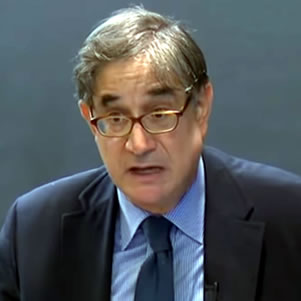
The Early Middle Ages, 284--1000 (HIST 210) In the first half of this lecture, Professor Freedman continues the previous lecture's discussion of the Abbasids. He highlights their ability to

assimilate other cultures, before turning to their decline in the tenth century. In the second half of the lecture, Professor Freedman considers the seventh century, the crucial turning point in the history of early medieval Europe. The seventh century shaped medieval Europe; the period saw the rise of Islam and Northern Europe, fundamental changes in Byzantium, the reorientation of Persia, and the end of the secular elite in the west. Professor Freedman concludes with a few remarks on the Pirenne thesis, which states that the rise of Islam broke up the Mediterranean and paved the way for the rise of northern Europe.

00:00 - Chapter 1. Geography and Medicine under the Abbasids
15:05 - Chapter 2. The Collapse of the Abbasid Caliphate
22:49 - Chapter 3. The Importance of the Seventh Century
30:18 - Chapter 4. The Seventh Century as a Turning Point
44:30 - Chapter 5. Pirenne Thesis and Conclusion

Complete course materials are available at the Yale Online website: online.yale.edu


This course was recorded in Fall 2011.

DISCLAIMER
All videos are shared for educational and information purposes only. All videos are hosted and viewable on Youtube servers. Video titles are generated using the original video title; overall content theme including actual dialogue and speech (Transcript); and A.I-based recommendations with a focus on SEO, keyword density, and internal search functions. The video title does not represent the views held by the Youtube video uploader, or any individual, organisation or business.

If you spot any mistake, omission or give feedback, kindly Contact Us with details

Overview & Key Concepts


Who is Paul Freedman?

Paul Freedman is the Chester D Tripp Professor of History at Yale University. He specializes in medieval social history, the history of Spain, the

study of medieval peasantry, and medieval cuisine.
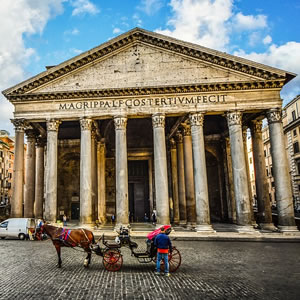
Where is Rome?

Rome is the capital city of Italy and a special comune (named Comune di Roma Capitale). Rome also serves as the capital of the Lazio region. With

2,872,800 residents in 1,285 km2 (496.1 sq mi), it is also the country's most populated comune. It is the fourth-most populous city in the European Union by population within city limits. It is the centre of the Metropolitan City of Rome, which has a population of 4.3 million residents. Rome is located in the central-western portion of the Italian Peninsula, within Lazio (Latium), along the shores of the Tiber. The Vatican City is an independent country inside the city boundaries of Rome, the only existing example of a country within a city: for this reason Rome has been often defined as capital of two states. Rome's history spans 28 centuries. While Roman mythology dates the founding of Rome at around 753 BC, the site has been inhabited for much longer, making it one of the oldest continuously occupied sites in Europe.

Frequently Asked Questions


1.When did Catholic Christianity become official religion of Rome?

In 380 CE, under the Edict of Thessalonica issued by Emperor Theodosius I, Nicene (Catholic) Christianity officially became the state religion of the Roman Empire, leading to the institutional regulation of religious practices and the formalisation of a calendar of feast days like Christmas and Easter.


2.What happened after Rome chose Christianity as the state religion?

When the Roman authorities officially adopted Christianity in the 4th century CE, they institutionalised the Roman Catholic version of the faith, favoring the universal theological framework of Paul over the localized, law-observant traditions of the original disciples. Mainstream historians emphasize that this political alliance standardized a singular imperial orthodoxy across the Mediterranean world, systematically suppressing alternative theological perspectives.


3.What is the 'Lazarus Effect' or 'Lazarus Syndrome' in science?

In medicine, this refers to a rare phenomenon where a patient's blood circulation spontaneously returns after CPR has failed and resuscitation attempts have stopped. The patient essentially 'comes back to life.'


  Multipart Video (1)

This video is part of a series as displayed below :
  Rome: The Crucial 7th Century - Paul Freedman 17/18


Videos on Paul Freedman (18)

Video: Rome: Rome's Greatness and First Crisis - Paul Freedman 1/18 40:08
Video: Rome: 3rd Century Crisis and Diocletian Reforms - Paul Freedman 2/18 48:37
Video: Rome: Constantine & The Early Roman Church - Paul Freedman 3/18 45:17
Video: Rome: Christian Roman Empire - Paul Freedman 4/18 47:56
Video: Rome: Augustine's Confessions - Paul Freedman 5/18 46:23
Video: Rome: Transformation of the Roman Empire - Paul Freedman 6/18 49:22
Video: Rome: Barbarian Kingdoms - Paul Freedman 7/18 49:15
Video: Rome: Survival in the East - Paul Freedman 8/18 47:10
Video: Rome: The Reign of Justinian - Paul Freedman 9/18 48:47
Video: Rome: Clovis and the Franks - Paul Freedman 10/18 46:55
Video: Rome: Frankish Society - Paul Freedman 11/18 50:01
Video: Rome: Britain and Ireland - Paul Freedman 12/18 44:15
Video: Rome: Monasticism ('Devoted Living') - Paul Freedman 13/18 45:50
Video: Rome: Muhammed and the Arab Conquests - Paul Freedman 14/18 43:15
Video: Rome: Islamic Conquests, Forced Conversions and Civil War - Paul Freedman 15/18 49:44
Video: Rome: The Splendor of the Abbasid Period - Paul Freedman 16/18 44:11
Video: Rome: The Crucial 7th Century - Paul Freedman 17/18 45:18
Video: Rome: The Splendor of Byzantium - Paul Freedman 18/18 48:40

EXPLORE TOPICS : PAUL FREEDMAN | 18 ROME | 60

Latest videos  •  6,061 videos  •  0 viewed/24 hour

SUBSCRIBE

Receive the latest news and updates by email - Subscribe Now!
About  |  Q&A  |  Contact Us    •    Terms  |  Privacy  |  Disclaimer  |  Sitemap
Connect:      Facebook  |    Twitter  |    Youtube
MuslimProphets.com is an educational website on the Prophets of God: David, Noah, Abraham, Moses, Jesus and Muhammad, who established the Abrahamic faiths of Judaism, Christianity and Islam. MuslimProphets.com explores contemporary social themes through Scripture, Evidences, Photo, Video, Maps, Current Affairs, Debate and 'alternative' Views held by Theologians, Apologists, Scholars and Street Preachers. Take a Site Tour

In accordance with Islamic etiquette, all prophet names should be followed with 'Peace Be Upon Him (PBUH)'. This is omitted to minimise text.

DISCLAIMER: All website content is for general information and educational purposes only and available in the public domain. Whilst all information comes from sources believed to be reliable, this cannot be guaranteed. External links are provided as a convenience and for informational purposes only. They do not constitute endorsement or approval for any products, services or comments by organizations or individuals. Title and Text links may be edited for external SEO, internal site and keyword search purposes. We bear no responsibility for the accuracy, legality, or content found on any external website or its subsequent links. Unless indicated, all images and content is licensed under a Creative Commons Attribution License distributed by Wikipedia, Wikimedia Commons, Pixabay, Pxhere, Pexels, Unsplash, Flickr and others. All Torah, Psalms, Old and New Testament Bible quotes are from the King James Version (KJV) Holy Bible in the public domain. All Quran quotes are from Taqi-ud-Din al-Hilali/Muhsin Khan English Quran translation.

ALWAYS DO YOUR OWN RESEARCH. If you spot any mistake, error or omission of information, contact us so we can correct it.