THE QURAN
It is widely regarded as the finest work in classical Arabic literature. The Quran is divided into chapters (surah in Arabic), which are then divided into verses (ayah). Muslims believe that the Quran was verbally revealed by God to Muhammad through the angel Gabriel (Jibril), gradually over a period of approximately 23 years, beginning on 22 December 609 CE, when Muhammad was 40, and concluding in 632, the year of his death. Muslims regard the Quran as the most important miracle of Muhammad, a proof of his prophethood, and the culmination of a series of divine messages that started with the messages revealed to Adam and ended with Muhammad.
Youtube Videos on The Quran (91)
 Jesus in
 On reading
 Oldest Bible confirms
 Mathematical Miracle Of
 Jesus of
 Baby Jesus: His Birth in
 Were There Multiple Versions of
 Patterns of Numerical Values in
 Why does
 In
 Is
 Jesus' Birth in
 Is
 In

 Can you explain
 Is
 Ring Composition: Miracle Structure of
 What is worse, believing
 Can you explain
 Women's Rights in
 Ezekiel and Jethro in
 Prove a single verse is corrupt in
 Inheritance in
 Different Versions of
 Preservation of
 I want to convert to Islam. Let me read
 Which is more violent,
 How
 Does
 Does
 God 'spoke' to me in
 How
 What is
 Story of Moses and Khidr in
 Story of Moses and Khidr in
 Story of Moses and Khidr in
 Story of Moses and Khidr in
 Story of Moses and Khidr in
 Story of Moses and Khidr in
 Is
 Mathematical Miracles in
 What
 Must I follow
 In
 Is
 27 Miracles in
 Prophet Moses & Al-Khidr: Story from
 Did a Sheep eat part of
 Creation of
 Jesus' Crucifixion is Unclear in
 Stories of Prophets: Prophets in
 Importance of Jerusalem in
 Exploring
 Allah, God of
 Evolution of Arabic Language in
 Is
 Who wrote
 Relationship between Islam, Christianity and Judaism using
 Adam, Eve and
 Moses Before
 Miracles of
 Islamic Dilemma - Does
 History behind
 Development of
 Early Development of
 Key Themes of
 Modern Challenges in
 Early Islam focused on GOD, not Muhammad or
 Importance of reading
 Early Muslims, Jews and Christians were called BELIEVERS in
 Sabians and Mandaeans in
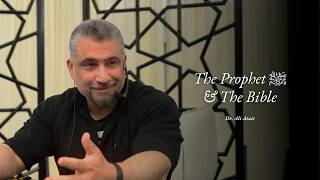 Muhammad in
FAQ on The Quran (74)
1.Why should we believe the Quran if it comes 600 years after Jesus?
The Quran may have come 600 years after Jesus, but does that make it false? Jesus came 1600 years after Moses, does that make Jesus false? The underlying or main argument here is the time between one person and another, but as we can see, if time is a problem then Christians should reject the other Prophets and Messengers since they have a greater number of years between them.
The complete manuscript collections of the New Testament and Old Testament date to the 4th and 5th century, within 100 years of the Qur'an, if Christians want to reject the Qur'an because it is 600 years after Jesus then they must be consistent and also reject the New Testament.
It should be noted that the Church itself did not ordain or make it canon (law) that the New Testament should be scripture until 393 and 397 CE in the Carthaginian councils. With all of these evidences, and centuries between Jesus and the New Testament, then they must reject the New Testament first.
2.What is the Quran?
The Quran is the sacred scripture of Islam, which was revealed to Prophet Muhammad through the Angel Gabriel.
3.Does Islam give any arguments to prove the existence of God?
The Holy Quran gives three kinds of arguments on this point.
Firstly, it refers us to the physical world which shows great order and arrangement, works according to laws, and where everything has a set purpose in the whole scheme of things. There is also immense beauty in nature which attracts man's heart. Science is discovering more and more of these characteristics of the world all the time. So behind this highly purposeful and beautiful working of nature must be One, single Intelligence of great beauty and attraction.
Secondly, the Quran tells us about the close and deep connection between God and the inner nature of every person. There is an in-built desire in each and every person to search for something higher than oneself, and when in difficulties a person instinctively wants to call upon a Hidden Power to help him.
Thirdly, and most convincingly, Prophets and men of God appeared in every nation in the world and showed their people the reality of God through their teachings and works. Just as most of us learn about science not by making all the discoveries ourselves, but by accepting the work and evidence of those who devote themselves to the study of science, similarly the proof of the existence of God is provided by the lives of the great luminaries whom God sent all over the world for this very purpose.
4.What are the names of some prophets?
The Quran mentions multiple prophets by name, including Biblical figures such as Noah, Abraham, Moses, David, and Jesus, alongside non-Biblical prophets like Luqman, Eber, and Ezekiel.
5.What did the Prophets teach?
All prophets gave the same basic teaching: that man should worship God, and God alone, and do good to his fellow beings. Ofcourse, the details of the teachings differed according to the nation and the time in which a Prophet appeared. In the Quran, the teachings of all Prophets are called Islam, and the Prophets and their true followers are labelled Muslims. This refers to the fact that the fundamental teachings given by all of them were the same - submission to God.
6.Name the scriptures available today?
Scripture revealed before the coming of Muhammad cannot be found today in their full and original form. However, these scriptures do contain some fragments of the original teachings, although they are mixed up with later additions and interpretations. Some of these scriptures are: the Torah of the Jews, the Gospels of the Christians, the Vedas of the Hindus, and the Zend Avesta of the Zoroastrians.
On the other hand, the latest word of God that came to Muhammad is still intact and completely preserved in the Muslim scripture, which is the Quran.
7.Do Muslims believe in scripture other than their own Quran?
Muslims believe that previous scriptures given to Moses, David, and Jesus contain elements of truth, but they maintain that the Quran is the final revelation from God and takes absolute precedence.
8.How was the Quran revealed?
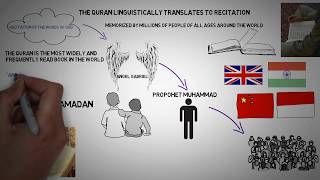
The Quran was verbally delivered to Prophet Muhammad through the Archangel Gabriel; the Prophet would then repeat the precise words, which were simultaneously memorised and recorded by scribes.
9.In the Bible, God says 'For God so loved the world, that he gave his only Begotten son'
The words 'Begotten' and 'Son' are not factually accurate when describing Jesus's relationship to the divine Creator. To support this point, it contrasts the Biblical text with the Quran, specifically quoting Chapter 19, Verses 88-92, which strongly condemns the claim that God has begotten a son, describing the assertion as a monstrous falsehood that contradicts the absolute majesty of the Creator.
10.What does the Quran say about Jews and Christians?
The Quran recognizes Jews and Christians as 'People of the Book' (Ahl al-Kitab), acknowledging that they were given previous divine revelations through prophets like Moses and Jesus. While it praises the righteous among them, it also critiques their theological developments, specifically rejecting the Christian doctrine of the Trinity and the divine sonship of Jesus.
11.How authentic is the Quran historically?
Islamic tradition holds that the text of the Quran has been preserved perfectly since its 7th-century revelation, with oral memorisation and scribal dictation acting as dual tracking methods. Mainstream secular historians and academic textual critics confirm that early surviving fragments (such as the Birmingham Quran manuscript) demonstrate remarkable textual stability, verifying its core compilation dates to within a few decades of the Prophet Muhammad's lifetime.
12.How was the Quran text kept authentic?
According to historical records, whenever a passage was revealed, the Prophet Muhammad immediately dictated the verses to literate scribes while simultaneously instructing the community to commit them to memory. This dual tracking framework where oral recitation by thousands of companions double-checked the physical parchment, leather, and palm leaves prevented textual isolation and provided a robust system of communal validation before the definitive text was standardized.
13.How was the Quran preserved?
Whenever a fragment of the Quran was revealed, Prophet Muhammad would immediately call one of his literate companions to dictate the exact verses and specify their precise placement in the text. To ensure perfect accuracy, the Prophet had the scribe repeat the verses back to correct any errors. Additionally, every year during Ramadan, he would recite the compiled revelation to the Archangel Gabriel. Verses were written down on highly diverse materials such as parchment, leather, and wooden tablets. While thousands of companions simultaneously committed the entire text to memory, creating a dual preservation system that kept the message authentic.
14.After the death of Muhammad, the Quran was changed?
This is false. The first three Caliphs, especially Uthman completed a critical analysis of the entire Quran text.
This was due to the rapid expansion of Islam in the first decade amongst people whose native language was not Arabic. So it was deemed essential the text retained its original purity.
Uthman sent copies of the standardized Quran text to the centre of the Islamic Empire. Today, copies attributed to Uthman exist can be found in Tashkent and Istanbul.
Apart from a few dialect variations in copying, the oldest documents known to the present day found throughout the Islamic world are identical; the same is true for documents preserved in Europe (fragments in the Bibliothèque Nationale in Paris which, according to the experts date from the 8th Century AD).
The minor dialect variations do not change the general meaning of the text. For example, the absence of diacritical marks could make a verb either active or passive and in some instances, masculine or feminine. This is a minor issue since the context indicated the meaning in many instances.
Therefore the Quran has been fully preserved since its revelation.
15.Was Jesus sent and approved by God?
In both Christian and Islamic traditions, Jesus is explicitly recognized as a messenger sent with direct divine approval and authority. The New Testament documents this through public miracles and voices from heaven (such as at his baptism in Matthew 3:17), while the Quran (Surah Al-Ma'idah 5:110) states that God explicitly strengthened Jesus with the Holy Spirit and authorized his miracles to validate his prophetic mission to Israel.
16.Was Jesus a man?
Both the New Testament and the Quran confirm Jesus' complete humanity through his experience of physical, human emotions and limitations. While traditional Christianity views him as fully divine and human, Islamic theology and secular history affirm him as a human prophet.
17.Was Jesus a servant of God?
Yes, both early Christian writings, which use the Greek term pais (Acts 3:13), and the Quran (Surah Maryam 19:30) explicitly describe Jesus as the servant of God, reinforcing his prophetic role.
18.Is Muhammad mentioned in the Quran?
Yes, the name Muhammad is explicitly mentioned by name four distinct times in the text of the Quran (Surah Al-Imran 3:144, Surah Al-Ahzab 33:40, Surah Muhammad 47:2, and Surah Al-Fath 48:29), where he is formally designated as the Messenger of God and the 'Seal of the Prophets.' Additionally, he is addressed once by the name Ahmad in Surah As-Saff (61:6), inside a narrative where Jesus prophesies the future arrival of a messenger coming after him.
19.Does the Quran tell Jews and Christians to refer to their Scriptures (Torah and Bible)?
Yes, the Quran references previous scriptures in passages like Surah Al-Ma'idah (5:47), which tells the followers of the Gospel to judge by what God has revealed in it. From an academic perspective, this reflects the historical context of 7th-century Medina, where Jews and Christians were recognized as 'People of the Book' who possessed divine laws. While Islamic theology holds that modern biblical texts have suffered from textual corruption (tahrif), the Quran historically appeals to the core monotheistic truths remaining in those scriptures to validate Muhammad's message.
20.Did God sent Jesus with the task of guiding people?
Yes, both Christian scripture and Islamic theology completely agree that Jesus was explicitly sent by God as a divinely appointed guide, teacher, and messenger to humanity. In the New Testament gospels, his mission is framed as bringing spiritual salvation, healing the sick, and declaring the immediate arrival of the Kingdom of God. Similarly, the Quran defines his core task as delivering the Gospel (Injeel) and serving as a miraculous sign to guide the Children of Israel back to pure monotheistic worship.
21.Does the Quran encourage violence against the disbelievers (non-Muslims)?
Academic Islamic scholarship clarifies that verses in the Quran addressing warfare against non-Muslims were historically revealed during active, state-level conflicts with the pagan tribes of Mecca and their military allies. Mainstream historians emphasize that these specific martial passages must be read within their situational context of self-defence and treaty violations, rather than as an open-ended command to attack peaceful non-Muslims.
The historical context is that this Quran verse was revealed at the Battle of Badr, a battle in which the pagans of Makkah traveled over 200 miles to destroy the Muslims of Madinah. The Pagans of Makkah had an army of about 1000 while the Muslims were only 300 followers. Muhammad and his followers had suffered severe persecutions and torture for 13 years in the city of Makkah. Having fled from Makkah to the safety of Madinah, they found that they were once again threatened.
From a historical and textual context this Quran verse does not promote the killing of innocents.
22.Are Muslims told to kill polytheists in the Quran?
Academic, context-based interpretations of the Quran indicate that verses regarding fighting (e.g., 9:5, 2:190) are historically situated within specific conflicts or treaty breaches rather than universal commands, emphasizing that the text generally prohibits indiscriminate violence, defends the sanctity of life (5:32), and allows for positive relations with peaceful non-Muslims (60:8).
23.Is their violence in the Quran?
Like many ancient religious scriptures, including the Hebrew Bible, the Quran contains passages dealing with warfare, military engagement, and state-level defense. Academic historians note that these specific verses were revealed chronologically during the 7th century to regulate battle conduct, enforce military discipline, and motivate the early Muslim community when they were heavily outnumbered by hostile pagan forces in Arabia.
24.Does the Quran encourage ill-treatment of non-Muslims?
No, orthodox Islamic theology strictly prohibits the unprovoked abuse, exploitation, or mistreatment of peaceful non-Muslims, explicitly warning in the Hadith literature that anyone who oppresses a religious minority will face divine complaints from the Prophet himself on the Day of Judgment. Scriptural texts command Muslims to uphold agreements, demonstrate broad compassion to all of creation, and engage in respectful theological dialogue.
25.Why does the Quran discourage the asking of questions?
This concept is rooted in Surah Al-Ma'idah (5:101), where the text advises believers not to ask about things that, if revealed to them, might cause them distress or unnecessary burden. Historical-critical and traditional scholars explain that this warning was directed at trivial, pedantic, or speculative inquiries that could over-complicate religious obligations, much like the extensive questioning regarding the sacrificial cow in the biblical and Quranic narrative of the Israelites, rather than discouraging sincere, honest questions aimed at seeking knowledge and spiritual clarity.
26.How is Muhammad connected to the Damascus Gate in Jerusalem?
In Islamic tradition, during the Isra and Miraj (the Night Journey), Prophet Muhammad traveled from Mecca to the Al-Aqsa Mosque compound in Jerusalem. While the exact gate through which he entered the city walls is not named in the Quran, regional traditions often associate the northern access from the road to Damascus with the historical approaches into the Old City.
27.How is Elijah connected to Baalbek?
The prophet Elijah is directly associated with Baalbek. According to classical Quranic commentaries and Islamic tradition (such as the writings of Ibn Kathir and Al-Tabari), Prophet Elijah was sent to the region of Baalbek to preach against the worship of the Canaanite storm god, Baal. The city's original ancient name stems from this deity, meaning 'Lord of the Beqaa Valley'.
In Chapter 37 of the Quran (Surah As-Saffat), Elijah's direct confrontation with his idol-worshipping people is mentioned: 'And Elijah was indeed one of the messengers. Remember when he said to his people, 'Will you not fear God? Do you call upon Baal and leave the Best of Creators, Allah...?' (Quran 37:123-126).
While the Biblical text places Elijah's confrontation with the prophets of Baal primarily in the Kingdom of Israel (such as Mount Carmel), early Middle Eastern geographic traditions linked the worship of Baal and Elijah's mission directly to the city of Baalbek. Near the ancient city, local folklore and regional geography still mark sites and traditions referencing Elijah's presence during his hiding and preaching.
28.Is Prophet Seth mentioned in the Quran?
No, Prophet Seth is not mentioned by name in the Quran. However, he is prominent in Islamic tradition, Hadith literature, and historical accounts by classical scholars such as Ibn Kathir. According to Islamic tradition, he was a revered prophet who received 50 divine scrolls (Suhuf) from God.
29.Is Prophet Aaron mentioned in the Quran and the Bible?
Yes, Aaron is prominently featured in both traditions. The Quran references him by name over 20 times as Harun, highlighting his eloquence, nobility, and partnership with Moses.
30.Is Prophet Abel mentioned by name in the Quran?
While the story of the two sons of Adam is detailed in the Quran (Sura Al-Ma'idah 5:27-31), Abel and Cain are not explicitly mentioned by name in the text itself. However, they are universally identified by name as Habil and Qabil in Islamic Hadith literature, commentary, and scholarly history.
31.Is Prophet Adam mentioned in the Quran and the Bible?
Yes, Adam is a central figure in Judaism, Christianity, and Islam. In the Quran, he is mentioned by name 25 times and is highlighted as God's Khalifah (vicegerent or steward) on Earth. In the Bible, his creation, life in Eden, and initial command from God are detailed in the Book of Genesis.
32.Is Aram mentioned in the Quran?
Aram is not mentioned as an individual prophet in the Quran. However, Islamic tradition and classical commentaries connect his name to 'Iram' (Iram dhat al-imaad / Iram of the Pillars), mentioned in Surah Al-Fajr. This refers to the ancient city or tribe associated with the people of Ad, to whom Prophet Hud was sent.
33.Is Arphaxad explicitly mentioned in the Quran?
No, Arphaxad is not mentioned by name in the Holy Quran. His lineage and life details are preserved through classical Islamic history, genealogical texts (such as those by Ibn Kathir and Al-Tabari), and Judeo-Christian scriptural traditions.
34.Is Benjamin mentioned in the Quran?
While Benjamin is a central figure in Surah Yusuf (Chapter 12) as Joseph's beloved full brother, he is not mentioned by his explicit name in the Quranic text. Classical Islamic scholarship and historical traditions identify him by name.
35.Is Cain mentioned in the Quran?
While Cain is not mentioned by his explicit name in the Holy Quran, his story is detailed in Surah Al-Ma'idah (5:27-31), which describes the sacrificial offering, his jealousy, the murder of his brother, and the raven sent by God to show him how to bury the body.
36.Is Prophet Daniel mentioned in the Quran?
No, Daniel is not mentioned by name in the Holy Quran. However, he is widely recognized in Islamic tradition, Hadith literature, and classical history books by scholars such as Ibn Kathir and Al-Tabari as a righteous prophet of God.
37.Is Prophet David mentioned in the Quran?
Yes, Prophet David is explicitly mentioned 16 times in the Holy Quran. He is praised as a righteous servant, a wise king, and a prophet given the power to soften iron and understand the language of birds and nature.
38.Is Eber mentioned in the Quran?
Classical Islamic scholars, including Ibn Kathir and Al-Tabari, widely identify the biblical patriarch Eber with the Quranic prophet Hud, who was sent to guide the ancient, arrogant tribe of Ad.
39.Is Prophet Eli recognized in Islamic tradition?
Eli is not mentioned by name in the Quran. However, classical Islamic historians and scholars recognize him within the narrative of the Israelite judges and high priests who cared for the Ark of the Covenant prior to the era of King Saul (Talut) and King David (Dawud).
40.Is Prophet Elijah mentioned in the Quran?
Yes, Elijah is mentioned by name in the Holy Quran (in Surah Al-An'am and Surah As-Saffat). He is praised as one of the righteous prophets who warned his people against worshipping the pagan idol Baal and called them to worship God alone.
41.Is Prophet Elisha mentioned in the Quran?
Yes, Elisha is explicitly mentioned by name twice in the Holy Quran (in Surah Al-An'am 6:86 and Surah Sad 38:48). He is praised as one of God's favored, righteous servants who was elevated above the nations alongside other major prophets.
42.Is Prophet Enoch mentioned in the Quran?
Yes, Enoch is mentioned by his Islamic name, Idris, in the Holy Quran (in Surah Maryam and Surah Al-Anbiya). He is praised as a man of truth, a prophet of patience, and someone whom God raised to a 'high station'.
43.Is Eve mentioned by name in the Quran?
No, Eve is not mentioned explicitly by her proper name in the Quranic text. Instead, she is referred to as Adam's 'spouse' (zawj). Her name, Hawwa (meaning 'living one'), is established through Islamic tradition, Hadith, and classical historical texts.
44.Is Prophet Ezekiel mentioned in the Quran?
No, Ezekiel is not mentioned explicitly by name in the Quran. However, classical Islamic scholars and commentators such as Ibn Kathir identify him with the prophet referenced in Surah Al-Baqarah (2:243), who witnessed thousands of people brought back to life by God's command.
45.Is Prophet Isaac mentioned in the Quran?
Yes, Prophet Isaac is explicitly mentioned by name 17 times in the Holy Quran. He is praised as a righteous servant, a leader guided by God, and a prophet blessed with deep spiritual wisdom and devotion.
46.Is Prophet Ishmael mentioned in the Quran?
Yes, Prophet Ishmael is mentioned by name 12 times in the Holy Quran. He is praised as a truthful fulfiller of promises, a patient servant, and a noble messenger elevated by God.
47.Is Prophet Jacob mentioned in the Quran?
Yes, Prophet Jacob is explicitly mentioned by name 16 times in the Holy Quran. He is praised as a righteous leader, a prophet of patience (Sabr), and a dedicated servant of God.
48.Is Prophet Japheth mentioned in the Quran?
Japheth is not mentioned by his explicit name in the Holy Quran, but Quranic commentary and Hadith literature reference Noah's sons repopulating the Earth after the deluge. His life and lineage are detailed by classical Islamic historians like Ibn Kathir and Al-Tabari.
49.Is Prophet Jesus mentioned in the Quran?
Yes, Prophet Jesus is mentioned by name 25 times in the Holy Quran, and referred to by titles such as Al-Masih (The Messiah) and Ibn Maryam (Son of Mary). He is revered as one of the five resolute messengers (Ulul 'Azm) of God.
50.How is Prophet Job revered in different religious traditions?
Judaism & Christianity: His story is recorded in the Book of Job in the Old Testament/Hebrew Bible, celebrating his integrity and wrestling with deep questions about divine justice.
Islam: Revered as the prophet Ayyub in the Quran (Surah Al-Anbiya and Surah Sad), praised by God as an excellent, patient servant who constantly turned back to the Creator.
51.How is Prophet John revered across different faith traditions?
Christianity: Revered as the forerunner of Christ, the last major prophet of the Old Covenant era, and a major saint across liturgical traditions.
Islam: Revered as the prophet Yahya, praised in the Quran for his purity, gentle wisdom, humility, and steadfast faith from childhood.
Mandaeism: Honored as their primary and ultimate prophet, whose teachings on baptism form the core of their religious practice.
52.How is Prophet Jonah viewed across different faith traditions?
Judaism: His story is read annually on Yom Kippur during the Mincha (afternoon) service to emphasize the power of sincere repentance and divine forgiveness.
Christianity: Jesus references the 'Sign of Jonah' in the New Testament Gospels, comparing Jonah's three days in the whale's belly to His own three days in the tomb before resurrection.
Islam: Revered as Yunus (and Dhu'n-Nun, 'Companion of the Fish') in the Quran, where an entire chapter (Surah Yunus) is named after him, celebrating his heartfelt prayer of repentance.
53.How is the story of Joseph viewed in different holy texts?
Judaism & Christianity: His life is detailed across the final chapters of Genesis in the Hebrew Bible / Old Testament, highlighting God's providence in turning human evil into divine good.
Islam: An entire chapter of the Quran (Surah Yusuf) is dedicated to his life, designated by God as the 'Best of Stories' (Ahsan al-Qasas) to highlight faith, chastity, and patience.
54.Is Prophet Joshua mentioned in the Quran and the Bible?
Hebrew Bible / Old Testament: He is the central figure in the Book of Joshua and features prominently in Exodus and Numbers as Moses' loyal attendant and one of the 12 spies sent to scout Canaan.
Islam: While not explicitly mentioned by proper name in the Quran, classical Islamic scholars identify him as the young companion who accompanied Moses on his journey to meet Al-Khidr (Surah Al-Kahf). His status as a prophet is explicitly affirmed in Hadith literature.
55.How is Judah viewed across different monotheistic faiths?
Judaism: Revered as a central founding patriarch whose tribe held the royal and messianic lineage.
Christianity: Honored as a direct ancestor of Jesus Christ, who is referred to in the New Testament as the 'Lion of the Tribe of Judah'.
Islam: Recognized as one of the twelve sons of Jacob (Asbat) mentioned in the Quran, whose life demonstrates themes of repentance, family responsibility, and divine reconciliation.
56.How is Levi viewed across different faith traditions?
Judaism: Honored as the ancestral father of the Levites and the Kohanim (the priestly class), establishing a legacy of religious service and devotion.
Christianity: Recognized as a key Old Testament patriarch whose lineage prepared the priestly backdrop for the New Testament ministry, including John the Baptist.
Islam: Respected as one of the twelve sons of Jacob (Asbat) recognized in the Quran, whose family ultimately established a noble line of guidance and faith.
57.How is Prophet Lot viewed across different faith traditions?
Judaism & Christianity: His story is recorded in the Book of Genesis, highlighting his hospitality toward the angels, his survival from Sodom's overthrow, and his status as a righteous man vexed by the surrounding lawlessness (2 Peter 2:7).
Islam: Honored as a noble, steadfast prophet (Lut) who remained devoted to God despite extreme isolation and resistance from his community, praised in the Quran across multiple chapters.
58.Who was Mary, the mother of Jesus, across world religions?
Mary (Maryam) is globally revered as one of the most holy, righteous, and prominent women in history. In Christianity, she is honored as the Virgin Mary, Theotokos (Bearer of God), and the mother of Jesus.
In Islam, she is revered as Maryam, the mother of Prophet Isa, and the only woman mentioned by name in the Quran.
59.Is Mary mentioned in both the Bible and the Quran?
Yes, Mary plays a central role in both scriptures:
Bible: Featured prominently in the Gospels of Matthew, Luke, and John, highlighting her devotion, presence at Jesus's birth, early life, miracles, crucifixion, and early church gathering.
Quran: An entire chapter, Surah Maryam (Chapter 19) is named in her honor. She is praised as a noble, chaste, and chosen woman above all women of the worlds.
60.How is Midian viewed across different faith traditions?
Judaism & Christianity: Detailed in Genesis and Exodus as a vital branch of Abraham's family tree, serving as both a place of shelter for Moses and later a kingdom that clashed with the Israelites during the Judges era.
Islam: Referenced in the Quran as Madyan, a prominent historical region associated with the mission of Prophet Shoaib and the early life of Musa (Moses).
61.Who was Prophet Moses across world religions?
Moses (Musa) is one of the most pivotal prophets, lawgivers, and religious leaders in history.
In Judaism, he is the supreme prophet who led the Israelites out of Egyptian slavery and received the Torah on Mount Sinai.
In Christianity, he is a major Old Testament prophet and foreshadower of Christ.
In Islam, he is revered as Musa, an Ulul 'Azm (resolute) messenger and the most frequently mentioned prophet in the Quran.
62.How did Prophet Muhammad receive the revelation of the Quran?
In 610 AD, at age 40, Muhammad was meditating in the Cave of Hira near Mecca when the Archangel Gabriel (Jibril) appeared to him with the first revelation from God. Over the next 23 years, these divine revelations were conveyed orally and recorded, forming the text of the Holy Quran.
63.Where did Noahs Ark come to rest after the Great Flood?
After months at sea, the floodwaters receded and the Ark came to rest upon a mountain peak. The Hebrew Bible identifies this location as the Mountains of Ararat (in modern-day eastern Turkey), while the Quran specifies Mount Judi (located in the same region near the Turkish-Iraqi border).
64.How is Prophet Noah honored in different faith traditions?
Judaism & Christianity: Detailed in the Book of Genesis, he is revered as a righteous man who 'walked with God' and established the Seven Laws of Noah (Noahide Laws) for all humanity.
Islam: Reverted as Nuh, one of the five Ulul Azm (Arch-Prophets of Firm Resolve), with an entire chapter of the Quran (Surah Nuh) dedicated to his mission and steadfast faith.
65.Is Prophet Samuel mentioned in the Quran?
While Samuel is not named explicitly by his proper name in the Quran, his story is highlighted in Surah Al-Baqarah (2:246-248) as the unnamed prophet whom the Children of Israel asked to appoint a king to lead them against Goliath and their enemies.
66.How is Prophet Zechariah viewed across different faith traditions?
Judaism: Recognizes historical prophets named Zechariah, most notably the author of the Book of Zechariah, who encouraged the rebuilding of the Second Temple and foretold messianic prophecies.
Christianity: Honored in the Gospel of Luke as a righteous priest whose prophetic song, the Benedictus, celebrated the coming of the Messiah and the role of his son, John the Baptist.
Islam: Revered as Zakariyya, a noble prophet praised in the Quran (notably in Surah Maryam and Surah Al-Imran) for his patience, devotion, and guardianship of Maryam.
67.What are some interesting historical facts about Prophet Muhammad?
- At the time of Muhammad, the Arabs were proud of their language, poetry and rhetoric, as it was popular in society
- Received the Quran written in a unique, poetic style
- Quran has remained unchanged in 1400 years
- Muhammad pointed at the moon causing it to split
- Water flowed from his finger when his companions were thirsty
- Travelled a long distance to Jerusalem overnight (Isra/Miraj)
- Fed an entire army with very little food
68.What is the Quran?
The Quran (also spelled Koran) is the holy book of Islam which Muslims believe to be the literal, verbatim word of God as revealed to the Prophet Muhammad through the Angel Gabriel over a 23-year period. Composed of 114 chapters (surahs), the Quran serves as the ultimate source of theology, law, morality, and daily guidance for over 2 billion Muslims worldwide.
69.What are the Six Articles of Faith in Islam?
While the Five Pillars govern outward actions, the Six Articles of Faith (Arkan al-Iman) dictate the core internal theological beliefs required of every Muslim:
1. Belief in Allah as the one and only supreme God.
2. Belief in His angels (such as Gabriel and Michael).
3. Belief in His holy books (including the Torah, Psalms, Gospel and the Quran).
4. Belief in His prophets and messengers (from Adam and Noah to Abraham, Moses, Jesus and Muhammad).
5. Belief in the Day of Judgment and the afterlife (Paradise and Hell).
6. Belief in divine decree or destiny (Qadar), meaning God possesses absolute ultimate knowledge of all events.
70.Do Muslims believe in Jesus?
Yes, Muslims deeply love and revere Jesus (known in Arabic as Isa). In Islam, Jesus is recognized as one of God's greatest and most critical prophets. The Quran explicitly affirms his virgin birth and credits him with performing numerous miracles, such as healing the sick and raising the dead. However, Islam rejects the Christian doctrine of the Trinity, teaching that Jesus was a purely human prophet rather than the literal Son of God, and that he was not crucified but raised directly to heaven by God.
71.What is Sharia law?
In Islam, Sharia (meaning 'the path to water') is the comprehensive religious and ethical legal framework derived from the Quran and the Hadith (the recorded sayings and actions of the Prophet Muhammad). Rather than being a static, singular book of codes, Sharia is an interpretive system that guides Muslims on how to conduct their daily lives, covering everything from personal prayer, marriage, and inheritance to business contracts, civic governance, and social justice.
72.What is Ramadan and why do Muslims fast?
Ramadan is the ninth month of the Islamic lunar calendar, celebrated as the holy month in which the first verses of the Quran were revealed to the Prophet Muhammad. In Islam, Muslims observe mandatory daily fasting (Sawm) from dawn until sunset to cultivate Taqwa (God-consciousness), practice self-restraint, purify the soul from worldly distractions, and build empathy for the poor and less fortunate.
73.What is a Hadith and how does it differ from the Quran?
While the Quran is believed by Muslims to be the direct, literal word of God, a Hadith is a recorded saying, action, or silent approval of the Prophet Muhammad. The Hadiths were meticulously compiled by Islamic scholars centuries after the Prophet's death using rigorous chains of narration (isnad). Together with the Quran, the Hadith collections form the foundation of Islam and provide practical, daily examples of how to implement the Quran's teachings.
74.What is the status of women in Islam?
In Islam, women were granted foundational legal rights long before they were adopted in the West. Under Sharia, women possess the absolute right to own property, inherit wealth, retain their maiden names after marriage, choose or divorce a spouse, and seek education. While traditional Islamic family frameworks designate distinct, complementary roles appointing the husband as the financial provider and the wife as the primary nurturer, both genders are explicitly stated in the Quran to be completely equal in spiritual worth and standing before God.
Articles on The Quran (6)




News on The Quran (5)
Scripture Themes on The Quran (4)
| 1. Quran confirms truth of Torah and Gospel | Quran 3:3 |
| 2. Gabriel Brings Quran Down to the Heart of Muhammad | Quran 2:97 |
| 3. The Holy Spirit Brings Down the Quran in Truth | Quran 16:102 |
| 4. Diversified Parables Parallel Moral Style of Luqman | Quran 30:58 |