SLAVE SLAVE MASTER SLAVERY
Thus allowing individuals to own, buy and sell other individuals, as a de jure form of property. A slave is unable to withdraw unilaterally from such an arrangement and works without remuneration. Slavery began to exist before written history, in many cultures. A person could become enslaved from the time of their birth, capture, or purchase. While slavery was institutionally recognized by most societies, it has now been outlawed in all recognized countries, the last being Mauritania in 2007. Nevertheless, there are an estimated 45.8 million people subject to some form of modern slavery worldwide.
Youtube Videos on Slavery, Slave, Slave Master (38)
 Does Islam allow the rape of Women and
 Crusades: Roman Catholic Church began the African Slave Trade - John Henrik Clarke
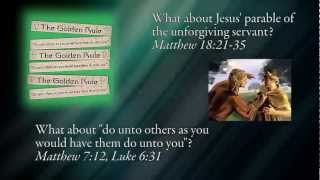
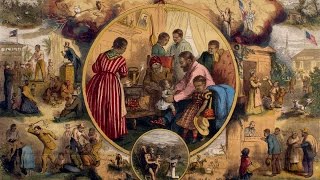 After
 Breaking the last bond of Black

 Islam,
 The Atlantic Slave Trade - Crash Course
 In Numbers 31:18, the Bible allowed Child
 In Genesis 9:25, Black
 Atlantic Slave Trade: 10M African Slaves to Americas - Anthony Hazard
 Black Man is a Slave in Libya. Where dem protests at? - Ali Dawah vs Kalam
 In past,
 You are a Slave to God. He owns you. He sells you Freedom - Hamza Yusuf
 I am not a Slave. I am an Atheist, Christian and Muslim - Chacha Usman vs Man
 Trans-Atlantic Slave Trade made Europe rich and prosperous - Leo Muhammad
 Before
 Black History before
 Church of England: Control through Bigotry, Education and
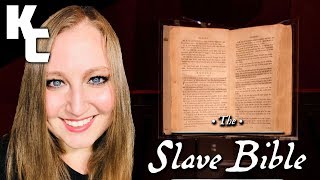 In 1807, 'The Slave Bible' published by Christian Slave masters was used to control obedient Black Slaves - Godless Engineer
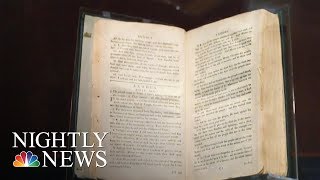 'Slave Bible' removed passages to instil Obedience & uphold
 Kiss Ma Boots & Apologize for Black
 American Black Man earning $15 per hour. He still a Slave struggling to Survive - ISUPK
 Muslims wrestle with history: the Inferiority Complex, 'Slave Mentality' and Colonization by Europeans - Masjid Ribat
 Historically,
 How Big Banks made Big Money from
 Black Man still praying to White Mans God, like the Klan, Donald Trump & your Slave Master - ISUPK
 COVID Trap Set 2020: Life of a Transhuman Slave in a Global Technocracy - Catherine Austin Fitts
 Great Reset: You are a Slave to a Master who Owns Everything - Douglas Kruger
 COVID Health Passports will link to Social Credit Scores. Welcome to Modern
 The Devil, the Liar and Deceiver forced Blacks into
 Will the Slave Master ever free the Black Man? | ISUPK
 Inside Saudi Arabia 2025: Life between Tyranny,
 Palestinians born into Gaza 'Concentration Camp' face a life of desperation and
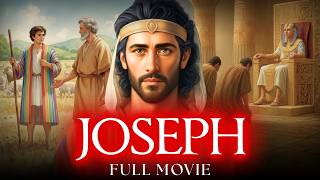 Joseph - From Slave to Prime Minister (2025)
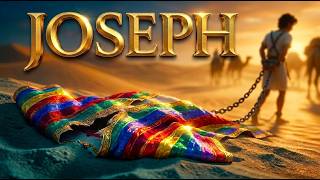 Joseph - Sold Into
 Onesimus and Philemon - The Runaway Slave Who Became a Brother | Bible Chronicles Animation
Scripture Themes on Slavery, Slave, Slave Master (8)
| 1. Moses flees Egypt to the desert of Midian | Exodus 2:11-25 |
| 2. Ezekiel performs symbolic sieges as a judgment metaphor for Israel and Judah | Ezekiel 3-5 |
| 3. David proclaims his final inspired words as king | 2 Samuel 23:1-7 |
| 4. Joseph sold into slavery for low price | Quran 12:20 |
| 5. Brothers plead to substitute for Benjamin | Quran 12:78 |
| 6. Brothers offer substitution for Benjamin | Quran 12:78 |
| 7. Brother Offers Self in Substitution for Benjamin | Quran 12:78 |
| 8. Brother Offers Self in Substitution for Benjamin | Quran 12:78 |
FAQ on Slavery, Slave, Slave Master (7)
1.How did Apostle Paul differ with the Jewish Rabbis?
The Jewish Rabbis preached a person was saved so long as their intention was to remain within the covenant, and one truly repented and seek forgiveness for their sins.
Paul preached that every person was 'damned' until they was offered salvation. Mans problem was that he was 'in the flesh' in bondage to the Law, sold under Sin, enslaved by the fundamental spirits of the universe (ie. dead).
Paul preached the only cure was liberation from slavery and death by union with Christ, who had conquered death and sin.
2.Does the Bible tell us to act like slaves?
Historically, the Bible has been used by some to enslave, subjugate and dominate over a people.
The 'Curse of Ham' Myth: Pro-slavery advocates twisted Genesis 9 to claim that people of African descent were divinely cursed to be eternal servants.
Old Testament Legal Protection: Slaveholders cited Leviticus 25 to argue that purchasing foreign bondmen and passing them down as inherited property was biblically sanctioned.
Weaponising Obedience Verses: Plantation owners frequently read verses like Ephesians 6:5 ('Slaves, obey your masters') to religiously brainwash enslaved people against rebelling.
The Redacted 'Slave Bible': British and American authorities physically censored the scriptures, deleting the entire Book of Exodus to hide the narrative of freedom from bondage.
Enforcing Fugitive Slave Laws: Pro-slavery preachers used Paul's letter to Philemon to argue that runaway slaves were legally and spiritually obligated to return to their masters.
3.Who was Prophet Aaron, and what was his primary role?
Aaron was an important prophet, the elder brother of Moses (Musa), and the first High Priest of Israel. Because Moses possessed a speech impediment, God appointed Aaron as his spokesperson to confront Pharaoh, guide the Israelites out of slavery in Egypt, and maintain spiritual order in the desert.
4.How did Prophet Joseph end up in Egypt?
Driven by intense jealousy over their father Jacob's love for Joseph, his older brothers plotted against him, threw him into a dry well, and sold him into slavery to a passing caravan. He was taken to Egypt and bought by Potiphar (Al-Aziz), a high-ranking Egyptian official.
5.What role did Judah play in the story of Joseph?
When Joseph's brothers plotted to kill him in the wilderness, Judah intervened to save his life by proposing they sell Joseph to a traveling merchant caravan instead. Years later in Egypt, Judah demonstrated deep remorse and leadership by offering himself as a slave in place of his youngest brother, Benjamin, which prompted Joseph to reveal his true identity.
6.Who was Prophet Moses across world religions?
Moses (Musa) is one of the most pivotal prophets, lawgivers, and religious leaders in history.
In Judaism, he is the supreme prophet who led the Israelites out of Egyptian slavery and received the Torah on Mount Sinai.
In Christianity, he is a major Old Testament prophet and foreshadower of Christ.
In Islam, he is revered as Musa, an Ulul 'Azm (resolute) messenger and the most frequently mentioned prophet in the Quran.
7.What is Rastafari and how did it start?
Rastafari is a young Abrahamic religious and social movement that developed in Jamaica during the 1930s. It emerged among impoverished Afro-Jamaican communities as a spiritual response to British colonial oppression and the legacy of slavery. The movement was heavily influenced by the Pan-Africanist teachings of Marcus Garvey, who urged Black people to look to Africa for their redemption and king.