PAGAN
It was applied on populations of the Roman Empire who practiced polytheism, either because they were increasingly rural and provincial relative to the Christian population or because they were not milites Christi (soldiers of Christ). Alternate terms in Christian texts for the same group were hellene, gentile, and heathen. Pagan and paganism were pejorative terms for the same polytheistic group, implying its inferiority. Paganism has broadly connoted the "religion of the peasantry", and for much of its history was a derogatory term. Both during and after the Middle Ages, pagan was a pejorative term that was applied to any non-Abrahamic or unfamiliar religion, and the term presumed a belief in false god(s).
Youtube Videos on Pagan (84)
 The
 Mithras:
 Resurrection was common amongst many
 Constantine's
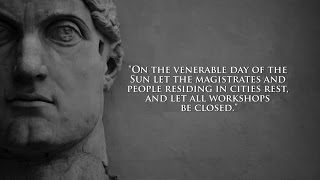 In 321 AD, Emperor Constantine, a confirmed
 Halloween:
 Constantine worshipped Sol Invictus, the
 Julius Caesar, Romans and
 Christianity adopted Graeco-Roman
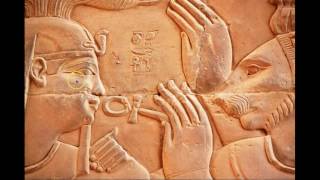
 Archaeology proves the Israelites worshipped
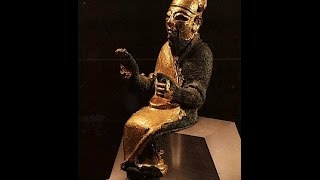
 Mithraism, like other Ancient Near East
 The Bible is not Scripture. Jesus is modelled on Dying & Rising
 Did the author of Mark copy
 Christmas on 25 December was a
 Origin of the Christmas Tree - Is it
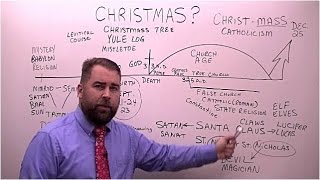 Christmas and
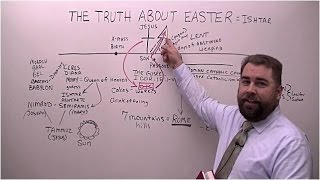 Easter and
 Christianity and its
 Easter Worship is
 Jesus evolved from Mithras, the Roman
 Did You Know Christmas is
 Mythical Jesus, Catholics and Engineering of Dates, Events, Gospels and Epistles (Clement & Barnabas) affirming pre-existant
 Tertullian (240 AD), first used 'Trinity' to mean 3 distinct persons, influenced by
 Academics acknowledge
 Christian origins in
 Christmas, 25th December was Ancient
 The Christian Church adopted the 'Sun God' Mithras and
 In 601 AD, Pope Gregory I adopted
 In 325 AD, Council of Nicaea created Jesus and Christianity by unifying
 Arguing Bishops at Council of Nicaea voted
 Early Christianity developed as a Jewish version of various
 Emperor Constantine was a
 Christian Gospels are Symbolic Fiction; mythical narratives mined from Jewish texts and

 Origins of Christmas, Bible &
 Easter: A Christian festival or
 Christmas, December 25th is under the control of the Devil Satan and
 Jesus Christ: A
 Jesus is too similar to Mythical
 Trinity is 'veiled' Tri-theism (Three Gods). Combining of Jewish Monotheism with
 The Jesus Story is more
 The Jesus Story is more
 Eusebius, an early Church Father loyal to Philo of Alexandria, who added the 'God From God'
 God is One. He moves by Spirit. He creates through Spoken Word (Trinity is from
 Pre-Islam
 Yeshua, Yesous, Iesous, Jesus are not derived from Zeus, the Greek
 Many Christian rituals have origins in
 The Black Stone and Safa-Marwa 'most likely' originate from pre-Islam,
 Emperor Constantine merged
 Gnostic 'secret knowledge' of God features in


 In 70 AD, Rome destroyed the Jerusalem Church, establishing '
 Virgin Births were common in
 Is the Christmas Tree
 Christianity, a collection of Pre-Christian
 Pantheon, Roman Temple to the Gods and Idols of
 Ancient
 Hajj at Kabah is a
 Christianity is a
 Palestinian Children tortured and sacrificed for a Zionist
 Evolution of The Allah God from Pre-Islam
 Muslim Leaders promote
 Did Christianity borrow from
 King Cyrus, a
FAQ on Pagan (17)
1.Who built the Kabah in Saudi Arabia?
Prophet Abraham built the Kaaba for people to worship God. While pagan Arabs admitted this fact and even kept the stone where he used to stand to build the Kaaba (Abraham's station), they brought idols to the Kaaba and worshiped them to get closer to Abraham's Lord, Allah, God of gods. Prophet Muhammad came with the monotheistic message of Islam. Arabs defended these idols and refused to give up the religion of their fathers and grandfathers.
2.Is Allah the Moon-God?
No, this is a entirely false claim that originally originated from a Christian pastor named Robert Morey; Islam explicitly refutes this idea, maintaining that Allah is the all-powerful, unique Creator of the entire universe and not a pagan entity or a creation like the moon.
3.How was Christianity made appealing to pagan idol worshippers?
Pope Gregory I (540-604 CE), a famous Christian leader encouraged accomodating pagan customs and beliefs. So if pagans worshipped a Tree or Spirit abiding in it, rather than shun the pagan worship, he urged priests to somehow link the worship to Jesus Christ, and allow them to continue their Tree or pagan idol worship.
4.Should Christians celebrate Jesus on 25th December?
Any believing Christian who is aware of the historical, pagan 'Sun-Baal' connections of this date should entirely avoid celebrating Christmas. It points to certain denominations, such as Jehovah Witnesses, who explicitly refuse to participate in the celebration for this very reason.
5.How was 25th December celebrated by pagans?
December 25th was the most important of Sun Festivals, the new
birth of the God, rising three days after 'dying' at the winter
solstice. Today, the celebration continues and its many features
can be witnessed. A few of these include:
* Excessive eating, drinking and merry was commin in Saturnalia
festival
* Father Christmas (Red Man) - who was originally Apollo, the
Sun-God or Thor God depicted as an elderly man, jovial or
friendly, of heavy build with a long white beard who drove a
chariot through the sky
* Fireplace - the fireplace in pagan homes was sacred to Thor
God which he would descend though the chimney
* Giving of gifts - a feature of Saturnalia festival
* Christmas card bearing the cheeky robin bird (with its chest
bearing the flame symbol)
* Snowman - who melts when the Sun comes out (is defeated by
the Sun)
* Fir-tree trinkets and decorations, symbolising life in the
'dead' parts of the world
* Holly - to deflect evil goblins in winter solstice
* Ivy - the female version of the 'male' holly
* Mistletoe - used by pagan druids in their worship
* Yule Log - sacred to the Thor God which is symbolised today as a chocolate cake
6.How were the Triadic or 'Trinity-like' Pagan Gods presented?
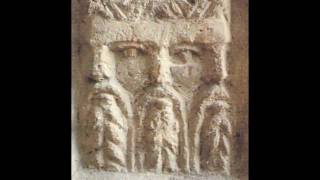
Ancient triadic deities in the Roman Empire were depicted in art and monuments as a single, unified figure featuring three distinct faces or heads to illustrate their triune nature.
7.Does the Christian Trinity come from pagan Triadic dieties?
Yes, the core teachings of modern Trinitarian Christian churches do not come from Jesus, but were pagan three-in-one concepts that existed long before his arrival and were later adopted by Christians to make their doctrine highly appealing to idol-worshipping masses.
8.Why are their so many similarities between Jesus Christ and all the pagan Gods?
It is probable the reason why the Church priests burned and destroyed the earlier records of pagan Gods was to hide the evidence for the real origins of their own Christian mythology.
9.Does the Quran encourage violence against the disbelievers (non-Muslims)?
Academic Islamic scholarship clarifies that verses in the Quran addressing warfare against non-Muslims were historically revealed during active, state-level conflicts with the pagan tribes of Mecca and their military allies. Mainstream historians emphasize that these specific martial passages must be read within their situational context of self-defence and treaty violations, rather than as an open-ended command to attack peaceful non-Muslims.
The historical context is that this Quran verse was revealed at the Battle of Badr, a battle in which the pagans of Makkah traveled over 200 miles to destroy the Muslims of Madinah. The Pagans of Makkah had an army of about 1000 while the Muslims were only 300 followers. Muhammad and his followers had suffered severe persecutions and torture for 13 years in the city of Makkah. Having fled from Makkah to the safety of Madinah, they found that they were once again threatened.
From a historical and textual context this Quran verse does not promote the killing of innocents.
10.Is their violence in the Quran?
Like many ancient religious scriptures, including the Hebrew Bible, the Quran contains passages dealing with warfare, military engagement, and state-level defense. Academic historians note that these specific verses were revealed chronologically during the 7th century to regulate battle conduct, enforce military discipline, and motivate the early Muslim community when they were heavily outnumbered by hostile pagan forces in Arabia.
11.Did Jesus preach monotheism?
Yes. Jesus taught the absolute oneness of God within the established Jewish monotheistic tradition, rejecting pagan polytheism.
12.Is Prophet Elijah mentioned in the Quran?
Yes, Elijah is mentioned by name in the Holy Quran (in Surah Al-An'am and Surah As-Saffat). He is praised as one of the righteous prophets who warned his people against worshipping the pagan idol Baal and called them to worship God alone.
13.What were Prophet Ezekiel's major prophecies?
Ezekiel recorded dramatic visions, including God's mobile throne chariot (Merkavah), the inevitable fall and destruction of Jerusalem due to idolatry, divine judgments on surrounding pagan nations, and the eventual construction of a restored, ideal Temple.
14.What was Terah's occupation and spiritual background?
According to historical and rabbinic traditions (such as the Midrash), Terah was a high-ranking sculptor and merchant of pagan idols in Ur. His household served as a major center for idol crafting, which placed him in direct religious opposition to his son Abraham's uncompromising monotheistic faith.
15.Is Asatru an ancient religion?
While Asatru is based on the pre-Christian historical traditions, folklore, and mythologies of Northern and Central Europe, the formal religion practiced today is a modern reconstructionist movement. It was revived and officially recognized as a state religion in Iceland in the early 1970s via organizations like the Islenska Asatruarfelagio. Because there is a historical gap in continuous practice, it is classified as a modern Pagan religion rather than a direct, unbroken line from the Viking Age.
16.What holidays do Jehovah Witness celebrate?
Jehovah Witnesses do not celebrate major religious or national holidays including Christmas, Easter, Halloween, Thanksgiving, or the 4th of July. They also do not celebrate birthdays. Their rejection of these events stems from the belief that these celebrations have pagan origins or promote a nationalistic spirit that honors humans rather than God. The only major event they formally observe is the annual Memorial of Christ's Death (also known as the Lord's Evening Meal).
17.What is Wicca and how did it start?
Wicca is a modern, earth-centered pagan religion that developed in England during the first half of the 20th century. It was popularized in 1954 by Gerald Gardner, a retired British civil servant who claimed to have been initiated into a surviving medieval witch coven. Wicca draws heavily on ancient European pagan traditions, folklore, ceremonial magic, and 19th-century romanticism, framing itself as a revival of pre-Christian nature worship.
News on Pagan (7)
Scripture Themes on Pagan (7)
| 1. Apostle Paul and Barnabas are mistaken for pagan gods in Lystra | Acts 14:8-20 |
| 2. Eber declares impending divine wrath | Quran 7:71 |
| 3. Joseph explains monotheism and divine judgment | Quran 12:40 |
| 4. Jethro rejects return to pagan religion | Quran 7:89 |
| 5. Israelites demand an idol after crossing sea | Quran 7:138 |
| 6. Elijah denounces worship of Baal | Quran 37:125 |
| 7. Pagan Idolatry Linked to Rebellious Satan | Quran 4:117 |