HINDU HINDUISM
It has historically been used as a geographical, cultural, and later religious identifier for people indigenous to the Indian subcontinent.
Youtube Videos on Hindu, Hinduism (25)
 Convert from Hinduism to Islam
 Muhammad in the
 Ravi Shankar, the Bhavishaya Purana
 Boy with mystery condition worshiped as a
 What does Islam say about Hinduism and Buddhism? - Shabir Ally
 Indian child with a 'Tail' worshiped as
 Did Jesus have an Umbilical cord? - Shabir Yusuf vs Ex-
 Dead calf with 'human-like' features worshiped as
 Baby born with an 'elephant trunk' worshiped as
 Baby born with Tail worshiped as Monkey
 Shiva Lingam (Shiva's Penis) worshiped as
 3-year old 'Kumari' virgin girl worshiped as
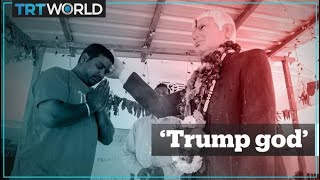
 Trump worshipped as
 Children blessed in Cow dung at

 How to make a
 India's
 Cow Urine is the finest drink, claims
 In Hinduism, Cows are Non-Violent animals ('Ahimsa'), just like Hindus
 Hinduism: From 1 God to 1 Million Idols
 It's Hurry Jesus. Not Hare Krishna, the idol God - Ruben Israel vs
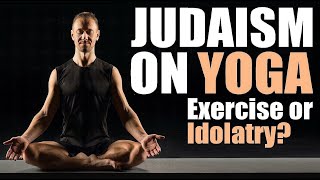 Is Yoga Exercise a form of Idolatory, or
 Fasting in Buddhism, Christianity, Islam, Judaism, Taoism, Jainism & Hinduism - Robert Sepehr
FAQ on Hindu, Hinduism (19)
1.Other religions also teach the existence of God. Is there any difference between their teaching and the Islamic concept of God?
The first major difference is that Islam teaches the absolute one-ness of God, with Whom no one can share in Divinity. No idol or heavenly object, nor any religious or spiritual teacher, can possess some Divine power or attribute.
Secondly, Islam teaches the highest conception of God, and does not accept any limitation to His power and knowledge, while other religions set limits to Him. For instance, Islam rejects the Hindu belief that God is not the Creator of matter and souls but exists alongside them. It also rejects the Christian doctrine that God is unable to forgive sins unless He punishes someone, and so He sent His 'son' to suffer the punishment for the sins of all humanity. Moreover, a son is needed to take the place of the father when the father dies, and clearly this cannot apply if God is perfect.
Thirdly, Islam refutes the idea that any human being, however great, was a 'manifestation' of God on earth, or a Divine incarnate.
2.Christianity and Hinduism revere their religious figures as gods or incarnations of God
According to Islam, all these righteous persons were mortal, human prophets of God, like Muhammad, having the same needs that every human being has. They all eventually died, as everyone must.
There are several reasons why they have come to be revered by their followers as 'gods'. One is that their words were misunderstood by the later generations, who mistook their figurative expressions in a literal sense. Another is that the details of their lives were not preserved accurately, and therefore a great many myths have grown up around them, and their works and deeds have been much exaggerated.
3.What is the difference between Buddhism and Hinduism?
While both ancient Indian traditions share concepts like karma, reincarnation, and liberation, they differ fundamentally on core theological tenets:
* The Soul: Hinduism teaches the existence of an eternal, individual soul (Atman), while Buddhism rejects this, teaching the doctrine of no-self (Anatta or Anatman).
* The Divine: Hinduism recognizes a supreme universal reality (Brahman) and an array of gods, whereas Buddhism is non-theistic.
* Social Structure: Hinduism historically integrated a caste system, which Buddhism categorically rejected, offering spiritual liberation equally to all people.
4.What is the Druze religion?
The Druze religion is a monotheistic, Abrahamic, and highly secretive syncretic faith that emerged during the 11th century in Cairo, Egypt. Adherents, known as the Druze, are a distinct ethnoreligious group primarily living in the Levant. The faith blends the foundational monotheism of Shia Isma'ili Islam with elements of Christianity, Gnosticism, ancient Greek philosophy (such as Neoplatonism and Pythagoreanism), and Hinduism.
5.What is the Hare Krishna religion?
The Hare Krishna movement officially named the International Society for Krishna Consciousness (ISKCON) is a monotheistic branch of Hinduism. It belongs to the Gaudiya Vaishnavism tradition, which originated in India during the 16th century. Followers focus their devotion entirely on the Supreme Lord Krishna, and actively promote spiritual consciousness through the chanting of sacred mantras, study of scripture and congregational community living.
6.What is the difference between Hare Krishna and mainstream Hinduism?
Hare Krishna is not a separate religion from Hinduism; rather, it is a highly focused monotheistic tradition within Hinduism. While mainstream Hinduism often encompasses a vast pantheon of various gods and paths, Gaudiya Vaishnavism teaches that Krishna is the Supreme Personality of Godhead, and that all other deities are his expansions or demigods. It places an exclusive emphasis on Bhakti (loving devotion) over intellectual philosophy or ascetic rituals.
7.Is the Hare Krishna movement considered a cult?
While the movement faced intense cultural skepticism and anti-cult labels during its rapid expansion in the 1970s, sociologists and religious scholars today classify ISKCON as an authentic, orthodox branch of ancient Hinduism. The organization operates transparently with thousands of temples globally, values family life, actively engages in worldwide humanitarian food relief (such as Food For Life), and is legally recognized as a mainstream religious charity in multiple nations.
8.What is Hinduism and what do followers call it?
Hinduism is the world's oldest continuously practiced religion, with roots stretching back more than 4,000 years. Adherents traditionally refer to the faith as Sanatana Dharma, a Sanskrit phrase meaning 'the eternal way' or 'eternal law.' It is a highly diverse spiritual tradition encompassing a wide range of philosophies, texts, and rituals, rather than a single doctrine managed by a centralized religious authority.
9.Who is the founder of Hinduism?
Unlike most other major world religions, Hinduism has no single founder, specific prophet, or definitive historical starting point. Instead, it evolved organically over millennia on the Indian subcontinent through the convergence of diverse cultures, indigenous belief systems, and the ancient spiritual insights of seers (rishis) whose teachings were compiled in the sacred Vedic texts.
10.Is Hinduism polytheistic or monotheistic?
Hinduism is most accurately described as henotheistic or pantheistic, though it contains elements of both monotheism and polytheism. While Hindus worship thousands of distinct deities (devas and devis), the vast majority of practitioners view these individual gods as different forms, facets, or manifestations of a single, supreme cosmic reality known as Brahman.
11.What are the holy books and sacred texts of Hinduism?
Hinduism possesses a massive library of classical literature split into two primary categories:
* Shruti ('What is Heard'): The most ancient, divinely revealed scriptures, consisting of the four Vedas (Rigveda, Samaveda, Yajurveda, and Atharvaveda) and the philosophical Upanishads.
* Smriti ('What is Remembered'): Epics and human-authored texts, including the Puranas, the Ramayana, and the Mahabharata—which contains the Bhagavad Gita, the most widely read spiritual text in Hinduism.
12.What are the four core beliefs of Hinduism?
While practices vary, the philosophical framework of Hinduism relies on four interconnected spiritual concepts:
* Dharma: Moral duty, ethics, and living in accordance with cosmic law.
* Karma: The universal law of cause and effect, where every intentional action yields an equivalent consequence.
* Samsara: The continuous cycle of birth, death, and reincarnation experienced by the soul (atman).
* Moksha: Ultimate spiritual liberation from the cycle of samsara, resulting in the soul merging back into Brahman.
13.Who are the main gods in Hinduism (The Trimurti)?
The cosmic functions of the universe are personified in Hinduism through the Trimurti, a triad of three principal male deities:
1. Brahma: The Creator of the cosmos.
2. Vishnu: The Preserver and protector of cosmic order, who descends to Earth in various forms (avatars), such as Rama and Krishna.
3. Shiva: The Destroyer and transformer, who dissolves the universe to allow for its ultimate renewal.
14.What is the role of the caste system in Hinduism?
The caste system (varna) historically divided Hindu society into four broad social and occupational classes: Brahmins (priests/scholars), Kshatriyas (warriors/rulers), Vaishyas (merchants/farmers), and Shudras (laborers).
While ancient texts described this as a fluid system based on an individual's natural aptitudes and duties, it evolved over centuries into a rigid, hereditary social hierarchy. Today, caste discrimination is illegal under the modern Indian constitution, and many spiritual leaders actively work to dismantle social prejudices.
15.Why do Hindus revere cows?
In Hinduism, the cow is venerated as a sacred symbol of life, gentleness, and maternal bounty, rather than worshipped as a god. Cows are deeply respected because they provide life-sustaining milk, fertilizer, and fuel while asking for nothing but grass in return. This reverence reflects the core Hindu principle of Ahimsa (non-violence and respect for all living creatures).
16.What is Diwali and why is it celebrated?
Diwali (or Deepavali) is the most celebrated festival in Hinduism, globally known as the Festival of Lights. Symbolizing the spiritual triumph of light over darkness, knowledge over ignorance, and good over evil, the multi-day celebration is marked by lighting clay lamps (diyas), setting off fireworks, decorating homes, and exchanging sweets. While regional narratives vary, it most famously commemorates Lord Rama's triumphant return to his kingdom after defeating the demon king Ravana.
17.What is the New Age movement and how did it start?
The New Age movement is a decentralized spiritual and social network rather than a structured religion with a single founder or holy book. It emerged prominently in Western societies during the 1970s and 1980s, drawing heavily from Eastern mysticism (like Hinduism and Buddhism), Western esotericism, alternative medicine, and modern psychology. The movement centers on the belief that humanity is entering a new era of higher consciousness, peace, and spiritual awakening, often referred to as the 'Age of Aquarius'.
18.Who or what is the Guru Granth Sahib?
The Guru Granth Sahib is the holy scripture and the eternal spiritual guide of the Sikhs. Following the passing of the tenth human Guru, Guru Gobind Singh, the spiritual authority was permanently transferred to this sacred text. It is treated with the utmost reverence as a living Guru. Uniquely, it contains not only the hymns of the Sikh Gurus but also spiritual writings from Hindu and Muslim saints who shared the same message of divine oneness.
19.Is Sikhism a branch of Hinduism or Islam?
No, Sikhism is an entirely independent, distinct world religion with its own unique scriptures, traditions and philosophy. While it originated in a geographical region dominated by Hinduism and Islam and shares some terminology (like karma or allah as names for God), it fundamentally rejects core aspects of both, such as Hindu idol worship, asceticism, and the caste system, as well as Islamic concepts of exclusive salvation or a binary heaven and hell.
News on Hindu, Hinduism (10)
Topics with Hindu, Hinduism (2)
Articles on Hindu, Hinduism (1)
Muhammad in Hindu Scriptures: Kalki Avatar in the Puranas

3,842 views
|