GOVERNMENT
In the case of its broad associative definition, government normally consists of legislature, executive, and judiciary. Government is a means by which organizational policies are enforced, as well as a mechanism for determining policy. Each government has a kind of constitution, a statement of its governing principles and philosophy.
Search Result on 'Government' (66 total)
News on Government (33)
Youtube Videos on Government (24)
 Noahs Ark: Turkish
 African Union can bring Peace, Reconstruction and African Currency to Africa. Western
 Big Media &
 Edward Bernays: Social Manipulation through Invisible
 Islam's Tradition is to support the Ruler &
 Technocracy, a single
 Orwell's 1984: Totalitarian
 New Age Plagues empower
 Israeli
 Deep State ready for New World Order, a 'Mad Max' Militarized Global
 Pope Francis pushes for NWO Global
 Pope Francis promotes post-COVID NWO Global
 FedCoin, a serial-number, tracked,
 India plans to pre-install
 COVID Vaccines lack medical scrutiny, forced on us like Russian
 Great Reset is the 'Great Threat' from Authoritarian
 Can UK
 UK
 Fabianism 1884 - A Socialist, Technocratic
 Has the Zionist 'Chutzbah' enslaved UK
 Lowkey EXPOSES how UK
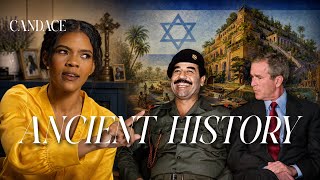 Return of Nimrod, Babylon and Gilgamesh. One World
 Will an Authoritarian UK
FAQ on Government (8)
1.What is the difference between Authoritarian and Totalitarian?
1. Authoritarianism: 'Do Not Challenge the State'
Authoritarian leaders or small elites focus strictly on monopolising political power. They do not have a grand plan to reshape human nature or build a new utopia.
* The Invisible Boundary: There is a clear distinction between the state and civil society. If you run a business, go to church, or raise a family, the government rarely intervenes, provided your activities remain strictly non-political.
* The Goal: Depoliticisation. The regime rules smoothly when the general public is quiet, neutral, and indifferent to politics.
2. Totalitarianism: 'Everything Within the State'
Totalitarianism is an extreme, all-encompassing form of authoritarianism.
* No Private Sphere: The boundary between public and private life is completely erased. The state utilizes tools like secret police, mandatory youth groups, mass surveillance, and neighborhood spies to monitor personal thoughts, media consumption, and even family dynamics.
* The Goal: Total mobilization and ideological purity. Silence is viewed as suspicion. Citizens are forced to actively participate in state-mandated events, and failing to show enough enthusiasm can be treated as treason. Education and media are weaponised to fundamentally brainwash the population.
2.Who is the founder of Cao Dai?
The Cao Dai religion was founded by Ngo Van Chieu, a Vietnamese government official serving under French colonial rule. In 1919, Chieu claimed to receive direct spirit communications from the supreme deity, who identified as Duc Cao Dai (the 'Highest Lord'). Following a series of subsequent revelations given to a broader group of mediums, the religion was formally established and recognized by the colonial administration in 1926.
3.What is Confucianism and who founded it?
Confucianism (historically known as Ruism) is an ancient Chinese belief system, philosophy, and ethical framework founded by the Chinese philosopher Confucius (Kong Fuzi) in the 6th-5th century BCE. Developed during a time of intense political chaos known as the Spring and Autumn period, Confucius sought to restore societal harmony, effective government, and peace by establishing practical codes of moral conduct and deep social responsibility.
4.How did Confucianism influence Chinese government and society?
Confucianism served as the official state ideology of imperial China for over two millennia, beginning heavily in the Han Dynasty. It completely shaped the historic Imperial Examination System, meaning civil servants, politicians, and government officials were selected and promoted based entirely on their mastery of Confucian texts rather than aristocratic birth. This created a highly structured meritocracy focused on ethics and civic duty.
5.Why is Falun Gong banned in China?
The Chinese government officially banned Falun Gong in July 1999 after the movement experienced rapid growth, attracting tens of millions of practitioners. Following a massive, silent demonstration by followers outside the leadership compound in Beijing, the Chinese Communist Party (CCP) declared it an illegal, heretical organization. The government viewed the movement's massive scale and independent organizational capability as a potential threat to state control, leading to a long-running crackdown that has been widely documented and condemned by international human rights organizations.
6.Do the Ancient Greek religions exist today?
Yes, the ancient religion has experienced a modern revival known as Hellenic Polytheism or Hellenic Neopaganism. Contemporary practitioners work to reconstruct the ancient ethics, values, and ritual structures of the classical era. In 2017, the Greek Government officially recognized Hellenism as a known, legal religion in modern Greece, allowing practitioners to establish formal places of worship and legally perform religious weddings.
7.What is a Caliphate in Islam?
A Caliphate is a historical form of Islamic government led by a Caliph (meaning 'successor'), who acts as both the political and administrative leader of the Muslim community (Ummah). The Caliphate is intended to unite the Muslim world under a single governance model ruled by Islamic law. The historical lineage began with the Rashidun (Rightly Guided) Caliphs immediately following the Prophet Muhammad, succeeded by major empires like the Umayyads, Abbasids, and ultimately the Ottoman Empire, which was formally dissolved in 1924.
8.Is Wicca a recognized religion?
Yes, Wicca is officially recognized as a legitimate religion in many countries, including the United States, Canada, and the United Kingdom. In the U.S the military officially recognizes Wicca as a faith, allowing the Wiccan emblem (the pentacle) on government headstones. It is protected under religious freedom laws, giving practitioners the same legal rights, tax exemptions, and protections as mainstream world religions.