CATHOLIC
This is the largest Christian church, with approximately 1.3 billion baptised Catholics worldwide, as of 2016. As one of the oldest religious institutions in the world, it has played a prominent role in the history and development of Western civilisation. The church is headed by the Bishop of Rome, known as the Pope. Its central administration, the Holy See, is in the Vatican City, an enclave within Rome, Italy. Catholic theology is based on the Nicene Creed.
Youtube Videos on Catholic (46)
 Was Jesus A
 A
 Why do
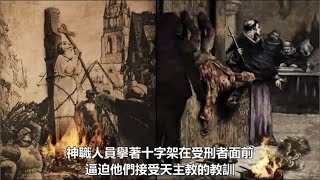
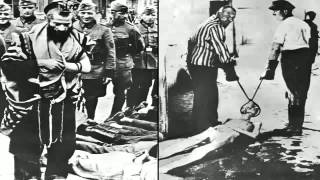
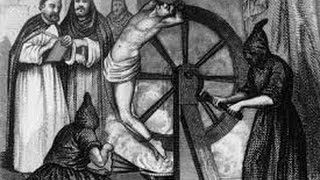 Spanish Inquisition - How the
 The Roman
 Clarifying
 Crusades: Roman
 Ricardo, a
 The
 We agree. Everything comes back to Scripture - Muhammad Tawheed & Abdul Hamid vs
 Secret Societies - History of the Roman
 In Matthew 28:19, the Trinity text was a later insertion and corruption, after 200 AD, by the
 In John 20:17, Jesus said I am going to my Father and your Father. Whose Father? - Mansur Ahmad vs
 Inside The Vatican: The
 New Testament Bible compiled to agree with
 Fullness of truth is in the
 In 1492 AD, Muslims protected Jews from
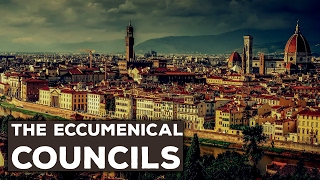 21 Ecumenical Church Councils defined
 It's Time to Quit the
 Pope Francis is a
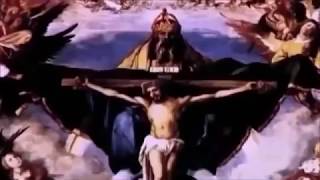 History of The Roman
 Greek Apostate Fathers: Clement, Ignatius, Justin Martyr, Shepherd of Hermas & Polycarp founded the
 From Proverbs 8:22, Philo of Alexandria applied a 'feminine' Wisdom (Sophia) in support of Roman
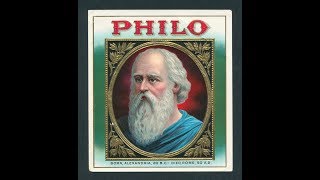 Philo of Alexandria mixed Greek philosophy with Jewish-Christianity to invent
 I believe in Muhammad. Am I still a
 The
 Ignatius' Letter to Smyrnaeans (110 AD) is earliest mention of '
 Why is
 Muhammad's wife, Aisha was aged between 6-15 years based on Historic Events - Uthman Ibn Farooq vs
 NWO and Vatican
 Protestant Christians rely on Roman
 Israeli Zionists demand Christians and
 Israel blocks
 Is The Pope OK with
News on Catholic (26)
FAQ on Catholic (10)
1.When was the word 'Catholic' first used?
The linguistic term 'Catholic' derived from a Greek word meaning 'universal' was historically recorded as early as 107 CE in the letters of Ignatius of Antioch.
2.When did Catholic Christianity become official religion of Rome?
In 380 CE, under the Edict of Thessalonica issued by Emperor Theodosius I, Nicene (Catholic) Christianity officially became the state religion of the Roman Empire, leading to the institutional regulation of religious practices and the formalisation of a calendar of feast days like Christmas and Easter.
3.What happened after Rome chose Christianity as the state religion?
When the Roman authorities officially adopted Christianity in the 4th century CE, they institutionalised the Roman Catholic version of the faith, favoring the universal theological framework of Paul over the localized, law-observant traditions of the original disciples. Mainstream historians emphasize that this political alliance standardized a singular imperial orthodoxy across the Mediterranean world, systematically suppressing alternative theological perspectives.
4.Who translated the Bible from Greek into Latin?
Saint Jerome (342-420) was commissioned to translate the gospels from Greek into Latin. This key Catholic Biblical scholar was highly regarded and often represented with the figure of a lion.
5.How did early Catholics learn about Christianity?
Early Catholics were taught Christianity by the priests, nuns and at Catholic schools - and not through Bible study. The priests role was to pass on Christian beliefs and practise to his congregation. The priest acted as an intermediary between God and the people; as mankind was regarded as inherently sinful.
Catholics were discouraged from individual Bible study and pushed towards conforming with traditional Church teachings.
6.Was Jesus a Catholic Christian?
Historically, Jesus was a practicing Jew, and the original Jesus movement was a reform movement within Judaism . Conversely, the Catholic Church views Jesus' mission as universal, intended for the entire world, not just the Jewish people .
7.What is the Immaculate Conception versus the Virgin Birth?
Virgin Birth: The shared Christian and Islamic doctrine that Mary conceived Jesus miraculously without a human father.
Immaculate Conception: A specific Roman Catholic dogma stating that Mary herself was preserved from the stain of original sin from the moment of her own conception.
8.What is the Cao Dai hierarchy and structure?
The institutional structure of Cao Dai is closely modeled after the hierarchical organization of the Roman Catholic Church. The administrative governance features a supreme leader known as the Giao Tong (equivalent to a Pope), followed by a legislative body of Cardinals, Archbishops, and Priests who manage the spiritual laws and temple networks. The administrative duties are uniquely divided across distinct branches tasked with judicial oversight, executive functions and mediumship.
9.Is Mormonism a Christian religion?
Yes, Latter-day Saints consider themselves Christians, as Jesus Christ is the central figure of their faith, theology, and salvation. However, traditional mainstream Christianity (Catholic, Orthodox, and Protestant) does not universally recognize Mormonism as orthodox Christian. This is due to distinct theological differences, including the rejection of the traditional Nicene Creed and a unique understanding of the Godhead.
10.Is the Unification Church considered a Christian religion?
While the Unification Church utilizes Christian terminology, references the Bible, and centers on the figures of Jesus and God, mainstream Christian denominations do not recognize it as an orthodox Christian church. Catholic, Orthodox, and Protestant theologians reject Unification theology due to its unique beliefs. Most notably, the church teaches that Jesus failed to achieve his complete mission because he was crucified before he could marry and father sinless children.