693 views
·
Last viewed: 3 days ago
Uploaded: 26 Jun 2025 (1 year ago) · Shared: 23 Sep 2025
Duration: 32:49
Uploaded: 26 Jun 2025 (1 year ago) · Shared: 23 Sep 2025
Duration: 32:49
Youtube Description
A lecture from my book about the many flood myths around the world. They are found not just in the Bible, but also on cuneiform tablets among theBabylonians, also among the Greeks, the Aztecs, the Native Americans, the Polynesians and so on.
This is a lecture about a chapter of my world history book called:
'In Search of the Sublime - A world history of humanity's relentless pursuit of scientific truth, moral excellence, and enlightenment.'
Read the book for FREE at:
worldhistorybook.com
Or buy it on Amazon:
https://www.amazon.com/dp/B0D28FVM8T
Kind regards,
Stephan P. Dinkgreve
MSc Theoretical Physics
Amsterdam
Explore More
Stephans History Babylon Israel Flood NOAH
NOAH
Search Google Search Explore Topics
 Who are Stephans History?
Stephan's History of the World. Reclaim the foundational thoughts and deeds of the great ancestors of humanity.
 Where is Babylon?
Babylon was an ancient city located on the lower Euphrates river in southern Mesopotamia, within modern-day Hillah, Iraq. This is about 85 kilometres (53 miles) south of modern-day Baghdad. Babylon functioned as the main cultural and political centre of the Akkadian-speaking region of Babylonia. Its rulers established two important empires in antiquity, the 19th-16th century BC Old Babylonian Empire, and the 7th-6th century BC Neo-Babylonian Empire. Babylon was also used as a regional capital of other empires, such as the Achaemenid Empire. Babylon was one of the most important urban centres of the ancient Near East, until its decline during the Hellenistic period.
 Where is Israel?
Israel, officially the State of Israel, is a country in the Middle East. Located on the southeastern shore of the Mediterranean Sea and the northern shore of the Red Sea. It has land borders with Lebanon to the north, Syria to the northeast, Jordan on the east, the Palestinian territories of the West Bank and Gaza Strip to the east and west, respectively, and Egypt to the southwest.
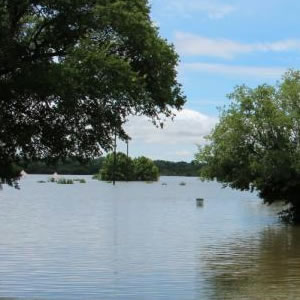 What is Flood?
A flood is a myth in which a great flood, usually sent by a deity or deities, destroys civilization, often in an act of divine retribution. Parallels are often drawn between the flood waters of these myths and the primeval cosmic ocean which appear in certain creation myths, as the flood waters are described as a measure for the cleansing of humanity, for example in preparation for rebirth. Most flood myths also contain a culture hero, who "represents the human craving for life". The oldest known narrative of a divinely initiated flood originates from the Sumerian culture in Mesopotamia, among others expressed in the Akkadian Atra-Hasis epic, which dates to the 18th century BCE. Comparable flood narratives appear in many other cultures, including the biblical Genesis flood narrative, manvantara-sandhya in Hinduism, Deucalion and Pyrrha in Greek mythology, also the Cheyenne, Blackfeet and Puebloan traditions.