872 views
·
Last viewed: 13 hrs ago
Uploaded: 07 Jan 2021 (6 years ago) · Shared: 14 Feb 2021
Duration: 23:20
Uploaded: 07 Jan 2021 (6 years ago) · Shared: 14 Feb 2021
Duration: 23:20
Youtube Description
Did Abraham exist? If so, when did he live and what evidence supports his existence? We offer several data points to support his life. Don't forgetto help us create more videos! We need your support:
https://www.patreon.com/inspiringphilosophy
https://www.youtube.com/channel/UC5qDet6sa6rODi7t6wfpg8g/join
Sources:
Craig Olson - How Old Was Abraham?
https://www.academia.edu/33972456/How_Old_was_Father_Abraham_Re_examining_the_Patriarchal_Lifespans_in_Light_of_Archaeology
Nahum M. Sarna - Understanding Genesis
George A. Barton - The Historical Value of the Patriarchal Narrative
David Noel Freedman - The Anchor Bible Dictionary, Vol. 1
Gösta W. Ahlström - The History of Ancient Palestine
Jonathan S. Greer et al. - Behind the Scenes of the Old Testament: Cultural, Social, and Historical Contexts
Daniel I. Block - Israel: Ancient Kingdom or Late Invention?
Richard S. Hess et al. - He Swore an Oath: Biblical Themes from
Genesis 12-50
Phillis Saretta - Asiatics in Middle Kingdom of Egypt
Langgut, Dafna, Israel Finkelstein, Thomas Litt, Frank Harald Neumann, & Mordechai Stein - Vegetation and
Climate Changes during the Bronze and Iron Ages (~3600–600 BCE) in the Southern Levant Based on
Palynological Records
https://journals.uair.arizona.edu/index.php/radiocarbon/article/view/18555
Manfred Bietak - Avaris: the Capital of the Hyksos: Recent Excavations at Tell El-Dabʻa
https://www.academia.edu/10071070/Avaris_Capital_of_the_Hyksos
Amihai Mazar and Israel Finkelstein - The Quest for the Historical Israel
Kenneth Kitchen - On The Reliability of the Old Testament
Avraham Biran - Biblical Dan
James B. Pritchard - Ancient Near Eastern Texts Relating to the Old Testament. 3rd ed
D. Ussishkin et al. - The New Encyclopedia of Archaeological Excavations in the Holy
Land
Kathleen M. Kenyon - Digging up Jerusalem
Mark W. Chavalas
- Mesopotamia and the Bible
C. Gordon - Biblical Customs and the Nuzu Tablets. The Biblical Archaeologist
https://www.jstor.org/stable/3209317
J. Bright - A History of Israel
B. Mazar et al. - Views of the Biblical World
Millar Burrows - The Complaint of Laban's Daughters
https://www.jstor.org/stable/594581
Richard S. Hess - Israelite Religions: An Archaeological and Biblical Survey
Provan, Iain W., et al. - A Biblical History of Israel
John Rogerson, R.W.L. Moberly, William Johnstone - Genesis and Exodus
Iain Provan, V. Philips Long, Tremper Longman III - A biblical history of Israel
#History #Bible #Genesis
Explore More
Biblical Archaeology InspiringPhilosophy Archaeology Philosophy Philo ABRAHAM
Search Google Search Explore Topics
 Who are Biblical Archaeology?
BiblicalArchaeology.org is the official web portal of the Biblical Archaeology Society (BAS), a nonprofit, nondenominational educational organization founded in 1974. The website serves as a premier hub for disseminating the latest scholarly research, excavations, and discoveries in the lands of the Bible.
 Who are InspiringPhilosophy?
My name is Michael Jones. I plan on creating a new video for InspiringPhilosophy.org every month dealing with philosophical and apologetic questions.
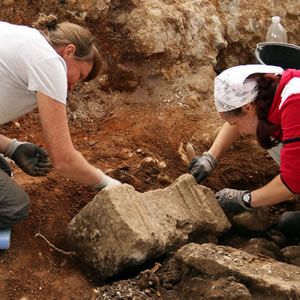 What is Archaeology?
Archaeology or archeology is the study of human activity through the recovery and analysis of material culture. The archaeological record consists of artifacts, architecture, biofacts or ecofacts, sites, and cultural landscapes. Archaeology can be considered both a social science and a branch of the humanities.
What is Philosophy?Philosophy is the study of general and fundamental problems concerning matters such as existence, knowledge, values, reason, mind, and language. The term was probably coined by Pythagoras (c. 570-495 BCE). Philosophical methods include questioning, critical discussion, rational argument, and systematic presentation. Classic philosophical questions include: Is it possible to know anything and to prove it? What is most real? Philosophers also pose more practical and concrete questions such as: Is there a best way to live? Is it better to be just or unjust (if one can get away with it)? Do humans have free will?
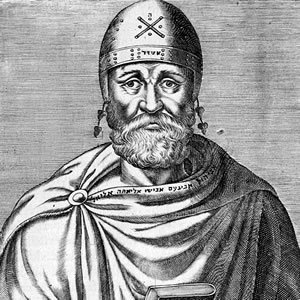 Who was Philo?
Philo of Alexandria (20 BC-50 AD) was a Hellenistic Jewish philosopher who lived in Alexandria, in the Roman province of Egypt. Philo used philosophical allegory to harmonize Jewish scripture, mainly the Torah, with Greek philosophy. His method followed the practices of both Jewish exegesis and Stoic philosophy. His allegorical exegesis was important for some Christian Church Fathers, but he had very little reception history within the Rabbinic Judaism. He adopted allegorical instead of literal interpretations of the Hebrew Bible. Some scholars hold that his concept of the Logos as God's creative principle influenced early Christology.