The Quran, Moses, Pharaoh and the Secrets of Egypt - ManyProphetsOneMessage
30:03
792 views
·
Last viewed: 8 hrs ago Uploaded:
26 Dec 2020 (6 years ago)
·
Shared: 28 Dec 2020
Video Description (from Youtube)
This video covers ten insights that the Qur'an has into the hidden past of ancient Egypt, proving that the Qur'an is of divine origins.
To learn more about the miracles of the Qur’an, please download
your free copy of the book “The Eternal Challenge” at the the following link:
https://onereason.org/eternalchallenge/
This video is based partly on research done by Dr. Saifullah and Sharif Randhawa. Check out their websites:
DISCLAIMER
All videos are shared for educational and information purposes only. All videos are hosted and viewable on Youtube servers. Video titles are generated using the original video title; overall content theme including actual dialogue and speech (Transcript); and A.I-based recommendations with a focus on SEO, keyword density, and internal search functions. The video title does not represent the views held by the Youtube video uploader, or any individual, organisation or business.
Quran, literally meaning "the recitation" is the central religious text of Islam, which Muslims believe to be a revelation from God (Allah). It is
widely regarded as the finest work in classical Arabic literature. The Quran is divided into chapters (surah in Arabic), which are then divided into verses (ayah). Muslims believe that the Quran was verbally revealed by God to Muhammad through the angel Gabriel (Jibril), gradually over a period of approximately 23 years, beginning on 22 December 609 CE, when Muhammad was 40, and concluding in 632, the year of his death. Muslims regard the Quran as the most important miracle of Muhammad, a proof of his prophethood, and the culmination of a series of divine messages that started with the messages revealed to Adam and ended with Muhammad.
In religion, a prophet is an individual who is regarded as being in contact with a divine being and is said to speak on that entity's behalf. They
claim to be serving as an intermediary with humanity by delivering messages or teachings from the supernatural source to other people. The message that the prophet conveys is called a prophecy. In Islam, all prophetic messengers are prophets (such as Adam, Noah, Abraham, Moses, Jesus, and Muhammad) though not all prophets are prophetic messengers. The primary distinction is that a prophet is required to demonstrate God's law through his actions, character, and behavior without necessarily calling people to follow him, while a prophetic messenger is required to pronounce God's law (i.e. revelation) and call his people to submit and follow him.
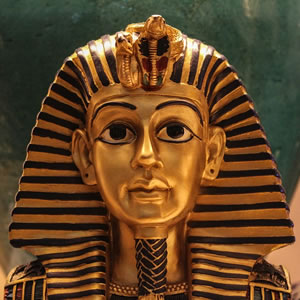
Egypt, officially the Arab Republic of Egypt, is a country spanning the northeast corner of Africa and southwest corner of Asia by a land bridge
formed by the Sinai Peninsula. Egypt is a Mediterranean country bordered by the Gaza Strip and Israel to the northeast, the Gulf of Aqaba and the Red Sea to the east, Sudan to the south, and Libya to the west. Across the Gulf of Aqaba lies Jordan, across the Red Sea lies Saudi Arabia, and across the Mediterranean lie Greece, Turkey and Cyprus, although none share a land border with Egypt.
The Quran may have come 600 years after Jesus, but does that make it false? Jesus came 1600 years after Moses, does that make Jesus false? The underlying or main argument here is the time between one person and another, but as we can see, if time is a problem then Christians should reject the other Prophets and Messengers since they have a greater number of years between them.
The complete manuscript collections of the New Testament and Old Testament date to the 4th and 5th century, within 100 years of the Qur'an, if Christians want to reject the Qur'an because it is 600 years after Jesus then they must be consistent and also reject the New Testament.
It should be noted that the Church itself did not ordain or make it canon (law) that the New Testament should be scripture until 393 and 397 CE in the Carthaginian councils. With all of these evidences, and centuries between Jesus and the New Testament, then they must reject the New Testament first.
The Quran was verbally delivered to Prophet Muhammad through the Archangel Gabriel; the Prophet would then repeat the precise words, which were simultaneously memorised and recorded by scribes.
The Quran recognizes Jews and Christians as 'People of the Book' (Ahl al-Kitab), acknowledging that they were given previous divine revelations through prophets like Moses and Jesus. While it praises the righteous among them, it also critiques their theological developments, specifically rejecting the Christian doctrine of the Trinity and the divine sonship of Jesus.
Islamic tradition holds that the text of the Quran has been preserved perfectly since its 7th-century revelation, with oral memorisation and scribal dictation acting as dual tracking methods. Mainstream secular historians and academic textual critics confirm that early surviving fragments (such as the Birmingham Quran manuscript) demonstrate remarkable textual stability, verifying its core compilation dates to within a few decades of the Prophet Muhammad's lifetime.
According to historical records, whenever a passage was revealed, the Prophet Muhammad immediately dictated the verses to literate scribes while simultaneously instructing the community to commit them to memory. This dual tracking framework where oral recitation by thousands of companions double-checked the physical parchment, leather, and palm leaves prevented textual isolation and provided a robust system of communal validation before the definitive text was standardized.
Whenever a fragment of the Quran was revealed, Prophet Muhammad would immediately call one of his literate companions to dictate the exact verses and specify their precise placement in the text. To ensure perfect accuracy, the Prophet had the scribe repeat the verses back to correct any errors. Additionally, every year during Ramadan, he would recite the compiled revelation to the Archangel Gabriel. Verses were written down on highly diverse materials such as parchment, leather, and wooden tablets. While thousands of companions simultaneously committed the entire text to memory, creating a dual preservation system that kept the message authentic.
This is false. The first three Caliphs, especially Uthman completed a critical analysis of the entire Quran text.
This was due to the rapid expansion of Islam in the first decade amongst people whose native language was not Arabic. So it was deemed essential the text retained its original purity.
Uthman sent copies of the standardized Quran text to the centre of the Islamic Empire. Today, copies attributed to Uthman exist can be found in Tashkent and Istanbul.
Apart from a few dialect variations in copying, the oldest documents known to the present day found throughout the Islamic world are identical; the same is true for documents preserved in Europe (fragments in the Bibliothque Nationale in Paris which, according to the experts date from the 8th Century AD).
The minor dialect variations do not change the general meaning of the text. For example, the absence of diacritical marks could make a verb either active or passive and in some instances, masculine or feminine. This is a minor issue since the context indicated the meaning in many instances.
Therefore the Quran has been fully preserved since its revelation.
Yes, the name Muhammad is explicitly mentioned by name four distinct times in the text of the Quran (Surah Al-Imran 3:144, Surah Al-Ahzab 33:40, Surah Muhammad 47:2, and Surah Al-Fath 48:29), where he is formally designated as the Messenger of God and the 'Seal of the Prophets.' Additionally, he is addressed once by the name Ahmad in Surah As-Saff (61:6), inside a narrative where Jesus prophesies the future arrival of a messenger coming after him.
Yes, the Quran references previous scriptures in passages like Surah Al-Ma'idah (5:47), which tells the followers of the Gospel to judge by what God has revealed in it. From an academic perspective, this reflects the historical context of 7th-century Medina, where Jews and Christians were recognized as 'People of the Book' who possessed divine laws. While Islamic theology holds that modern biblical texts have suffered from textual corruption (tahrif), the Quran historically appeals to the core monotheistic truths remaining in those scriptures to validate Muhammad's message.
Academic Islamic scholarship clarifies that verses in the Quran addressing warfare against non-Muslims were historically revealed during active, state-level conflicts with the pagan tribes of Mecca and their military allies. Mainstream historians emphasize that these specific martial passages must be read within their situational context of self-defence and treaty violations, rather than as an open-ended command to attack peaceful non-Muslims.
The historical context is that this Quran verse was revealed at the Battle of Badr, a battle in which the pagans of Makkah traveled over 200 miles to destroy the Muslims of Madinah. The Pagans of Makkah had an army of about 1000 while the Muslims were only 300 followers. Muhammad and his followers had suffered severe persecutions and torture for 13 years in the city of Makkah. Having fled from Makkah to the safety of Madinah, they found that they were once again threatened.
From a historical and textual context this Quran verse does not promote the killing of innocents.
Academic, context-based interpretations of the Quran indicate that verses regarding fighting (e.g., 9:5, 2:190) are historically situated within specific conflicts or treaty breaches rather than universal commands, emphasizing that the text generally prohibits indiscriminate violence, defends the sanctity of life (5:32), and allows for positive relations with peaceful non-Muslims (60:8).
Like many ancient religious scriptures, including the Hebrew Bible, the Quran contains passages dealing with warfare, military engagement, and state-level defense. Academic historians note that these specific verses were revealed chronologically during the 7th century to regulate battle conduct, enforce military discipline, and motivate the early Muslim community when they were heavily outnumbered by hostile pagan forces in Arabia.
No, orthodox Islamic theology strictly prohibits the unprovoked abuse, exploitation, or mistreatment of peaceful non-Muslims, explicitly warning in the Hadith literature that anyone who oppresses a religious minority will face divine complaints from the Prophet himself on the Day of Judgment. Scriptural texts command Muslims to uphold agreements, demonstrate broad compassion to all of creation, and engage in respectful theological dialogue.
This concept is rooted in Surah Al-Ma'idah (5:101), where the text advises believers not to ask about things that, if revealed to them, might cause them distress or unnecessary burden. Historical-critical and traditional scholars explain that this warning was directed at trivial, pedantic, or speculative inquiries that could over-complicate religious obligations, much like the extensive questioning regarding the sacrificial cow in the biblical and Quranic narrative of the Israelites, rather than discouraging sincere, honest questions aimed at seeking knowledge and spiritual clarity.