668 views
·
Last viewed: 2 days ago
Uploaded: 06 Aug 2020 (6 years ago) · Shared: 13 Aug 2020
Duration: 1:17:12
Uploaded: 06 Aug 2020 (6 years ago) · Shared: 13 Aug 2020
Duration: 1:17:12
Youtube Description
Throughout human history, people in all cultures have sensed the divine and developed a bewildering arrays of beliefs and ideas. Jimmy Akin and DomBettinelli explore the conflict between belief in one God vs. many, the journey that God had led his people on through time, and how we should understand these concepts today.
https://sqpn.com/2020/08/god-and-the-gods/
Further Resources:
• Jimmy’s article on the Divine Court: https://tinyurl.com/y4nclg4w
• Michael Heiser’s book The Unseen Realm: https://amzn.to/2D1aUTB
• Kami: https://tinyurl.com/ya4uwotf
• Amenominakanushi: https://tinyurl.com/ycgrf85t
• Amaterasu: https://tinyurl.com/yxket6vc
• Joseph Smith and Elohim as “Gods”: https://tinyurl.com/y696w78c
Mysterious Headlines: (UFO/UAP Theme)
• Navy UFO Program to Release Some Findings Regularly: https://tinyurl.com/y6c7ln29
• War Zone Investigation into Colorado Mystery Drones: https://tinyurl.com/yysxkewh
Explore More
Jimmy Akin Monotheism Polytheism Atheism GODSearch Google Search Explore Topics
 Who is Jimmy Akin?
Jimmy Akin is an internationally known author and speaker. As the senior apologist at Catholic Answers, he has over 20 years of experiencing defending and explaining the Christian faith. Akin has background in the Bible, theology, the Church Fathers, philosophy, canon law, and liturgy.
 What is Monotheism?
Monotheism has been defined as the belief in the existence of only one god. A god that created the world, is all-powerful and intervenes in the world. A broader definition of monotheism is the belief in one god. A distinction may be made between exclusive monotheism, and both inclusive monotheism and pluriform (panentheistic) monotheism which, while recognising various distinct gods, postulate some underlying unity.
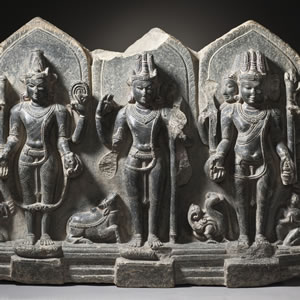 What is Polytheism?
Polytheism is the worship of or belief in multiple deities, usually as a pantheon of gods and goddesses. In most religions which accept polytheism, the different gods and goddesses are representations of forces of nature or ancestral principles, and can be viewed either as autonomous or as aspects or emanations of a creator deity or transcendental absolute principle (monistic theologies), which manifests immanently in nature (panentheistic and pantheistic theologies). Most of the polytheistic deities of ancient religions, with the notable exceptions of the Ancient Egyptian and Hindu deities, were conceived as having physical bodies. Polytheism is a type of theism. Within theism, it contrasts with monotheism, the belief in a singular God, in most cases transcendent. Important polytheistic religions practiced today include Chinese traditional religion, Hinduism, Japanese Shinto, and various neopagan faiths.
 What is Atheism?
Atheism is, in the broadest sense, the absence of belief in the existence of deities. Less broadly, atheism is the rejection of belief that any deities exist. In an even narrower sense, atheism is specifically the position that there are no deities. Atheism is contrasted with theism, which, in its most general form, is the belief that at least one deity exists.
 Who is GOD?
In monotheism and henotheism, God is conceived as the Supreme Being and principal object of faith. The concept of God as described by theologians commonly includes the attributes of omniscience (infinite knowledge), omnipotence (unlimited power), omnipresence (present everywhere), omnibenevolence (perfect goodness), divine simplicity, and eternal and necessary existence. In theism, God is the creator and sustainer of the universe In deism, God is the creator, but not the sustainer, of the universe Monotheism is the belief in the existence of one God or in the oneness of God In pantheism, God is the universe itself In atheism, God is purported not to exist, while deemed unknown or unknowable within the context of agnosticism.