833 views
·
Last viewed: 1 week ago
Uploaded: 06 Nov 2019 (7 years ago) · Shared: 08 Nov 2019
Duration: 1:11:13
Uploaded: 06 Nov 2019 (7 years ago) · Shared: 08 Nov 2019
Duration: 1:11:13
Youtube Description
In this lecture, Prof. Ian Shapiro goes over what was (and is) the Global War on Terror and how radical an innovation it was. He then discusses whatit meant for the emerging post-Cold War international order as well as what were the paths not taken.
Explore More
Christine Hayes Yale University Dale Martin Terror 911Search Google Search Explore Topics
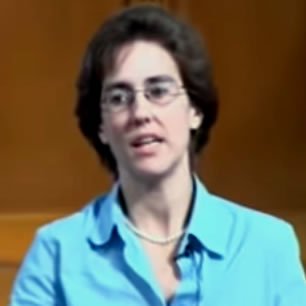 Who is Christine Hayes? (MEMBER OF Yale University)
Christine Hayes is the Robert F and Patricia Ross Weis Professor of Religious Studies at Yale University. She is former Chair of the Department of Religious Studies, and one of the foremost American academics focusing on talmudic-midrashic studies and Classical Judaica. Hayes received her B.A. summa cum laude in The Study of Religion from Harvard University in 1984. She subsequently received an M.A. with distinction from the University of California, Berkeley in 1988 which included a year of graduate work at the Hebrew University of Jerusalem. She received her PhD. in Talmudic and Judaic Studies (Department of Near Eastern Studies) from the University of California, Berkeley in 1993.
 Who are Yale University?
Yale University is an American private Ivy League research university in New Haven, Connecticut. Founded in 1701, it is the third-oldest institution of higher education in the United States and one of the nine Colonial Colleges chartered before the American Revolution. Originally restricted to theology and sacred languages, the curriculum began to incorporate humanities and sciences by the time of the American Revolution.
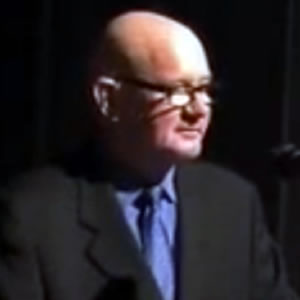 Who is Dale Martin? (MEMBER OF Yale University)
Dale Martin (born 1954) is an American New Testament scholar. He is Woolsey Professor of Religious Studies at Yale University. He has degrees from Abilene Christian University, Princeton Theological Seminary, and Yale. Martin previously taught at Rhodes College and Duke University. Martin was elected a Fellow of the American Academy of Arts and Sciences in 2009.
 What is Terror?
Terrorism is the use of intentionally indiscriminate violence as a means to create terror among masses of people. With aim to create fear to achieve a financial, political, religious or ideological aim. It is used in this regard primarily to refer to violence against peacetime targets or in war against non-combatants. The terms "terrorist" and "terrorism" originated during the French Revolution of the late 18th century but gained mainstream popularity during the U.S. presidency of Ronald Reagan (1981-89) after the 1983 Beirut barracks bombings and again after the 2001 September 11 attacks. There is no commonly accepted definition of "terrorism". Being a charged term, with the connotation of something "morally wrong", it is often used, both by governments and non-state groups, to abuse or denounce opposing groups.
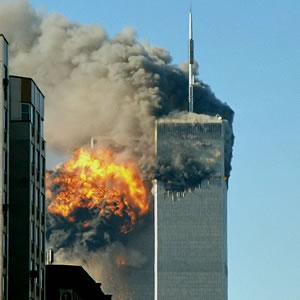 What was 911?
The September 11 attacks (also referred to as 9/11) were a series of four coordinated terrorist attacks. Reportedly carried out by the Islamic terrorist group al-Qaeda against the United States on the morning of Tuesday, September 11, 2001. The attacks killed 2,996 people, injured over 6,000 others, and caused at least $10 billion in infrastructure and property damage.