Allah is HaShem of the Jewish Torah, not a Moon God - Aaron Youtube

   4:43
703 views  ·  Last viewed: 1 day ago
Uploaded: 03 Jan 2018   (9 years ago)  ·  Shared: 24 Jan 2018

Video Description (from Youtube)

A Jew explains whether Allah is a 'moon god' as some people claim.
DISCLAIMER
All videos are shared for educational and information purposes only. All videos are hosted and viewable on Youtube servers. Video titles are generated using the original video title; overall content theme including actual dialogue and speech (Transcript); and A.I-based recommendations with a focus on SEO, keyword density, and internal search functions. The video title does not represent the views held by the Youtube video uploader, or any individual, organisation or business.

If you spot any mistake, omission or give feedback, kindly Contact Us with details

Overview & Key Concepts


Who is Aaron Youtube?


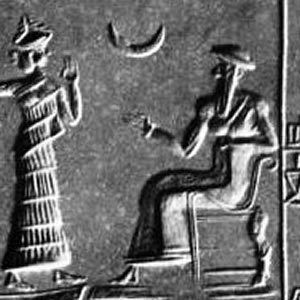
Who is the Moon God?

In modern times it is claimed Allah (God in Islam) historically originates as a Moon God. Therefore this Moon God was worshipped in pre-Islamic Arabia

originates in early 20th-century scholarship, most prominently advocated by American evangelicals from the 1990s. The idea was proposed by archeologist Hugo Winckler in 1901. It was proliferated in the USA in the 1990s, first via the publication of Robert Morey's pamphlet The Moon-god Allah: In Archeology of the Middle East (1994). Morey argues that "Allah" was the name of a moon god in pre-Islamic Arabic mythology, the implication being that "Allah" as the term for God in Islam implies that Muslims worship a different deity than the Judeo-Christian one. Joseph Lumbard, a professor of classical Islam, has stated the idea is "not only an insult to Muslims but also an insult to Arab Christians who use the name 'Allah' for God."
What is Jewish?

Judaism is an Abrahamic, monotheistic, ethnic religion that comprises the collective spiritual, cultural, and legal traditions of the Jewish people

Religious Jews regard Judaism as their means of observing the Mosaic covenant, which they believe was established between God and the Jewish people. The religion is considered one of the earliest monotheistic religions. Jewish religious doctrine encompasses a wide body of texts, practices, theological positions, and forms of organization. Among Judaism's core texts is the Torah - the first five books of the Hebrew Bible - and a collection of ancient Hebrew scriptures. The Tanakh, known in English as the Hebrew Bible, has the same books as Protestant Christianity's Old Testament, with some differences in order and content.

Who is Allah?

Allah is the Arabic word for God in Abrahamic religions. In the English language, the word generally refers to God in Islam. The word is thought to be

derived by contraction from al-ilah, which means 'the god', and is related to El and Elah, the Hebrew and Aramaic words for God. The word Allah has been used by Arabic people of different religions since pre-Islamic times. More specifically, it has been used as a term for God by Muslims (both Arab and non-Arab) and Arab Christians.
What is the Torah?

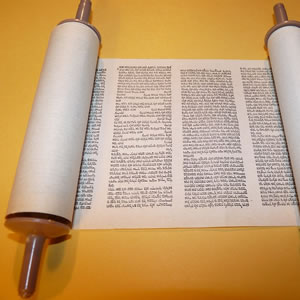
Torah, "Instruction", "Teaching" or "Law" has a range of meanings. Common to all these meanings, Torah consists of the origin of Jewish peoplehood:

their call into being by God, their trials and tribulations, and their covenant with their God, which involves following a way of life embodied in a set of moral and religious obligations and civil laws. In rabbinic literature the word Torah denotes both the five books "Torah that is written" and the Oral Torah "Torah that is spoken". The Oral Torah consists of interpretations and amplifications which according to rabbinic tradition have been handed down from generation to generation and are now embodied in the Talmud and Midrash. According to rabbinic tradition, all of the teachings found in the Torah, both written and oral, were given by God through the prophet Moses, some at Mount Sinai and others at the Tabernacle, and all the teachings were written down by Moses, which resulted in the Torah that exists today. The majority of Biblical scholars believe the written books were a product of the Babylonian captivity (c. 600 BCE), based on earlier written and oral traditions, which could only have arisen from separate communities within ancient Israel, and that it was completed by the period of Achaemenid rule (c. 400 BCE).

Frequently Asked Questions


1.Who is Allah?

Allah is the official Arabic word used to signify God. The title is entirely unique because it has no plural or gendered forms, unlike standard words like gods or goddesses. It simply translates to 'The One and Only True God'. Linguistic origins show variants like 'Elah' or 'Eloh' in the Hebrew Torah, as well as in the original Aramaic language spoken by Jesus.


2.Is Allah the Moon-God?

No, this is a entirely false claim that originally originated from a Christian pastor named Robert Morey; Islam explicitly refutes this idea, maintaining that Allah is the all-powerful, unique Creator of the entire universe and not a pagan entity or a creation like the moon.


3.Where did the name Allah come from?

The word Allah is the standard Arabic word for God used in all Arabic Bible translations, and its roots are identical to the Aramaic word 'Eloi' used by Jesus on the cross.

It was used in some English translations of the Bible like the original 'Scofield Reference Bible'

In the New Testament, Jesus is believed to cry before his death 'ELOI, ELOI, LAMA SABACHTHANI', Eloi is the exact Arabic word 'Elahi' which comes from the same root as Allah.


4.According to Apostle Paul, why did God give Jews the Torah?

Paul viewed the Torah as a temporary guide, claiming it was given to the Jews until they could be saved through faith in Jesus Christ.


5.When was the Torah written?

Mainstream biblical scholarship tracks the composition of the Torah (the first five books of the Bible) through a gradual process starting from traditional Mosaic oral codes to written records compiled during the mid-to-late 1st millennium BCE. While early fragments exist in ancient archaeological discoveries like the Dead Sea Scrolls, the authoritative text was systematically finalized and preserved by Jewish scribes over centuries of scriptural copy transmissions.


6.Does the Quran tell Jews and Christians to refer to their Scriptures (Torah and Bible)?

Yes, the Quran references previous scriptures in passages like Surah Al-Ma'idah (5:47), which tells the followers of the Gospel to judge by what God has revealed in it. From an academic perspective, this reflects the historical context of 7th-century Medina, where Jews and Christians were recognized as 'People of the Book' who possessed divine laws. While Islamic theology holds that modern biblical texts have suffered from textual corruption (tahrif), the Quran historically appeals to the core monotheistic truths remaining in those scriptures to validate Muhammad's message.


7.How did the Early Jewish-Christians practise their religion?

The earliest Jewish-Christians strictly followed traditional Hebrew practices, including daily prayers, circumcision, rituals for purity, fasting, dietary laws, and temple, according to the source material.


8.Did Jesus claim to be 'King of the Jews'?

A political placard accusing Jesus of making this claim was nailed to his cross, and this historical artifact can be found today at the Church of Santa Croce in Rome.


9.How was Jesus Jewish?

Jesus fully observed the laws of the Torah, maintained kosher dietary regulations, and never asked his followers to abandon Judaism, as they continued to meet at the Temple and practice circumcision rather than establishing a separate religion or attending a church.


10.What did early Jewish-Christians think of Apostle Paul?

Between 55 and 66 CE, early Jewish-Christian leaders in Jerusalem rejected Paul's teachings and challenged his authority, leading to a significant decline in his popularity.


11.Were the early Christians Jews?

Yes, Jesus and early followers were entirely Jewish, strictly observing traditional laws and customs.


12.Did Saul kill the early Jewish-Christians?

Before his conversion, Saul actively sought to imprison and execute early Jewish-Christians. Saul believed that he was serving God by finding Christians, throwing them into prison, and even executing them.
1 And Saul was consenting unto his death. And at that time there was a great persecution against the church which was at Jerusalem; and they were all scattered abroad throughout the regions of Judaea and Samaria, except the apostles.
2 And devout men carried Stephen to his burial, and made great lamentation over him.
3 As for Saul, he made havock of the church, entering into every house, and haling men and women committed them to prison.
[Acts 8:1-3]


13.How did the Jews view Apostle Paul?

Faithful Jews viewed Paul's salvation theory as blatant blasphemy because his theological teachings explicitly ridiculed all previous revelations from God, including the sacred Torah, while teaching a doctrine that went against the absolute oneness of God.


14.According to Apostle Paul, why did God give Jews the Torah?

Paul viewed the Torah as a temporary guide, claiming it was given to the Jews until they could be saved through faith in Jesus Christ.


15.How did Apostle Paul differ with the Jewish Rabbis?

The Jewish Rabbis preached a person was saved so long as their intention was to remain within the covenant, and one truly repented and seek forgiveness for their sins.

Paul preached that every person was 'damned' until they was offered salvation. Mans problem was that he was 'in the flesh' in bondage to the Law, sold under Sin, enslaved by the fundamental spirits of the universe (ie. dead).

Paul preached the only cure was liberation from slavery and death by union with Christ, who had conquered death and sin.


16.How did the early Jewish-Christians view Jesus' resurrection?

The earliest Jewish-Christians did not believe that the resurrection meant Jesus was God, but rather that he was a righteous man approved by God through miracles, wonders, and signs. Based on texts like Acts 2:22-24, they maintained the theological view that Jesus had been raised by God, not that he was the Creator himself.


17.Who seperated Christianity from Judaism?

It was Apostle Paul's dramatic conversion and subsequent teachings that directly resulted in the permanent theological separation of Christianity from Judaism. Within mere months of Jesus' departure, the original human-centric and law-abiding message was fundamentally altered into an independent religious system.


18.Why Jews do not accept Jesus as the Messiah?

The Bible claims the Messiah will accomplish certain signs:

1. Build the Third Temple (Ezekiel 37:26-28).

2. Gather all Jews back to the Land of Israel (Isaiah 43:5-6).

3. Usher in an era of world peace, and end all hatred, oppression, suffering and disease. As it says: 'Nation shall not lift up sword against nation, neither shall man learn war anymore.' (Isaiah 2:4)

4. Spread universal knowledge of the God of Israel, which will unite humanity as one. As it says: 'God will be King over all the world—on that day, God will be One and His Name will be One' (Zechariah 14:9).

The historical fact is that Jesus fulfilled none of these messianic prophecies.

Christians counter that Jesus will fulfill these in the Second Coming, but Jewish sources show that the Messiah will fulfill the prophecies outright, and no concept of a second coming exists.


19.What does the Quran say about Jews and Christians?

The Quran recognizes Jews and Christians as 'People of the Book' (Ahl al-Kitab), acknowledging that they were given previous divine revelations through prophets like Moses and Jesus. While it praises the righteous among them, it also critiques their theological developments, specifically rejecting the Christian doctrine of the Trinity and the divine sonship of Jesus.


20.How was Apostle Paul viewed by the Jews?

Paul was widely viewed by mainstream Jewish communities as a radical apostate and religious heretic because he preached that observance of the Mosaic Torah was no longer required for salvation. This fierce theological conflict frequently resulted in severe public opposition, legal charges before Roman authorities, and physical riots during his travel throughout ancient Mediterranean cities.


21.Does the Quran tell Jews and Christians to refer to their Scriptures (Torah and Bible)?

Yes, the Quran references previous scriptures in passages like Surah Al-Ma'idah (5:47), which tells the followers of the Gospel to judge by what God has revealed in it. From an academic perspective, this reflects the historical context of 7th-century Medina, where Jews and Christians were recognized as 'People of the Book' who possessed divine laws. While Islamic theology holds that modern biblical texts have suffered from textual corruption (tahrif), the Quran historically appeals to the core monotheistic truths remaining in those scriptures to validate Muhammad's message.


22.In the time of Jesus, what qualities would identify the Messiah, to the Jews?

First-century Jewish expectations, as discussed in this analysis of Trinity dogma, centered on a human leader, such as a prophet or king from David's line, rather than a divine figure.

A human empowered by God. Not a God-man, a person of the Godhead or part of a Triune God (Trinity)
From the lineage of Abraham (Gen. 22:18)
From the tribe of Judah (Gen. 49:10)
A descendant of David (2 Sam. 7:12)
A Lord under Yahweh, the God of Israel (Ps. 110:1)
From amongst their own people (Jer. 30:21)


23.How did the 1st century Jews view the Holy Spirit?

The Holy Spirit was understood as God's active, divine power, rather than a distinct, third person of a Trinity.

First century Jews believed the Holy Spirit was another name for God, similar to Yahweh, Elohim or El Shaddai - not a separate Person in the Trinity!

There is no record of Jesus ever trying to correct the Jews and prove the Holy Spirit was a third Person in the Trinity.


24.Jesus claimed to be God. The Jews must have understood this, as they accused him of blasphemy and were ready to stone him?

The platform asserts that Jesus did not claim divinity in this instance, and that his mention of Psalm 82:6 in John 10:34 was a defense noting that human judges are called 'gods' in scripture, thus challenging the accusation of blasphemy.


25.Why do Jews let the hair grow on the sides of there head?

In the text of the Torah (Leviticus 19:27), God explicitly forbids cutting or rounding off the corners of the hair on the sides of the head and marring the edges of the beard.


26.How did Jews view the Greek Bible (Septuagint)?

The Jewish community regarded the Septuagint only as a translation of the original Hebrew, never as an independent or authoritative scripture.


27.In the time of Jesus, how were the Jews viewed by the Greeks?

The text suggests that the Greeks perceived Judaism as an insular tradition, weakened by long-term Roman occupation, economic decline, and emigration.


Videos on Aaron Youtube (16)

Video: In Noahide Laws, Jews, Muslims and Christians can get to Heaven - Aaron Youtube 11:36
Video: In Jewish Law, it is impossible for God to become a Man - Aaron Youtube 3:01
Video: In Jewish Law, a married Jewish women must wear Hijab (cover her hair) - Aaron Youtube 4:41
Video: In Genesis 6:6, did God regret creating Man? - Aaron Youtube 5:15
Video: In Jewish Law, a Jew can never commit idolatory, worship idol or statue, even if their life is threatened - Aaron Youtube 11:07
Video: Allah is HaShem of the Jewish Torah, not a Moon God - Aaron Youtube 4:43
Video: In Isaiah 9:6, does God approve of Trinity? - Aaron Youtube 5:47
Video: What can Jews learn from Muslims? - Aaron Youtube 8:25
Video: What Jews think of Ishmael and Hagar - Aaron Youtube 14:54
Video: In Leviticus 11:7, God forbids Pig and Swine - Aaron Youtube 5:51
Video: Similarities between Islam and Judaism - Aaron Youtube 9:32
Video: Jews bring people to God. I am happy Sinead O Connor converted to Islam and follows Noahide Laws - Aaron Youtube 10:04
Video: 3 major sins Jews must give up their lives for - Aaron Youtube 4:41
Video: How do Jews pray to God (Hashem)? - Aaron Youtube 19:28
Video: Why did God reveal Torah to Moses, and not Abraham? - Aaron Youtube 4:55
Video: Why Jews refer to Jesus as 'JC'? - Aaron Youtube 2:37

EXPLORE TOPICS : ALLAH | 60 MOON GOD | 11 TORAH | 47 AARON YOUTUBE | 16 JEWISH | 224 JEWS | 140 JUDAISM | 74 GOD | 0

Latest videos  •  6,061 videos  •  0 viewed/24 hour

SUBSCRIBE

Receive the latest news and updates by email - Subscribe Now!
About  |  Q&A  |  Contact Us    •    Terms  |  Privacy  |  Disclaimer  |  Sitemap
Connect:      Facebook  |    Twitter  |    Youtube
MuslimProphets.com is an educational website on the Prophets of God: David, Noah, Abraham, Moses, Jesus and Muhammad, who established the Abrahamic faiths of Judaism, Christianity and Islam. MuslimProphets.com explores contemporary social themes through Scripture, Evidences, Photo, Video, Maps, Current Affairs, Debate and 'alternative' Views held by Theologians, Apologists, Scholars and Street Preachers. Take a Site Tour

In accordance with Islamic etiquette, all prophet names should be followed with 'Peace Be Upon Him (PBUH)'. This is omitted to minimise text.

DISCLAIMER: All website content is for general information and educational purposes only and available in the public domain. Whilst all information comes from sources believed to be reliable, this cannot be guaranteed. External links are provided as a convenience and for informational purposes only. They do not constitute endorsement or approval for any products, services or comments by organizations or individuals. Title and Text links may be edited for external SEO, internal site and keyword search purposes. We bear no responsibility for the accuracy, legality, or content found on any external website or its subsequent links. Unless indicated, all images and content is licensed under a Creative Commons Attribution License distributed by Wikipedia, Wikimedia Commons, Pixabay, Pxhere, Pexels, Unsplash, Flickr and others. All Torah, Psalms, Old and New Testament Bible quotes are from the King James Version (KJV) Holy Bible in the public domain. All Quran quotes are from Taqi-ud-Din al-Hilali/Muhsin Khan English Quran translation.

ALWAYS DO YOUR OWN RESEARCH. If you spot any mistake, error or omission of information, contact us so we can correct it.