1122 views
·
Last viewed: 4 hrs ago
Uploaded: 11 Jan 2012 (15 years ago) · Shared: 01 Aug 2017
Duration: 17:47
Uploaded: 11 Jan 2012 (15 years ago) · Shared: 01 Aug 2017
Duration: 17:47
Youtube Description
The last verses in the Gospel of Mark are sometimes said to be added later. Not being included in the original text, that is to be. This is not trueChuck Missler brings here up the evidence, why not.
It is because the oldest complete New Testament text, the Codex Alexandria doesn't contain these 20 verses. But the Codex Alexandria is dated, to be from the 5th century AD. And the old Church nevertheless quoted these verses. For instance did Irenæus so in 170 AD. He was borne in Smyrna about 130 AD and died 202.
Explore More
Chuck Missler Church Father Justin Martyr Resurrection ChurchSearch Google Search Explore Topics
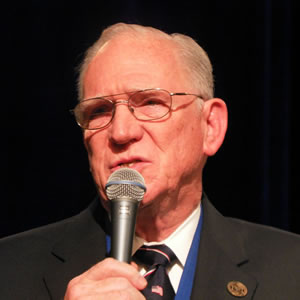 Who is Chuck Missler?
Charles W Missler, "Chuck Missler" (1934-2018) was an American author, evangelical Christian, Bible teacher, engineer, and former businessman. He was the founder of the Koinonia House ministry based in Coeur d'Alene, Idaho. Missler is a prominent speaker on the subject of bible prophecy. Missler has had numerous programs aired on the Christian television station GOD TV, namely the DVD versions of his biblical studies "Learn the Bible in 24 Hours", "The Book of Revelation", "The Book of Genesis", and "The Book of Daniel".
 What is Church Father?
The Church Fathers, Early Church Fathers, Christian Fathers, or Fathers of the Church are ancient and influential Christian theologians and writers. There is no definitive list. The era of these scholars who set the theological and scholarly foundations of Christianity largely ended by AD 700. In the past, the Church Fathers were regarded as authoritative, and more restrictive definitions were used which sought to limit the list to authors treated as such.
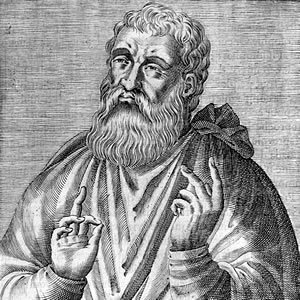 Who was Justin Martyr?
Justin Martyr was an early Christian apologist, and is regarded as the foremost interpreter of the theory of the Logos in the 2nd century. He was martyred, alongside some of his students, and is considered a saint by the Roman Catholic Church, the Anglican Church, the Eastern Orthodox Church, and the Oriental Orthodox Churches.
 What is Resurrection?
Resurrection is the concept of coming back to life after death. In a number of ancient religions, a dying-and-rising god is a deity which dies and resurrects. The death and resurrection of Jesus, an example of resurrection, is the central focus of Christianity. As a religious concept, it is used in two distinct respects: a belief in the resurrection of individual souls that is current and ongoing (Christian idealism, realized eschatology), or else a belief in a singular resurrection of the dead at the end of the world. The resurrection of the dead is a standard eschatological belief in the Abrahamic religions.
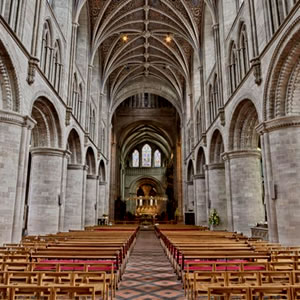 What is the Church?
A church is a building used for Christian worship services and Christian activities. The earliest identified Christian church is a house church founded between 233 AD and 256 AD. The word church also describes a body or assembly of Christian believers, while "the Church" refers to the worldwide Christian religious community.