New Testament: Gospel of Luke - Dale Martin 6/23

   49:16
835 views  ·  Last viewed: 22 hrs ago
Uploaded: 01 Sep 2009   (17 years ago)  ·  Shared: 04 May 2017

Video Description (from Youtube)

Introduction to New Testament (RLST 152) Luke and Acts, a two-volume work, are structured very carefully by the author to outline the ministry of Jesus and the spread of the Gospel to the gentiles

The Gospel of Luke emphasizes the themes of Jesus' Jewish piety, his role as a rejected prophet, and the reversal of earthly status. The Gospel ends in Jerusalem, and the Acts of the Apostles begins there and then follows the spread of the Gospel, both conceptually and geographically, to Samaria and the gentiles. By closely analyzing the Gospel and Acts, we see that the author was not concerned with historicity or chronological order. Rather, he writes his 'orderly account' to illustrate the rejection of the Gospel by the Jews and its consequent spread to the gentiles.

00:00 - Chapter 1. The Structure of Luke and Acts
17:35 - Chapter 2. The Themes of Luke
34:03 - Chapter 3. The Geography of Acts

Complete course materials are available at the Open Yale Courses website: http://open.yale.edu/courses

This course was recorded in Spring 2009.

DISCLAIMER
All videos are shared for educational and information purposes only. All videos are hosted and viewable on Youtube servers. Video titles are generated using the original video title; overall content theme including actual dialogue and speech (Transcript); and A.I-based recommendations with a focus on SEO, keyword density, and internal search functions. The video title does not represent the views held by the Youtube video uploader, or any individual, organisation or business.

If you spot any mistake, omission or give feedback, kindly Contact Us with details

Overview & Key Concepts


What is New Testament?

The New Testament is the second part of the Christian biblical canon. The first part being the Old Testament, based on the Hebrew Bible. The New

Testament discusses the teachings and person of Jesus, as well as events in first-century Christianity. Christians regard both the Old and New Testaments together as sacred scripture. The New Testament (in whole or in part) has frequently accompanied the spread of Christianity around the world. It reflects and serves as a source for Christian theology and morality.
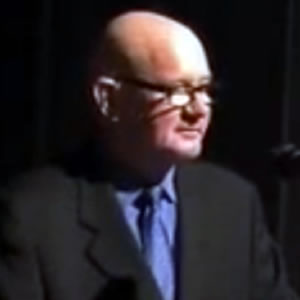
Who is Dale Martin?

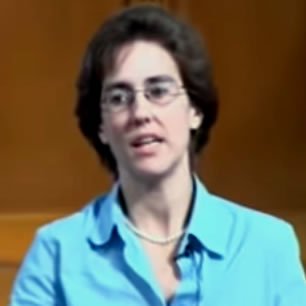
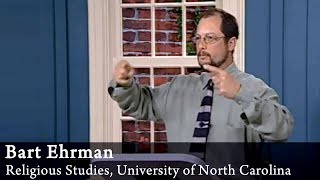
Dale Martin (born 1954) is an American New Testament scholar. He is Woolsey Professor of Religious Studies at Yale University. He has degrees from

Abilene Christian University, Princeton Theological Seminary, and Yale. Martin previously taught at Rhodes College and Duke University. Martin was elected a Fellow of the American Academy of Arts and Sciences in 2009.
What is Gospel?

Gospel is the Old English translation of Greek evangelion, meaning "good news". It originally meant the Christian message itself, but in the 2nd

century it came to be used for the books in which the message was set out. The four gospels of the New Testament: Matthew, Mark, Luke and John are the main source of information on the life of Jesus.
Frequently Asked Questions


1.What is the King James Version (KJV) of the New Testament?

The King James Version (KJV) of the New Testament was completed in 1611 by 8 members of the Church of England.

There were (and still are) no original texts to translate. The oldest manuscripts we have were written down hundreds of years after the last Apostle died. There are over 8000 of these old manuscripts, with no two alike.

The King James translators chose to use none of the texts. Instead, they edited previous translations to create the New Testament their king and parliament would approve.

So today, 21st century Christians believe the 'Word of God' is a book edited in the 17th century from 16th century translations of 8000 contradictory copies of 4th century scrolls that claim to copies of lost letters written in the 1st century by unknown authors.


2.Is the New Testament historically authentic?

Textual critics note that the original autographs of the New Testament books no longer exist, leaving thousands of handwritten Greek manuscripts that contain thousands of minor variants, mostly consisting of spelling or word order differences. Despite these historical copy changes, scholars emphasize that modern textual reconstruction methods allow historians to confidently identify the original 1st-century text, ensuring no essential historical narrative or Christian doctrine is left in doubt.


3.What is the oldest manuscript of the Bible New Testament?

It is of enormous importance in establishing the biblical text. There are three earliest manuscripts of the Bible New Testament:

1. Codex Alexandrinus is one of the earliest and most important manuscripts of the entire Bible in Greek

2. Codex Sinaiticus is one of the most important books in the world and is kept in the British Library. Handwritten well over 1600 years ago, the manuscript contains the Christian Bible in Greek, including the oldest complete copy of the New Testament.

3. Codex Vaticanus in Rome


4.What language is the earliest New Testament in?

The earliest New Testament manuscripts are in Koine Greek. But there are Aramaic phrases in the Gospels. Therefore, Scholars believe an Aramaic layer lies beneath the written Greek of the New Testament, one which may never have been written down.

If true, the Greek text is itself a translation, and English text would be a translation of a translation, which raises textual inerrancy and corruption issue.

Since every translation is a personal judgement of which word to best use, made at the translators discretion.


5.What do Synoptic Gospels say about Jesus?

The Synoptic Gospels strictly portray Jesus through a human lens as an honorable prophet, a moral hero, and a devoted martyr. They do not present him as a literal God who assumed human flesh, nor do they frame his life as a cosmic sacrifice intended to die and rise again for the spiritual salvation of mankind.


6.What did Apostle Paul think of his fellow Gospel writers?

Paul was deeply unyielding toward alternative views of the faith, explicitly writing in Galatians 1:9 that if any person preached a gospel different from the one his followers had received, that individual should be completely accursed. This indicates he aggressively dismissed the legalistic, Jewish-Christian perspectives held by original disciples like James and Peter.


7.How did Matthew (Gospel) support Apostle Pauline Christian doctrine?

The Gospel of Matthew, aimed at law-abiding Jewish-Christians, did not support Pauline doctrine and actually stood in direct opposition to it.


8.When were the Gospels written?

The canonical gospels were composed during the second half of the 1st century, with Mark widely dated around 65-70 CE, followed by Matthew and Luke between 80-90 CE, and John close to 90-100 CE. These dates mean the texts were compiled decades after Jesus' earthly ministry, drawing on reliable oral traditions and early eyewitness testimonies.


9.What did Apostle Paul say about the other gospels?

In Galatians 1:6-9, Paul strongly condemned anyone preaching a different gospel, reflecting a significant conflict in the early church between his Gentile-inclusive mission and strict adherence to the Law.


10.Who wrote John's gospel?

The author of the fourth gospel is believed to be a Greek convert with limited knowledge of traditional Judaism, who frequently uses 'the Jews' as an antagonistic term over 60 times in the Gospel of John alone.


11.What were the Apocryphal Gospels?

Apocrypha are works, usually written works, that are of unknown authorship, or of doubtful authenticity, or spurious, or not considered to be within a particular canon.

The Apocrypha (Greek for 'hidden away') are revered Biblical text which were excluded from the canon Bible. They were literally hidden away from the early Christians, and tell a very different story of Jesus.

Gospel of Nazoreans
Gospel of Ebionites
Gospel of Egyptians
Gospel of Peter
Gospel of Thomas
Gospel of Hebrews


12.What is the significance of the Gospel of Thomas?

Thomas is the most important non-canonical Gospel recently discovered in the last century. It positively features in current studies of Christian origins and the historical Jesus.

Gospel of Thomas with sayings of Jesus is thought to be earliest written record of his life produced within ten years of his death.


13.How was the Gospel of John viewed?

In the 2nd century, some Christians felt John gospel was so different in tone and approach in comparison to the other three synoptic gospels (Mark, Matthew, Luke); it should have been excluded from the cannon.


14.In 325 AD, did Emperor Constantine burn gospels, writings and religious text?

The books of Arius and his followers, after the first Council of Nicaea (325 C.E.), were burned for heresy by the Roman emperors Constantine, Honorius, and Theodosius I, who published a decree commanding that, 'the doctrine of the Trinity should be embraced by those who would be called catholics; that all others should bear the infamous name of heretics'.


  Multipart Video (1)

This video is part of a series as displayed below :
  New Testament: Gospel of Luke - Dale Martin 6/23


Videos on Dale Martin (24)

Video: New Testament: Bible Canon - Dale Martin 1/23 48:54
Video: New Testament: Life of Apostle Paul - Dale Martin 2/23 36:42
Video: New Testament: Gospel of Mark - Dale Martin 3/23 44:38
Video: New Testament: Gospel of Matthew - Dale Martin 4/23 48:17
Video: New Testament: Gospel of Thomas - Dale Martin 5/23 50:29
Video: New Testament: Gospel of Luke - Dale Martin 6/23 49:16
Video: New Testament: Acts of the Apostles - Dale Martin 7/23 48:35
Video: New Testament: Gospel of John - Dale Martin 8/23 49:50
Video: New Testament: Letters of John - Dale Martin 9/23 50:56
Video: New Testament: Life of Jesus - Dale Martin 10/23 52:29
Video: New Testament: Apostle Paul as Missionary - Dale Martin 11/23 50:15
Video: New Testament: Apostle Paul as Pastor - Dale Martin 12/23 47:31
Video: New Testament: Apostle Paul as Jewish Theologian - Dale Martin 13/23 47:50
Video: New Testament: Disciples of Apostle Paul - Dale Martin 14/23 49:52
Video: New Testament: Arguments with Apostle Paul - Dale Martin 15/23 45:52
Video: New Testament: Pastoral Epistles of Apostle Paul - Dale Martin 16/23 46:04
Video: New Testament: Acts of Apostle Paul - Dale Martin 17/23 48:34
Video: New Testament: Interpreting Hebrews - Dale Martin 18/23 48:06
Video: New Testament: Interpreting Medieval Texts - Dale Martin 19/23 49:29
Video: New Testament: Interpreting Apocalyptic Texts - Dale Martin 20/23 47:12
Video: New Testament: Roman Authority - Dale Martin 21/23 48:19
Video: New Testament: Early Christian Institutions - Dale Martin 22/23 48:24
Video: New Testament: Growth of Christianity - Dale Martin 23/23 47:41
Video: Did Jesus stand Trial before Pontius Pilate? - Dale Martin 6:34

EXPLORE TOPICS : NEW TESTAMENT | 133 DALE MARTIN | 24 GOSPEL | 221

Latest videos  •  6,061 videos  •  0 viewed/24 hour

SUBSCRIBE

Receive the latest news and updates by email - Subscribe Now!
About  |  Q&A  |  Contact Us    •    Terms  |  Privacy  |  Disclaimer  |  Sitemap
Connect:      Facebook  |    Twitter  |    Youtube
MuslimProphets.com is an educational website on the Prophets of God: David, Noah, Abraham, Moses, Jesus and Muhammad, who established the Abrahamic faiths of Judaism, Christianity and Islam. MuslimProphets.com explores contemporary social themes through Scripture, Evidences, Photo, Video, Maps, Current Affairs, Debate and 'alternative' Views held by Theologians, Apologists, Scholars and Street Preachers. Take a Site Tour

In accordance with Islamic etiquette, all prophet names should be followed with 'Peace Be Upon Him (PBUH)'. This is omitted to minimise text.

DISCLAIMER: All website content is for general information and educational purposes only and available in the public domain. Whilst all information comes from sources believed to be reliable, this cannot be guaranteed. External links are provided as a convenience and for informational purposes only. They do not constitute endorsement or approval for any products, services or comments by organizations or individuals. Title and Text links may be edited for external SEO, internal site and keyword search purposes. We bear no responsibility for the accuracy, legality, or content found on any external website or its subsequent links. Unless indicated, all images and content is licensed under a Creative Commons Attribution License distributed by Wikipedia, Wikimedia Commons, Pixabay, Pxhere, Pexels, Unsplash, Flickr and others. All Torah, Psalms, Old and New Testament Bible quotes are from the King James Version (KJV) Holy Bible in the public domain. All Quran quotes are from Taqi-ud-Din al-Hilali/Muhsin Khan English Quran translation.

ALWAYS DO YOUR OWN RESEARCH. If you spot any mistake, error or omission of information, contact us so we can correct it.