SPIRITUALITY
It is a re-formation which "aims to recover the original shape of man", oriented at "the image of God" as exemplified by the founders and sacred texts of the religions of the world. In modern times the emphasis is on subjective experience of a sacred dimension and the "deepest values and meanings by which people live", often in a context separate from organized religious institutions. Modern systems of spirituality may include a belief in a supernatural (beyond the known and observable) realm, personal growth, a quest for an ultimate or sacred meaning, religious experience, or an encounter with one's own "inner dimension".
Search Result on 'Spirituality' (10 total)
FAQ on Spirituality (6)
1.Can an atheist believe in a higher power, spirituality, or a creator?
Strictly speaking, No. If a person explicitly believes in a conscious 'creator' or personal deity, they are classified as a theist or deist rather than an atheist. However, because atheism strictly refers to a rejection of traditional gods, some atheists may still explore secular spirituality, a universal consciousness, or non-theistic philosophy (such as certain traditions within secular Buddhism or Taoism) that do not command worship of a personified creator.
2.What are the core beliefs of New Age spirituality?
While beliefs vary widely from person to person, several universal themes unite New Age thought:
* Monism and Pantheism: The belief that 'All is One' and that a divine, intelligent energy or 'Universal Life Force' permeates everything in existence.
* The Divinity of Self: The idea that human beings are inherently divine and that the ultimate goal of life is to awaken to this higher consciousness.
* Reincarnation and Karma: Borrowed from Eastern traditions, the belief that the soul undergoes multiple lifetimes to learn lessons and spiritually evolve.
3.What are the chakras in New Age spirituality?
Adapted from ancient Indian Vedic traditions, chakras are viewed as seven major energy centers aligned along the human spine. New Age practices emphasize keeping these wheels of energy spinning smoothly to maintain physical, emotional, and spiritual health. Blockages or imbalances in specific chakras (such as the Root, Heart, or Third Eye) are believed to manifest as physical ailments or emotional distress, which practitioners attempt to clear through meditation, yoga and energy work.
4.What is the difference between New Age and traditional religions?
The primary difference lies in the source of spiritual authority and the concept of God:
* Traditional Religions: Typically rely on external authority, such as sacred texts (the Bible, Quran, Torah), historic dogmas, and a distinct, external Creator God.
* New Age Spirituality: Rejects external dogma and emphasizes personal, subjective experience. 'God' is not viewed as a separate being judging humanity, but as an immanent cosmic energy or higher consciousness found within oneself.
5.Why is the New Age movement criticized?
The movement faces criticism from both secular and religious perspectives:
* From mainstream religions: It is often criticized for being overly self-centered ('me-centered spirituality') and for watering down sacred, centuries-old traditions.
* From the scientific community: Many New Age healing practices, such as crystal therapy or quantum manifestation, are labeled as pseudoscience because they lack empirical evidence.
* Cultural appropriation: Indigenous and Eastern communities frequently critique the commercialization and distortion of their traditional practices (like shamanism or yoga) by Western New Age markets.
6.What is Shinto and how did it start?
Shinto is the indigenous spirituality and folk religion of Japan. Unlike many major world religions, Shinto has no single founder, no official sacred scriptures, and no rigid dogmatic creed. It originated in prehistoric Japan as a decentralized mix of nature worship, animism, and ancestral veneration. Over centuries, these localized traditions gradually coalesced into a unified cultural and spiritual system that remains deeply woven into the fabric of Japanese identity.

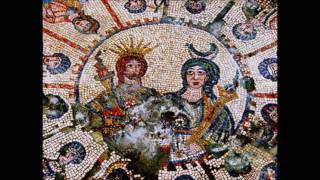 The Gospel of Mary Magdalene and Gnostic
 Modern society reduces humans with random, cosmic knowledge devoid of sensory experience and