QURAYSH
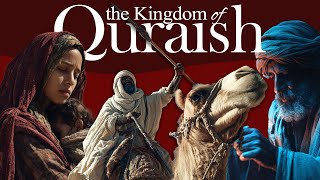
Their members were divided into ten main clans, most notably the Banu Hashim, into which Islam's founder prophet Muhammad was born. By the 7th century, they had become wealthy merchants, dominating trade between the Indian Ocean, East Africa, and the Mediterranean. The tribe ran caravans to Gaza and Damascus in summer and to Yemen in winter, while also mining and pursuing other enterprises on these routes. When Muhammad began preaching Islam in Mecca, the Quraysh initially showed little concern. However, their opposition to his activities quickly grew as he increasingly challenged the polytheism prevalent throughout pre-Islamic Arabia.
Youtube Videos on Quraysh (5)
 How
 The
 Allah evolved from Rabb and Ar-Rahman due to
 Muhammad and The
FAQ on Quraysh (2)
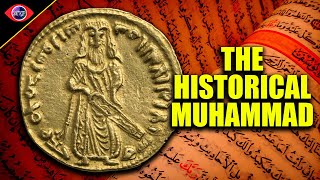
1.Did Muhammad actually exist?
Stephen of Alexandria writes of an Arab merchant around the year 630 CE:
'In the desert of Ethrib there had appeared a certain man from the so-called tribe of Quraysh of the genealogy of Ishamel whose name was Muhammad and who said he was a Prophet. He appeared in the month of Pharmuti, which is called April by the Romans, of the 932nd year from the beginning of Philip. He has brought a new expression and a strange teaching, promising to those who accept him victories in wars, domination over enemies and delights in paradise.'
Source: De Stephano Alexandrino, Horoscope (21 edition, Hermann Usener, Bonn: 1880).
By Ethrib he means Yathrib (or what was later called Madina), the 932nd year of Philip corresponds to the year 620 CE. This Arab merchant does not know about Muslim beliefs, but knows enough details that correspond to the core historical beliefs of Muslims:
1. That Muhammad peace be upon him was a Prophet.
2. That he migrated to Madinah.
3. That there were wars since the migration.
2.Was Prophet Muhammad involved in any Battles or Wars?
The Battle of Badr (624 AD) - Muhammad vs Quraysh - 84 deaths The Battle of Uhud (625 AD) - Muhammad vs Quraysh - 110 deaths The Battle of the Trench (627 AD) - Muhammad vs Confederate allies - 9 deaths The Battle of Khaybar (628 AD) - Muhammad vs Jewish tribes of Khaybar - 111 deaths The Conquest of Mecca (630 AD) - Muhammad vs Quraysh - 30 deaths The Battle of Hunayn (630 AD) - Muhammad vs Hawazin and Thaqif - Unknown deaths The Siege of Ta'if (630 AD) - Muhammad vs Thaqif - Unknown deaths The Expedition of Tabuk (630 AD) - Muhammad vs Byzantine Empire - 0 deaths