OLD TESTAMENT
This is based primarily upon the Hebrew Bible (or Tanakh), a collection of ancient religious writings by the Israelites believed by most Christians and religious Jews to be the sacred Word of God. The second part of the Christian Bible is the New Testament.
The books that comprise the Old Testament canon, as well as their order and names, differ between Christian denominations. The Catholic canon comprises 46 books, and the canons of the Eastern Orthodox and Oriental Orthodox Churches comprise up to 51 books and the most common Protestant canon comprises 39 books.
Search Result on 'Old Testament' (95 total)
Youtube Videos on Old Testament (49)
 Cain and Abel - The
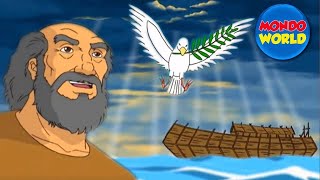 Noah - The
 How the
 How the
 How the
 How the
 Secrets of the
 The
 Bible Scholars acknowledge the different versions of
 Textual Corruption in the
 In 2 Timothy 3:16, Apostle Paul refers to the
 Dietary Laws in
 Not a single Christian Doctrine is in the
 Christian teachings are not found in the
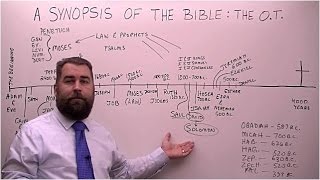 Prophets in
 Violence and Killings in the
 Why Muslims believe the
 The GodFather: Muhammad executed 600 men. Moses, Joshua, David and Solomon did similar violence. Is the
 You could invent Christianity or any cult quoting
 Jesus was a strict Jewish teacher who fully observed
 Keeping
 In the
 Jesus, a Jew who worshiped the
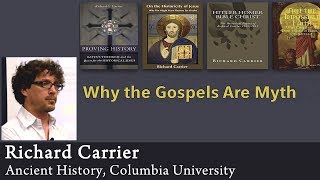 Jesus stories are plagarized versions of Moses', the
 Documentary Hypothesis (JEDP Theory/Wellhausen): Evidence of multiple
 The
 Matthew misquotes
 In the
 Jesus was a follower of Moses. He followed the Jewish Law in the
 In Philippians 2:10, when Apostle Paul writes 'Every Knee Shall Bow', he contradicts
 In Deuteronomy 32:39, God emphasizes his Unique, Oneness. Trinity is not in the
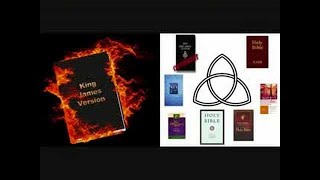 On John 1:18, this verse contradicts the
 Bible Project:
 Marcion (85-160 AD) listed 11 books in New
 In Islam,
 Capital letters in English translation of
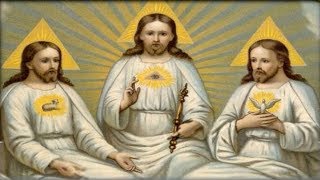 Trinity is a false doctrine not found in
 New
 New
 New
 Jesus fulfilled 300 or 600
 Is Christianity against
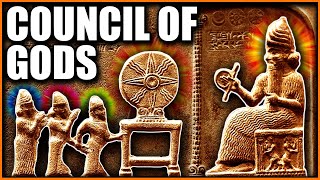 Polytheism to Yahweh-Only Monotheism in the
 Why Apostle Paul opposed
 The Evolution of Monotheism from Polytheism in the
 The
 Child Sacrifice in The
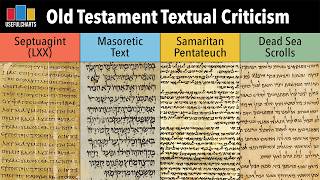 Evolution of The
FAQ on Old Testament (34)
1.Why should we believe the Quran if it comes 600 years after Jesus?
The Quran may have come 600 years after Jesus, but does that make it false? Jesus came 1600 years after Moses, does that make Jesus false? The underlying or main argument here is the time between one person and another, but as we can see, if time is a problem then Christians should reject the other Prophets and Messengers since they have a greater number of years between them.
The complete manuscript collections of the New Testament and Old Testament date to the 4th and 5th century, within 100 years of the Qur'an, if Christians want to reject the Qur'an because it is 600 years after Jesus then they must be consistent and also reject the New Testament.
It should be noted that the Church itself did not ordain or make it canon (law) that the New Testament should be scripture until 393 and 397 CE in the Carthaginian councils. With all of these evidences, and centuries between Jesus and the New Testament, then they must reject the New Testament first.
2.Can Muslims eat swine and pork?
No, the consumption of pork, bacon, and ham is strictly prohibited by divine law, matching historical restrictions found in the Old Testament followed by Jews and certain Christian groups.
3.What is the God of the Old Testament like?
The God of the Old Testament is a jealous, bloodthirsty, vicious God that mercilessly commanded horrific attrocities like, for example:
Killing every human on the planet except the handful that went with Noah.
Moses commanding his people to shed each others blood as atonement for creating and worshiping the golden calf
The genocide of the people in the promised land when the Hebrews finally ended their 40-year stay in the dessert. Under the command of God, they wiped out whole cities, killing every man, woman and child.
4.In John 1:1. Jesus claims to be God?
The Gospel of John opens with the phrase, 'In the beginning was the Word, and the Word was with God, and the Word was God,' which mainstream Christian theology interprets as an explicit declaration of Jesus' pre-existent divinity. Historical and linguistic scholars note that the 'Word' (Logos) represents the divine reason and creative power of God becoming flesh in the person of Jesus.
In the beginning was the Word, and the Word was with God, and the Word was God.
In actual fact, the 'Word' is God's wisdom and action and not as a separate deity, as is presented in the Old Testament:
And the word of the Lord was Joseph's helper (Gen.39:2)
And Moses brought the people to meet the word of the Lord (Ex. 19:17)
And the word of the Lord accepted the face of Job (Job 42:9)
And the word of the Lord shall laugh them to scorn (Ps. 2:4)
They believed in the name of His word (Ps. 106:12)
5.What does the name Jesus mean?
Linguistically, the name Yeshua (Jesus) means 'Yahweh is salvation' or 'The Lord saves' in ancient Hebrew. It is the exact same name as the Old Testament figure Joshua, highlighting a theological theme of deliverance and salvation within biblical history.
6.Jesus claimed he was a man or son of man
In the New Testament gospels, Jesus frequently refers to himself as the 'Son of Man,' a term with deep messianic significance derived from the Old Testament Book of Daniel. While he explicitly describes his human nature and vulnerabilities as a man, Christian theology maintains that his dual identity encompasses both full humanity and full divinity.
60 Then the high priest stood up before them and asked Jesus, 'Are you not going to answer? What is this testimony that these men are bringing against you?'
61 But Jesus remained silent and gave no answer. Again the high priest asked him, 'Are you the Messiah, the Son of the Blessed One?'
62. 'I am,' said Jesus. 'And you will see the Son of Man sitting at the right hand of the Mighty One and coming on the clouds of heaven.'
Mark 14:60-62
39 They answered and said unto him, Abraham is our father. Jesus saith unto them, If ye were Abraham's children, ye would do the works of Abraham.
40 But now ye seek to kill me, a man that hath told you the truth, which I have heard of God: this did not Abraham.
John 8:39
22 Ye men of Israel, hear these words; Jesus of Nazareth, a man approved of God among you by miracles and wonders and signs, which God did by him in the midst of you, as ye yourselves also know
Acts 2.22
31 because he has set a day when he is going to judge the world with justice[o] through a man whom he has appointed. He has given proof of this to everyone by raising him from the dead.
Act 17.31
For there is one God and one mediator between God and mankind, the man Christ Jesus.
1 Timothy 2:5
7.Where did the name Yahweh come from?
The name Yahweh is the principal, sacred vocalisation of the Hebrew Tetragrammaton (YHWH), revealed historically to Moses in the Old Testament Book of Exodus as God's personal covenant name. Biblical scholars note its linguistic roots link directly to an archaic Hebrew verb meaning 'To Be,' signifying the eternal, self-existing, and uncreated nature of the Creator.
8.Is the Old Testament historically authentic?
Mainstream biblical scholarship clarifies that the Old Testament is an anthology of ancient texts compiled, edited, and transmission-copied by diverse authors over more than a millennium. While archaeological discoveries like the Dead Sea Scrolls confirm that the texts have been preserved with high fidelity for over 2,000 years, comparative textual analysis reveals localized spelling updates, minor scribal variations, and stylistic expansions common to ancient Near Eastern manuscript traditions.
9.Does the Bible tell us to act like slaves?
Historically, the Bible has been used by some to enslave, subjugate and dominate over a people.
The 'Curse of Ham' Myth: Pro-slavery advocates twisted Genesis 9 to claim that people of African descent were divinely cursed to be eternal servants.
Old Testament Legal Protection: Slaveholders cited Leviticus 25 to argue that purchasing foreign bondmen and passing them down as inherited property was biblically sanctioned.
Weaponising Obedience Verses: Plantation owners frequently read verses like Ephesians 6:5 ('Slaves, obey your masters') to religiously brainwash enslaved people against rebelling.
The Redacted 'Slave Bible': British and American authorities physically censored the scriptures, deleting the entire Book of Exodus to hide the narrative of freedom from bondage.
Enforcing Fugitive Slave Laws: Pro-slavery preachers used Paul's letter to Philemon to argue that runaway slaves were legally and spiritually obligated to return to their masters.
10.The Bible is about peace and forgiveness
No, historical-critical analysis shows that the Bible is a vast anthology containing highly diverse themes, including both messages of profound peace and accounts of severe warfare. While the New Testament emphasizes love, grace, and forgiveness through Jesus, the Old Testament contains complex legal codes, civil laws, and narratives where God commands total military warfare and strict retributive punishments against rival nations to protect the monotheistic identity of ancient Israel.
11.Did Jesus abolish the Old Testament Law?
In the Synoptic Gospels, Jesus explicitly states in Matthew 5:17 that he did not come to abolish the Law or the Prophets, but to fulfill them. Mainstream Christian theology interprets this 'fulfillment' as Jesus perfectly satisfying the legal and sacrificial requirements of the Mosaic covenant, thereby inaugurating a New Covenant where specific ritual laws are no longer binding on believers. Secular historians and Islamic scholars emphasize that during his life, Jesus operated firmly within first-century Judaism, actively practicing and teaching obedience to the commandments of the Torah.
12.What did James say of the Old Testament Law?
In the New Testament Epistle of James, the author strongly emphasizes that faith without accompanying righteous deeds is dead and notes that stumbling at just one point makes a person guilty of breaking the entire Law (James 2:10). Early church records and historical scholarship depict James the Just (the brother of Jesus) as a deeply traditional, law-observant leader of the Jerusalem Church. He maintained that Jewish believers should strictly adhere to traditional Mosaic customs, which later created a significant theological tension with Apostle Paul's ministry to the Gentiles.
13.What is the punishment for apostasy in The Bible (Old Testament)?
In the legal codes of the Old Testament, most notably Deuteronomy 13:6-11, the prescribed statutory punishment for an Israelite who entices others to worship foreign gods is death by public stoning. While historical narratives like Exodus 32 document severe executions for national apostasy (such as the incident with the Golden Calf), biblical scholars note that this capital penalty was legally designed to protect the monotheistic identity of ancient Israel.
14.Is the Bible a peaceful scripture with no violence?
No, historical-critical analysis proves the Bible contains highly diverse themes, including intense descriptions of ancient warfare and divine judgments. In the Old Testament, there are several instances where God commands total military destruction such as Moses ordering the execution of Midianite captives in Numbers 31 or Joshua's campaigns in Canaan to legally protect Israel's monotheistic identity from neighboring polytheistic influences.
15.What was the foundation of the Old Testament?
The foundational belief of the Old Testament is strict monotheism, epitomized by the Shema (Deuteronomy 6:4): 'Hear, O Israel: The Lord our God is one Lord.' This faith was maintained in opposition to surrounding polytheistic practices.
16.Does the Old Testament teach the Christian Trinity?
Mainstream biblical scholars and historians agree that the Old Testament does not explicitly teach the doctrine of the Trinity, nor did ancient Jewish communities possess a concept of a triune Godhead. There is no historical evidence in pre-Christian Jewish literature including the Hebrew text, the Dead Sea Scrolls, or ancient commentaries of a belief in a plurality of divine Persons. While Christian theologians retrospectively interpret certain plural expressions (such as 'Let us make man' in Genesis 1:26) as hints of the Trinity, ancient Judaism strictly maintained a unitarian monotheistic understanding of God.
17.What do Christian 'Trinity' scholars say about the Old Testament?
Many theologians, including this analysis of Trinity dogma, note that the Old Testament does not explicitly contain the Trinity, which they believe was only fully revealed later.
The distinguished Trinitarian scholar Bertrand de Margerie in his book The Christian Trinity in History writes:
'Contemporary exegetes [Bible teachers] affirm unanimously that the Old Testament did not bring to the Jewish people a clear and distinct Revelation of the existence of a plurality of persons in God. In this they agree with the clear and frequent affirmation of Fathers such as Irenaeus, Hilary, and Gregory of Nazianzus: that the doctrine of the Trinity is revealed only in the New Testament.'
So any person who lived before Jesus' ministry did not have to believe in the Trinity to be saved because the Trinity is not mentioned in the Old Testament.
18.Can Christians eat swine and pork?
While modern Christian practice permits eating pork, the text notes that God explicitly prohibited the consumption of pig and swine meat in the Old Testament laws. The source argues that the New Testament passage often used to defend eating pork was originally a specific debate regarding whether unwashed hands made clean food unclean, rather than a lifting of the pork ban.
19.Many Christians believe that Jesus abolished the Old Testament dietary laws
Many Christians believe that Jesus abolished the Old Testament dietary laws. The dietary interpretation of Jesus' words (i.e. swine pig consumption) does not exist in the Textus Receptus Bible, the authoritative Greek New Testament text that was accepted by the Christian Church until about 100 years ago.
This parenthetic interpretation of Jesus words was obviously a comment that some Bible scribe wrote in the margin of the text. Later scribes accidentally or deliberately incorporated the marginal comment into the text itself, so the statement appears only in corrupted texts.
But the statement does not appear in the Textus Receptus, so the KJV says nothing about Jesus 'declaring all foods clean.'
God had clearly prohibited pig, swine and pork in the Old Testament. This verse was over whether or not 'unwashed hands' caused clean food to become unclean.
'Thus he declared all foods clean' is completely missing from the Textus Receptus, the authoritative Greek New Testament line used for centuries. It claims this widespread dietary interpretation was likely a later scribal note added to the margins of the text, which was subsequently mistaken for Jesus' actual words in corrupted versions.
20.How did Joshua pray?
According to the Old Testament text, Joshua similarly fell down directly on his face to the earth and prayed
21.How did Early Christians view the Old Testament?
Early Christians considered the Old Testament 'God-breathed' and authoritative, but believed its ultimate meaning was only revealed through its connection to Jesus Christ, who fulfilled Israel's prophetic history.
22.Where is Haggai, the Old Testament prophet buried?
At the Tomb of the Prophets (Qubur al-Anbiyya). This is a burial site located on Mount of Olives. By Jewish and Christian tradition, it is believed to hold the remains of the Old Testament prophets Haggai, Zechariah, and Malachi.
23.Where is Zechariah, the Old Testament prophet buried?
At the Tomb of the Prophets (Qubur al-Anbiyya). This is a burial site located on Mount of Olives. By Jewish and Christian tradition, it is believed to hold the remains of the Old Testament prophets Haggai, Zechariah, and Malachi.
24.Where is Malachi, the Old Testament prophet buried?
At the Tomb of the Prophets (Qubur al-Anbiyya). This is a burial site located on Mount of Olives. By Jewish and Christian tradition, it is believed to hold the remains of the Old Testament prophets Haggai, Zechariah, and Malachi.
25.How is Prophet Job revered in different religious traditions?
Judaism & Christianity: His story is recorded in the Book of Job in the Old Testament/Hebrew Bible, celebrating his integrity and wrestling with deep questions about divine justice.
Islam: Revered as the prophet Ayyub in the Quran (Surah Al-Anbiya and Surah Sad), praised by God as an excellent, patient servant who constantly turned back to the Creator.
26.How is the story of Joseph viewed in different holy texts?
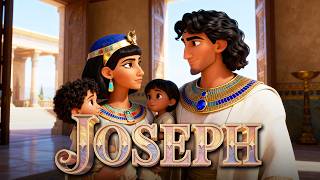
Judaism & Christianity: His life is detailed across the final chapters of Genesis in the Hebrew Bible / Old Testament, highlighting God's providence in turning human evil into divine good.
Islam: An entire chapter of the Quran (Surah Yusuf) is dedicated to his life, designated by God as the 'Best of Stories' (Ahsan al-Qasas) to highlight faith, chastity, and patience.
27.Is Prophet Joshua mentioned in the Quran and the Bible?
Hebrew Bible / Old Testament: He is the central figure in the Book of Joshua and features prominently in Exodus and Numbers as Moses' loyal attendant and one of the 12 spies sent to scout Canaan.
Islam: While not explicitly mentioned by proper name in the Quran, classical Islamic scholars identify him as the young companion who accompanied Moses on his journey to meet Al-Khidr (Surah Al-Kahf). His status as a prophet is explicitly affirmed in Hadith literature.
28.How is Levi viewed across different faith traditions?
Judaism: Honored as the ancestral father of the Levites and the Kohanim (the priestly class), establishing a legacy of religious service and devotion.
Christianity: Recognized as a key Old Testament patriarch whose lineage prepared the priestly backdrop for the New Testament ministry, including John the Baptist.
Islam: Respected as one of the twelve sons of Jacob (Asbat) recognized in the Quran, whose family ultimately established a noble line of guidance and faith.
29.Who was Prophet Moses across world religions?
Moses (Musa) is one of the most pivotal prophets, lawgivers, and religious leaders in history.
In Judaism, he is the supreme prophet who led the Israelites out of Egyptian slavery and received the Torah on Mount Sinai.
In Christianity, he is a major Old Testament prophet and foreshadower of Christ.
In Islam, he is revered as Musa, an Ulul 'Azm (resolute) messenger and the most frequently mentioned prophet in the Quran.
30.How is Prophet Samuel revered across different faith traditions?
Judaism: Honored as one of the greatest biblical prophets, often grouped alongside Moses and Aaron for his spiritual integrity and leadership (1 & 2 Samuel).
Christianity: Celebrated as a crucial Old Testament prophet who prepared the royal line of David from which Jesus descended.
Islam: Recognized as a noble prophet (Samu'il) who restored faith, anointed Saul (Talut), and laid the groundwork for David's prophethood and kingdom.
31.How is Prophet Shem viewed across different faith traditions?
Judaism: Revered in the Book of Genesis as a blessed son of Noah whose lineage preserved godliness; rabbinic tradition frequently identifies him with Melchizedek, the righteous King of Salem.
Christianity: Honored as a direct, foundational patriarch in the Old Testament genealogy of Jesus Christ.
Islam: Honored in classical historical texts (such as those by Al-Tabari and Ibn Kathir) as the noble, monotheistic son of Nuh from whom the prophets of the Middle East descended.
32.How is Terah's relationship with Abraham depicted across scriptures?
Hebrew Bible / Old Testament: Depicted as the patriarchal father of Abraham who initiated the family's journey out of Ur toward Canaan before passing away in Haran.
Quran & Islamic Tradition: Highlights the sharp contrast between Terah/Azar's devotion to idol sculpting and Abraham's gentle, respectful attempts to invite his father to divine monotheism, serving as a timeless lesson on personal faith over ancestral traditions.
33.What are some interesting historical facts about Prophet Moses?
- In the days of Moses, magic was the most advanced art
- Threw staff on the ground and it turned into a python and swallowed the sticks and ropes of the magicians
- Parted the Red Sea and led people to safety
- Tree branch turned into snake
- His hand turned white
- Mount Tur shook in fear
- He spoke directly to God
- Lived for 120 years
- Brother of Aaron who knew their father for 65 years
- Moses received the Oral Tradition from God and commanded to write first five books of Old Testament
34.Who is the Demiurge in Gnosticism?
In Gnostic theology, the Demiurge (often named Yaldabaoth or Saklas) is an inferior, arrogant, and blind deity who mistakenly believes he is the supreme God. Gnostics identify the Demiurge as the creator god described in the Old Testament. They argue that because the Demiurge is ignorant of the true, pure spiritual realms above him, he accidentally trapped divine light into flawed material bodies, creating the physical world.