NEW TESTAMENT
The first part being the Old Testament, based on the Hebrew Bible. The New Testament discusses the teachings and person of Jesus, as well as events in first-century Christianity. Christians regard both the Old and New Testaments together as sacred scripture. The New Testament (in whole or in part) has frequently accompanied the spread of Christianity around the world. It reflects and serves as a source for Christian theology and morality.
Search Result on 'New Testament' (184 total)
Youtube Videos on New Testament (122)
 Fallacies of the
 Fallacies of the
 Fallacies of the
 Fallacies of the
 Fallacies of the
 Fallacies of the
 Fallacies of the
 Fallacies of the
 Why are
 How did the
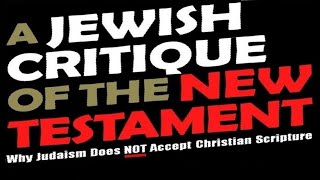 A Jewish critique of the
 Jesus in the
 Who authored the
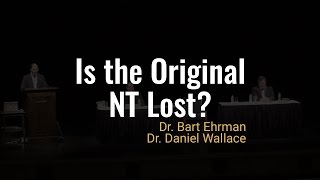 Is the original
 Is the
 Can we trust the
 In 1 John 5:8, the Church corrupted the
 God revealed scripture: Torah, Gospels, Injeel,
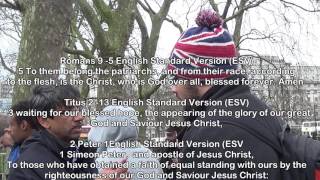 God revealed scripture: Torah, Gospels, Injeel,
 Was the
 Deconstructing the
 Does the
 Is the
 Can we trust the
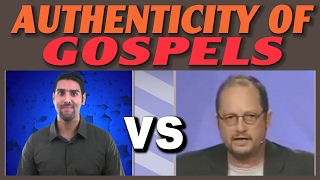 Authenticity of the
 Origins of the
 Do we have the Original Manuscripts of the
 Can we reconstruct the Original Manuscripts of





 Was the
 Using Logic to understand the
 Trinity is from Paganism; not found in
 Who chose the





 In Isaiah 7:14, Jesus was called Immanuel. Who called Jesus by this name in the
 Original Sin is a false belief in the
 In Jeremiah 31:32 and Hebrews 8:9, God established a
 For 300 years, we have worked to restore the original
 For 300 years, we have worked to restore the original
 Apostle Paul wrote only 7 Letters (of 13) in the
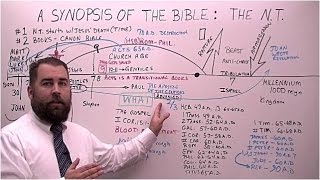 A Synopsis of
 Apostle Paul, Paganism and
 According to the
 75% of
 We do not have the original
 Greek
 We are getting closer to the original
 Early Christians did not believe Trinity, or write about it in
 Jesus, an Aramaic speaking Palestinian.
 Original text of all
 In John 7:53, Scribes added, later removed, the Adulteress story from
 In Mark 16:9-20, Scribes wrote a 'longer ending' to
 In 367 AD, the
 In 1545 AD, Council of Trent was first ecumenical council to officially recognise 27
 Apocalypse of Peter almost made it into the
 Early Christians invented Jesus' stories, sayings and sermons; aka
 5,300
 Church growth led to demand for
 RSV (Revised Standard Version) is most accurate
 Bart Ehrman is most well-known, prolific writer and Professor of
 Jesus' resurrection is nowhere to be found in the
 After Nicaea 325 AD, Constantine had Eusebius determine the earliest
 The original
 Jesus preached the Oral Gospel (Injeel), not
 Christians believed in Jesus' Resurrection before the
 There is only one, true God, a 'Unitarian' Father in
 Belief in Jesus' Crucifixion & Resurrection determine our Salvation, not the
 Which Church Council gave Athanasius authority to decide the 27
 Codex Sinaiticus: Oldest Surviving Christian
 Marcion (85-160 AD) listed 11 books in
 Christianity needs Jesus' Resurrection, not the
 History of
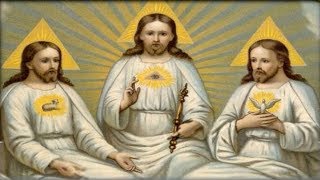 Trinity is a false doctrine not found in Old
 Catholic tradition decided the
 In 367 AD, Athanasius decreed the 27
 How the Old &
 Apostle Paul and his
 Apostle Paul and his
 Is the
 Did Rome Create the
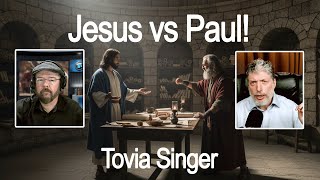 Did Apostle Paul know his Letters would appear in the
 Islamic Dilemma - Does The Quran confirm
 Christian Zionists FAIL to Understand
 Is the Original
FAQ on New Testament (44)
1.Why should we believe the Quran if it comes 600 years after Jesus?
The Quran may have come 600 years after Jesus, but does that make it false? Jesus came 1600 years after Moses, does that make Jesus false? The underlying or main argument here is the time between one person and another, but as we can see, if time is a problem then Christians should reject the other Prophets and Messengers since they have a greater number of years between them.
The complete manuscript collections of the New Testament and Old Testament date to the 4th and 5th century, within 100 years of the Qur'an, if Christians want to reject the Qur'an because it is 600 years after Jesus then they must be consistent and also reject the New Testament.
It should be noted that the Church itself did not ordain or make it canon (law) that the New Testament should be scripture until 393 and 397 CE in the Carthaginian councils. With all of these evidences, and centuries between Jesus and the New Testament, then they must reject the New Testament first.
2.Where did the name Allah come from?
The word Allah is the standard Arabic word for God used in all Arabic Bible translations, and its roots are identical to the Aramaic word 'Eloi' used by Jesus on the cross.
It was used in some English translations of the Bible like the original 'Scofield Reference Bible'
In the New Testament, Jesus is believed to cry before his death 'ELOI, ELOI, LAMA SABACHTHANI', Eloi is the exact Arabic word 'Elahi' which comes from the same root as Allah.
3.Why did Christians turn away from the original message of Jesus?
By the time the New Testament Gospels (Mark, Matthew, Luke, John) were compiled, there was a growing movement to frame traditional Jewish practices as obsolete, driven by a desire to break free from strict Mosaic laws like circumcision, ritual purity, and dietary codes, which required portraying Judaism as an inferior path for the new faith to flourish.
4.What about Apostle Paul's writings?
Paul authored 13 of the 27 books in the modern New Testament, comprising a major portion of the text. This is significant due to his differing theological teachings to the law-observant teachings of Jesus.
5.Why is believing in Apostle Paul so wrong?
Accepting Paul's theology implies that Jesus mistakenly selected the wrong individuals as his original twelve disciples,
It renders Jesus's earthly life and direct moral teachings completely irrelevant, and
Ignores the fact that Paul never actually met Jesus in person yet rejected the guidance of those who lived and learned directly from him.
Furthermore, it notes that the final New Testament canon restricted competing eyewitness accounts by omitting the gospels of Peter, Barnabas, and James.
6.What is the Codex Sinaiticus?
The Codex Sinaiticus is one of the most important books in the world. Handwritten well over 1600 years ago, the manuscript contains the Christian Bible in Greek, including the oldest complete copy of the New Testament
It is a fact of Christian history that the earliest Gospels did not record a resurrection of Jesus Christ, and this fact is supported in the Codex Sinaiticus.
Called the Codex Sinaiticus, or Sinai Bible, the oldest known complete Bible available to mankind today, was named after Mt. Sinai, the location of St. Catherines Monastery where it was discovered in 1859 by Dr Constantine Von Tischendorf (1815-1874).
The discovery of the Sinai Bible provided biblical scholars with irrefutable evidence of wilful falsifications in all modern-day Gospels, and a comparison identified a staggering 14,800 later editorial alterations in modern Bibles.
7.Did people believe Jesus was a Prophet?
Yes, contemporary crowds and close followers frequently identified Jesus as a prophet mighty in word and deed. This status is explicitly preserved in the New Testament gospels, including verses like Matthew 21:11 and Luke 24:19.
8.What is the King James Version (KJV) of the New Testament?
The King James Version (KJV) of the New Testament was completed in 1611 by 8 members of the Church of England.
There were (and still are) no original texts to translate. The oldest manuscripts we have were written down hundreds of years after the last Apostle died. There are over 8000 of these old manuscripts, with no two alike.
The King James translators chose to use none of the texts. Instead, they edited previous translations to create the New Testament their king and parliament would approve.
So today, 21st century Christians believe the 'Word of God' is a book edited in the 17th century from 16th century translations of 8000 contradictory copies of 4th century scrolls that claim to copies of lost letters written in the 1st century by unknown authors.
9.Why is the Trinity so difficult to understand?
The Trinity is a complex theological doctrine because it describes God as existing as three distinct Persons: Father, Son, and Holy Spirit who are co-equal and co-eternal, yet remain one single, unified divine Being. It requires balancing the concepts of strict monotheism with the distinct actions and relationships of the three divine Persons as revealed across the New Testament text.
10.Was Jesus sent with his own Word?
In the New Testament gospels, Jesus repeatedly emphasizes that his teachings and doctrine are not his own independent creation, but rather the direct words and commandments of the Father who sent him. He portrays himself as a faithful messenger and servant completely aligned with the will of God, speaking exactly what he was commanded to say.
11.Who were the authors of the books in the Bible?
Mainstream biblical scholarship notes that the four New Testament gospels were originally written anonymously and did not carry their authors' signatures inside the early texts. Christian tradition later attributed them to Matthew, Mark, Luke, and John based on early church history and theological consensus.
12.Jesus claimed he was a man or son of man
In the New Testament gospels, Jesus frequently refers to himself as the 'Son of Man,' a term with deep messianic significance derived from the Old Testament Book of Daniel. While he explicitly describes his human nature and vulnerabilities as a man, Christian theology maintains that his dual identity encompasses both full humanity and full divinity.
60 Then the high priest stood up before them and asked Jesus, 'Are you not going to answer? What is this testimony that these men are bringing against you?'
61 But Jesus remained silent and gave no answer. Again the high priest asked him, 'Are you the Messiah, the Son of the Blessed One?'
62. 'I am,' said Jesus. 'And you will see the Son of Man sitting at the right hand of the Mighty One and coming on the clouds of heaven.'
Mark 14:60-62
39 They answered and said unto him, Abraham is our father. Jesus saith unto them, If ye were Abraham's children, ye would do the works of Abraham.
40 But now ye seek to kill me, a man that hath told you the truth, which I have heard of God: this did not Abraham.
John 8:39
22 Ye men of Israel, hear these words; Jesus of Nazareth, a man approved of God among you by miracles and wonders and signs, which God did by him in the midst of you, as ye yourselves also know
Acts 2.22
31 because he has set a day when he is going to judge the world with justice[o] through a man whom he has appointed. He has given proof of this to everyone by raising him from the dead.
Act 17.31
For there is one God and one mediator between God and mankind, the man Christ Jesus.
1 Timothy 2:5
13.Did Jesus actually want to die on the Cross?
The New Testament gospels depict Jesus as fully aware of his impending execution, yet experiencing intense human agony and praying to avoid it during his night in the Garden of Gethsemane. However, mainstream Christian theology emphasizes that he willingly surrendered to the crucifixion out of absolute obedience to the divine plan for humanity's redemption.
14.Is the New Testament historically authentic?
Textual critics note that the original autographs of the New Testament books no longer exist, leaving thousands of handwritten Greek manuscripts that contain thousands of minor variants, mostly consisting of spelling or word order differences. Despite these historical copy changes, scholars emphasize that modern textual reconstruction methods allow historians to confidently identify the original 1st-century text, ensuring no essential historical narrative or Christian doctrine is left in doubt.
15.How did the Christian Trinity come about?
The New Testament gospels show Jesus selecting twelve apostles to lead his immediate followers, but he did not lay down a detailed blueprint for a complex institutional priesthood or administrative hierarchy. The elaborate structures, clerical offices, and distinct liturgical traditions seen in modern churches developed gradually over centuries as the movement adapted to Roman institutional frameworks.
The concept of a dual human and divine nature in the person of Jesus is known as the Hypostatic Union, an essential component of modern Trinitarianism.
Yet it was not until the Council of Chalcedon that we see the emergence of an official doctrine of the Trinity in a form that is recognisable with what Christian Trinitarians believe in today. This took place in the fifth century, over 400 years after Jesus!
The evangelical theologian and Professor Wayne A. Grudem sums this up as follows:
'A precise understanding of how full deity and full humanity' argues Grudem, 'could be combined together in one person was formulated only gradually in the church and did not reach the final form until the Chalcedonian Definition in 451 AD.
16.Is Muhammad mentioned in the Bible?
Mainstream Christian and Jewish biblical scholars state that Muhammad is not mentioned anywhere in the Hebrew Bible or New Testament, as these texts predate Islam by centuries. However, Islamic theology interprets specific biblical passages as prophecies of his coming, most notably Deuteronomy 18:18 (a prophet 'from among their brothers') and the promised 'Comforter' (Paracletos) in John 14-16, which Muslims believe refers to Muhammad rather than the Holy Spirit.
17.Whose words did Jesus speak?
In the New Testament gospels, Jesus is portrayed as a faithful messenger who consistently states that his teachings are not his own invention but are delivered directly from God the Father. Mainstream Christian theology interprets this as a reflection of the perfect relational unity within the Trinity, where the Son acts in absolute harmony with the Father. From an Islamic perspective, this text is viewed as clear scriptural evidence that Jesus functioned as a human prophet and messenger (Rasul), receiving and delivering verbal divine revelation (Injeel).
18.Was Jesus sent and approved by God?
In both Christian and Islamic traditions, Jesus is explicitly recognized as a messenger sent with direct divine approval and authority. The New Testament documents this through public miracles and voices from heaven (such as at his baptism in Matthew 3:17), while the Quran (Surah Al-Ma'idah 5:110) states that God explicitly strengthened Jesus with the Holy Spirit and authorized his miracles to validate his prophetic mission to Israel.
19.Was Jesus a man?
Both the New Testament and the Quran confirm Jesus' complete humanity through his experience of physical, human emotions and limitations. While traditional Christianity views him as fully divine and human, Islamic theology and secular history affirm him as a human prophet.
20.Does the Bible support the Trinity (3-in-1) God concept?
Mainstream biblical scholars and historians state that the doctrine of the Trinity is never explicitly laid out as a formal dogma anywhere in the text of the Old or New Testaments. While the New Testament contains early triadic formulas (such as the baptismal command in Matthew 28:19 and apostolic blessings in 2 Corinthians 13:14), the actual systemic theology of a three-in-one God was developed later by early church fathers over centuries. Christian theologians argue that the doctrine is implicitly woven throughout the scriptures, while critics and Islamic scholars point to the lack of clear, direct scriptural definitions to argue it was a later modification of strict biblical monotheism.
21.The Bible is about peace and forgiveness
No, historical-critical analysis shows that the Bible is a vast anthology containing highly diverse themes, including both messages of profound peace and accounts of severe warfare. While the New Testament emphasizes love, grace, and forgiveness through Jesus, the Old Testament contains complex legal codes, civil laws, and narratives where God commands total military warfare and strict retributive punishments against rival nations to protect the monotheistic identity of ancient Israel.
22.What did James say of the Old Testament Law?
In the New Testament Epistle of James, the author strongly emphasizes that faith without accompanying righteous deeds is dead and notes that stumbling at just one point makes a person guilty of breaking the entire Law (James 2:10). Early church records and historical scholarship depict James the Just (the brother of Jesus) as a deeply traditional, law-observant leader of the Jerusalem Church. He maintained that Jewish believers should strictly adhere to traditional Mosaic customs, which later created a significant theological tension with Apostle Paul's ministry to the Gentiles.
23.Did God sent Jesus with the task of guiding people?
Yes, both Christian scripture and Islamic theology completely agree that Jesus was explicitly sent by God as a divinely appointed guide, teacher, and messenger to humanity. In the New Testament gospels, his mission is framed as bringing spiritual salvation, healing the sick, and declaring the immediate arrival of the Kingdom of God. Similarly, the Quran defines his core task as delivering the Gospel (Injeel) and serving as a miraculous sign to guide the Children of Israel back to pure monotheistic worship.
24.Why did early Christians have church synods and councils?
Early Christian bishops organized regional synods and ecumenical councils to systematically define orthodox Christian doctrines and combat widespread heresies. These massive assemblies were essential for creating a unified creed, standardizing the New Testament canon, and establishing clear administrative laws for a rapidly growing global church. Prominent gatherings, like the Council of Nicaea, were often financed and politically mandated by Roman emperors to secure empire-wide religious stability.
25.Did Bible tells us that the Father became flesh
No, mainstream Christian theology explicitly rejects the idea that God the Father became flesh, a concept historically condemned as the heresy of Patripassianism or Sabellianism. The New Testament specifies that it was exclusively the Logos, the pre-existent Word or Son of God who took on human flesh in the person of Jesus Christ, as stated in John 1:14 ('And the Word was made flesh, and dwelt among us').
26.What is the oldest manuscript of the Bible New Testament?
It is of enormous importance in establishing the biblical text. There are three earliest manuscripts of the Bible New Testament:
1. Codex Alexandrinus is one of the earliest and most important manuscripts of the entire Bible in Greek
2. Codex Sinaiticus is one of the most important books in the world and is kept in the British Library. Handwritten well over 1600 years ago, the manuscript contains the Christian Bible in Greek, including the oldest complete copy of the New Testament.
3. Codex Vaticanus in Rome
27.What do Christian 'Trinity' scholars say about the Old Testament?
Many theologians, including this analysis of Trinity dogma, note that the Old Testament does not explicitly contain the Trinity, which they believe was only fully revealed later.
The distinguished Trinitarian scholar Bertrand de Margerie in his book The Christian Trinity in History writes:
'Contemporary exegetes [Bible teachers] affirm unanimously that the Old Testament did not bring to the Jewish people a clear and distinct Revelation of the existence of a plurality of persons in God. In this they agree with the clear and frequent affirmation of Fathers such as Irenaeus, Hilary, and Gregory of Nazianzus: that the doctrine of the Trinity is revealed only in the New Testament.'
So any person who lived before Jesus' ministry did not have to believe in the Trinity to be saved because the Trinity is not mentioned in the Old Testament.
28.What do Christian scholars say about the Trinity?
Mainstream scholars acknowledge that the Trinity is not explicitly defined in the New Testament but was formulated later by combining various verses and theological concepts.
Scholars freely admit that the Trinity is never presented as a complete doctrine in the New Testament, but rather is built from scattered Bible verses.
In the New Testament there is no explicit statement of the doctrine
Evangelical Dictionary of Theology (p. 1112)
It is not a Biblical doctrine in the sense that any formulation of it can be found in the Bible
New Bible Dictionary (p.1221)
The New Testament does not present a systematic presentation of the Trinity. The scattered segments from various writers that appear throughout the New Testament reflect a seemingly accepted understanding that exists without a full-length discussion.
Holman Bible Dictionary (p.1372)
Theologians admit the New Testament does not define the Trinity. Furthermore, there is no clear teaching that salvation depends on the belief in the Trinity.
29.Did Jesus have brothers, sisters and wife?
Jesus may have married because first-century Jews viewed procreation as a sacred duty, and point to non-canonical writings like the Gospel of Philip which allege a romantic connection with Mary Magdalene. However, mainstream historical-critical scholarship and Christian tradition emphasize that there is no verified historical or biblical evidence to support the claim that Jesus married, concluding he practiced lifelong celibacy. The New Testament does explicitly verify that Jesus had brothers and sisters, though theologians debate whether they were biological siblings, step-siblings, or cousins.
Jesus' brothers were married. It is likely that Jesus had a wife for the following reasons:
- Pious 1st century Jews took God's commandment to Adam and Eve to 'multiply' seriously
- No evidence to suggest Jesus was celibate
- As a future king of Israel, Jesus would never have been celibate
- He was close to his companion Mary Magdalene - Gospel of Philip has Jesus kissing Mary on the lips
30.Did Jesus' disciple question his resurrection?
Yes, the New Testament canonical records openly document that even members of Jesus' inner circle of chosen followers struggled to accept his physical resurrection. In the Gospel of Matthew (Matthew 28:17), the text captures his final appearance on a mountain in Galilee, explicitly stating that when the disciples saw him, they worshipped him, 'but some doubted'. Modern historians view this candid admission as highly credible, showing that belief in the resurrection was complex even for early eyewitnesses.
31.Can Christians eat swine and pork?
While modern Christian practice permits eating pork, the text notes that God explicitly prohibited the consumption of pig and swine meat in the Old Testament laws. The source argues that the New Testament passage often used to defend eating pork was originally a specific debate regarding whether unwashed hands made clean food unclean, rather than a lifting of the pork ban.
32.Many Christians believe that Jesus abolished the Old Testament dietary laws
Many Christians believe that Jesus abolished the Old Testament dietary laws. The dietary interpretation of Jesus' words (i.e. swine pig consumption) does not exist in the Textus Receptus Bible, the authoritative Greek New Testament text that was accepted by the Christian Church until about 100 years ago.
This parenthetic interpretation of Jesus words was obviously a comment that some Bible scribe wrote in the margin of the text. Later scribes accidentally or deliberately incorporated the marginal comment into the text itself, so the statement appears only in corrupted texts.
But the statement does not appear in the Textus Receptus, so the KJV says nothing about Jesus 'declaring all foods clean.'
God had clearly prohibited pig, swine and pork in the Old Testament. This verse was over whether or not 'unwashed hands' caused clean food to become unclean.
'Thus he declared all foods clean' is completely missing from the Textus Receptus, the authoritative Greek New Testament line used for centuries. It claims this widespread dietary interpretation was likely a later scribal note added to the margins of the text, which was subsequently mistaken for Jesus' actual words in corrupted versions.
33.How was the King James bible translated into English?
Today, the King James Version Bible (KJV) is considered the crown of English Bibles. In the 17th century, the Textus Receptus, the authoritative Greek New Testament text was used to translate the Greek Bible into the English KJV Bible.
34.Who was the founder of Christianity?
The platform asserts that Jesus was not the actual founder of Christianity as an independent world religion, noting that the vast majority of the New Testament text does not directly focus on the historical Jesus but is defined by Paul. Academic critical scholars agree that while Jesus initiated the original localized movement within Judaism, it was Paul's theological letters and universal missionary blueprint that systematically institutionalized the faith globally.
35.In John 9:38, Jesus is worshipped like a God?
While the verse describes a healed blind man worshipping Jesus, the webpage highlights that this verse is absent from the Codex Sinaiticus, the oldest 4th-century New Testament manuscript . It appears only as a later marginal addition, suggesting a deliberate insertion by a scribe to support the doctrine of Jesus' divinity .
According to verse 38, a blind man is healed by Jesus, and after seeing Jesus he worships him.
In the Codex Sinaticus, the oldest manuscript of John, dated to 330-years after Jesus, verse 38 is not recorded. The entire verse 38 appears as an additional footnote on the side of the Codex Sinaticus.
Verse 38 was inserted into the bible to prove that Jesus was worshipped and that he acknowledged and allowed the people to worship him.
This proves that the early Jewish-Christians did not interpret Johns gospel in the way we do today. At some point a scribe felt so strongly about the divinity of Jesus that he was compelled to include a footnote into the main text as an actual verse.
36.How did Jesus pray?
New Testament gospels explicitly record that Jesus fell flat onto his face and prayed to God.
37.What language is the earliest New Testament in?
The earliest New Testament manuscripts are in Koine Greek. But there are Aramaic phrases in the Gospels. Therefore, Scholars believe an Aramaic layer lies beneath the written Greek of the New Testament, one which may never have been written down.
If true, the Greek text is itself a translation, and English text would be a translation of a translation, which raises textual inerrancy and corruption issue.
Since every translation is a personal judgement of which word to best use, made at the translators discretion.
38.How is Jesus connected to Mount of Olives?
Jesus regularly taught on the mount, gave the Olivet Discourse predicting future events, and prayed in the Garden of Gethsemane at its base before his arrest.
According to Christian tradition and the New Testament (Acts 1:9-12), Jesus ascended into heaven from the peak of the Mount of Olives, where the Chapel of the Ascension stands today.
39.How is Prophet Jonah viewed across different faith traditions?
Judaism: His story is read annually on Yom Kippur during the Mincha (afternoon) service to emphasize the power of sincere repentance and divine forgiveness.
Christianity: Jesus references the 'Sign of Jonah' in the New Testament Gospels, comparing Jonah's three days in the whale's belly to His own three days in the tomb before resurrection.
Islam: Revered as Yunus (and Dhu'n-Nun, 'Companion of the Fish') in the Quran, where an entire chapter (Surah Yunus) is named after him, celebrating his heartfelt prayer of repentance.
40.How is Judah viewed across different monotheistic faiths?
Judaism: Revered as a central founding patriarch whose tribe held the royal and messianic lineage.
Christianity: Honored as a direct ancestor of Jesus Christ, who is referred to in the New Testament as the 'Lion of the Tribe of Judah'.
Islam: Recognized as one of the twelve sons of Jacob (Asbat) mentioned in the Quran, whose life demonstrates themes of repentance, family responsibility, and divine reconciliation.
41.How is Levi viewed across different faith traditions?
Judaism: Honored as the ancestral father of the Levites and the Kohanim (the priestly class), establishing a legacy of religious service and devotion.
Christianity: Recognized as a key Old Testament patriarch whose lineage prepared the priestly backdrop for the New Testament ministry, including John the Baptist.
Islam: Respected as one of the twelve sons of Jacob (Asbat) recognized in the Quran, whose family ultimately established a noble line of guidance and faith.
42.Who founded Christian Science?
The Christian Science religion was founded by Mary Baker Eddy in 1879 in Boston, Massachusetts. Eddy established the church following a dramatic personal recovery from a severe spinal injury in 1866, which she attributed to reading a New Testament healing account. In 1875, she published her foundational textbook, Science and Health with Key to the Scriptures, which remains the definitive companion guide to the Bible for all Christian Scientists.
43.What are the Gnostic Gospels?
The Gnostic Gospels are a collection of early texts concerning the life and teachings of Jesus that were explicitly excluded from the canonical New Testament Bible. Unlike the traditional books of Matthew, Mark, Luke and John, these texts focus on secret dialogues and deep esoteric wisdom. The most famous examples include:
* The Gospel of Thomas: A collection of 114 sayings attributed to Jesus, completely lacking a narrative or crucifixion story.
* The Gospel of Mary: Highlights Mary Magdalene as a premier disciple who received secret revelations directly from Jesus.
* The Gospel of Judas: Radically reframes Judas Iscariot not as a traitor, but as Jesus's closest friend acting under divine orders.
44.Who leads the Mormon/LDS Church today?
The Church is led by a living prophet who serves as the President of the Church. He is sustained by members as a seer and revelator who receives direct divine guidance for the world today. The President is assisted by two counselors (forming the First Presidency) and the Quorum of the Twelve Apostles. This leadership structure mimics the organizational pattern established by Jesus Christ in the New Testament.
Articles on New Testament (10)




News on New Testament (5)
Scripture Themes on New Testament (2)
| 1. Jesus supported with clear signs and holy spirit | Quran 2:87 |
| 2. Jesus sent with Gospel confirming Torah | Quran 5:46 |