POLYTHEISM POLYTHEIST IDOLS THE GODS
In most religions which accept polytheism, the different gods and goddesses are representations of forces of nature or ancestral principles, and can be viewed either as autonomous or as aspects or emanations of a creator deity or transcendental absolute principle (monistic theologies), which manifests immanently in nature (panentheistic and pantheistic theologies). Most of the polytheistic deities of ancient religions, with the notable exceptions of the Ancient Egyptian and Hindu deities, were conceived as having physical bodies. Polytheism is a type of theism. Within theism, it contrasts with monotheism, the belief in a singular God, in most cases transcendent. Important polytheistic religions practiced today include Chinese traditional religion, Hinduism, Japanese Shinto, and various neopagan faiths.
Youtube Videos on Idols, Polytheism, Polytheist, The Gods (36)
 Do Muslims Worship
 Is belief in the Christian Trinity Polytheism? - Shadid Lewis vs Anthony Rogers
 Pagan Gods In The Bible (Polytheist 'Confusion') - Andrea Salbego 1/3
 Pagan Gods In The Bible (Polytheist 'Confusion') - Andrea Salbego 2/3
 Pagan Gods In The Bible (Polytheist 'Confusion') - Andrea Salbego 3/3
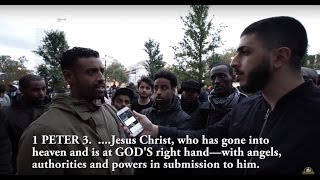 Is Christianity a Polytheist religion? - Ali Dawah vs Christian
 All people should be United in Love with the Gods - Sadat Anwar vs American Mormons
 What is worse, doing Shirk (Polytheism) or destroying people on Earth? - Mohammed Hijab vs Atheists 2/3
 Shirk, or Polytheism includes personal Desires, Whims and Opinions - Hamza Yusuf
 93% of Romans were polytheist pagans with many Gods. Christians had a 'more powerful' God - Bart Ehrman
 Trinity is 'veiled' Tri-theism (Three Gods). Combining of Jewish Monotheism with Pagan Polytheism
 Pre-Islam Pagan Arabs made
 In Exodus 20:4, cleanse homes of graven Images, Gods and
 Hinduism: From 1 God to 1 Million
 Historical Understanding of God and gods in Monotheism, Polytheism & Atheism - Jimmy Akin
 Origins of Yahweh in a Polytheist Society - InspiringPhilosophy
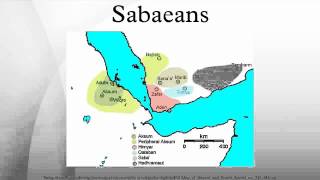 Sabians of Yemen: 7
 Polytheism to Yahweh-Only Monotheism in the Old Testament - Kipp Davis / MythVision
 Pantheon, Roman Temple to the Gods and
 Thusia (800 BC), Animal Sacrifice to The Gods of Greece | ReligionForBreakfast
 Animal Sacrifice, a Gift from Farmers to The Gods | Ocean Keltoi
 Allah and The Gods of Pre-Islam Arabia | Ahmad Al-Jallad
 Adam & Eve Story copied from Early Polytheist Myths? | MythVision
 Pre-Islam Arabia was Polytheist with Allah 'The High God' and Hubal The Chief, Moon God of Kabah | Al-Maidah Initiative
 Archaeology indicates Polytheism did not exist in Pre-Islamic Mecca | Sean Anthony | MythVision
 The Gods of Israel (El, Baal, Yahweh, Asherah) | Stephans History
 Ancient Mesopotamia studied Planets to Understand the Will of The Gods | Stephans History
 The Evolution of Monotheism from Polytheism in the Old Testament Bible | Stephans History
 Muhammad's Conquest of Mecca! 360
 Archaeology for the worship of
 The Gods of Jews and Early Christians | Paula Fredriksen | MythVision
 Christian Trinity is Mono-Polytheism adopted from Greek Philosophy | approvedofGod
 Early Judaism was Polytheism: GOD Yahweh in a 'Divine Council' of Lower Gods | Nicholas Allen | History Valley
 Why did the post-Islam Hajj pilgrimage continue many polytheist, pre-Islam Hajj rituals? | James Howard-Johnston | Skepsislamica
 The
 Polytheism in Early Judaism: Yahweh is Our God. So is Baal, El & Asherah | Joel Baden
Scripture Themes on Idols, Polytheism, Polytheist, The Gods (23)
FAQ on Idols, Polytheism, Polytheist, The Gods (16)
1.Who built the Kabah in Saudi Arabia?
Prophet Abraham built the Kaaba for people to worship God. While pagan Arabs admitted this fact and even kept the stone where he used to stand to build the Kaaba (Abraham's station), they brought idols to the Kaaba and worshiped them to get closer to Abraham's Lord, Allah, God of gods. Prophet Muhammad came with the monotheistic message of Islam. Arabs defended these idols and refused to give up the religion of their fathers and grandfathers.
2.Were the Gods sacrificed?
* Horus - In Egypt, in the Heb-Sed festival, the powers of Pharaoh
(Horus incarnate) were tested. If found weak, Horus was expected to
sacrifice himself by donating his blood to the soil
* Kronos - A man was sacrified annually at the Phoenician
feast of Kronos. Kronos had a son, Ieoud who he sacrificed. Ieoud
was known as 'the only begotten son of his Father'
* Tammuz - A popular Syrian saviour-God born of a virgin
was killed and rose again every spring. Wherever Tammuz was
worshipped a human victim in royal robes was killed and eaten, so
his body and blood might bring salvation to the community.
3.What did Moses command his people to do?
In the text of the Hebrew Bible (the Torah), Moses explicitly commanded the Israelites to strictly observe the covenantal laws, moral statutes, and civil judgments given by God at Mount Sinai, summarized in Deuteronomy 6:4-5. Historical-critical scholars emphasize that Moses' mission was to establish a highly structured, law-observant community that rejected ancient polytheism and maintained a unique identity through dietary codes (Kosher), Sabbath observance, and sacrificial rituals. Both Jewish and Islamic traditions view Moses as a lawgiver whose primary instruction was obedience to divine law.
4.Why do Muslims say non-Muslims will go to Hell?
One of the basic teachings of Islam is that God does not have a favorable opinion of those who knowingly deny His right to be worshiped alone (as He alone is responsible for our creation, our sustenance, and our judgement) and reject any of His messengers.
This is not to say that there will be conveyor belts for each religion, and we just jump on and go to either Heaven or Hell according to what we call ourselves. Each person will be judged based on their understanding of God's message, as well as his or her capability and intentions to follow the path to God as best he or she could.
Muslims are not allowed to say that someone will go to hell just because they call themselves a Christian, Jew, or Polytheist. Muslims are not allowed to speak without knowledge. And each person's destination in the Hereafter is known only to God.
It is interesting to note that some people of different faiths insist on telling everyone who does not go to their specific place of worship that they will certainly be going to Hell (knowledge they do not have). But when they see this Quran verse, they are upset by it.
5.Did Jesus preach monotheism?
Yes. Jesus taught the absolute oneness of God within the established Jewish monotheistic tradition, rejecting pagan polytheism.
6.Who are the Gods in the Bible?
Historically, the term 'God' was applied to powerful figures, such as leaders and magistrates, who served as representatives on Earth. Emperor Constantine referenced this, citing Psalm 82:6 to remind bishops of their high, albeit human, office.
Emperor Constantine at the opening of the Council of Nicaea (325 AD) quoted Psalm 82:6 to remind the bishops that their high office should raise them above jealousy and party feeling.
The term 'God' was applied to people of power, authority and rule who were considered to have greater nearness to God than others - an appellation which implies that you are God's representatives on earth, and that your decision is, in an important sense, to be regarded as his.
7.What miracles and major trials is Prophet Abraham known for?
The Fiery Furnace: When Abraham smashed the idols of his town, King Nimrod ordered him thrown into a roaring fire. God miraculously commanded the flames to become cool and safe for him.
The Sacrificial Test: God tested Abraham's devotion by commanding him to sacrifice his son. Demonstrating absolute submission, Abraham prepared to obey before God stopped him and replaced his son with a ram.
Leaving His Family in the Desert: Abraham followed divine guidance by leaving his wife Hagar and infant son Ishmael in the barren valley of Mecca, which led to the miraculous emergence of the Zamzam water spring.
8.What was Terah's occupation and spiritual background?
According to historical and rabbinic traditions (such as the Midrash), Terah was a high-ranking sculptor and merchant of pagan idols in Ur. His household served as a major center for idol crafting, which placed him in direct religious opposition to his son Abraham's uncompromising monotheistic faith.
9.Do Epicureans believe in God?
Yes, Epicureans believe that gods exist, but they reject the idea of a creator or interventionist God. Epicurus taught that the gods are physical beings made of highly refined atoms who live an immortal, blissfully happy life in the spaces between worlds (intermundia). Because the gods are perfectly happy, Epicureans believe they do not care about human behavior, do not answer prayers, do not cause natural disasters, and do not punish people in Hell.
10.What is the "Tetrapharmakos" (The Four-Part Cure)?
The Tetrapharmakos is a core philosophical checklist or 'four-part remedy' created by Epicureans to quickly eliminate the mental anxieties of daily human existence. It states:
1. Don't fear God (The gods are indifferent and peaceful).
2. Don't worry about death (There is no consciousness or torment after dying).
3. What is good is easy to get (Basic survival needs are simple to fulfill).
4. What is terrible is easy to endure (Intense pain is usually brief; chronic pain can be managed with pleasant memories).
11.What are Ancient Greek religions called?
The ancient Greek religion does not have a formal historical name because it was deeply woven into daily civic life rather than treated as a separate organization. Today, historians and modern practitioners refer to it as Hellenic Polytheism, Hellenism, or Ancient Greek Religion. It was a decentralized, polytheistic system focused on the worship of a vast pantheon of deities who controlled natural forces and human destiny.
12.Who are the 12 Olympian gods in the Ancient Greek religions?
The 12 Olympians were the principal deities of the Greek pantheon who were believed to reside in a palace atop Mount Olympus. They include:
1. Zeus: King of the gods and ruler of the sky.
2. Hera: Queen of the gods and goddess of marriage.
3. Poseidon: God of the sea, earthquakes, and horses.
4. Demeter: Goddess of agriculture and the harvest.
5. Athena: Goddess of wisdom, crafts, and strategic warfare.
6. Apollo: God of music, poetry, prophecy, and healing.
7. Artemis: Goddess of the hunt and wild animals.
8. Ares: God of war.
9. Aphrodite: Goddess of love and beauty.
10. Hephaestus: God of fire, metalworking, and sculpture.
11. Hermes: The messenger god and protector of travelers.
12. Dionysus (or Hestia): God of wine, theater, and ritual ecstasy.
13.Do the Ancient Greek religions exist today?
Yes, the ancient religion has experienced a modern revival known as Hellenic Polytheism or Hellenic Neopaganism. Contemporary practitioners work to reconstruct the ancient ethics, values, and ritual structures of the classical era. In 2017, the Greek Government officially recognized Hellenism as a known, legal religion in modern Greece, allowing practitioners to establish formal places of worship and legally perform religious weddings.
14.Is Hinduism polytheistic or monotheistic?
Hinduism is most accurately described as henotheistic or pantheistic, though it contains elements of both monotheism and polytheism. While Hindus worship thousands of distinct deities (devas and devis), the vast majority of practitioners view these individual gods as different forms, facets, or manifestations of a single, supreme cosmic reality known as Brahman.
15.What was the core belief of the ancient Mayan religion?
The ancient Mayan religion was a complex polytheistic system deeply rooted in the forces of nature, astronomy and agriculture. The Maya believed that the universe was highly interconnected and divided into three main realms: the heavens, the earth, and the underworld (Xibalba). Central to their worldview was the concept of cosmic reciprocity—the belief that humans had to maintain a strict balance with the gods through rituals, offerings, and bloodletting to ensure survival, rainfall, and bountiful crop harvests.
16.Why did the Maya practice human sacrifice?
In Mayan religion theology, blood was considered the ultimate life force and nourishment for the gods. The Maya believed the gods sacrificed their own blood to create the world and humanity; therefore, human sacrifice was viewed as a holy debt repayment to prevent cosmic collapse. Sacrifices were typically reserved for momentous occasions such as the ascension of a new king, a severe drought, or the dedication of a major pyramid temple, and the victims were often captured enemy royalty or elites.
News on Idols, Polytheism, Polytheist, The Gods (2)
| 1. War on Christmas: Gossip of the Gods (Jonathan Storment) | Patheos |
| 2. Many of the gods come from Stars: Angels, Virgin Birth and Jesus | Raw Story |
Articles on Idols, Polytheism, Polytheist, The Gods (1)
Monotheism vs Polytheism: How Abrahamic Worship Practices Differ

20,236 views
|