What was the Council Of Nicaea?

COUNCIL OF NICAEA 

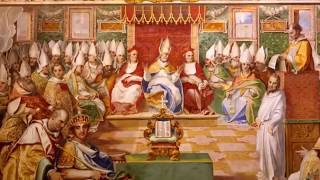
The First Council of Nicaea was a council of Christian bishops convened in the Bithynian city of Nicaea (now ?znik, Bursa province, Turkey) by the Roman Emperor Constantine I in 325 AD.

Its main accomplishments were settlement of the Christological issue of the divine nature of God the Son and his relationship to God the Father, the construction of the first part of the Nicene Creed, establishing uniform observance of the date of Easter, and promulgation of early canon law.

Youtube Videos on Council Of Nicaea (21)
Video: At Council of Nicaea 325 AD, Arian, Orthodox and Eusebians debated Jesus At Council of Nicaea 325 AD, Arian, Orthodox and Eusebians debated Jesus' divinity - InspiringPhilosophy   9:30
851 views
Video: The Council of Nicaea, Arian and Athanasian Creed The Council of Nicaea, Arian and Athanasian Creed   8:06
615 views
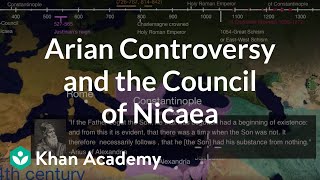
Video: Arian Controversy and the Council of Nicaea - Khan Academy Arian Controversy and the Council of Nicaea - Khan Academy   11:24
521 views
Video: Serapis Christus, Ptolemy and how Constantine created Jesus Christ at the Council of Nicaea - Ray Hagins Serapis Christus, Ptolemy and how Constantine created Jesus Christ at the Council of Nicaea - Ray Hagins   51:30
1,065 views
Video: After the Council of Nicaea - Ryan Reeves After the Council of Nicaea - Ryan Reeves   27:05
674 views
Video: In 325 AD, Trinity became Official Church Doctrine at Council of Nicaea - Tovia Singer In 325 AD, Trinity became Official Church Doctrine at Council of Nicaea - Tovia Singer   50:14
991 views
Video: In 325 AD, Council of Nicaea created Jesus and Christianity by unifying pagan Gods and beliefs - Doug Michael In 325 AD, Council of Nicaea created Jesus and Christianity by unifying pagan Gods and beliefs - Doug Michael   1:51
1,058 views
Video: Arguing Bishops at Council of Nicaea voted Pagan rituals into Christianity i.e. Trinity - Doug Michael Arguing Bishops at Council of Nicaea voted Pagan rituals into Christianity i.e. Trinity - Doug Michael   2:10
1,362 views
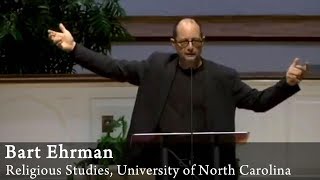
Video: In 325 AD, Council of Nicaea debated and voted on divinity of Jesus - Bart Ehrman In 325 AD, Council of Nicaea debated and voted on divinity of Jesus - Bart Ehrman   2:00
645 views
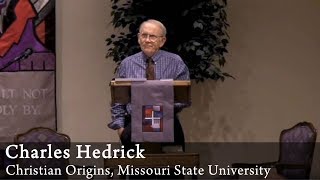
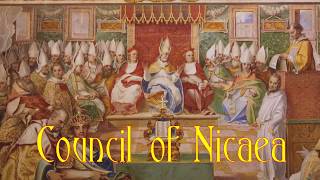
Video: Christianity did not exist until AFTER the Council of Nicaea (325 AD) - Charles Hedrick Christianity did not exist until AFTER the Council of Nicaea (325 AD) - Charles Hedrick   1:46
957 views
Video: Council of Nicaea (325 AD) ignored earlier writings on Jesus Council of Nicaea (325 AD) ignored earlier writings on Jesus' divinity in the Gospels - Charles Hedrick   0:56
831 views
Video: In 325 AD, Council of Nicaea decided the final Christian doctrine - Lorence Yufa | Milwaukee Atheists In 325 AD, Council of Nicaea decided the final Christian doctrine - Lorence Yufa | Milwaukee Atheists   1:50
888 views
Video: Council of Nicaea (325 AD) - Jim Papandrea Council of Nicaea (325 AD) - Jim Papandrea   1:02:30
546 views
Video: Nobody believed Jesus was God, until the Council of Nicaea in 325 AD - Michael Skobac Nobody believed Jesus was God, until the Council of Nicaea in 325 AD - Michael Skobac   9:15
974 views
Video: What Happened at the Council of Nicaea? - Milwaukee Atheists What Happened at the Council of Nicaea? - Milwaukee Atheists   18:25
731 views
Video: Greek Philosophy won at Council of Nicaea. The Bible lost - Richard Rubenstein Greek Philosophy won at Council of Nicaea. The Bible lost - Richard Rubenstein   5:21
913 views
Video: Greek philosophy, John Greek philosophy, John's gospel and Philo of Alexandria were merged at Council of Nicaea in 325 AD - William Lane Craig & approvedofGod   12:38
1,210 views
Video: In 325 AD, the Council of Nicaea defined Jesus as In 325 AD, the Council of Nicaea defined Jesus as 'Homoousios', of same substance with God - Kegan Chandler   1:00:25
662 views
Video: At Council of Nicaea 325 AD, who decided Jesus was Homoousios ( At Council of Nicaea 325 AD, who decided Jesus was Homoousios ('same substance') as God? - Kegan Chandler   3:04
780 views
Video: At Council of Nicaea, Constantine quoted Plato, a Pagan philosopher to justify Homoousios ( At Council of Nicaea, Constantine quoted Plato, a Pagan philosopher to justify Homoousios ('same substance') - Kegan Chandler   2:14
1,062 views
Video: Opposition to Homoousios ( Opposition to Homoousios ('same substance') was silenced at Council of Nicaea? - Kegan Chandler   4:24
937 views

FAQ on Council Of Nicaea (5)

1.What happened at the Council of Nicaea in 325 AD?

During this historic imperial gathering, the various conflicting Christian factions were officially ordered by Roman authority to accept the unified Athanasian Creed. This political and religious decree formally established the doctrine affirming that Jesus Christ, as the Son of God, was simultaneously 100% human Man and 100% divine God.

2.Are Jesus and God the same?

Mainstream Christian orthodoxy, solidified at the Council of Nicaea, dictates that Jesus and God are the same in essence (homoousios), defining Jesus as the pre-existent Word of God who took on human flesh. However, secular historians and Unitarian theologians point out that the Synoptic Gospels make explicit distinctions between Jesus and God, such as when Jesus prays to the Father or denies knowing the timing of the Final Hour. Islamic theology strictly rejects any identification of Jesus with God, viewing the claim as a violation of absolute monotheism (Tawhid).

3.Why did early Christians have church synods and councils?

Early Christian bishops organized regional synods and ecumenical councils to systematically define orthodox Christian doctrines and combat widespread heresies. These massive assemblies were essential for creating a unified creed, standardizing the New Testament canon, and establishing clear administrative laws for a rapidly growing global church. Prominent gatherings, like the Council of Nicaea, were often financed and politically mandated by Roman emperors to secure empire-wide religious stability.

4.Who are the Gods in the Bible?

Historically, the term 'God' was applied to powerful figures, such as leaders and magistrates, who served as representatives on Earth. Emperor Constantine referenced this, citing Psalm 82:6 to remind bishops of their high, albeit human, office.

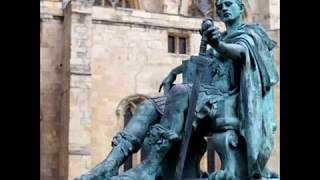
Emperor Constantine at the opening of the Council of Nicaea (325 AD) quoted Psalm 82:6 to remind the bishops that their high office should raise them above jealousy and party feeling.

The term 'God' was applied to people of power, authority and rule who were considered to have greater nearness to God than others - an appellation which implies that you are God's representatives on earth, and that your decision is, in an important sense, to be regarded as his.

5.In 325 AD, did Emperor Constantine burn gospels, writings and religious text?

The books of Arius and his followers, after the first Council of Nicaea (325 C.E.), were burned for heresy by the Roman emperors Constantine, Honorius, and Theodosius I, who published a decree commanding that, 'the doctrine of the Trinity should be embraced by those who would be called catholics; that all others should bear the infamous name of heretics'.


About  |  Q&A  |  Contact Us    •    Terms  |  Privacy  |  Disclaimer  |  Sitemap
Connect:      Facebook  |    Twitter  |    Youtube
MuslimProphets.com is an educational website on the Prophets of God: David, Noah, Abraham, Moses, Jesus and Muhammad, who established the Abrahamic faiths of Judaism, Christianity and Islam.

MuslimProphets.com explores contemporary social themes through Scripture, Evidences, Photo, Video, Maps, Current Affairs, Debate and 'alternative' Views held by Theologians, Apologists, Scholars and Street Preachers.

In accordance with Islamic etiquette, all prophet names should be followed with 'Peace Be Upon Him (PBUH)'. This is omitted to minimise text.

DISCLAIMER
The historical information provided on this website is for educational and informational purposes only.
History is an ongoing interpretation of past events. Historical accounts are shaped by the perspectives, biases, and cultural influences of their time; therefore, no content on this website should be taken as absolute, 100% factual truth. We encourage readers to approach historical narratives with a critical mind.

All website content is available in the public domain. While all information is gathered from sources believed to be reliable, its absolute accuracy cannot be guaranteed.

EXTERNAL LINKS & SEO
External links are provided as a convenience and for informational purposes only. They do not constitute an endorsement or approval of any products, services, or opinions of any organization or individual. Title and text links may be edited for external SEO, internal site structure, and keyword search purposes. We bear no responsibility for the accuracy, legality, or content found on any external website or its subsequent links.

MEDIA & SOURCE ATTRIBUTIONS
Unless otherwise indicated, all images and content are licensed under a Creative Commons Attribution License distributed by Wikipedia, Wikimedia Commons, Pixabay, Unsplash, and similar platforms. While every effort is made to accurately source all media, contact us if you believe your copyright has been infringed so we can address and resolve the matter promptly.

All videos are hosted on and viewable via YouTube servers. Video titles are generated based on the original video title, the overall content theme (including actual dialogue and transcripts), and AI-based recommendations optimized for SEO, keyword density, and internal search functions. Video titles do not represent the views held by the YouTube video uploader, or any associated individual, organisation, or business.

All Torah, Psalms, and Old/New Testament Bible quotes are from the King James Version (KJV) Holy Bible, which is in the public domain.
All Quran quotes are from the Taqi-ud-Din al-Hilali / Muhsin Khan English Quran translation.

CORRECTIONS
If you spot a mistake, error, or omission of information, please contact us so we can review and correct it.