BRITISH
British nationality law governs modern British citizenship and nationality, which can be acquired, for instance, by descent from British nationals. The British are a diverse, multinational, multicultural and multilingual people, with "strong regional accents, expressions and identities". The social structure of the United Kingdom has changed radically since the 19th century, with a decline in religious observance, enlargement of the middle class, and increased ethnic diversity, particularly since the 1950s, when citizens of the British Empire were encouraged to immigrate to Britain to work as part of the recovery from World War II. The population of the UK stands at around 67 million, with around 50 million being White British. This includes 44.4 million in England and Wales as of 2021, and 4.2 million in Scotland as of 2022. 1.8 million identify as White in Northern Ireland, including White British and other White ethnicities, as of 2021.
Youtube Videos on British (21)
 Great
 Genocide of the Australian Blacks (Aborigines) by
 The
 1612
 What the
 Where's the evidence
 Young
 WIth
 WIth
 In 1916,
 The
 The Spider's Web: 2nd
 COVID Tests are Inaccurate with 93% False-Positive rate,
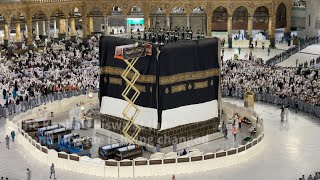 Kabah Kiswah (Black Silk Cloth) costs $6M USD or 4.3M
 Saudi Arabia - Unity with Wahhabis and
 Saudi Arabia Wahhabi and
 Israeli Soldiers shot children in head, chest, abdomen, testicles 'on different days',
 Lowkey EXPOSES how UK Government and Police work for Israel - NOT the
News on British (20)
FAQ on British (4)
1.Does the Bible tell us to act like slaves?
Historically, the Bible has been used by some to enslave, subjugate and dominate over a people.
The 'Curse of Ham' Myth: Pro-slavery advocates twisted Genesis 9 to claim that people of African descent were divinely cursed to be eternal servants.
Old Testament Legal Protection: Slaveholders cited Leviticus 25 to argue that purchasing foreign bondmen and passing them down as inherited property was biblically sanctioned.
Weaponising Obedience Verses: Plantation owners frequently read verses like Ephesians 6:5 ('Slaves, obey your masters') to religiously brainwash enslaved people against rebelling.
The Redacted 'Slave Bible': British and American authorities physically censored the scriptures, deleting the entire Book of Exodus to hide the narrative of freedom from bondage.
Enforcing Fugitive Slave Laws: Pro-slavery preachers used Paul's letter to Philemon to argue that runaway slaves were legally and spiritually obligated to return to their masters.
2.What is the oldest manuscript of the Bible New Testament?
It is of enormous importance in establishing the biblical text. There are three earliest manuscripts of the Bible New Testament:
1. Codex Alexandrinus is one of the earliest and most important manuscripts of the entire Bible in Greek
2. Codex Sinaiticus is one of the most important books in the world and is kept in the British Library. Handwritten well over 1600 years ago, the manuscript contains the Christian Bible in Greek, including the oldest complete copy of the New Testament.
3. Codex Vaticanus in Rome
3.What is Rastafari and how did it start?
Rastafari is a young Abrahamic religious and social movement that developed in Jamaica during the 1930s. It emerged among impoverished Afro-Jamaican communities as a spiritual response to British colonial oppression and the legacy of slavery. The movement was heavily influenced by the Pan-Africanist teachings of Marcus Garvey, who urged Black people to look to Africa for their redemption and king.
4.What is Wicca and how did it start?
Wicca is a modern, earth-centered pagan religion that developed in England during the first half of the 20th century. It was popularized in 1954 by Gerald Gardner, a retired British civil servant who claimed to have been initiated into a surviving medieval witch coven. Wicca draws heavily on ancient European pagan traditions, folklore, ceremonial magic, and 19th-century romanticism, framing itself as a revival of pre-Christian nature worship.