1387 views
·
Last viewed: 2 hrs ago
Uploaded: 22 Apr 2025 (1 year ago) · Shared: 22 Apr 2025
Duration: 33:15
Uploaded: 22 Apr 2025 (1 year ago) · Shared: 22 Apr 2025
Duration: 33:15
Youtube Description
After nearly two years since the escalation of the genocide, half the Christian population of Gaza has been killed or forced to flee by the Israeliregime. But despite Palestine being home to Christianity’s holiest sites, the Palestinian Christians being the oldest Christian community anywhere in the world, and very prominent Christian voices like the late Pope Francis calling for an end to the genocide, many Christians in the West continue to support Israel. Why? Why do Christian Zionists fail to practice the teaching of “love your neighbor” in this case? What is the shared history of Muslims and Christians in the Holy Land? And how must our communities work together for justice today?
In the latest episode of Gaza Diaries, Dr. Omar Suleiman discusses these questions with Palestinian pastor Rev. Munther Isaac of the Christmas Lutheran Church in Bethlehem, Palestine.
0:00 - Rev. Munther Isaac’s famous “Christ in the Rubble” sermon
1:50 - A Palestinian Christian’s explanation to Christian Zionists
3:28 - Not all Palestinians are Muslim
6:54 - Preserving credibility as a people of faith
10:41 - Do Palestinian Muslims oppress Palestinian Christians?
13:04 - How Israel’s apartheid laws affect Christians
14:39 - The Muslim conquest of Jerusalem and protections for Christians
17:25 - The current situation of Christians in Gaza
23:10 - Rev. Munther’s friendships with Palestinian imams
25:55 - Rev. Munther’s visits to the US: Are perspectives changing?
32:08 - Conclusion
Click SUBSCRIBE and hit the 🔔 icon to receive the latest updates from Yaqeen!
Visit http://www.yaqeeninstitute.org for full access to all research publications, infographics, and videos. Join the conversation on Twitter, Facebook, and Instagram @yaqeeninstitute!
Explore More
Yaqeen Institute Jonathan Brown Munther Isaac Omar Suleiman Palestine Zionism Israel SufferSearch Google Search Explore Topics
 Who are Yaqeen Institute? (MEMBER OF YI)
The Yaqeen Institute for Islamic Research is an independent American research institute and think tank founded in 2016, mainly interested in the advanced study of modernity, Islam and Muslim societies. It works to aggregate complex Islamic topics for audiences outside of the field of Islamic academia. Yaqeen Institute was founded by American Islamic scholar Omar Suleiman and is based in Irving, Texas. It has published works have covered a variety of topics at the intersection of Islam, including perennialism, international politics, parenting, and historical preservation of Islamic texts. It works to "pioneer Islamic research in cutting-edge, creative formats."
 Who is Jonathan Brown? (MEMBER OF YI)
Jonathan Andrew Cleveland Brown (born 1977) is an American scholar of Islamic studies. Since 2012, he has been associate professor at Georgetown University's Edmund A. Walsh School of Foreign Service. He holds the Alwaleed bin Talal Chair of Islamic Civilization at Georgetown University. Brown has also published articles in the fields of Hadith, Islamic law, Salafism, Sufism, and Arabic language.
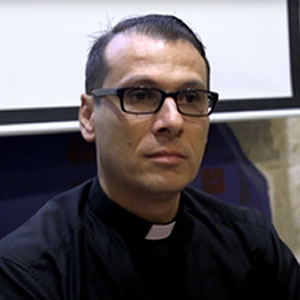 Who is Munther Isaac?
Munther Isaac (born 1979) is a Palestinian pastor, author, and theologian based in the West Bank. For some time, Isaac has vocally criticized the Israeli government's treatment of Palestinians and Christian Zionist support for Israel. He became more widely known throughout the world due to his activism during the Gaza war, including media appearances, speaking tours, and social media posts.
 Who is Omar Suleiman? (MEMBER OF YI)
Omar Suleiman (born 1986) is an American Muslim scholar, civil rights activist and speaker. He is the Founder and President of the Yaqeen Institute for Islamic Research professor of Islamic Studies at Southern Methodist University. Suleiman is also the Resident Scholar of the Valley Ranch Islamic Center and the Co-Chair of Faith Forward Dallas at Thanks-Giving Square.
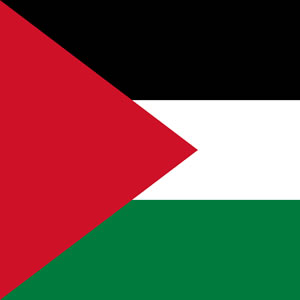 Where is Palestine?
Palestine is a geographic region in Western Asia. It is usually considered to include the Gaza Strip, the West Bank, Israel, and in some definitions, some parts of western Jordan. The name was used by ancient Greek writers, and it was later used for the Roman province Syria Palaestina, the Byzantine Palaestina Prima, and the Islamic provincial district of Jund Filastin. The region comprises most of the territory claimed for the biblical regions known as the Land of Israel, the Holy Land or Promised Land. Historically, it has been known as the southern portion of wider regional designations such as Canaan, Syria, ash-Sham, and the Levant. Situated at a strategic location between Egypt, Syria and Arabia, and the birthplace of Judaism and Christianity, the region has a long and tumultuous history as a crossroads for religion, culture, commerce, and politics.
 What is Zionism?
Zionism is a political movement that supports the self-determination and homeland for Jewish people in Israel. Zionists advocate for the existence and continuation of Israel, but is used by Israel's settler movement to justify expansion and occupation into internationally recognized Palestinian lands. The 'Greater Israel' project is a frequently contentious, right-wing Zionist project linked to settlement expansion and greater land annexation concepts for a Jewish state. The project may include the Jordan River to the Mediterranean Sea (including the West Bank and Gaza) to biblical, larger borders stretching from the River Nile to the Euphrates. Jewish, Christian and Muslim Zionists are those Jews, Christians and Muslims who support Israel in its objectives in the 'Greater Israel' project.
Where is Israel?Israel, officially the State of Israel, is a country in the Middle East. Located on the southeastern shore of the Mediterranean Sea and the northern shore of the Red Sea. It has land borders with Lebanon to the north, Syria to the northeast, Jordan on the east, the Palestinian territories of the West Bank and Gaza Strip to the east and west, respectively, and Egypt to the southwest.
 What is to Suffer?
Suffering, or pain in a broad sense may be an experience of unpleasantness or aversion, possibly associated with the perception of harm or threat of harm in an individual. Suffering is the basic element that makes up the negative valence of affective phenomena. The opposite of suffering is pleasure or happiness. Suffering is often categorized as physical or mental. It may come in all degrees of intensity, from mild to intolerable. Factors of duration and frequency of occurrence usually compound those of intensity.