966 views
·
Last viewed: 16 hrs ago
Uploaded: 28 Mar 2016 (11 years ago) · Shared: 20 Dec 2016
Duration: 7:35
Uploaded: 28 Mar 2016 (11 years ago) · Shared: 20 Dec 2016
Duration: 7:35
Youtube Description
How Did the Nicene Creed Form? This famous statement of Christian orthodoxy is recited all over the world today. But it was actually composed in the4th century during a theological controversy. What was this controversy? And what can it tell us about early Christianity?
Patreon: www.patreon.com/religionforbreakfast
Twitter: @andrewmarkhenry
Blog: www.religionforbreakfast.com
Facebook: www.facebook.com/religionforbreakfast
Music: Kevin MacLeod, incompetech.com
Explore More
ReligionForBreakfast Nicene Creed TrinitySearch Google Search Explore Topics
 Who are ReligionForBreakfast?
ReligionForBreakfast is an educational channel dedicated to the academic, nonsectarian study of religion. We strive to raise the level of conversation about religion on YouTube by exploring surprising facts about humanity's beliefs and rituals through an anthropological, sociological, and archaeological lens. Here at RFB we respect everyone: religious, non-religious, and everyone in between.
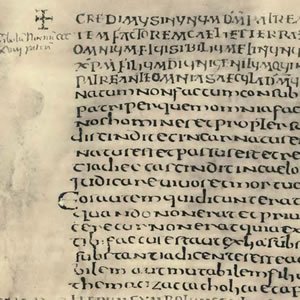 What is Nicene Creed?
The Nicene Creed is a statement of belief widely used in Christian liturgy. It is called Nicene because it was originally adopted in the city of Nicaea (present day Iznik, Turkey) by the First Council of Nicaea in 325 CE. In 381, it was amended at the First Council of Constantinople, and the amended form is referred to as the Nicene or the Niceno-Constantinopolitan Creed.
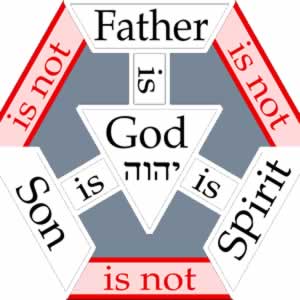 What is Trinity?
The Christian doctrine of the Trinity (Latin: trinus "threefold") holds that God is one God, but three coeternal consubstantial persons or hypostases. These being the Father, the Son (Jesus Christ), and the Holy Spirit - as "one God in three Divine Persons". The three Persons are distinct, yet are one "substance, essence or nature" (homoousios).